Support

Khorramabad

About

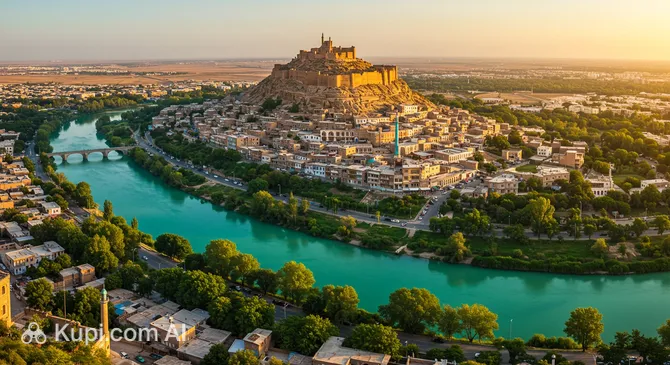
Khorramabad is a picturesque city nestled among the majestic Zagros mountain ranges in western Iran. It is the heart of Lorestan province, a region where turbulent rivers and dense forests meet ancient cliffs, creating unique landscapes and a special atmosphere.

With a population of approximately 373,416 people, Khorramabad serves as the administrative center of Lorestan province and an important cultural hub. The city is surrounded by green hills, babbling brooks, and scenic waterfalls, and its center features a small lake that adds a special charm to the urban panorama.

Khorramabad. Illustration.
Source: Kupi.com AI

Khorramabad is famous for its hospitality, the vibrant atmosphere of its oriental bazaar, and a rich history dating back to the Sassanid era. It is a place where the ancient traditions of nomadic tribes and modern urban rhythms blend wonderfully. Travelers are drawn to ancient fortresses, such as the famous Falak-ol-Aflak, and minarets that stand alongside bustling markets and cozy tea houses where one can experience the true spirit of the East.

If you dream of adventures off the beaten tourist path and want to touch the authentic culture of Western Iran, Khorramabad will be a true discovery for you and provide unforgettable impressions.

You can find more interesting facts on the history of Khorramabad page.

Weather Overview

In Khorramabad, you can expect a climate with distinct seasons. Summer, especially from June to September, is hot and dry, with average temperatures reaching 28°C in July, and maximum values can exceed 35°C. Precipitation during this period is almost non-existent. Winters, from December to February, are cool, with average temperatures ranging from 1.8°C to 4.6°C, and frosts are possible. Small amounts of precipitation fall during the winter months, about 3-4 mm per month, with up to 12 rainy days. Spring and autumn are transitional periods with more moderate temperatures and some rainfall, especially in March-April and November.

Overall, expect a hot, dry summer and cool winters with light precipitation. You can find more detailed information about the weather on the Khorramabad Climate page.

Average monthly temperature

Average monthly precipitation

Interesting Facts

Khorramabad is not just a city with ancient history, but a true treasure chest of surprises for the curious traveler. Beyond the well-known routes, it holds many fascinating secrets and little-known facts that make it even more alluring.

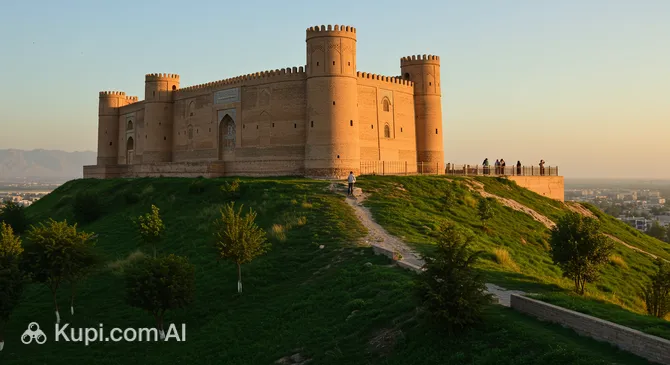
Falak-ol-Aflak Castle. Illustration.
Source: Kupi.com AI

Traveler photos:

  • The city's symbol, the majestic Falak-ol-Aflak Fortress, built during the Sassanid era, originally had 12 towers, 8 of which have survived to this day. In different historical periods, it served as both a royal residence and an impregnable military citadel, and today its walls house an ethnographic museum dedicated to the traditions and lifestyle of the Lurs—the indigenous people of these lands.

  • In the very heart of Khorramabad stands an ancient brick minaret dating back to the 10th century. This 30-meter-tall cylindrical structure once played a key role for trade caravans: at nightfall, a fire was lit at its top to serve as a beacon for travelers. The climb to the minaret's observation deck consists of 99 steps.

  • The surroundings of Khorramabad are rightfully called the "land of waterfalls," and one of the most famous and picturesque among them is Bisheh Waterfall. Its impressive cascades drop from a height of over 48 meters, drawing both locals and travelers seeking to enjoy the pristine beauty of nature.

  • Lorestan province, with Khorramabad as its administrative center, is famous not only for its waterfalls but also for an abundance of Paleolithic cave sites. These unique archaeological sites testify to the region's settlement since ancient times, making this area a genuine treasury for researchers of early human history.

How to Get There

When planning a trip to the capital of Lorestan province, it is worth thinking through your route in advance, as the city is located in a mountainous area. You can find more details on how to get to Khorramabad by exploring all available options, from flights to bus trips. Below, we look at the main transport hubs located relatively close to the city.

Since direct flights specifically to Khorramabad may not always be available or convenient in terms of schedule, many travelers choose to fly into neighboring large cities. One of the most convenient options is Kermanshah Airport (IATA: KSH), located in the city of Kermanshah. This is a major regional hub that accepts a significant number of flights. It is about 147 km from Khorramabad, and the journey by taxi or intercity bus takes about 2.5–3 hours, allowing you to enjoy the mountain scenery.

Another possible option is Hamadan Airport (IATA: HDM), located in Hamadan, approximately 157 km from central Khorramabad. This is a small airport, but it can be convenient if you are combining your trip with a visit to Hamadan's historical sites. The drive from here takes about the same time as from Kermanshah.

If you are looking for a major international hub with more flights, you might consider Ahvaz Airport (IATA: AWZ) in the city of Ahvaz. Although it is further away—about 240 km from Khorramabad (a 3.5–4 hour drive)—the high passenger traffic and flight frequency may make this route preferable for transit travelers.

For clarity, here is summary information on the main airports in the region through which you can reach your destination:

AirportPassenger trafficDistance
Dezful Airport100 000114 km
Kermanshah Airport3.5 mln147 km
Hamadan Airport42 000157 km
Ilam Airport150 000180 km
Sanandaj Airport304 398232 km

Regarding rail connections, there is no station on the main line directly in Khorramabad itself; however, Lorestan province is home to one of the most scenic railways in the country. The nearest major station is in the city of Dorud, about 60–80 km from Khorramabad. The train passing through the Zagros Mountains offers breathtaking views of waterfalls and gorges. From Dorud station, Khorramabad can be easily reached by taxi or local bus in about an hour.

The most common and budget-friendly way to get to Khorramabad from Tehran and other major Iranian cities remains intercity buses. Comfortable VIP buses run regularly, offering reclining seats and air conditioning, making the long journey along Iran's scenic roads quite pleasant.

Main Attractions

Khorramabad, the capital of Lorestan province, offers travelers a unique combination of ancient history and picturesque nature. The city and its surroundings have preserved many monuments testifying to the region's rich past, as well as beautiful places for relaxation and immersion in local culture.

The main symbol of Khorramabad and a mandatory stop for any visitor is the majestic Falak-ol-Aflak Fortress. This ancient citadel, spectacularly rising on a hill in the city center, holds centuries of history and is a key historical site in the region. Visiting the fortress is an opportunity to touch the rich past of Lorestan.

For a pleasant outdoor experience, Keeyow Lake is perfect. This scenic urban lake, surrounded by a well-kept park area, is a favorite spot for both locals and tourists. Here you can enjoy a boat ride, go bird watching, or simply relax in a peaceful atmosphere while admiring the beautiful views, especially at sunset.

Testament to the region's ancient history is found in the impressive ruins of the Shapuri Bridge (Pol-e Shapuri). The remains of this monumental structure, built during the Sassanid era, still capture the imagination and serve as a reminder of the engineering skill and strategic importance of the ancient trade routes that once passed through these lands.

Another interesting historical site worth noting is Gerdab-e Sangi (The Stone Whirlpool). This unique circular stone structure, dating back to the Sassanid period, was likely used for water distribution. Gerdab-e Sangi is a fascinating example of ancient hydraulic engineering and an important historical monument in Khorramabad.

Local Cuisine

The gastronomic scene in Khorramabad is a vibrant reflection of the rich history and cultural diversity of Lorestan province. Local cuisine is famous for using the freshest products grown on the region's fertile lands and offers travelers a unique opportunity to get acquainted with authentic Iranian flavors. Traditions are highly valued here, with recipes passed down through generations, making every dish truly special.

Be sure to try the famous "Luri kebab" – it's not just meat over coals, but a culinary art form. The secret to its unique taste lies in a special marinade, and it is traditionally served with thin lavash bread, fresh herbs, and refreshing yogurt-based sauces. Another signature dish of Khorramabad is the thick and hearty soup "ash-e-doogh". This spicy yogurt-based soup, with added herbs and grains, is perfect for warming up and satisfying hunger, especially on cool evenings. Local establishments will also offer you various lamb and beef dishes cooked over coals or in a tandoor, along with fragrant stews featuring herbs and local spices.

For dessert in Khorramabad, it is customary to serve sweets prepared according to ancient recipes. Halva made from local flour and aromatic honey is particularly popular. Of course, one cannot overlook the abundance of fresh fruit that this region is so rich in. As for drinks, fragrant tea is ubiquitous and is an integral part of Iranian hospitality. You should also try doogh – a refreshing yogurt drink that perfectly complements hearty meat dishes.

Dining culture in Khorramabad is not limited to restaurants. To truly experience the local flavor, head to the city bazaars. Life is bustling here, and among the stalls, you can find many street food vendors: try fragrant flatbreads with various fillings, fried chickpeas, and handmade sweets. Local markets also abound with fresh herbs, nuts, homemade cheeses, and honey, allowing tourists not only to enjoy prepared meals but also to purchase high-quality local products. In the spring, the city often hosts gastronomic festivals where you can dive deeper into Luristani culinary traditions.

Travel Tips

Planning a trip to Khorramabad, the historical heart of Lorestan province? To ensure your journey goes smoothly and leaves only pleasant memories, we have prepared some practical tips. These recommendations will help you better navigate local features and enjoy the hospitality of Iran.

  1. Clothing and Essentials: The climate in Khorramabad is continental: summers are hot, and winters can be cool. In Iran, it is important to follow the dress code. Women are advised to wear a headscarf (hijab) and loose clothing that covers the arms and legs (tunics, long skirts, or trousers). Men should wear long trousers and shirts; shorts and sleeveless shirts are not accepted in public places. Comfortable shoes are a must, especially if you plan to explore the ancient Falak-ol-Aflak Fortress. Also, don't forget a universal adapter for charging your devices.
  2. Transport: The most convenient way to get around Khorramabad is by taxi. They are easily available, and trips are relatively inexpensive. We recommend using local ride-hailing apps like Snapp (similar to Uber). Public transport is mainly represented by buses, whose routes may not always be obvious to a tourist. Car rental is possible, but keep in mind that the driving style in Iranian cities can be quite chaotic and unfamiliar to foreigners.
  3. Finance: The official currency is the Iranian Rial (IRR). Please note: international bank cards (Visa, Mastercard, etc.) are practically not accepted in Iran. It is necessary to bring enough cash (preferably US dollars or Euros) for your entire trip. You can exchange currency at official exchange offices (sarrafi) or banks. ATMs only serve local Iranian cards. Tipping culture is not as widespread as in the West, but tips are always welcome in restaurants (usually 5-10% of the bill) and for good service from guides or drivers.
  4. Health and Safety: Pharmacies (in Persian, "darukhaneh") can be found in many parts of the city. If serious medical assistance is needed, tourists should go to hospitals; it is highly recommended to have travel insurance that covers medical expenses. Khorramabad is generally considered a safe city. Nevertheless, follow standard precautions: keep an eye on your personal belongings in crowded places, and avoid walking alone in poorly lit and deserted areas after dark. Tap water in Iranian cities is usually considered safe, but many tourists prefer to buy bottled water.
  5. Communication: The main language in Khorramabad is Farsi (Persian), and the Luri dialect, characteristic of Lorestan province, is also common. English is not very widely spoken, especially among the older generation and outside of tourist sites. Learning a few basic phrases in Farsi (e.g., "salam" – hello, "merci"/"tashakkor" – thank you, "beleh" – yes, "na" – no) will be very helpful and appreciated by locals. A local SIM card (e.g., from operators Irancell or Hamrahe Aval) can be purchased at the airport or at mobile phone shops in the city by presenting your passport. Wi-Fi is available in most hotels and some cafes, however, internet speed can be low, and access to some resources may be restricted.
  6. Local Etiquette: Greetings between men usually include a handshake; the same applies to women. If you are a man, wait for a woman to extend her hand first for a handshake if she wishes to do so. An important part of Iranian culture is "taarof"—a complex system of politeness and hospitality where offers (e.g., to treat or pay) might be made out of courtesy and don't always imply literal agreement the first time. Public displays of affection (hugging, kissing) are not accepted. It is always customary to remove your shoes when entering an Iranian home.
  7. What to Avoid: It is strongly recommended not to photograph military facilities, police stations, government buildings, or any demonstrations or protests. Avoid public displays of romantic feelings. Be careful when discussing political or religious topics. Always show respect for Islamic customs and traditions, especially during religious holidays like Ramadan.
  8. Local Highlight: Be sure to find time to visit the local bazaar. It is not only a great place to buy authentic souvenirs and handmade items but also an opportunity to dive into the city's daily life and feel its unique character. Also, don't miss the chance to try traditional Luristani cuisine—it is famous for its unique flavors and is often prepared with local products.

We hope these tips help you plan an unforgettable trip to welcoming Khorramabad. We wish you vivid impressions and a pleasant stay in Iran!

Entertainment & Nightlife

When planning your evening leisure in Khorramabad, it is important to understand that the nightlife here has its own unique characteristics shaped by Iran's cultural traditions. You won't find bars, nightclubs, or loud nightlife districts in the usual Western sense, as the sale and consumption of alcohol are prohibited, and entertainment venues operate according to local norms.

Nevertheless, evenings in Khorramabad offer their own opportunities for a pleasant time. The main focus shifts to family recreation, socializing, and enjoying local cuisine. Many restaurants and cafes remain open until late evening, offering guests traditional Iranian dishes. Tea houses (chaikhaneh) are especially popular, where you can drink tea in a calm setting, try local sweets, and chat. During the warmer months, city parks and public spaces also become venues for evening strolls and meetings among locals.

The atmosphere of evening Khorramabad is generally peaceful and welcoming. The crowd is mostly local, including families with children and groups of friends. The dress code complies with the general standards of modesty accepted in the country. Establishments usually operate until 10:00 PM or 11:00 PM, though times may vary.

For evening outings, it is best to head to the central districts where more restaurants and cafes are concentrated. You can reach your destination by taxi, which is available in the evening. Khorramabad is considered a fairly safe city, though, as always, standard precautions should be taken during nighttime walks.

Regarding specific nightlife venues like bars or clubs, as mentioned, there are none in Khorramabad. Instead, for evening relaxation, you can choose one of the many restaurants offering Luristani cuisine or a cozy tea house. Unfortunately, the provided list of attractions does not include establishments in the bar or nightclub category.

During the day, Khorramabad offers tourists interesting leisure options. A visit to the majestic Falak-ol-Aflak Fortress is a must, as it is the symbol of the city and houses centuries of history. Inside the fortress, there is also a museum. In addition to historical sites, you can stroll through city parks or explore the city's picturesque surroundings.

Falak-ol-Aflak Castle. Illustration.
Source: Kupi.com AI

Traveler photos:

Thus, while the nightlife in Khorramabad may differ from the expectations of those seeking loud parties, the city offers an authentic and peaceful evening experience that allows for a deeper dive into the local culture.

Parks & Museums

Khorramabad, nestled among the picturesque Zagros Mountains, offers its guests not only an immersion in ancient history but also the opportunity to enjoy nature. The city carefully preserves its cultural heritage through interesting museums and delights visitors with green spaces for relaxation.

One of the main natural attractions and a popular vacation spot for locals and tourists is Keeyow Lake. This artificial lake, located in the northwestern part of Khorramabad, is surrounded by a park area where you can stroll, enjoy the fresh air, or have a picnic. Beyond Keeyow Lake, Khorramabad's very location in the mountainous Lorestan region provides a sense of connection with nature. The city's surroundings are rich in natural beauty, including waterfalls and green valleys, which make for an excellent addition to a cultural itinerary.

Falak-ol-Aflak Castle. Illustration.
Source: Kupi.com AI

Traveler photos:

The central historical and cultural site in Khorramabad, which is definitely worth a visit, is the majestic Falak-ol-Aflak Fortress. This ancient citadel, whose name poetically translates as "The Heaven of Heavens," stands proudly on a hill, dominating the city skyline. Built during the Sassanid era, the fortress served for many centuries as a royal residence and an important military fortification.

Today, within the massive walls of the Falak-ol-Aflak Fortress, is an impressive museum complex. Here you can visit the archaeological museum, which displays artifacts telling the story of the region's ancient history, as well as the anthropological museum, introducing visitors to the culture and lifestyle of the people of Lorestan. The exhibitions in these museums allow for a deep dive into the rich past and traditions of this land. A walk through the fortress itself is a true journey through time, allowing you to touch centuries of history.

For more authentic impressions of Khorramabad and to get acquainted with local life, stop by the city bazaar. Here you can find unique souvenirs and products by local artisans, as well as experience the true atmosphere of an oriental city. Don't miss the chance to have a cup of fragrant Iranian tea in one of the traditional tea houses, where you can relax and watch the slow pace of local life.

Getting Around

Getting around Khorramabad is possible using public transport and taxis. The backbone of the public transport system is city buses, which connect various areas of the city and are the most affordable way to travel medium and long distances within city limits.

The bus network in Khorramabad covers most key destinations. Fares for buses are most often paid in cash directly to the driver or conductor upon boarding. In some Iranian cities, prepaid transport cards may be used, but for tourists staying for a short time, cash is usually the simplest and most convenient option. Fares are generally low. Buses run their routes throughout the day, although it's worth noting that their number and frequency may decrease in the evening.

Taxis are another popular and widespread way to get around in Khorramabad. You can find official taxis, usually yellow or green, as well as private drivers. It is highly recommended to agree on the fare in advance before getting into the car, especially if there is no meter or the driver doesn't turn it on. Also common in Iran are shared taxis (savari)—passenger cars that run along fixed routes and pick up several passengers along the way. This is a more economical option compared to an individual taxi, but less comfortable if you are traveling with luggage.

To order a taxi, you can try using local ride-hailing apps if they are popular and available in Khorramabad, or simply hail a car on the street, which is common practice. For short distances, especially in the central part of the city, it is quite comfortable to get around on foot. This is not only free but also allows you to better experience the atmosphere of Khorramabad, its streets, and local life. Information on car-sharing systems or organized bike rentals in Khorramabad is limited, so tourists should primarily rely on buses and various types of taxis.

Tourists planning to use public transport should take into account that information on routes and bus schedules may be presented primarily in Farsi. Therefore, having your destination address written in the local language or using offline maps on your smartphone with navigation capabilities will be very useful. Public transport operating hours usually cover the daytime, from early morning until late evening, but the intensity of service may decrease during traditional lunch hours (siesta) and after dark.

Accommodation

In Khorramabad, travelers can find various accommodation options to suit different budgets and preferences. Choices range from guesthouses and budget-friendly options to mid-range hotels offering comfortable stays. While luxury resorts are less common here, finding a cozy place to sleep is entirely possible. Many tourists prefer to stay in central areas or near key attractions, such as the famous Falak-ol-Aflak Fortress, providing convenient access to major tourist sites and transport hubs.

The price range for accommodation in Khorramabad can generally be described as affordable, with budget and mid-range offers prevailing. For searching and booking hotels and guesthouses, it is convenient to use popular online platforms and travel aggregators. In some cases, direct booking is possible by contacting the hotel, especially for smaller local establishments.

To guarantee the best choice and avoid availability issues, especially during peak tourist seasons or local holidays, it is recommended to book your accommodation in advance. This can also help you find better deals and select a room that fully meets your expectations for your trip to Khorramabad.

Nearby Cities

For those who want to explore the surroundings, Khorramabad serves as an excellent starting point for day trips to several interesting nearby locations:

CityPopulationDistance
Aleshtar33 55845 km
Borujerd234 99762 km
Dorud121 60866 km
Pol-e Dokhtar26 35267 km
Kuhdasht89 09168 km

Each of these cities offers something unique for the curious traveler. Dezful attracts visitors with its famous ancient bridge built back in Sassanid times and is the gateway to ancient ruins like Chogha Zanbil. Borujerd is known for its rich history, traditional architecture, magnificent mosques including the Jameh Mosque, and its colorful bazaar. A trip to Malayer allows you to enjoy its well-kept parks, such as Seifiyeh Park, and learn about the local viticulture for which the region is famous. Andimeshk, an important railway hub, might be interesting due to its proximity to the impressive Dez and Karkheh dams, as well as its scenic natural landscapes. And Dorud, located in a picturesque mountainous area and often called the "nature capital of Iran," will charm outdoor enthusiasts with its waterfalls, including the famous Bisheh Waterfall, and beautiful valleys.

These nearby destinations provide insight into the diverse culture and landscapes of the region. Each city possesses its own unique charm and history, offering travelers the chance to expand their experience of a trip to Iran.

Shopping & Souvenirs

Khorramabad, like many Iranian cities, offers tourists the chance to dive into the atmosphere of traditional trade, especially at its bazaars. Here you can find everyday items as well as unique products from local craftsmen. The city may not be famous for large modern shopping complexes to the same extent as the capital, but its charm lies in its authentic markets and small shops.

The main commercial life of Khorramabad is likely concentrated around the central streets and the traditional bazaar. This is where most shops offering clothes, shoes, jewelry, and household goods are located. A walk through these lively streets can be an interesting experience in itself, allowing you to observe the daily life of the city.

In Khorramabad, you might come across small modern shopping centers or department stores offering a more standardized range of goods. However, if you are looking for something truly unique and local, the traditional markets are a better choice. Information about large, nationally famous shopping malls in Khorramabad is hard to find, highlighting the city's orientation toward more traditional forms of trade.

The heart of trade in Khorramabad is undoubtedly the traditional bazaar. This colorful place is where you can find practically everything: from fresh produce, aromatic spices, and local sweets to handmade carpets, textiles, copperware, and other crafts. Visiting the bazaar is not just about shopping; it's a true immersion into the culture and life of the Lorestan region. Bargaining is expected here, so don't hesitate to ask for a discount.

When in Khorramabad and Lorestan province, it is worth bringing back items made by local masters. Look for Lorestan kilims and carpets with characteristic patterns, which are famous for their quality. Copperware, ceramics, and traditional clothing or accessories are also popular. Don't forget edible souvenirs: local varieties of honey, nuts, dried fruits, and, of course, Iranian spices like saffron.

Shops in Khorramabad usually operate from the morning (around 9:00-10:00 AM) until evening (until 8:00-9:00 PM), with a possible break for lunch in the middle of the day, especially during the hot season. Friday is a day off in Iran, so many shops may be closed or work on a reduced schedule. The primary means of payment is cash Iranian Rial (IRR). The use of international bank cards can be very limited, so tourists are advised to carry an adequate supply of cash.

The Tax Free refund system for tourists in Iran is not as widespread or standardized as in some other countries. The likelihood of using this service in Khorramabad shops is low. It is better to check for tax refund possibilities directly in large stores when making expensive purchases, but you shouldn't rely on it too much.
Reached the end of the page?

That means the route is fully explored