Support

Sabzevar

About

Sabzevar is an important cultural and commercial center located in the Razavi Khorasan Province. This city, with a population exceeding 240,000, plays a significant role in the life of the region and attracts travelers with its authentic character. When planning a trip to Iran, it is worth paying attention to this settlement, which serves as a unique gateway to the culture of the country's northeast and sits on the edge of the Dasht-e Kavir desert.

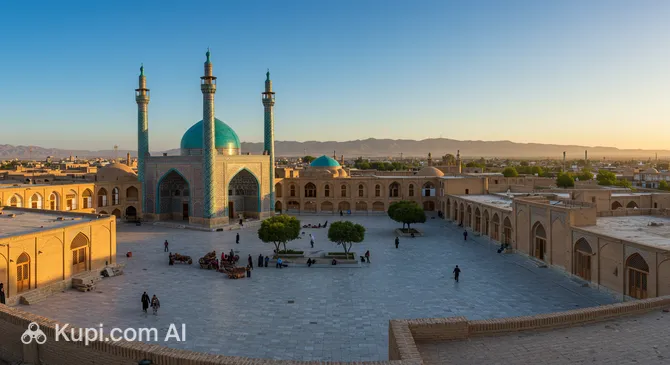
Sabzevar. Illustration.
Source: Kupi.com AI

The city boasts ancient roots reaching deep into the centuries. The rich history of Sabzevar is inextricably linked to the legendary Silk Road and the Sarbadar movement, of which it was once the capital. Walking through the streets, you can feel the breath of time and imagine the numerous trade caravans passing through, carrying goods between East and West.

Among the main attractions, the Khosrow Gerd Minaret deserves special attention—a standalone 12th-century brick structure that served as a guiding beacon for travelers. No less interesting is the Sabzevar Jameh Mosque, impressive with its high iwans and tiled decor. Beyond its architecture, the city is famous as a production center for high-quality cumin and dried fruits, which can be purchased at local bazaars.

A visit to Sabzevar will give you a unique opportunity to touch ancient traditions and enjoy the warm hospitality of the locals. This is a place where historical heritage harmoniously intertwines with vibrant modern life, promising travelers bright and memorable experiences.

Weather Overview

The climate in this region is characterized by pronounced seasonality, which is typical for an area bordering the desert. Expect hot, dry summers and cool winters with the possibility of night frosts. Before your trip, we recommend checking what weather in Sabzevar is expected for the dates of your visit to choose your wardrobe correctly.

Summer months here are truly sweltering. The hottest time of the year is July, when the average temperature is about 29.9°C, and daytime highs can reach 36.7°C. During this period, from June to September, rain is practically non-existent, and the sun shines brightly and constantly.

Winter brings a significant drop in temperatures. In January, the thermometer average stays at 4.0°C, but at night the air can cool down to -1.3°C. Spring is considered the wettest season: for example, in April, up to 7 days with precipitation are recorded, although the rains themselves are usually short-lived and not heavy.

Average monthly temperature

Average monthly precipitation

Interesting Facts

In addition to its main attractions, Sabzevar holds many fascinating secrets and legends that are revealed only to curious travelers. This city is not just a point on the map, but a place where mythology intertwines with the real history of Iran.

  • Echoes of Legendary Battles. According to local legends, the city's surroundings are linked to the dramatic events of the epic "Shahnameh." Folklore says that it was in this region, near the "White Fortress" (Dezh-e Sepid) on the border of Khorasan, where the tragic battle of the great hero Rostam and his son Sohrab took place.

  • Sacred Fire of the Farmers. In the mountains not far from the city, on the Rivand ridge, was Adur Burzen-Mihr—one of the three main Zoroastrian fire temples of the Sasanian era. This fire was revered as the sacred patron of farmers, highlighting the important role of agricultural traditions in the region's history.

  • Cradle of Persian Prose. In ancient times, the city was known as Bayhaq. The famous historian and writer Abul-Fazl Bayhaqi (11th century), author of the monumental work "Tarikh-e Bayhaqi," was born here. He is considered the father of Persian artistic prose, and his writing style is still studied today as a standard of eloquence.

  • Traditions of the Heroes. Sabzevar is famous for its commitment to "Varzesh-e Pahlavani"—a traditional Iranian sport combining wrestling, strength exercises, and a chivalrous code of honor. The spirit of the ancient Sarbadar defenders lives on today: local athletes (pahlavans) enjoy immense respect among the inhabitants.

How to Get There

When planning a trip to this historical region, it is important to think about logistics in advance, as there may not be direct flights to the city itself. Travelers most often choose a flight to major neighboring transport hubs followed by a transfer to ground transport. You can find more details on how to get to Sabzevar on a special page, and below we will look at the main options for arriving through the nearest airports.

The most popular and convenient option for tourists is Mashhad International Airport (MHD). Keep in mind that the airport is not located in Sabzevar itself, but in the city of Mashhad, which is about 177 km away. This is a major international hub receiving many flights. The journey by taxi or intercity bus from the airport to the destination will take approximately 4 hours and 45 minutes.

Another geographically close option is Ashgabat International Airport (ASB). It is located in the city of Ashgabat, about 206 km from Sabzevar. A car journey from here will take about 5.5 hours. However, when choosing this route, it is important to remember the need to cross a state border, as the airport is located in a neighboring country.

For clarity, here is a summary of the main airports:

AirportPassenger trafficDistance
Mashhad International Airport8.4 mln177 km
Ashgabat Airport1.3 mln206 km

Main Attractions

A journey to Sabzevar is an immersion into the deep history of the Silk Road, where every stone holds the memory of caravans and ancient thinkers. This city in Razavi Khorasan Province offers tourists a unique set of monuments, from majestic mosques to cozy caravanserais, which allow for a better understanding of the culture and architecture of the country's northeast.

One of the most recognizable architectural gems of the city is the Sabzevar Jameh Mosque. This monumental structure, with roots dating back to the Sarbadar era, impresses with its scale and elegance. Tourists are drawn to the high brick minarets and magnificent iwans decorated with intricate tilework featuring calligraphic inscriptions. The mosque remains the spiritual heart of the city, where one can feel peace and admire the craftsmanship of medieval architects.

Equally interesting to visit is the Tomb of Haj Mulla Hadi Sabzevari, also known as the "Tomb of Secrets" (Asrar). This mausoleum, built during the Qajar era, is the final resting place of the great 19th-century Persian philosopher and mystic. The building is located in a beautiful garden and topped with an elegant brick dome featuring turquoise lining. The interior decoration strikes the imagination with mirror mosaics and delicate paintings, creating an atmosphere of light and loftiness befitting a sage's resting place.

Located near the tomb is the Faramarz Khan Caravanserai, which today serves as the Anthropology Museum. It is a classic example of Persian roadside architecture with four iwans and a spacious courtyard where pilgrims once stayed on their way to Mashhad. A visit here allows you not only to examine the historical walls but also to get acquainted with the ethnographic collection: tools, clothing, and household items telling the story of the traditions and lifestyle of the region's inhabitants.

Outside the city limits, standing like a lonely desert sentinel, rises the Khosrow Gerd Minaret. This 30-meter 12th-century tower is one of the tallest and most beautiful brick minarets in Iran from the Seljuk era. In ancient times, it served as a beacon for trade caravans, pointing the way to the oasis. The skillful brickwork, forming geometric patterns in the shape of diamonds, makes it a true masterpiece of engineering and a must-see for history lovers.

Local Cuisine

The gastronomic scene of Sabzevar is inextricably linked to the culinary traditions of the Khorasan region, where local ingredients, spices, and hearty dishes are prioritized. Since the city is famous for producing some of the best cumin (zira) in Iran, this spice plays a key role in many recipes, giving food a unique aroma and characteristic taste.

Among the dishes that are definitely worth a try, Kameh Joosh stands out. This is a unique local dish prepared on the basis of "kameh"—a special type of thick, aged yogurt or curd product. It is mixed with walnuts, tomatoes, mint, and spices, served as a thick stew in which it is customary to dip bread. Another signature dish is Zireh Polo—fragrant rice with a generous addition of local cumin, often served with chicken or tender lamb. Various types of Ash are also popular—thick traditional soups with legumes, noodles, and plenty of herbs.

As for drinks, the culture of consumption here fully complies with the laws and traditions of the country. Alcohol is strictly prohibited and is not served in restaurants or sold in shops. The main drink at any table is hot black tea, which is drunk from small glass cups (armuds) with sugar cubes or dates. In hot weather, doogh is perfectly refreshing—a salty fermented milk drink with dried mint—as are sweet sherbets based on natural fruit syrups.

The food culture in Sabzevar is characterized by hospitality and commitment to traditions. Locals often visit family restaurants or traditional tea houses, where wide platforms (takhts) with carpets and pillows are used instead of chairs. A gastronomic journey will be incomplete without a visit to the city bazaar: this is where you can buy famous local spices, dried fruits, and try fresh street pastries, immersing yourself in the authentic atmosphere of an Eastern city.

Travel Tips

Preparing for a trip to Sabzevar requires attention to cultural and practical details characteristic of the Iranian provinces. To make your trip comfortable and leave only pleasant memories, we have collected a list of important recommendations to help you feel confident.

  1. Clothing and Dress Code. Sabzevar is a city with a traditional lifestyle, so strictly follow accepted norms. Women need to wear a headscarf (roosari) covering the hair and a loose-fitting tunic (manteau) reaching mid-thigh. Men should wear long trousers; shorts are not allowed here. In winter, be sure to bring warm clothes, as the proximity to the desert guarantees cold nights.
  2. Transport Nuances. There is no metro in the city, and the bus network can be difficult for a tourist without language skills. The most convenient way to get around is by taxi. In Iran, the Snapp app (local analog of Uber) is widely used, which allows you to see the price in advance. If you catch a car on the street, always agree on the cost of the trip before getting in.
  3. Finance and Cash. International Visa and Mastercard cards are not accepted for payment here. Be sure to bring a sufficient supply of cash (dollars or euros) and change it at official exchange offices (Sarrafi). Remember the counting system: the official currency is the rial, but in everyday life, prices are quoted in "tomans" (one toman equals 10 rials), which often confuses newcomers.
  4. Communication and Internet. To access familiar messengers and social networks, you will definitely need a VPN, which is best installed on your phone before entering the country. It is more profitable and easier to get a local SIM card (for example, Irancell) immediately upon arrival. Wi-Fi is available in hotels, but its speed is not always stable.
  5. Health and Safety. It is not recommended to drink tap water; buy bottled water. Pharmacies in the city are marked with signs, but if you need specific medications, bring them with you. Sabzevar is safe for tourists, however, be extremely careful when crossing the road: traffic rules are followed only loosely.
  6. Local Etiquette and "Taarof". Be prepared for the cultural phenomenon of "taarof"—a complex system of politeness. If a seller or driver refuses to take money, saying it's a gift—it's a tribute to politeness. You must insist on paying. Also, it is not customary to extend your hand for a handshake to members of the opposite sex unless they have taken the initiative themselves.
  7. What to Avoid. Refrain from public displays of affection (kissing and hugging)—in a conservative society, this can cause disapproval. It is strictly forbidden to photograph government buildings, military facilities, and police officers. Also, remember the total ban on alcohol.
  8. Local Tip: Sabzevar's "Gold". Don't leave without the main gastronomic souvenir—cumin (zira). Sabzevar is considered the capital of this spice. Buy fresh cumin at the bazaar; it has an incredible aroma and will be a great reminder of the trip in your kitchen.

Following these simple rules will help you show respect for local traditions and avoid awkward situations. Sabzevar is a city with a warm heart, and by showing a little attention to its customs, you will encounter sincere cordiality and hospitality here.

Entertainment & Nightlife

The nightlife in Sabzevar has its own unique characteristics determined by the culture and laws of Iran. Here you will not find the usual Western-style nightclubs, discos, or bars serving alcohol, as they are prohibited by law. Evening leisure in the city is primarily a time for socializing, family walks, and gastronomic pleasures. As the sun sets and the daytime heat fades, the streets fill with life, and the atmosphere becomes particularly cozy and relaxed.

Urban green zones become the center of attraction in the evening hours. One of the most popular spots is Mellat Park. As dusk falls, hundreds of locals gather here: families spread carpets right on the grass for picnics, children play on the playgrounds, and young people stroll along the paths. It is a great place to observe the real life of the citizens and enjoy the cool air near the fountains. The area around the National Garden (Bagh-e Melli) is also lively, where groups of friends often gather.

The gastronomic component is the main part of evening entertainment. Instead of bars, locals visit traditional tea houses and restaurants. We recommend taking a walk around Karegar Square (Meydan-e Karegar) and the adjacent streets. There is a concentration of many snack bars and cafes here where you can try fresh kebabs or drink hot tea with local sweets. Many establishments stay open until midnight, offering guests traditional "takht" (carpeted platforms) for relaxation.

As for daytime entertainment, it is more cultural and educational. During daylight hours, it is worth spending time exploring the historical monuments and museums mentioned earlier, or visiting the local bazaars. The theatrical life in the city is not very widespread, but cultural events and exhibitions are sometimes held in urban art centers.

In terms of safety, Sabzevar is a quiet and friendly city. Evening walks along the well-lit central streets and parks do not pose a threat to tourists. However, as with everywhere else, it is worth keeping an eye on personal belongings in crowded places. To return to the hotel at night, it is best to use an official taxi or the Snapp app, as public transport stops running by that time.

Parks & Museums

Despite its location on the edge of a harsh desert, Sabzevar knows how to surprise travelers with cozy green zones and rich cultural content. The city offers guests a balanced itinerary where walks along shaded paths are harmoniously combined with immersion in history through the expositions of local museums that reveal the unique traditions of the country's northeast.

Among the city's green oases, Mellat Park holds a special place. It is one of the largest and most popular recreational areas in Sabzevar, located on a hill from where a pleasant view opens up. The park serves as the main relaxation spot for local families: comfortable picnic areas are set up here, walking paths are laid out, and fountains operate, providing cool air on hot days. For tourists, this is a great opportunity to take a break from the city bustle and observe the leisurely pace of life in the Iranian province.

Another important natural corner is the National Garden (Bagh-e Melli). This historical park is located in the city center and is characterized by a special atmosphere of antiquity. Tall trees create deep shade that saves from the heat, and the classic layout is reminiscent of traditional Persian gardens. It is an ideal place for a short break during excursions in the city center, where you can sit on a bench with a book or simply enjoy the silence.

The cultural program in Sabzevar is inextricably linked to its museums. The main one is considered the Anthropology Museum, located in the historical building of the Faramarz Khan Caravanserai. The museum's exposition is a true mirror of life in the Khorasan region. In the ancient cells where Silk Road merchants once rested, scenes from the daily life of local residents are now displayed: wax figures in traditional clothing, agricultural tools, utensils, and craft instruments. Visiting this place allows for a deeper understanding of the folk culture and customs of those who have lived on this land for centuries.

Fans of technical history will find the Petroleum Industry Museum interesting. Sabzevar was one of the first cities in the region where infrastructure for the distribution of petroleum products appeared. The museum, often located in an old filling station, demonstrates the evolution of equipment: from antique fuel dispensers and pumps to historical photographs and documents. This is a fairly rare type of museum that tells the story of Iran's industrial development in the 20th century.

The city itself can be called an open-air museum thanks to the abundance of brick architecture. In addition to the already known mosques, it is worth paying attention to the historical houses (for example, the Oskoui House) preserved in the old quarters. These mansions with courtyards and wind towers (badgirs) demonstrate the genius of local architects who knew how to create comfort in a hot climate.

Insider Tip: Try to find the remains of ancient yakhchals—traditional ice houses—in the outskirts or old districts of the city. These dome-shaped clay structures were used for storing ice long before the invention of electricity. Although many have lost their significance, their unique conical shape and engineering design still evoke admiration and serve as a great backdrop for atmospheric photos.

Getting Around

The public transport system in Sabzevar is arranged quite simply and clearly, which is typical for medium-sized Iranian cities. There are no metro or tram lines here, so the main burden of passenger transportation falls on buses and various types of taxis. Due to the compactness of the city's central part, many attractions are within walking distance of each other, allowing tourists to depend less on wheeled transport.

City buses run along the main streets and connect the center with residential areas and universities. This is the most budget-friendly way to get around, but it may not always be convenient for a tourist due to the lack of schedules and routes in English. It is important to remember a cultural feature: gender segregation applies in the cabins. Men usually occupy the front part of the bus, and women occupy the back. Even if you are traveling as a couple, it is better to observe these rules in crowded transport.

The most popular and convenient means of transport for city guests remains the taxi. In Sabzevar, as in the entire region, "shared taxis" (known locally as "savari") are widespread. These are ordinary passenger cars, most often yellow or green, that follow fixed routes. You simply stand by the road, shout your destination to the driver, and if it's on their way—you get in. The fare in such a taxi is fixed and very low, but you will have to share the car with three other passengers.

For more comfortable trips, it is recommended to use "darbast" (closed door)—this is the equivalent of a standard private taxi, where you rent the entire car. In recent years, the lives of tourists have been significantly eased by mobile apps for calling a taxi. The Snapp service (the local equivalent of Uber) operates in the city. Using the app eliminates the need to haggle and explain the address to the driver in Farsi: you simply indicate the point on the map and see a fixed price in advance.

The fare payment system has its nuances. Electronic cards are being introduced on municipal buses, but it is not always practical to buy them for a short-term visit. Drivers often accept cash. In taxis and minibuses, payment is made almost exclusively in cash. When paying, be careful with the currency: although the official monetary unit is the rial, locals quote prices in "tomans" (1 toman = 10 rials). Always clarify which unit the amount is named in to avoid overpayment.

Car-sharing and organized bike rentals are not yet developed in the city, so you shouldn't count on them. If you plan late-night walks, keep in mind that buses stop running quite early, around 20:30–21:00. At night, the only available option is to order a taxi via the app or by phone.

Accommodation

The choice of accommodation in Sabzevar, as in many non-touristic cities in Iran, is quite modest but fully covers the needs of travelers stopping here on their way to Mashhad or exploring the Khorasan region. Practical accommodation options prevail in the city: from inexpensive guesthouses to mid-range hotels. You shouldn't look for luxury five-star resorts or international hotel chains here, but local hoteliers are famous for their hospitality and try to provide guests with maximum comfort.

In terms of location, two areas are considered most convenient for tourists. The first is the historical center near the Jameh Mosque, where you can immerse yourself in the atmosphere of the old city and walk to the main attractions. The second popular option is the Sarbedaran Boulevard area and the vicinity of major transport interchanges. Staying here is particularly convenient for car travelers and those using Sabzevar as a transit point, as it's easy to reach the main highway, and the noise of central streets won't disturb your rest.

Among specific accommodation options, travelers often highlight the Kamelia Hotel. This is a three-star hotel considered one of the best in the city. It offers clean rooms, its own restaurant, and convenient parking, making it an excellent choice for couples. Another reliable option is the Sabzevar Tourist Hotel (also known as Jahangardi). It belongs to the well-known Iranian state-owned ITTO chain, which guarantees a predictable level of service, breakfast, and classic interiors familiar to many who have already traveled around the country.

Booking accommodation in the Iranian provinces has its own specifics. Since international booking systems (such as Booking or Airbnb) do not work in the country due to sanctions, it is better to search for and book rooms through local Iranian online platforms or by contacting local travel agencies. In the low season, it is often possible to check in without a prior reservation just by arriving at the hotel, but during Iranian holidays (e.g., Nowruz) or religious events, finding a free room can be a problem, so it's worth taking care of this in advance.

The price range in Sabzevar can be described as budget and mid-range. The cost of a night in a good hotel here will be significantly lower than in Tehran or Isfahan. Payment is almost always made in the local currency (rials) and in cash, as foreign Visa and Mastercard bank cards are not accepted. Some hotels may accept dollars or euros, but the exchange rate may not be the most favorable, so it is better to have a supply of Iranian money with you.

Nearby Cities

For those who want to explore the surroundings, Sabzevar serves as an excellent starting point for day trips to several interesting nearby locations:

Just 101 km to the east lies the legendary Nishapur—one of the most important cultural centers of the ancient East. This city is known worldwide as the birthplace of the great poet and mathematician Omar Khayyam. Tourists go there to see his elegant mausoleum, stroll through the quiet gardens, and visit the tomb of the mystic Attar. Additionally, Nishapur is famous for its turquoise mines, which are considered the best in the world, making it the perfect place to buy unique souvenirs.

Another fascinating destination is Kashmar, located about a two-hour drive away. This city attracts travelers with its agricultural flavor: the region is famous for producing high-quality saffron and special grape varieties. Here you can not only get acquainted with the agricultural traditions of Iran but also visit historical mosques and mausoleums while enjoying the calm atmosphere of the province.

CityPopulationDistance
Neqab14 72359 km
Joghatay15 13471 km
Esfarayen59 49097 km
Nishapur221 700101 km
Bardaskan28 233110 km

These nearby destinations provide an insight into the diverse culture and landscapes of the region, complementing the impressions from visiting Sabzevar itself.

Shopping & Souvenirs

Shopping in Sabzevar is an opportunity to immerse yourself in the atmosphere of a traditional Iranian trading city, where the history of the Silk Road intertwines with everyday life. Here you won't find giant ultra-modern malls with international brands like in Tehran, but you can enjoy the authenticity of Eastern bazaars and purchase unique locally produced goods at very pleasant prices.

The city's main commercial life is concentrated around historical streets. The main artery for shopping enthusiasts is Beyhaq Street. This is where the commercial heart of the city beats: dozens of shops are located along the street, offering everything from clothing and shoes to gold jewelry and household items. Walking along this street will allow you not only to make purchases but also to see architectural monuments preserved from past centuries. Another important location is Kashefi Street, where many boutiques with modern clothing and accessories are concentrated.

The format of large shopping centers in Sabzevar is represented mainly by "passages"—covered shopping galleries. As a rule, they specialize in certain categories of goods. In such passages, you can find high-quality Iranian-made clothing, cosmetics, and electronics. Although they are smaller than the capital's complexes, a cozy atmosphere reigns here, and sellers are always ready to help with the choice, even if communication takes place through sign language.

A true gem for a tourist is the Historical Sabzevar Bazaar (Bazaar-e Sarpushideh), also known as the Covered Market. This is a place with centuries of history, where lively trade takes place under vaulted brick ceilings. This is the place to look for the most colorful goods: from fabrics and carpets to fragrant spices. The atmosphere of the old bazaar with its smells, sounds, and play of light creates a unique impression of traveling back in time.

Speaking of souvenirs, Sabzevar is primarily famous for its gastronomic riches. The city's main brand is cumin (zira). Sabzevar cumin is considered one of the best in Iran due to its rich aroma, so a bag of this spice will be an excellent gift for gourmets. It is also worth paying attention to local dried fruits (especially raisins and dried figs) and traditional "koloocheh" cookies. Craft lovers will enjoy ceramic products and, of course, the famous handmade Khorasan carpets.

When planning your shopping, take into account the local working hours. Shops are usually open from 9:00 to 13:00 and then reopen in the evening, from 16:00 to 21:00 or 22:00. The afternoon siesta break is observed quite strictly, especially during the hot season. The bazaar lives by a similar schedule, but it is most lively in the morning.

The payment system in Sabzevar has its own peculiarities. International Visa and Mastercard cards do not work here, so always have cash with you (Iranian rials). Some larger shops may accept local debit cards, but for a tourist, cash remains the most reliable method. Remember that prices are often quoted in "tomans" (1 toman = 10 rials), so always clarify the currency before paying.

The Tax-Free (VAT refund) system does not operate in the city, so you should not count on a tax refund upon departure. However, prices for many goods, especially local products and handicrafts, are significantly lower here than in major tourist centers, which in itself makes shopping profitable.
Reached the end of the page?

That means the route is fully explored