Support

Donegal Castle

About

Imagine a rugged and majestic fortress towering over the rocky banks of the River Eske. This is Donegal Castle—a 15th-century architectural gem located in the heart of Donegal town. Once the primary residence of the powerful O'Donnell clan, it is now one of the most significant historical monuments in Ireland.
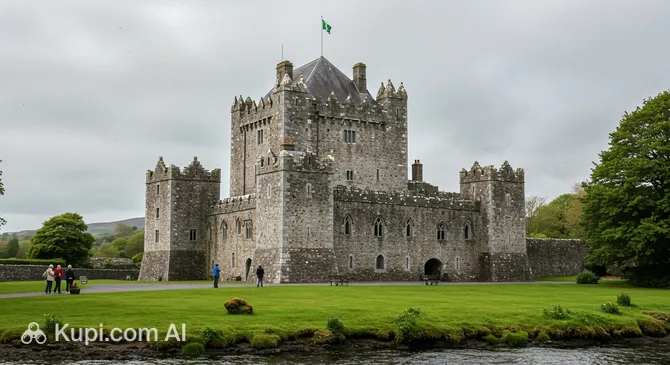
Donegal Castle
Donegal Castle. Иллюстрация. Источник: Kupi.com AI

The castle is a unique blend of defensive architecture and later residential additions in the Jacobean style. Built from local limestone and sandstone, it stood in ruins for a long time, but thanks to painstaking restoration in the 1990s, it has regained its oak roof and authentic interiors. This is a place where the history of Gaelic kings and chieftains literally comes to life.

Of particular value are the 17th-century curtain wall surrounding the castle and the symmetrical gatehouse at the entrance. Modern travelers appreciate the castle not only for its ancient stones but also for the opportunity to experience the atmosphere of old Ireland in this beautifully preserved open-air museum.

Contacts

For more information about special events or group tours, you can use the official communication channels:

How to contactContact
AddressSaint Helenes, Castle St, Donegal, Ireland
Phone+353 74 972 2405
Websiteheritageireland.ie

What to Do

Inside Donegal Castle, a fascinating journey through time awaits guests. You can explore the Great Hall with its majestic atmosphere and admire the details of the restored oak floors, which were recreated using original medieval techniques. Be sure to climb the keep: from here, you can enjoy a panoramic view of the River Eske, the town's rooftops, and the vast expanse of Donegal Bay.

Culture enthusiasts should pay attention to the themed events. The castle regularly hosts Gaelic evenings, where stories of the great O'Donnell clan are told to the sounds of traditional music. Information boards and audio guides will help you understand the nuances of the architectural transformations—from a rugged military fortification to an elegant 17th-century manor with its characteristic windows and gables.

After exploring the interior, take a walk along the fortress wall and look into the symmetrical gatehouse, which is considered an excellent backdrop for photos. You can round off your historical exploration with a visit to "The Diamond" square or the ruins of the Franciscan friary, which are within walking distance and complete the historical character of this area.

Getting There

Donegal Castle is located in the heart of the town at Saint Helenes, Castle St. Thanks to its central location, it is incredibly easy to reach on foot from almost anywhere in town. A walk from the main square, "The Diamond," or the local bus station will take no more than 5–10 minutes.

If you are arriving from other regions, the most convenient way is to use the Bus Éireann service. For those who prefer air travel, Donegal Airport is located just 8 kilometers from the castle. A taxi or rental car ride from the airport to the fortress takes about 10–15 minutes.

For travelers using their own transport, the N15 or N56 routes are ideal. Parking is available near the castle, making your visit as comfortable as possible. The town's compact nature allows you to leave your car and enjoy the historical views during a leisurely walk.

Ближайший город: Donegal

History & Facts

The history of this site began in 1474, when Sir Hugh O'Donnell the Elder, the powerful chieftain of an influential clan, laid the foundations of the fortress. The castle became more than just a home; it was the political center of the Kingdom of Tyrconnell—the last stronghold of independent Gaelic rulers. For centuries, it was considered one of the most impregnable and grand citadels in Ireland.

A turning point came in 1607 following the famous "Flight of the Earls." To prevent the castle from falling into English hands, the departing Irish chieftains deliberately damaged its walls. Soon after, control of the ruins passed to Captain Basil Brooke. The new owners rebuilt the fortress according to the fashions of the Jacobean era, adding elegant gables and large windows, which gave the rugged military site the features of a residential manor.

By the 18th century, the castle was eventually abandoned and gradually fell into ruin until the late 19th century, when the Earl of Arran donated it to the state. It wasn't until the 1990s that a large-scale restoration was carried out. Master craftsmen used 15th-century techniques to restore the oak floors and roof, returning the castle to its historical splendor and making it accessible to modern explorers of the past.

Time Needed

To leisurely explore all corners of the castle, 1–2 hours is usually enough. During this time, you can study the indoor exhibits dedicated to the O'Donnell clan, climb the tower, and take memorable photos in the courtyard.

If your visit coincides with a cultural evening or if you decide to use a guide for a detailed study of the architectural details, it is worth setting aside about 3 hours for the visit. The site's compact nature makes it easy to fit into a busy day of walking around the town.

Working Hours

Donegal Castle is open to visitors daily, making it easy to plan a visit any day of the week. The current museum opening hours are as follows:

  • Monday – Sunday: 10:00 AM – 5:15 PM

Please note that opening hours may vary slightly depending on the season, so it is recommended to check the official website or inquire locally before your trip.

10:00 – 17:15

Nearby

Donegal Town is famous for its cozy atmosphere, and a visit to the castle is just the beginning of your acquaintance with the local charm. A stroll through the surroundings will allow you to dive deeper into Irish traditions, taste fresh seafood, and see monuments dedicated to the region's great history.

NameDistance
Blueberry Tea Room and Restaurant0 km
Abbey Hotel Nightclub0.1 km
The Reel Inn0.1 km
McCafferty's Bar0.2 km
Donegal Bay Waterbus0.2 km
Donegal Railway Heritage Centre0.3 km
Blas0.3 km

Reached the end of the page?

That means the route is fully explored