Support

People's Palace

About

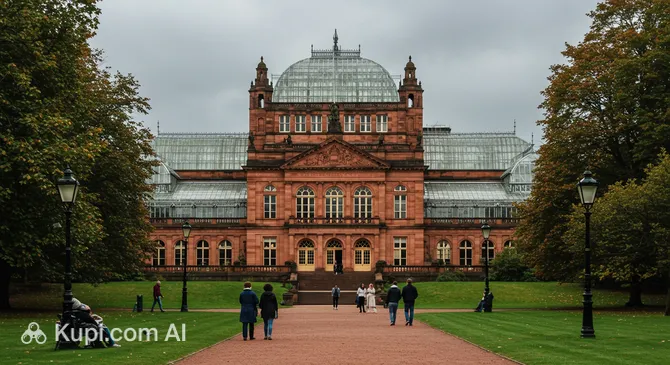
In the heart of the oldest park in Glasgow stands a majestic red sandstone building known as the People's Palace. This unique museum complex, opened at the end of the 19th century, serves as a living testament to the rich social and cultural history for which the United Kingdom is famous. Unlike traditional art galleries, this center is entirely dedicated to the lives of ordinary citizens, their traditions, and the city's journey from an industrial giant to a modern metropolis.
People
People's Palace. Иллюстрация. Источник: Kupi.com AI

One of the main highlights of the complex is the adjoining Winter Gardens—a magnificent Victorian glass conservatory. Here, visitors can stroll among exotic plants, enjoying the warmth and light even on cloudy Scottish days. The building's architecture harmoniously combines the monumentality of sandstone with the lightness of glass structures, making it one of the most recognizable landmarks in the region.

Today, the People's Palace is not just a repository of artifacts, but a true cultural hub. The exhibitions tell stories of daily life, social movements, and vibrant moments in the city's history, allowing every guest to feel a connection across time. Located in a picturesque green area, the museum is the perfect starting point for discovering the soul of this distinctive city.

Contacts

To verify the latest information before your visit, you can use the museum's official contact channels:

How to contactContact
AddressThe Grn, Glasgow G40 1AT, UK
Phone+44 141 276 0788
Websitewww.glasgowlife.org.uk

What to Do

Inside the museum, a fascinating immersion into the city's social history awaits you. You can see reconstructions of old living rooms, learn how fashion and the daily lives of working families changed, and study exhibits dedicated to the struggle for civil rights. This is a rare opportunity to look at history not through the lens of battles or kings, but through the eyes of an ordinary person.

Be sure to stop by the Winter Gardens, located right behind the main building. Under a huge glass dome, a collection of tropical plants creates an atmosphere of eternal summer. This is a wonderful place to take striking photos against a backdrop of lush greenery or simply relax on a bench, admiring the play of light on the palm leaves.

After leaving the building, take some time to stroll through Glasgow Green park. Here you can see the famous Nelson's Monument—the first of its kind in the country, erected back in 1806. For active recreation enthusiasts, there are nearby football pitches and scenic paths along the River Clyde, where families often have picnics and spend time together.

Getting There

Reaching this iconic spot on the city map is easy. The People's Palace is located in the East End, in the heart of Glasgow Green park. If you prefer public transport, you can take bus routes 19, 19A, or 38, which stop in the immediate vicinity of the park entrance.

For those traveling by train or subway, the nearest stations are about a 10–15 minute leisurely walk away. If you are walking from the city center, the journey takes about 20–30 minutes through picturesque historic streets. From the main railway station or George Square, a taxi ride to the park gates is quick and comfortable.

Travelers arriving from the international airport will find it most convenient to take an express bus or train to the city center (about 20–30 minutes) and then transfer to local transport. Satnavs easily find the location using the address The Green, Glasgow G40 1AT. Please note that parking spaces inside the park itself are limited, so using city transport is often a more practical choice.

Ближайший город: Glasgow

History & Facts

The museum's grand opening took place in 1898. The honor of cutting the ribbon went to the Earl of Rosebery, who declared that the venue would be "open to the people for ever and ever." From the very beginning, the People's Palace was envisioned as a cultural center for the residents of the city's East End, providing them with access to art and history during a period of rapid industrial growth.

The majestic red sandstone building is itself a monument to Victorian architecture. Interestingly, the museum's displays cover the region's history from ancient times, including Celtic settlements, but the main focus is on the city's transformation into a powerful industrial hub. The city's name itself, by the way, has Brittonic roots and translates as "dear green place," which perfectly harmonizes with the museum's location in its oldest park.

Special attention in the historical halls is given to social movements. Here you will find evidence of the suffragettes' struggle for women's rights, materials from temperance campaigns, and documents reflecting the daily lives of ordinary working families. The museum carefully preserves the memory of how society changed, transforming from a purely industrial conglomerate into a modern cultural metropolis.

Time Needed

To explore all levels of the museum at a leisurely pace and enjoy the atmosphere of the conservatory, most visitors need about 1.5–2 hours. Usually, about an hour is spent studying the main exhibition dedicated to social history, and another 30–45 minutes is spent relaxing among the tropical plants in the Winter Gardens.

If your plans include a full walk through the surrounding Glasgow Green park, including a visit to the country's oldest monument to Admiral Nelson and the magnificent facade of the former carpet factory, it is worth setting aside 2.5–3 hours for your visit. This will allow you to fully experience the scale of this cultural space without unnecessary rush.

Working Hours

The People's Palace is currently temporarily closed for essential maintenance and refurbishment. Because of this, standard schedules may not be applicable.

It is strongly recommended to check the status of the venue and precise opening hours on the official Glasgow Life website before planning your trip to get the most up-to-date information regarding the reopening date for visitors.

Nearby

The museum's location in a historic district makes it easy to combine your visit with other iconic landmarks. A stroll through the surrounding area will help you dive deeper into the atmosphere of the old city and see how industrial heritage coexists with modern leisure spaces.

NameDistance
Doulton Fountain0.1 km
Glasgow Necropolis1.3 km
Paesano Pizza1.3 km
Gallery of Modern Art1.4 km
Princes Square1.4 km
Miller & Carter1.5 km
Sugo Pasta1.5 km

Reached the end of the page?

That means the route is fully explored