Support

Liverpool Metropolitan Cathedral

About

Liverpool Metropolitan Cathedral (officially the Metropolitan Cathedral of Christ the King) is an astonishing example of modernist architecture that fundamentally changes the perception of how a Catholic church should look. Located in the city of Liverpool, United Kingdom, it draws the eye with its unusual truncated cone shape, resembling a giant tent or a crown.
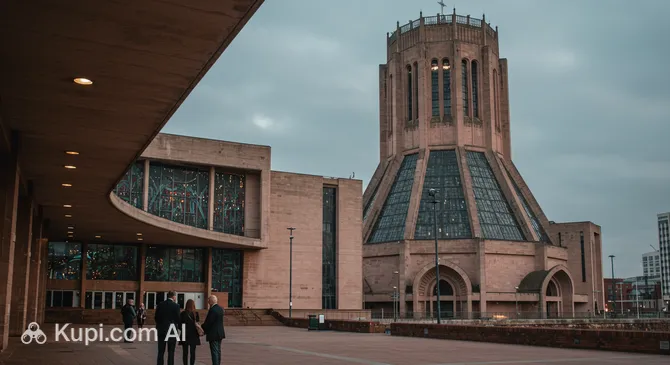
Liverpool Metropolitan Cathedral
Liverpool Metropolitan Cathedral. Иллюстрация. Источник: Kupi.com AI

This cathedral is the main Catholic shrine in the region and the seat of the Archbishop. Its main feature is the futuristic lantern tower, topped with a stained-glass crown, through which a kaleidoscope of multi-colored rays penetrates the interior. Thanks to its bold design, the building has become one of the most recognizable landmarks on the city's skyline.

Unlike traditional Gothic cathedrals, Liverpool Metropolitan Cathedral invites visitors into a space where light, concrete, and colored glass create an atmosphere of solemnity and lightness at the same time. It is a place where religion meets modern art, making it a must-visit for anyone interested in architecture and culture.

Contacts

To clarify information about services or to arrange tours, you can contact the cathedral administration directly. The cathedral is open for communication and always welcomes guests from different parts of the world.

Below are the current contact details for Liverpool Metropolitan Cathedral:

How to contactContact
AddressCathedral House, Mount Pleasant, Liverpool L3 5TQ, UK
Phone+44 151 709 9222
Websitewww.liverpoolmetrocathedral.org.uk

What to Do

Inside the cathedral, a breathtaking sight awaits you: a vast circular hall where the central altar is located directly under the lantern. Be sure to take the time to just sit on one of the benches and watch how sunlight, passing through the blue and gold stained glass, transforms the space. The circular seating arrangement symbolizes the unity of the community and allows every visitor to feel part of what is happening.

For history buffs, the underground crypt is of particular interest. It is the only part of the grand pre-war project that was realized, and its massive brickwork creates a striking contrast with the light structures of the upper church. In a small museum at the cathedral, you can see models and drawings showing what this temple could have looked like in the last century.

If you're lucky, you might catch a rehearsal or a choral music concert. The cathedral organ is famous for its powerful and clear sound, which, combined with the unique acoustics of the concrete cone, makes a lasting impression even on those far from religion. Before leaving, climb the wide grand staircase at the entrance — it offers an excellent panoramic view of the Liverpool streets.

Getting There

This architectural masterpiece is located in the heart of the city of Liverpool on Mount Pleasant. Thanks to its central location, getting there is easy from almost anywhere in the city. The most pleasant way is a short walk from the main railway stations: the journey from Liverpool Lime Street or Liverpool Central takes only about 10–15 minutes.

If you prefer public transport, numerous buses connecting the center with the outskirts stop near the cathedral. For those using taxi services, the trip from the port or shopping districts will be quick and comfortable. Drivers can use paid public parking lots located within walking distance of the cathedral building.

The walk to the cathedral itself is an interesting route, allowing you to see the contrast between the historical buildings and the modern university structures that surround this unusual edifice.

Ближайший город: Liverpool

History & Facts

The history of the cathedral's creation is full of dramatic turns and bold architectural ambitions. The first plans to build a grand Catholic cathedral appeared as early as 1853, but the path to their realization stretched over a century. In the 1930s, the famous architect Sir Edwin Lutyens proposed a design that was intended to eclipse St. Peter's Basilica in Rome with its gigantic dome. However, due to the outbreak of the Second World War and a lack of funds, construction stopped at the crypt stage.

In the post-war years, it became clear that the original design was too expensive and complex, so in 1959 a new competition was announced for an avant-garde design. The winner was Frederick Gibberd, who proposed an absolutely revolutionary form. His vision allowed for the construction of a modern building in just five years — from 1962 to 1967, which is a record short time for structures of this scale.

Today, the Liverpool Metropolitan Cathedral, affectionately nicknamed "Paddy's Wigwam" by locals, is considered one of the most striking examples of post-war modernism. It has become an important symbol of the city, embodying renewal and faith in the future.

Time Needed

To leisurely explore the main hall, admire the play of light on the stained glass, and study the interior details, most travelers need about 1 hour. This time is quite sufficient for a general introduction to the architecture and atmosphere of the sanctuary.

If you plan to descend into the historic Lutyens Crypt, visit the local museum, and perhaps stay for an organ concert or Mass, you should set aside 2 hours or more. The cathedral has unique acoustics, so musical events here deserve special attention in your schedule.

Working Hours

The cathedral doors are open to everyone daily. It usually welcomes visitors from 07:30 to 18:00. This schedule is convenient for both morning pilgrims and tourists strolling through the city during the day.

However, it is important to note that during solemn services, holidays, or special musical events, access to certain parts of the cathedral (e.g., the altar or the crypt) may be temporarily restricted. It is recommended to check the service schedule on the official cathedral website before visiting.

7:30 – 18:00

Nearby

The area around the cathedral is rich in cultural and historical sites, so a visit can easily be combined with exploring other iconic locations. A stroll through Liverpool will offer many discoveries — from mysterious underground tunnels to legendary sites associated with music and sports.

NameDistance
Quirky Quarter0.8 km
Liverpool Cathedral0.9 km
St James's Mount and Gardens0.9 km
Kazimier Garden0.9 km
Central Library0.9 km
Walker Art Gallery0.9 km
Liverpool ONE1.2 km

Reached the end of the page?

That means the route is fully explored