Support

Western Approaches

About

Hidden beneath ordinary city streets, the Western Approaches Museum is a unique historical space. This top-secret underground bunker was once the "nerve center" where the strategically vital Battle of the Atlantic was coordinated. For those who appreciate authentic history, this place will be a true discovery, as it has preserved its original appearance since 1945.
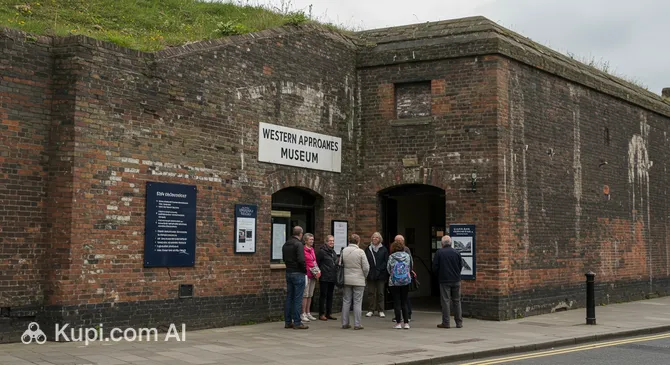
Western Approaches
Western Approaches. Иллюстрация. Источник: Kupi.com AI

This site in Liverpool is more than just a typical exhibition; it is an authentic military headquarters. Great Britain has carefully preserved the bunker's interiors and equipment, allowing visitors to literally step back in time. There are no artificial sets here—only the real walls, documents, and tools used by officers during those fateful years.

The significance of Western Approaches cannot be overstated. It was the brain center where movements were analyzed and convoy routes were mapped out. Today, the museum is recognized as one of the most captivating military history monuments, offering guests a rare glimpse behind the scenes of secret operations from the mid-20th century.

Contacts

For more details or to book group tours, you can use the museum's official contact information.

How to contactContact
Address1-3 Rumford St, Liverpool L2 8SZ, UK
Phone+44 151 227 2008
Websiteliverpoolwarmuseum.co.uk

What to Do

At Western Approaches, an exciting journey through the labyrinth of a secret bunker awaits you. Visitors can move freely between rooms that were once filled with the clatter of teletype machines and the intense whispers of staff officers. You will have the chance to personally examine original documents, maps, and tools used to track positions in the open ocean.

Special attention should be paid to the technical equipment. Here, you will find one of only two surviving telephones that had a direct link to Winston Churchill's own War Rooms in London. Seeing this device immediately conveys the high status this facility held within the British command hierarchy.

Beyond studying the maps, guests are encouraged to simply absorb the atmosphere of the era. Authentic artifacts, furniture, and even small personal items belonging to the staff create a feeling that the shift ended only moments ago. It is the perfect place to feel, if only for a moment, like a strategist whose decisions impact the lives of thousands.

Getting There

The museum is located at 1-3 Rumford St, right in the heart of the city. Thanks to its central location, getting to Western Approaches is easy. If you are in the city center, it is a pleasant walk of no more than 10 minutes from the famous Pier Head area or the Liverpool ONE shopping complex.

For those preferring public transport, the nearest suburban rail and metro stations are James Street and Moorfields. From there, you can reach the bunker entrance on foot in just a couple of minutes. Plenty of city buses passing through the business district also stop nearby.

If you value comfort or are in a hurry, you can always use a taxi or popular ride-sharing services. The trip from Liverpool Lime Street, the main railway station, will be short and inexpensive, as the distance is just over a kilometer.

Ближайший город: Liverpool

History & Facts

The history of this site was once shrouded in the strictest secrecy. Western Approaches functioned as a top-secret command center where naval and air operations were coordinated. This was the hub where critical information on movements was gathered and analyzed to develop winning strategies. During its operation, only a very limited circle of people knew the bunker existed.

Remarkably, after the operations ended in 1945, the facility was simply locked up and preserved. The doors were closed, and the interiors remained untouched for decades. Thanks to this, today we can see the bunker almost exactly as it was when the staff left on the day the conflict ended. This makes the museum not just an exhibition, but a genuine time capsule.

The museum's location itself highlights the historical significance of the city. Liverpool has come a long way from a modest settlement whose name once meant "muddy pool" to one of the most important strategic and cultural centers visited by people from all over Great Britain. The bunker's activities remain one of the most fascinating, yet hidden, chapters in the city's annals.

Time Needed

To explore all the rooms at a leisurely pace, study the documents on display, and soak in the atmosphere of this historical site, most tourists need about 1.5–2 hours. This is usually enough time to walk through all the accessible rooms and see the main exhibits.

If you are a dedicated history enthusiast who enjoys reading every archival record, your visit could last for half a day. The interactive elements and authentic setting encourage a deep dive into the past, so it is best not to schedule your next activity too closely to your museum visit.

Working Hours

The museum is open to visitors daily, making it easy to include in any travel itinerary. The bunker doors open in the morning and welcome guests until the end of the working day:

Monday — Sunday: 10:00 AM – 5:00 PM.

Please note that last entry is usually permitted one hour before closing to ensure you have enough time to explore the entire exhibition.

10:00 – 17:00

Nearby

A visit to the underground bunker is just one part of what this amazing city has to offer. A stroll through the surrounding area will allow you to switch from history to an atmosphere of music, shopping, and architectural grandeur.

Many iconic sites are within walking distance, making it easy to plan a full day's itinerary. Below is a list of interesting attractions located nearby:

NameDistance
Mowgli Street Food, Water Street0.1 km
Moose Coffee0.2 km
British Music Experience0.3 km
The Cavern Club0.4 km
Cavern Walks0.4 km
The Beatles Statue0.4 km
Dale Street Kitchen & Bar0.5 km

Reached the end of the page?

That means the route is fully explored