Support

Aviva Stadium

About

Aviva Stadium is a modern multi-purpose sports arena located in Dublin, the capital of Ireland. This iconic structure is the home ground for the national football and rugby teams, making it a true hub of sporting life and a point of pride for the Irish. The arena was built on the site of the historic Lansdowne Road Stadium and opened in 2010.
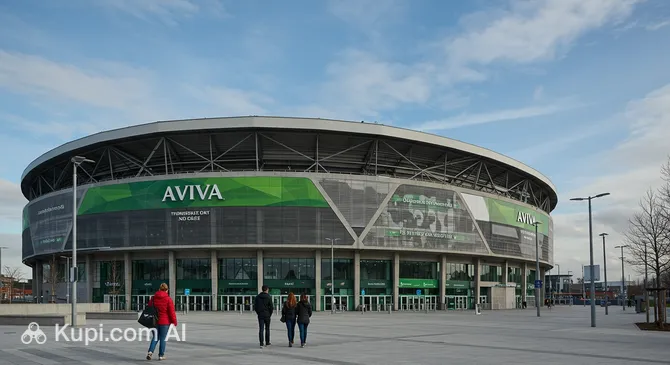
Aviva Stadium. Illustration.
Source: Kupi.com AI

Traveler photos:

One of the stadium's most notable features is its unique wave-like and asymmetrical design, which was developed to accommodate the dense urban surroundings. The North Stand is noticeably lower and consists of a single tier, while the other stands rise above it, creating a futuristic and easily recognizable silhouette. The arena can accommodate 51,711 spectators, providing a fantastic atmosphere during matches and concerts.

The stadium received its current name in 2009 through a sponsorship agreement with the Aviva insurance group. Today, Aviva is not just a sports facility but an important architectural landmark in Dublin, attracting tourists with its impressive design. Stadium tours are available for anyone interested, offering a peek behind the scenes of sporting life and a chance to feel like a part of major sports.

Contacts

For the most up-to-date information on events, tours, and opening hours, it is recommended to visit the stadium's official website. Below are the main contact details for reaching the Aviva Stadium administration.

How to contactContact
AddressLansdowne Rd, Dublin 4, Ireland
Phone number+353 1 238 2300
Websitewww.avivastadium.ie

What to Do

The primary purpose of Aviva Stadium is, of course, sports. The arena serves as the main venue for exciting football and rugby matches. Visitors can immerse themselves in the unique atmosphere during games of the Ireland national teams in these two sports, as well as watch matches from various club tournaments. The stadium also hosts major international competitions; for instance, it held the UEFA Europa League Final in 2011 and again in 2024, making it a landmark site for any sports fan.

Beyond sporting battles, Aviva is a popular concert venue. Many world stars, such as Robbie Williams, Lady Gaga, and AC/DC, have performed on its stage, gathering tens of thousands of music fans. Thus, a trip to Dublin can offer not only sporting thrills but also vivid musical experiences if your visit coincides with one of these grand shows. Checking the event calendar on the official stadium website before your trip is a great idea to ensure you don't miss an interesting event.

For those who want to see behind the scenes of sporting life, the stadium offers fascinating guided tours. During the tour, you can walk through the tunnel players use to enter the field, visit team dressing rooms, the media center, and even sit on the substitutes' bench. This is a unique opportunity to feel like part of the world of major sports, learn more about the arena's history, and take unforgettable photos in places usually off-limits to spectators.

Getting There

Aviva Stadium is conveniently located in the Ballsbridge area, just a couple of kilometers from the center of Dublin, making it easily accessible for tourists. The simplest and fastest way to reach the arena is by using the DART (Dublin Area Rapid Transit) suburban trains. The railway line runs directly under the stadium's West Stand, and the Lansdowne Road station is just a few steps from the entrance. DART trains depart from central stations such as Connolly, Tara Street, and Pearse, allowing for an easy commute from any part of the city.

You can also reach the stadium via numerous city buses. Several Dublin Bus routes pass in the immediate vicinity of the arena. Depending on your location in the city, you can take routes heading towards the Ballsbridge, Ringsend, or Sandymount areas. Main routes stopping near the stadium include No. 4, 7, 7a, C1, and C2. It is recommended to check the current schedule and routes on the official Dublin Bus website before traveling, as there may be changes to traffic on major event days.

If you prefer walking and want to get to know the city better, the walk from the center of Dublin—for example, from St. Stephen's Green—to the stadium will take about 25–30 minutes. It's a pleasant stroll through picturesque neighborhoods. Additionally, you can always use taxi or car-sharing services. This is a convenient, though more expensive, option. Keep in mind that on match or concert days, traffic around the stadium can be congested, and there is no parking for private cars on the arena grounds.

Nearest city: Dublin

History & Facts

The history of Aviva Stadium is inextricably linked to its famous predecessor—Lansdowne Road Stadium, which was one of the oldest sporting venues in the world. Founded back in 1872, it served as the primary arena for Irish rugby and football for over a hundred years, becoming a truly iconic site. However, over time, it became clear that the historical structure needed a complete modernization, and in the early 2000s, the decision was made to demolish it and build a new, modern arena on the same spot.

The design of the future Aviva Stadium began in 2005, with construction starting in 2007 and finishing in May 2010. An international duo of architects worked on creating this impressive facility: the American firm Populous, known for its stadium designs worldwide, was responsible for the futuristic exterior, while the Irish firm Scott Tallon Walker handled the interior design. They faced a challenging task: to build a world-class arena that would blend harmoniously into the existing urban landscape.

The main difficulty during construction was the strict site-related constraints. The architects were forbidden from moving the training pitches of neighboring rugby clubs, demolishing dense residential housing, or affecting the nearby DART railway station. These conditions led to a unique and bold architectural solution—the stadium's asymmetrical, wave-like design. The North Stand was designed significantly lower than the others to avoid overshadowing neighboring houses, giving the arena its famous and easily recognizable silhouette, which has become one of the hallmarks of modern Dublin.

Time Needed

For a detailed look at Aviva Stadium, an organized guided tour is best. A standard tour usually lasts about one hour. During this time, visitors get a unique opportunity to peek behind the scenes of the sports arena: visit the player dressing rooms, walk through the tunnel leading to the pitch, and see the stadium from a perspective usually reserved for athletes and staff. This is plenty of time to feel the atmosphere of this legendary place and learn its main secrets.

However, the total time you spend at the stadium can vary significantly. If your goal is not just a tour but attending a football or rugby match, plan to spend at least 3–4 hours. This time includes arriving early, passing through security, the match itself with halftime, and time to exit the arena after the final whistle. Attending a concert will also require roughly the same amount of time, turning the visit into a half-day event.

Even if you don't plan on taking a tour or attending an event, it's worth setting aside about 20–30 minutes just to walk around the exterior and take photos. Its futuristic, wave-like architecture is particularly impressive and is one of modern Dublin's landmarks. Before visiting, it is highly recommended to check the official Aviva Stadium website for current information on tour availability and schedules, as they may be canceled on event days.

Working Hours

Guided tours of Aviva Stadium, which offer a peek behind the scenes of the sports arena, are usually held year-round, but their schedule can change. Currently, according to official information, standard stadium tours are temporarily suspended indefinitely. Consequently, there are no regular opening hours for visits. Before planning a visit, it is highly recommended to check the official stadium website for the current status and the possible resumption of tours.

Despite the suspension of tours, the stadium continues to function as the primary venue for major sporting events and concerts. Access to the arena on event days is only open to ticket holders for the respective event. If you plan to attend a match or a show, tickets should be purchased well in advance through official distributors, as they are in high demand.

Nearby

Visiting Aviva Stadium is a wonderful opportunity to explore other iconic places in Dublin. Thanks to the arena's convenient location, many cultural and historical sites are within a short drive or a pleasant walk, helping you dive deeper into the atmosphere of Ireland's capital.

By combining a stadium visit with sightseeing nearby, you can turn a trip to a sporting or musical event into a full cultural adventure. Below is a list of interesting places located near Aviva Stadium that are definitely worth your attention.

NameDistance
3Arena1.4 km
National Museum of Ireland – Archaeology1.8 km
EPIC The Irish Emigration Museum2 km
Trinity College Dublin2 km
Whelan's2.5 km
The Temple Bar Pub2.6 km
Dublin Castle2.7 km

Have you reached the end of the page?

So the route has been studied inside and out