Support

St Patrick's Cathedral

About

St. Patrick's Cathedral is not just the largest cathedral in Ireland, but also one of Dublin's most iconic architectural and historical landmarks. According to legend, it was built on the very site where, in the 5th century, Saint Patrick himself baptized the first Irish Christians at an ancient spring, making it one of the oldest and most significant religious sites on the island.
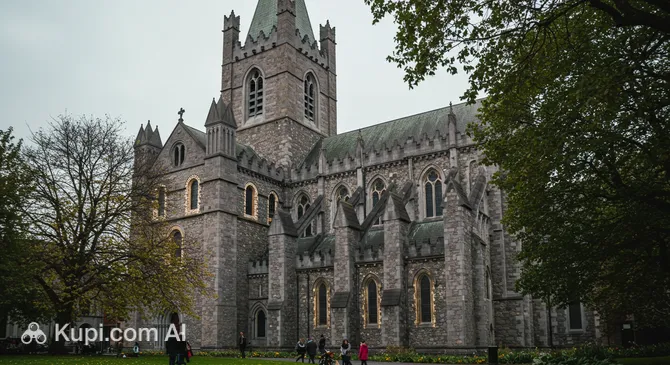
St Patrick's Cathedral. Illustration.
Source: Kupi.com AI

Traveler photos:

Today, the cathedral officially belongs to the Anglican Church of Ireland and bears the full name The National Cathedral and Collegiate Church of Saint Patrick, Dublin. Over the centuries, it has been more than just a place of prayer; it has been a vital center of the city's spiritual and social life, witnessing key events in the country's history.

An interesting fact: the cathedral is headed not by a bishop, but by a Dean, and the most famous of them was the renowned satirist Jonathan Swift, author of "Gulliver's Travels." A visit to the cathedral is a unique opportunity to immerse yourself in rich history, enjoy magnificent Gothic architecture, and feel the true spirit of old Ireland.

Contacts

To plan your visit to St. Patrick's Cathedral, check the current service schedule, find out ticket prices, or get information about special events, it is recommended to contact the cathedral representatives directly. All necessary contact information is provided in the table below.

How to contactContact
AddressSt Patrick's Close, Dublin, D08 H6X3, Ireland
Phone number+353 1 453 9472
Websitewww.stpatrickscathedral.ie

What to Do

A visit to St. Patrick's Cathedral is a chance to touch centuries of Ireland's history and culture. Guests can take a close look at the magnificent Gothic architecture, delicate stained glass, numerous sculptures, and memorial plaques dedicated to prominent Irish figures. The interior decoration is of particular interest: carved wooden panels, patterned floor tiles, and majestic vaults that create a unique atmosphere. Inside the cathedral, there is also a special Discovery Space where you can learn more about the temple's history and listen to recordings of its famous choir using touchscreens and tablets.

One of the main draws for visitors is the grave of Jonathan Swift, author of "Gulliver's Travels," who served as the Dean of the cathedral from 1713 to 1745. Near his burial site, you can see an epitaph he wrote himself and his bust. Additionally, the cathedral houses a small museum with an exhibition telling the story of its rich history and St. Patrick's role in the Christianization of the island.

The cathedral remains an active place of worship, so visitors can not only view it as a historical monument but also attend one of the services held daily. Organ concerts and choir performances, famous throughout Dublin, are also regularly held here. For a deeper dive into history, guided tours are available, as well as temporary exhibitions dedicated to various aspects of Irish culture and Christianity.

Getting There

St. Patrick's Cathedral is conveniently located in the heart of Dublin, making it easily accessible for travelers. If you are exploring the city center on foot, reaching the cathedral is quite simple. It is just a few minutes' walk from bustling spots like the Grafton Street shopping area and the picturesque St. Stephen's Green park, allowing you to easily include it in your walking tour of the capital's main attractions.

For those who prefer public transport, numerous bus routes pass near the cathedral, including 49, 54A, 56A, and 77A. This is one of the most convenient ways to reach your destination from various parts of the city. Additionally, you can use the modern Luas tram line (Green Line). The nearest stop to the cathedral is St. Stephen’s Green, from which it is a pleasant short walk to your destination.

If you are traveling by car, public parking can be found near the cathedral. However, please note that parking spaces in central Dublin are limited and can fill up quickly. Therefore, to avoid unnecessary hassle, using public transport is recommended. Alternatively, you can always take a taxi, which will take you directly to the cathedral entrance.

Nearest city: Dublin

History & Facts

The history of St. Patrick's Cathedral dates back to the deep past. Its foundation in 1191 is linked to an ancient well where, according to legend, Saint Patrick himself baptized the first Irish people. By the following year, 1192, the first Archbishop of Dublin, John Comyn, officially granted the site the status of a cathedral church, laying the foundation for the future greatness of one of Ireland's main symbols.

The cathedral began to take its current shape in the 13th century, when a major reconstruction was carried out by order of King Henry III of England. It was then that the building acquired the characteristic features of Early English Gothic, which still amaze visitors today. In the following centuries, the architectural ensemble continued to develop: the elegant Lady Chapel was added in 1270, and after a devastating fire in 1362, Minot's Tower and the west nave were restored and rebuilt.

Over time, a whole complex of ancillary buildings grew around the cathedral, including the Archbishop's Palace, emphasizing its central role in city life. Throughout its history, the temple has been not just a religious center but also an important arena for significant events. An interesting feature was its legal management: power was shared between the Dean and the Archbishop, creating a unique administrative structure that reflected the cathedral's complex position in the hierarchy.

Time Needed

To explore St. Patrick's Cathedral in Dublin, it is recommended to set aside 1 to 2 hours. This is generally enough time for a self-guided tour of the cathedral's main highlights. During this period, you can leisurely walk through the main halls, appreciate the grandeur of the Gothic architecture, view the famous stained glass windows, and examine the numerous monuments and epitaphs, including the grave of Jonathan Swift.

If you want to dive deeper into the history of this iconic site for all of Ireland, you should plan for more time. For instance, joining a guided tour, which reveals many interesting details and legends, usually adds about an hour to the visit. You should also consider the schedule of services and organ concerts: if you wish to hear the famous choir or magnificent organ music, your visit may last significantly longer.

Thus, for most tourists, a one-and-a-half-hour walk is the optimal choice to get a full impression of the cathedral. However, enthusiasts of history and architecture, or those seeking spiritual solitude, can easily spend half a day here, enjoying the atmosphere and exploring every corner of this unique monument.

Working Hours

St. Patrick's Cathedral in Dublin is open to visitors year-round, but opening hours may vary. Generally, the cathedral welcomes guests on weekdays from 9:30 to 17:00, and on Saturdays from 9:00 to 18:00. On Sundays, the schedule depends on service times. As it is an active church, the schedule may change depending on the season and due to services or special events. Therefore, it is highly recommended to check current opening hours on the official attraction website before planning your visit.

To guarantee entry and avoid queues, especially during the high tourist season, it is recommended to purchase tickets in advance online. While not always mandatory, advance purchase will help you save time and better plan your exploration of Ireland's cultural heritage. Usually, no special booking is required for a standard visit, but different rules may apply for group tours or special events.

DayOpening hours
Monday9:30 – 17:00
Tuesday9:30 – 17:00
Wednesday9:30 – 17:00
Thursday9:30 – 17:00
Friday9:30 – 17:00
Saturday9:00 – 18:00
Sunday9:00 – 10:30, 1:00 – 14:30, 4:30 – 18:00

Nearby

Visiting the magnificent St. Patrick's Cathedral is just the beginning of your journey into Dublin's rich history. Its surroundings are packed with iconic sites just a few minutes' walk away. A stroll through this area will allow you to dive deeper into the atmosphere of the old city and see how closely eras and cultures are intertwined here.

The cathedral's location is ideal for continuing your journey through the capital of Ireland on foot. Literally around the corner, you will find other famous cathedrals, ancient libraries, and even legendary pubs. Exploring these places will enrich your experience and help you form a more complete picture of life and history in this amazing city.

NameDistance
Marsh’s Library0.1 km
Dublin Castle0.5 km
Whelan's0.5 km
Smock Alley Theatre0.6 km
The Temple Bar Pub0.8 km
Bow St. Distillery1 km
Guinness Storehouse1 km

Have you reached the end of the page?

So the route has been studied inside and out