Support

Assisi

About

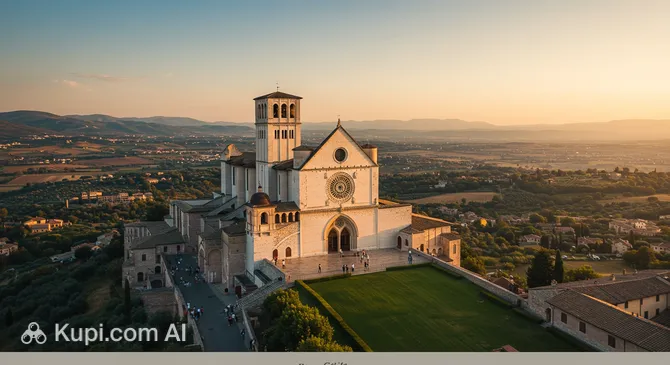
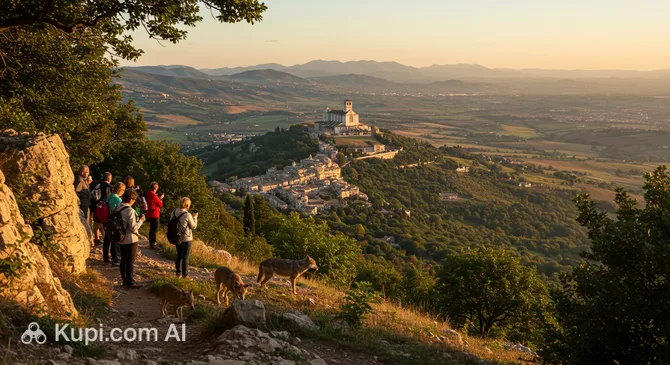
Assisi is not just a city, but a true jewel of Umbria and one of the most significant spiritual sites in Italy. Perched on the slopes of Mount Subasio, this medieval town enchants visitors with its peaceful atmosphere, narrow stone streets, and breathtaking views of the surrounding valleys. Assisi is world-renowned as the birthplace of Saint Francis, the founder of the Franciscan Order, which has left an indelible mark on its history and culture.
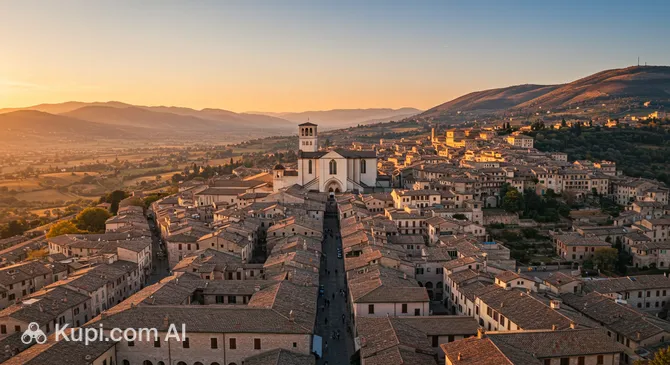
Assisi. Illustration.
Source: Kupi.com AI

The city is located in the central part of Italy, in the Umbria region, and has a population of about 28,000 people. The climate here is typically Mediterranean, with warm sunny summers and mild, sometimes rainy winters, making a visit to Assisi comfortable at almost any time of year. Its elevated geographical position provides the city not only with picturesque panoramas but also a pleasant coolness during the summer months.

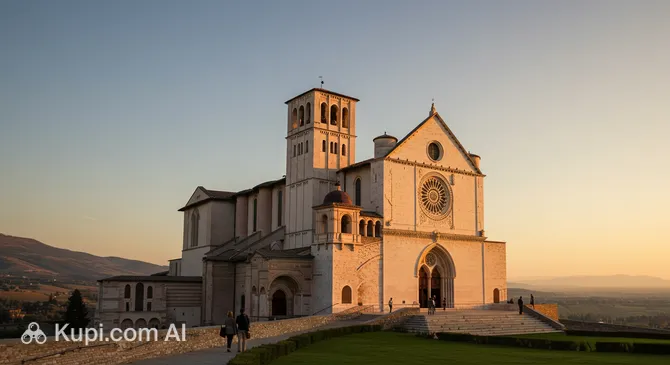
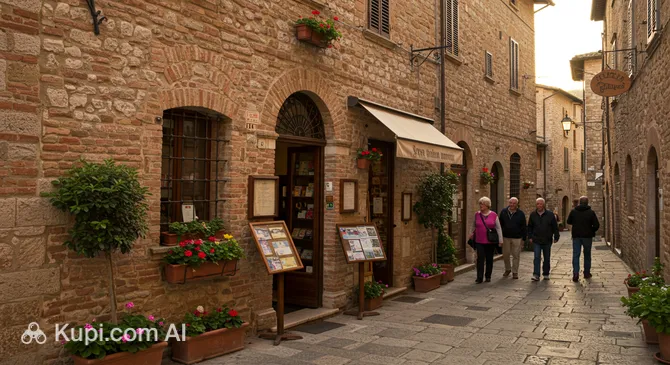
The main attraction attracting pilgrims and tourists from all over the world is, undoubtedly, the Basilica of Saint Francis (Basilica di San Francesco d'Assisi), a UNESCO World Heritage site. This majestic complex, consisting of two churches — the Upper and the Lower — is decorated with famous frescoes by Giotto and Cimabue. It is also worth visiting the Cathedral of San Rufino, where Saint Francis was baptized, and the mighty Rocca Maggiore fortress, which offers a stunning view of the city and its surroundings from its heights. A stroll through the ancient streets of Assisi is an unforgettable experience in itself, allowing you to immerse yourself in the medieval atmosphere.

Assisi is a place where history, art, and spirituality intertwine to create a unique aura. A visit to this city will leave a deep impression on every traveler seeking inspiration and tranquility. Do not miss the opportunity to touch its centuries-old wisdom and beauty.

You can find more interesting facts on the Assisi city history page.
Weather Overview

The weather in Assisi is characterized by warm, sunny summers and mild, wetter winters. The hottest months are July and August, with an average temperature of about 24.4°C and maximum values that can reach 30.2°C. In winter, especially in January, the average temperature is about 4.9°C, while night minimums can drop to 1.2°C. Precipitation is distributed unevenly throughout the year: the driest month is July (about 1 mm of precipitation). November is one of the wettest months, along with December, when precipitation is about 4 mm. Overall, expect warm summers with little precipitation and cool, sometimes rainy winters. For more detailed information, check the full description of the Assisi climate.

Average monthly temperature

Average monthly precipitation

Interesting Facts

In addition to its world-famous shrines, Assisi hides many amazing details and stories that make it even more attractive to the curious traveler. Here are just a few interesting facts about this unique city in Italy:

Church of Santa Maria sopra Minerva. Illustration.
Source: Kupi.com AI

Traveler photos:

  • Many buildings in Assisi are constructed from a special pink stone quarried from Mount Subasio. At sunset, the city takes on a magical warm hue, creating an unforgettable sight.

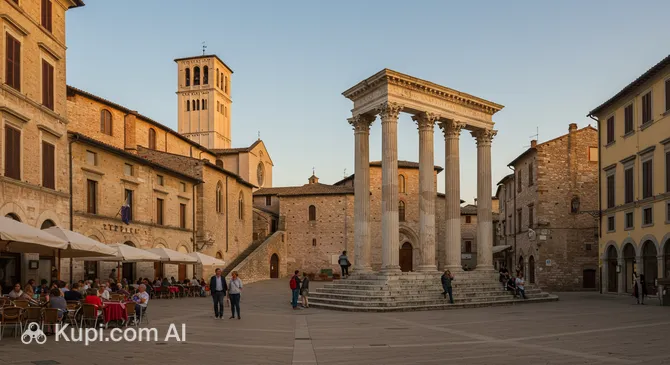
  • In the very heart of the city, on Piazza del Comune, stands the Church of Santa Maria sopra Minerva, whose facade is a perfectly preserved portico of an ancient Roman temple from the 1st century BC dedicated to the goddess Minerva.

  • Not far from the famous basilica lies the Bosco di San Francesco — the "Wood of Saint Francis." This is a restored forest area of more than 60 hectares with walking trails, symbolizing the saint's deep connection with nature and offering peace and beautiful views.

  • On the slopes of Mount Subasio, away from the city bustle, is the Eremo delle Carceri — a secluded hermitage where Saint Francis and his followers spent time in prayer. This site consists of small chapels and caves built directly into the rocks and still preserves an atmosphere of deep spirituality.

How to Get There

Getting to the spiritual heart of Umbria, the city of Assisi, is possible through several convenient methods. Whether you prefer the speed of air travel or the scenic views from a train window, you will find a suitable route for your journey to this historic city.

One of the most popular ways to reach Assisi is by flying to one of the nearby airports. Although there is no airport in the city itself, several regional and international air hubs are within a reasonable distance.

The closest and most convenient option is Perugia Sant'Egidio Airport (PEG), located in the city of Perugia, just about 9.1 km from Assisi. This small regional airport serves some European destinations. A trip from the airport to the center of Assisi by taxi or pre-booked transfer will take about 30-35 minutes. Bus routes are also available.

Another good option is the international Ancona Falconara Airport (AOI), located in the city of Ancona, about 85.5 km east of Assisi. This is a medium-sized airport receiving flights from various European cities. The road from Ancona to Assisi by car (taxi or rental) will take approximately 2.5 hours.

For those who prefer to fly into a larger international hub, Florence Peretola Airport (FLR) should be considered. It is located in Florence, about 141 km from Assisi. Given the distance, a direct taxi transfer can take about 3.5-4 hours and be expensive. A more common option is to get from the airport to Florence's central station (Santa Maria Novella) and from there take a train to Assisi (total travel time will be about 3-3.5 hours, including the transfer to the station). You can also rent a car.

For clarity, here is summary information on the main airports from which you can reach Assisi:

AirportPassenger trafficDistance
Sant Egidio Airport532 4749 km
Ancona Falconara Airport600 06585 km
Miramare Airport321 552106 km
Luigi Ridolfi134 000132 km
Firenze-Peretola Airport3.5 mln141 km

Railway connection is another convenient way to get to Assisi. The city has its own railway station, Stazione di Assisi, which is located at the foot of the hill, about 3 km from the historical center. From the station, the city center can be easily reached by local bus (Line C) or taxi. Trains to Assisi regularly depart from major Umbrian cities, as well as from Rome and Florence, often with one transfer.

If you are traveling from Rome, your route will most likely pass through one of the capital's main stations, for example, Roma Termini Station (XRJ). This is Rome's largest railway hub, from where trains depart to all of Italy, including directions convenient for transferring to a train to Assisi. The distance from Rome to Assisi by rail is about 130-170 km, and the journey usually takes 2-3 hours.

Similarly, when traveling from Florence, the main point of departure or transfer will be Firenze Santa Maria Novella Station (ZMS). This is Florence's central station, offering many routes, including those leading towards Umbria and Assisi. The train ride from Florence to Assisi takes approximately 2-2.5 hours.

While Assisi has its own station, data on the main transfer hubs in Rome and Florence, from where you can continue your journey to Assisi, may be useful for route planning:

StationPassenger trafficDistance
Tiburtina Railway Station51 mln129 km
Roma Termini Station150 mln130 km
Ostiense Railway Station5.8 mln134 km
Firenze Campo di Marte Railway Station1.8 mln134 km
Firenze Santa Maria Novella Station59 mln136 km

In addition to air and rail links, Assisi is easily accessible by car. The city is well-connected by a network of highways to major Italian cities. For example, from Rome (about 170 km), the road will take about 2-2.5 hours, and from Florence (about 175 km) — about the same. Traveling by car gives you the freedom to explore the picturesque surroundings of Umbria on your way to Assisi.

Main Attractions

Assisi, a city with a rich history and spiritual heritage, offers visitors many unique attractions. Immerse yourself in the atmosphere of the Middle Ages and spirituality by exploring its treasures. Here are some of the key places that you should definitely include in your itinerary:

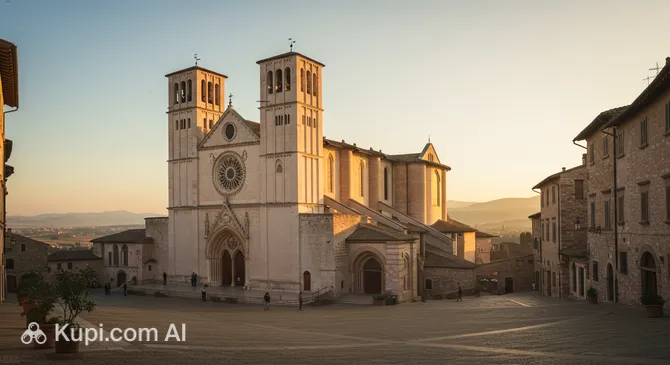
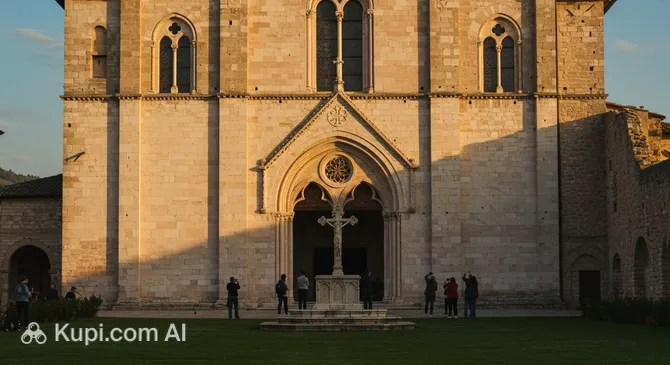
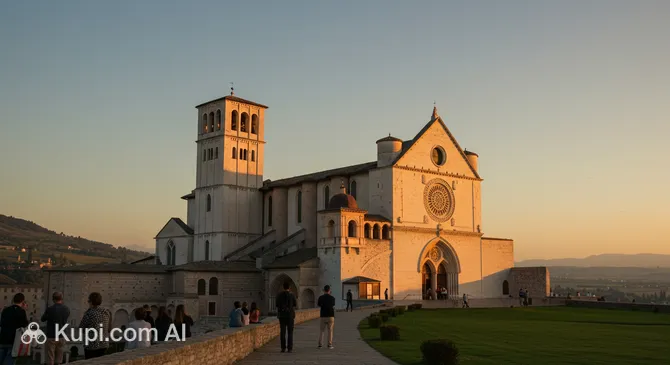
One of the city's main gems is the Basilica of Saint Francis of Assisi. This majestic complex, included in the UNESCO World Heritage list, consists of two churches — the Upper and the Lower — as well as a crypt where the relics of Saint Francis rest. The Basilica captivates the imagination with famous frescoes by medieval masters, including Giotto and Cimabue, and is a major pilgrimage center for believers from around the world who wish to connect with the life and legacy of the founder of the Franciscan Order.

Basilica of Saint Francis of Assisi. Illustration.
Source: Kupi.com AI

Traveler photos:

No less significant is the Basilica of Saint Clare (Basilica di Santa Chiara). This elegant Gothic structure, built from the pink and white stone characteristic of the region, is dedicated to Saint Clare — the faithful companion of Saint Francis and the founder of the Order of Poor Clares. Inside the basilica, the relics of the saint are kept, as well as the famous crucifix from the Church of San Damiano, which, according to tradition, spoke to Saint Francis, calling on him to restore the church.

Basilica of Saint Clare. Illustration.
Source: Kupi.com AI

Traveler photos:

Be sure to visit the Cathedral of San Rufino (Cattedrale di San Rufino). This cathedral, dedicated to the first bishop of Assisi, Saint Rufinus, is the city's main church. Its magnificent 12th-century Romanesque facade is considered one of the best examples of this style in Umbria. The cathedral is of particular historical value because Saint Francis and Saint Clare, and according to some sources, Emperor Frederick II, were baptized here in the ancient baptismal font.

Cathedral of San Rufino. Illustration.
Source: Kupi.com AI

Traveler photos:

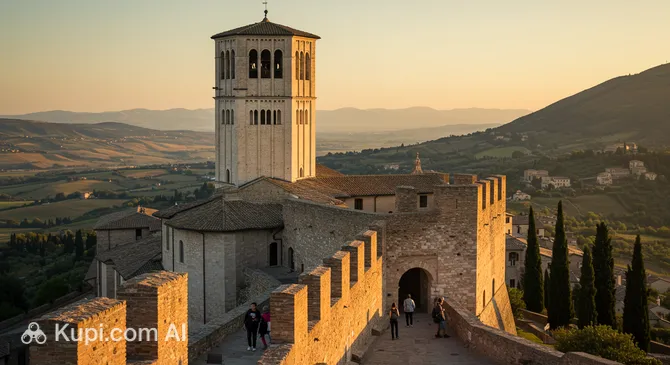
To enjoy breathtaking views of the city and the surrounding Umbrian valley, climb up to Rocca Maggiore. This mighty medieval fortress, towering on a hill above Assisi, was built in the 12th century and rebuilt several times. A walk along its walls and towers will not only give you unforgettable panoramic photos but also allow you to dive into the turbulent history of the region, feeling like a guardian of the ancient city.

Rocca Maggiore. Illustration.
Source: Kupi.com AI

Traveler photos:

The heart of Assisi's social life for centuries has been Piazza del Comune. This historic square has retained its medieval charm and is surrounded by significant buildings: the Palazzo dei Priori (city hall), the Torre del Popolo tower, and the Palazzo del Capitano del Popolo. The gem of the square is the facade of the Church of Santa Maria sopra Minerva, which is actually a perfectly preserved portico of an ancient Roman temple from the 1st century BC dedicated to the goddess Minerva. Today, it is a lively place where it is pleasant to have a coffee and watch the city life.

Piazza del Comune. Illustration.
Source: Kupi.com AI

Traveler photos:

Local Cuisine

The cuisine of Assisi is the embodiment of the best traditions of the Umbria region, often called the "green heart of Italy." Gastronomy here is characterized by simplicity, the use of the freshest local products, and a deep connection to the land. Expect hearty, aromatic dishes prepared according to ancient recipes passed down from generation to generation. This is a cuisine that warms the soul and gives true taste pleasure.

Among the dishes you must try in Assisi are strangozzi — a local type of pasta often served with black truffle, another treasure of Umbria, or with a simple but aromatic tomato sauce. Be sure to taste torta al testo — a traditional Umbrian flatbread baked on a special stone (testo) and served with various fillings, such as local sausages, cheeses, or greens. Umbrian meat delicacies are also famous, especially sausages and ham (salumi), and wild boar (cinghiale) dishes. And, of course, one cannot forget the excellent local olive oil, which is the base of many dishes.

Regarding drinks, Umbria is a well-known wine region. In Assisi and its surroundings, you can enjoy famous wines such as the full-bodied red Sagrantino di Montefalco DOCG or the refreshing white Orvieto Classico DOC. Among non-alcoholic drinks, as in all of Italy, there is a cult of coffee — espresso or cappuccino will be a great addition to any meal or just a pleasant reason for a small break.

Assaggi Assisi. Illustration.
Source: Kupi.com AI

Traveler photos:

The dining culture in Assisi encourages leisurely enjoyment of food in a cozy setting. Locals and tourists prefer traditional trattorias and osterias, where you can taste authentic home-cooked dishes. Enotecas (wine bars) are also popular, where you can taste local wines paired with light snacks. To get acquainted with the variety of local products and delicacies, it is worth looking into specialized shops or local markets if any are held during your visit. An excellent place to discover the region's gastronomic wealth is Assaggi Assisi, where you can taste and purchase typical products.

Assisi's gastronomic scene charms with its authenticity and commitment to quality. This is not a place for trendy culinary experiments at the expense of tradition, but rather a corner where you can truly experience the taste of real Umbrian cuisine — simple, yet incredibly tasty and memorable. Visiting local establishments and tasting specialties will be an important and very pleasant part of your journey to this amazing city.

Travel Tips

Welcome to Assisi, the city of peace and spirituality! To make your trip to this amazing place in Italy as comfortable and memorable as possible, we have prepared some practical tips. They will help you better navigate and enjoy every moment of your stay in this unique corner of Umbria.

  1. Clothing and Essentials:

    The climate in Assisi is Mediterranean: summers are warm, and winters are mild. In summer, bring light clothing, sunscreen, a hat, and comfortable shoes — you will have to walk a lot, including on cobblestones and hilly terrain. In spring and autumn, warmer clothes and an umbrella will come in handy. For visiting the numerous churches and basilicas (including the Basilica of Saint Francis), a dress code is mandatory: shoulders and knees must be covered. Don't forget an adapter for Italian sockets (Type L, sometimes C/F types fit).

  2. Getting Around Town:

    The historic center of Assisi is best explored on foot. The streets are narrow and steep, but this is how you will feel the atmosphere of the city. For moving between the railway station (located in the valley) and the upper part of the city, local buses (e.g., Line C) operate. Taxis are available but can be more expensive. Renting a car makes sense if you plan trips around Umbria, but for Assisi itself, it is not very practical due to limited traffic zones (ZTL) and parking difficulties.

  3. Finances:

    The local currency is the Euro (€). Bank cards (Visa, Mastercard) are accepted in most hotels, restaurants, and shops, but it is always useful to have some cash for small purchases or at small establishments. ATMs (Bancomat) are easy to find. You can exchange currency at banks or exchange offices, but the rate at an ATM is often better. Tipping in Italy is usually not strictly mandatory, as service charges (servizio incluso or coperto) are often included in the bill. However, if the service was particularly good, you can leave a small amount (5-10% or round up the bill).

  4. Health and Safety:

    Assisi is a very safe city. Nevertheless, standard precautions against pickpockets in crowded tourist spots are always a good idea. Pharmacies (Farmacia) are marked with a green cross; check the schedule for duty pharmacies if you need help after hours. For emergency medical assistance, tourists are recommended to have travel insurance. Europeans can use their EHIC card. If necessary, contact the local hospital (Ospedale di Assisi).

  5. Communication:

    The official language is Italian. In tourist areas, many people speak English, but knowing a few basic phrases in Italian (Buongiorno – Good day, Grazie – Thank you, Prego – You're welcome, Scusi – Excuse me) will be very helpful and bring a smile to the locals. Mobile SIM cards can be purchased at telecom shops. Wi-Fi is available in most hotels and many cafes.

  6. Local Etiquette:

    Italians value politeness. It is customary to say hello when entering a shop or cafe. When visiting churches, maintain silence and respect, take photos only where permitted and without flash. Don't be surprised by Italian expressiveness in communication — it's part of the culture. Riposo (afternoon break, approximately from 13:00 to 16:00) is a sacred time for many shops; plan your shopping with this in mind.

  7. What to Avoid:

    Try not to be overly noisy or provocatively dressed, especially when visiting holy sites — Assisi has deep spiritual meaning for many. Also, avoid trying to haggle in shops with fixed prices — it is not practiced.

  8. Additional Tip:

    Assisi is located on the slope of Mount Subasio. To fully enjoy the views and visit all significant sites, from the Basilica of Saint Francis in the lower part to the Rocca Maggiore fortress at the top, be prepared for climbs and descents. The reward will be stunning panoramas and unforgettable impressions. Don't rush, take breaks, and enjoy every corner of this magical city.

We hope these tips make your journey to Assisi even more pleasant and fulfilling. This city has a special magic, and we are sure it will leave the warmest memories in your heart!

Entertainment & Nightlife

Assisi, known for its tranquility and spiritual atmosphere, transforms in the evening, offering guests cozy corners to relax and enjoy the Italian lifestyle. While you won't find loud nightclubs or districts that stay open until dawn like in major metropolises, Assisi in the evening charms with its intimacy and the opportunity to spend time in a pleasant setting.

Nightlife in Assisi is centered mainly around the main square, Piazza del Comune, and the adjacent streets of the historic center. As twilight falls, numerous bars, enotecas (wine bars), and restaurants open here, many offering outdoor seating during the warm season. The atmosphere is more relaxed and conducive to conversation than rowdy partying. The crowd is mixed — from pilgrims and tourists to locals enjoying an evening aperitif or dinner. Most establishments work until midnight or slightly later, especially on weekends. There is usually no special dress code, but neat casual style is appropriate.

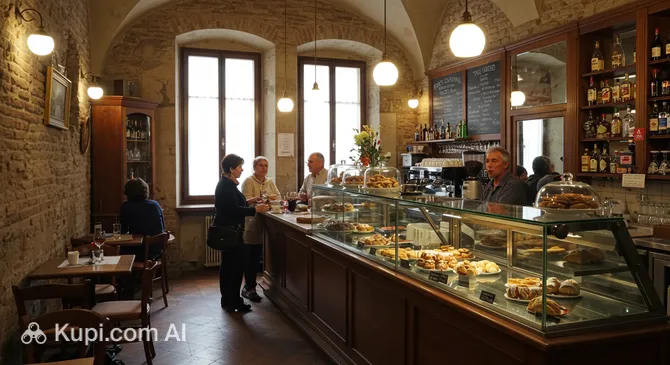
Among the places where you can spend a pleasant evening, several establishments are worth mentioning. For example, Vinti Pastry Shop & Cafe is not only a spot for morning coffee but also a cozy bar where you can enjoy a drink in the evening. For lovers of good wine and local cuisine, Cuisine 83 Enoteca di Mare offers a wide selection of wines and snacks. If you are looking for a restaurant for a special dinner with a beautiful view, look into Le Terrazze di Properzio, where you can enjoy not only the food but also the panorama of the evening city.

Vinti Pastry and Coffee Bar. Illustration.
Source: Kupi.com AI

Traveler photos:

When planning your evening leisure, keep in mind that the best time to visit bars and restaurants is after 19:00-20:00, when the daytime heat subsides and the city comes alive in a new way. Prices in Assisi's establishments correspond to the average level for tourist cities in Italy. Getting around the historic center at night is easiest on foot. If your hotel is far away, you can use a taxi; the staff at the establishment where you spend your evening can usually help with calling a car.

Assisi is a very safe city, and evening walks along its illuminated streets will be a pleasure. Nevertheless, you should always take basic precautions. The areas around the main attractions and the central square are well-patrolled and safe for night walks.

As for daytime entertainment, Assisi offers a rich program for lovers of history, art, and spirituality. Most of the day should, of course, be dedicated to exploring the majestic basilicas, such as the Basilica of Saint Francis and the Basilica of Saint Clare, visiting museums, and strolling through ancient streets. Although there are no large amusement parks in Assisi, its historical and cultural heritage is the main attraction itself. Occasionally, classical music concerts or other cultural events are held in the city, which you can learn about at the local tourist office.

Parks & Museums

Assisi is not only a global spiritual center but also a city where nature and a very rich culture are harmoniously interwoven, offering guests both peaceful green corners for relaxation and an invaluable historical heritage represented in its many shrines, museums, and ancient structures. Here, everyone will find something for the soul, whether it's a quiet walk through the forest or an introduction to masterpieces of medieval art.

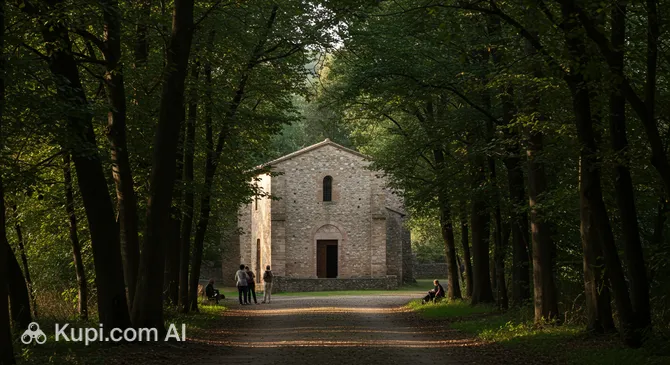
For nature lovers and those seeking peaceful relaxation, Assisi offers several wonderful spots. One of the most iconic is the Bosco di San Francesco (Wood of Saint Francis). This vast forest area, carefully restored by the Italian Environmental Fund (FAI), stretches at the foot of the Basilica of Saint Francis. There are picturesque trails leading through centuries-old trees, past a medieval tower, and a restored monastery complex. It is an ideal place for meditative walks, allowing you to feel Saint Francis's deep connection with nature.

Bosco di San Francesco. Illustration.
Source: Kupi.com AI

Traveler photos:

An integral part of Assisi's landscape is the majestic Mount Subasio, on whose slopes the city is located. The mountain is a regional natural park offering numerous routes for walking and hiking of varying difficulty. Reaching its peaks, you will be rewarded with breathtaking panoramic views of Assisi, the Umbrian valley, and the surrounding hills. It is a wonderful opportunity to enjoy the silence, fresh air, and beauty of the local flora and fauna.

Mount Subasio. Illustration.
Source: Kupi.com AI

Traveler photos:

Speaking of cultural heritage, it is worth noting that in Assisi, many historical and religious sites are true treasuries of art and history in their own right, functioning as museums. Undoubtedly, the Basilica of Saint Francis with its priceless frescoes by Giotto and Cimabue is the main such site. For a deeper dive into the history of Franciscanism and the atmosphere of the early Middle Ages, be sure to visit the monastery of San Damiano. It was here, according to tradition, that the Crucifix spoke to Saint Francis, calling on him to restore the church. This place has preserved its amazing authenticity and allows you to touch the very origins of the Franciscan movement.

San Damiano. Illustration.
Source: Kupi.com AI

Traveler photos:

Another important cultural center is the Cathedral of San Rufino. In addition to its impressive Romanesque architecture and historical role (Saint Francis and Saint Clare were baptized here), the cathedral houses important relics and works of art. The Diocesan Museum (Museo Diocesano e Cripta di San Rufino) often operates at the cathedral, showcasing a rich collection of ecclesiastical art. For those interested in painting, the Municipal Art Gallery (Pinacoteca Comunale) with works by Umbrian masters is worth mentioning, as well as the Museum of the Roman Forum (Museo e Foro Romano), where you can see the remains of ancient Roman Assisi hidden under the main square.

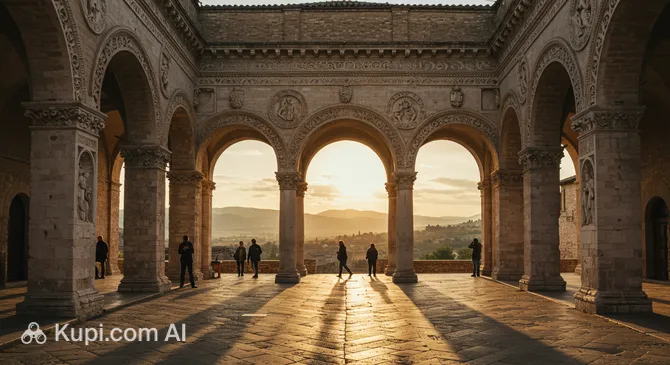
Beyond the world-famous basilicas, Assisi is rich in other historical monuments testifying to its centuries-long history. Note the Portico del Monte Frumentario — an elegant medieval structure with an arcade that originally served as a hospital for pilgrims and later as a granary. Today, this space is often used for exhibitions and cultural events, reminding visitors of the city's rich social and economic life in the past.

Portico of Monte Frumentario. Illustration.
Source: Kupi.com AI

Traveler photos:

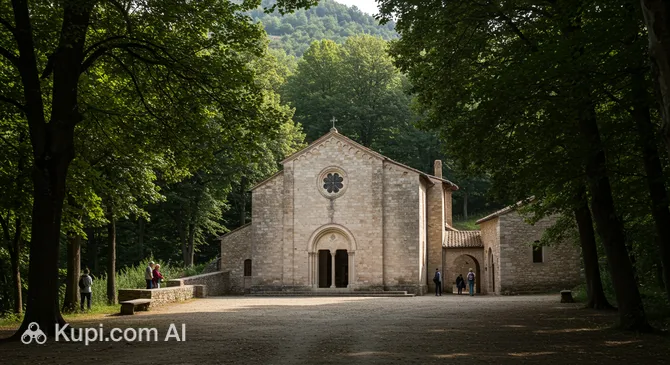
To get a truly authentic experience and deeper sense of the spirit of Assisi, don't limit yourself to only the most popular attractions. We highly recommend visiting the secluded Eremo delle Carceri hermitage, located on the wooded slopes of Mount Subasio, about 4 km from the city. This is a place of prayer and retreat for Saint Francis and his followers, consisting of small caves and chapels built into the rocks. A special atmosphere of silence, peace, and deep spirituality reigns here, allowing you to take a break from the hustle and bustle and reflect on the eternal. Also, do not be afraid to turn off the beaten tourist paths in the city itself — by exploring quiet side streets, you may discover charming courtyards, ancient fountains, and unexpected panoramic views that will show you Assisi from a new perspective.

Hermitage of the Carceri. Illustration.
Source: Kupi.com AI

Traveler photos:

Getting Around

Getting around Assisi and its immediate surroundings is quite simple, although the historic center itself, located on a hill, is best explored on foot. Its narrow medieval streets and steep climbs are not designed for active car traffic or public transport, except for a few key routes.

The main form of public transport in Assisi is the city bus (autobus). They connect the historic center (upper town) with the newer part of the city at the foot of the hill, where the railway station (Stazione di Assisi, located in the Santa Maria degli Angeli district) is situated. The most popular route for tourists is Line C, which runs between the station and the city center, making stops at key points. There are no subways, trams, or trolleybuses in the city.

The fare payment system on Assisi buses is standard for many Italian cities. Tickets (biglietti) must be purchased in advance, before boarding the bus. They can be bought at tobacco shops (tabaccheria, look for the sign with a large letter "T"), newsstands (edicola), or sometimes in bars near bus stops. The cost of a single trip is usually around 1.50 - 2.50 Euros. The purchased ticket must be validated (stamped) in a special yellow or orange machine inside the bus immediately after boarding. An unstamped ticket is considered invalid, and fines apply.

Buses in Assisi usually start running early in the morning and end in the evening, around 20:00-21:00, depending on the line and day of the week (schedules may change and intervals may increase on weekends and holidays). It is recommended to check schedules at stops or on the website of the local transport company in advance. During peak hours and the tourist season, buses can be crowded.

As an alternative to public transport in Assisi, you can use a taxi. Taxi stands are usually found at the railway station and on the main squares. This is a more expensive but more comfortable way to get around, especially if you are traveling with luggage or in a group. Car rental can be useful for exploring the Umbrian countryside, but for Assisi itself, it is less practical due to the existence of limited traffic zones (ZTL) in the historic center and parking difficulties. Bicycle rental is not very common due to the hilly terrain, although some hotels may offer this service, potentially including e-bikes.

Accommodation

In Assisi, travelers will find a variety of accommodation options to satisfy different preferences and budgets. The city offers a wide range of housing: from cozy and often family-run Bed and Breakfasts (B&Bs) and guest houses, many of which are located in historic buildings with a unique atmosphere, to more traditional mid-range hotels. Self-catering apartments are also available, which can be a convenient option for families or long stays. In the surroundings of Assisi, you can find charming agriturismos (rural estates) offering a peaceful holiday in nature with the opportunity to taste local products.

The most popular area for tourists to stay is undoubtedly the historic center (centro storico), located on the hill. By choosing accommodation here, you will be within walking distance of the main attractions, such as the Basilica of Saint Francis, Basilica of Saint Clare, and Piazza del Comune. Staying within the medieval walls allows you to fully immerse yourself in the unique atmosphere of Assisi. Another option is to stay in the more modern part of the city, at the foot of the hill, for example, in the Santa Maria degli Angeli district, where the railway station and the Basilica of Santa Maria degli Angeli are located. Here you can find more modern hotels, sometimes at more affordable prices, but visiting the historic center will require using transport or taking a walk uphill.

As for the price range, in Assisi you can find options for any budget — from budget guest houses and hostels to more refined and comfortable hotels. It is recommended to book accommodation in advance, especially if your trip falls during the peak tourist season (spring, summer, major religious holidays like Easter), as the best options can be quickly booked up. You can book stays through popular online platforms or directly on the websites of hotels and guest houses. Some small family establishments may prefer booking by phone or email.

Nearby Cities

For those who want to explore the surroundings, Assisi serves as an excellent starting point for day trips to several interesting nearby locations:

Several interesting cities are located near Assisi, each worthy of attention. Perugia, the capital of Umbria, attracts visitors with its Etruscan walls, medieval streets, and the National Gallery of Umbria. Foligno is known for its historic center, Palazzo Trinci, and the colorful Giostra della Quintana knightly tournament. In Città di Castello, you can explore Renaissance art and works by contemporary artist Alberto Burri. Spoleto is famous for its "Festival of the Two Worlds," ancient Roman monuments, and the majestic Rocca Albornoziana fortress. And the medieval town of Gubbio will enchant you with the Palazzo dei Consoli and the unique Festa dei Ceri race.

CityPopulationDistance
Spello8 56510 km
Foligno56 99915 km
Deruta9 71319 km
Perugia165 68319 km
Gualdo Tadino15 01822 km

These nearby destinations provide a more complete picture of the diverse culture, history, and landscapes of Umbria, complementing the experience of visiting Assisi itself. Each trip promises new discoveries and unforgettable moments.

Shopping & Souvenirs

Shopping in Assisi is, first and foremost, an opportunity to touch local traditions and take home a piece of the unique atmosphere of this holy city. You won't find huge shopping streets with global brands like in major metropolises here, but the charm of local shops and workshops offering authentic goods will not leave you indifferent. The city is famous for its handmade products, religious items, and the gastronomic delicacies of the Umbria region.

The main shopping arteries of Assisi are concentrated in its historic center. Walking along streets like Corso Mazzini and Via San Francesco, which leads to the famous basilica, you will discover many small shops. It is also worth paying attention to the streets around Piazza del Comune, where you can find souvenir shops, ceramic stores, and local food shops.

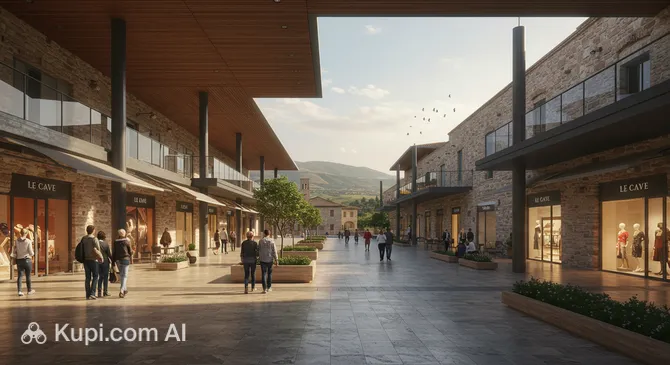
Although Assisi is a city with a historical focus, for those looking for a more modern shopping format, the Le Cave Shopping Center is located near the historic center in the lower part of the city. Here you can find clothing stores, household goods, and a supermarket offering a wider selection compared to the small shops in the center.

Le Cave Shopping Center. Illustration.
Source: Kupi.com AI

Traveler photos:

As for markets, there are not as many large and permanent flea or souvenir markets in Assisi as in some other Italian cities. However, small local craft fairs or agricultural markets may be held periodically in the city and its surroundings, where you can purchase fresh produce, cheeses, and other Umbrian delicacies. It is best to check for information on such events locally at the tourist office.

Common souvenirs to bring from Assisi reflect its spiritual significance and local craft traditions. Especially popular are:

  • Religious items: icons, figurines of Saint Francis and Saint Clare, rosaries, crosses, books, and candles.
  • Ceramics: hand-painted plates, vases, and tiles with traditional Umbrian patterns.
  • Textiles: products made of linen and cotton, lace, embroidery — Umbria is famous for its textile traditions.
  • Gastronomic souvenirs: extra-virgin olive oil, local wines (such as Sagrantino or Orvieto), truffles and truffle products (pastes, sauces), Umbrian sausages and cheeses, as well as traditional strangozzi pasta.
  • Wood products: small crafts, often on religious themes.

Most shops in Assisi operate from approximately 9:00-10:00 to 13:00 and then after a lunch break (riposo) from 16:00-16:30 to 19:30-20:00. During the tourist season, some shops, especially souvenir shops, may operate without a long break or close later. On Sundays and religious holidays, many small shops may be closed, although souvenir shops in central areas are usually open. Bank cards (Visa, Mastercard) are accepted in most places, but for small purchases in tiny shops or at markets, it is always useful to have cash Euros with you.

For tourists from non-European Union countries, Italy has a value-added tax (VAT, called IVA here) refund system for purchases made in shops participating in the Tax Free Shopping system. This is usually possible when purchasing goods for a certain amount (most often over 154.94 Euros in one shop). Look for the Tax Free sticker in the window or check with the salesperson. To process a refund, you will need to present your passport and fill out a special check, which then must be presented at customs when leaving the EU.

Reached the end of the page?

That means the route is fully explored