Support

Museo Archeologico di Santa Scolastica

About

One of the most vibrant cultural gems that Bari has to offer its guests is the Santa Scolastica Archaeological Museum. It is not just an exhibition space, but an entire historical complex located in the building of an ancient Benedictine monastery in the heart of Italy.

The museum is rightfully considered one of the most important in the Apulia region. Its halls house unique evidence of life from three ancient civilizations: Daunia, Messapia, and Peucetia. The collection covers a colossal time span — from prehistoric times to the mysterious Middle Ages, allowing visitors to trace the path of human development through the centuries.
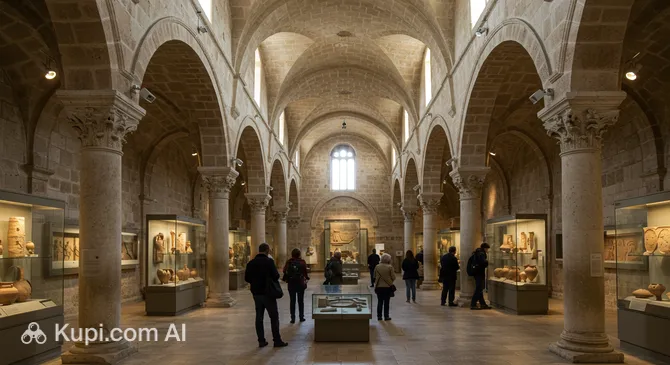
Archaeological Museum of Santa Scolastica
Archaeological Museum of Santa Scolastica. Иллюстрация. Источник: Kupi.com AI

Visitors can expect rich collections of ceramics, exquisite jewelry, and items made of bronze and bone. Of particular interest are findings documenting the lives of the region's inhabitants over a million and a half years ago. The combination of austere monastic architecture and priceless ancient artifacts creates a unique atmosphere, immersing you in the distant past of the south of the Apennine Peninsula.

Contacts

To confirm details before your visit, you can use the institution's official contact information. The museum is conveniently located, and its staff are always ready to assist visitors with information about the exhibitions.

How to contactContact
AddressVia Venezia, 73, 70122 Bari BA, Италия
Phone+39 080 099 0882
Websitewww.museoarcheologicosantascolastica.it

What to Do

A journey through the museum should begin with the Neolithic exhibition. Here, you will come face to face with history — the halls display human remains over 6,500 years old. Pay special attention to the rare clay figurines of the "Mother Goddess," symbolizing ancient fertility cults.

Be sure to set aside time to view the Polese collection. This collection of two thousand items is striking in its elegance: here you will find the finest gold diadems, ancient necklaces, and precious stones dating back to the 6th century BC. Architecture enthusiasts will enjoy the central courtyard, where you can see authentic city walls from the 10th–11th centuries and the foundations of Roman houses.

Don't forget to look into the bastion, which houses the ruins of the Byzantine church of Saints John and Paul. Thanks to modern multimedia materials, you can clearly imagine what Byzantine Bari looked like and how the quiet life of monks flowed within the walls of this monastery many centuries ago.

Getting There

Finding your way to the museum is easy, as it is located in the heart of Bari's historical center, at Via Venezia, 73. Its location on the edge of the old town makes the walk very picturesque — the path often runs along the promenade or through charming narrow streets.

For those arriving in the city by train, the most convenient option is a walk from the Bari Centrale railway station. The walk takes approximately 15–20 minutes, during which you can begin your acquaintance with the city's architecture. Alternatively, you can take a local taxi, which will quickly deliver you to the doors of the monastery complex.

If you prefer public transport, Bari has a well-developed network of bus routes connecting various districts with the center. Stops are within walking distance of the museum. For travelers by car, please note that entry restrictions (ZTL zones) apply in the historical part of the city, so it is best to leave your vehicle in one of the parking lots outside the old quarters.

Ближайший город: Bari

History & Facts

The history of this cultural institution began back in 1875, when it was founded as the Archaeological Museum of the Province of Bari. Over the past century and a half, it has transformed into the region's largest repository of memory, documenting the development of human communities over an incredible period — more than one and a half million years.

A significant contribution to the museum's holdings was made in 1925 by Arturo Polese, a railway officer. His passion for collecting led to the museum being enriched with unique items found during construction work on the Bari–Taranto line. Today, these artifacts make up one of the most valuable parts of the collection.

Housing the collection in a former Benedictine monastery gives the museum a special atmosphere. The walls of this historical structure are an exhibit in themselves, uniting archaeological finds from the Neolithic, Iron Age, and Classical periods in a single space, making it a unique location even by the standards of the history-rich Mediterranean.

Time Needed

When planning your visit, you should allow for approximately 2–3 hours. This is enough time to leisurely inspect the main halls, study the collection of antiquities, and visit the cozy inner courtyard where fragments of ancient walls are preserved.

If you have a deep interest in archaeology or the history of the Byzantine period, you may need a little more time to explore the multimedia materials and the detailed finds from Peucetia. In any case, the museum offers a comfortable pace of exploration that won't leave you feeling rushed.

Working Hours

To ensure your visit is as comfortable as possible, we recommend checking the museum's opening hours. It is typically open to the public from Tuesday to Saturday from 09:00 to 19:00. On Sundays, the museum welcomes guests on a reduced schedule — from 09:00 to 13:00, and Monday is traditionally its closing day.

Since the schedule may change on holidays or for special exhibitions, it is advisable to check the latest information on the institution's official website before your visit.

DayWorking hours
понедельникЗакрыто
вторник09:00–19:00
среда09:00–19:00
четверг09:00–19:00
пятница09:00–19:00
суббота09:00–19:00
воскресенье09:00–13:00

Nearby

A stroll through the surroundings of the Santa Scolastica Museum is a great way to further immerse yourself in the atmosphere of old Bari. Around almost every corner lie traces of great civilizations and medieval monuments that harmoniously complement the museum's exhibits.

Below are the most interesting sites located in the immediate vicinity of the museum:

NameDistance
Basilica of Saint Nicholas0.2 km
Regional Museum Directorate of Apulia0.2 km
La Cantina dello Zio0.3 km
Antò – Traditional Apulian Cuisine0.4 km
Bari Cathedral0.4 km
Bari City Walls0.5 km
Fort of Saint Anthony0.5 km

Reached the end of the page?

That means the route is fully explored