Support

Civitavecchia

About

Civitavecchia is a charming coastal city nestled on the shores of the Tyrrhenian Sea, approximately 70 kilometers northwest of Rome. Thanks to its strategic location, the city has served as the main seaport for the capital of Italy for many centuries. Today, it is rightfully considered the "gateway to Rome" for thousands of travelers arriving on board cruise ships.

The population of Civitavecchia is about 51,595 people, creating an atmosphere of a "middle ground" city: it has everything necessary for a comfortable life and vacation, yet lacks the capital's hustle and bustle. The city is part of the Province of Rome in the Lazio region. Civitavecchia surprises with its harmony: ancient ruins peacefully coexist with cozy cafes, and modern buildings do not overshadow the charm of old churches and squares.
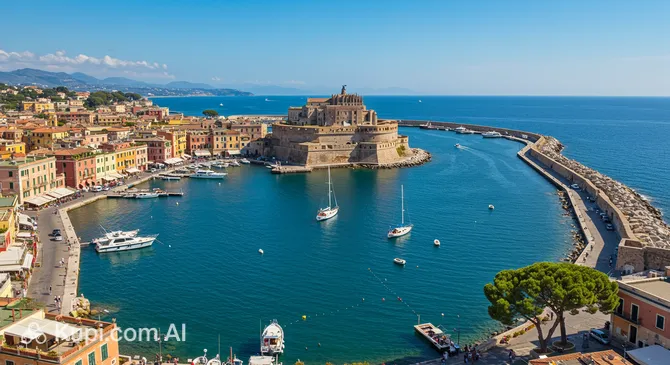
Civitavecchia. Illustration.
Source: Kupi.com AI

Civitavecchia welcomes its guests with clean beaches, a picturesque promenade, and the unique atmosphere of authentic Italy, where the sea breeze mixes with the scents of history. Among the city's unique features are its historic center with narrow streets perfect for leisurely strolls, bustling markets where you can feel the local flavor, and, of course, stunning views of the endless sea. Be sure to try the freshest seafood in one of the many local restaurants.

The atmosphere of Civitavecchia, steeped in maritime spirit and a rich historical heritage, makes this city more than just a transit point on the way to the Eternal City, but a destination in its own right for those who appreciate history, exquisite gastronomy, and a relaxing holiday. Discover Civitavecchia – the pearl of the Tyrrhenian coast, which will surely enchant you with its hospitality and beauty!

You can find more interesting facts on the Civitavecchia history page.
Weather Overview

The climate in Civitavecchia is typically Mediterranean, characterized by hot, sunny summers and mild, wetter winters. In the summer months, especially July and August, average air temperatures range from 21-22°C at night to nearly 30°C during the day. Precipitation during this period is minimal; for example, in July, it tends toward zero. In winter, from December to February, daytime temperatures usually stay within 12-13°C, dropping to 6-8°C at night. November is the wettest month of the year, with about 5 mm of precipitation and approximately 14 rainy days. In the other winter months (December-February), precipitation ranges from 2-4 mm, and the number of rainy days varies from 8 to 12 per month.

In general, expect hot and dry summers and mild, wetter winters in Civitavecchia. Spring and autumn offer comfortable transitional periods with moderate temperatures. Detailed information about the weather by month, including sunshine hours and humidity, can be found on the Civitavecchia Climate page.

Average monthly temperature

Average monthly precipitation

Interesting Facts

Beyond its role as an important maritime hub, Civitavecchia hides many curious details and stories that make it more than just a transit point, but a city with a rich past and interesting features.

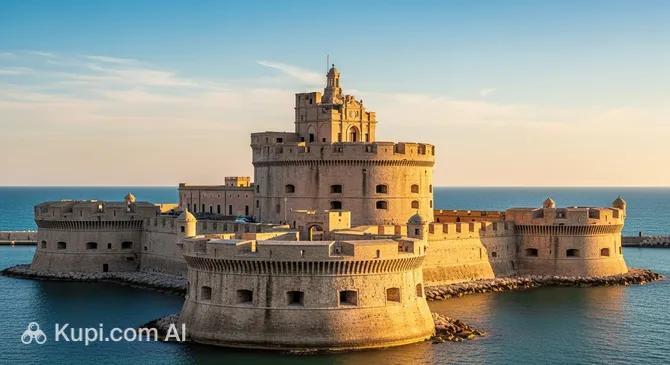
Michelangelo Fortress. Illustration.
Source: Kupi.com AI

Traveler photos:

  • The city was founded by none other than the Roman Emperor Trajan at the beginning of the 2nd century AD as a port to serve Rome. Legend has it that the Emperor himself loved to relax in the local thermal springs, known as the Terme Taurine (Taurine Baths), the ruins of which have been preserved to this day.

  • The symbol of the city is the majestic Michelangelo Fortress. It is noteworthy that the great Renaissance master Michelangelo Buonarroti himself had a hand in its design, although the main work to complete the fort was carried out by other architects after him.

  • Despite its ancient history, Civitavecchia today is one of the largest cruise ports in the Mediterranean. Millions of travelers pass through it every year, making the city a kind of "maritime gateway" to Rome and central Italy for many tourists.

  • In Civitavecchia, you can find fountains designed by Luigi Vanvitelli – the same architect who designed the famous Royal Palace of Caserta. This highlights the artistic significance of the city, which goes beyond its port function.

How to Get There

Civitavecchia, a well-known port city on the Tyrrhenian coast, serves as an important maritime gateway to Rome and central Italy. It can be reached in several convenient ways, mainly through the country's capital, Rome, which has excellent transport links.

Since Civitavecchia itself does not have its own airport, most travelers arrive through Rome's international airports. The most convenient and largest is Leonardo da Vinci–Fiumicino Airport (FCO), located in Rome approximately 50.4 km from Civitavecchia. It is one of Europe's busiest airports, offering many international and domestic flights. A taxi ride from Fiumicino Airport to Civitavecchia takes about 1 hour and 35 minutes. Another option is Ciampino–G. B. Pastine International Airport (CIA), also located in Rome, about 73.8 km away. This airport mainly serves budget airlines. A taxi journey from Ciampino to Civitavecchia takes approximately 2 hours and 10 minutes. From both airports, you can reach Rome's railway stations and take a train to Civitavecchia from there.

For clarity, here is a summary of the main airports used to reach Civitavecchia:

AirportPassenger trafficDistance
Leonardo da Vinci-Fiumicino Airport40.5 mln50 km
Ciampino–G. B. Pastine International Airport3.9 mln74 km
Sant Egidio Airport532 474126 km
Marina di Campo Airport13 107148 km
Firenze-Peretola Airport3.5 mln197 km

Reaching Civitavecchia by rail is also very convenient, especially if you are traveling from other regions of Italy. Although the city has its own railway station where trains from Rome and other destinations arrive, key international and long-distance routes often pass through Rome's major transport hubs. The capital's largest station, Roma Termini Station, is located in Rome, about 62.4 km from the center of Civitavecchia. It is a massive transport hub with numerous services and shops. Another important transport hub in Rome is Tiburtina Station, located about 64.2 km from Civitavecchia. Trains depart regularly from these and other Roman stations directly to Civitavecchia station, with travel times ranging from 45 minutes to 1 hour and 20 minutes, depending on the type of train.

Below is information about some major railway stations through which you can plan your route to Civitavecchia:

StationPassenger trafficDistance
Ostiense Railway Station5.8 mln62 km
Roma Termini Station150 mln62 km
Tiburtina Railway Station51 mln64 km
Firenze Campo di Marte Railway Station1.8 mln192 km
Firenze Santa Maria Novella Station59 mln192 km

In addition, Civitavecchia is a major cruise port, so many tourists arrive by sea. The city is also well-connected by road to Rome and other Italian regions, making travel by car or bus a comfortable option.

Main Attractions

Civitavecchia, known as a major Italian seaport, offers its guests not only convenient transport links but also several interesting attractions worth visiting.

One of the city's main landmarks is the majestic Michelangelo Fortress. This powerful 16th-century fortification, towering over the port, was commissioned by Pope Julius II to protect the harbor. It is believed that Michelangelo Buonarroti himself had a hand in the design and completion of the construction, which is reflected in its name. The fortress impresses with its massive architecture, historical significance, and the views it offers over the Tyrrhenian Sea. Today, it is a popular place for walking and learning about the city's history.

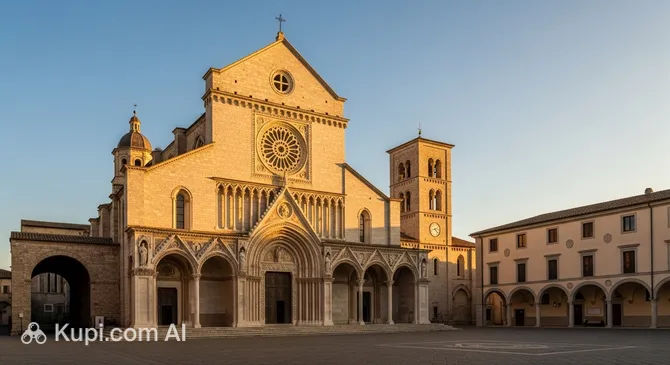
Located near the port is the Cathedral of Saint Francis of Assisi. This main church of the city was built at the end of the 18th century on the site of an older church destroyed by fire. The cathedral is dedicated to Saint Francis of Assisi, the patron saint of Italy, and is a beautiful example of Neoclassical architecture. Tourists are drawn to its elegant facade and its rich interior adorned with works of art.

Cathedral of St. Francis of Assisi. Illustration.
Source: Kupi.com AI

Traveler photos:

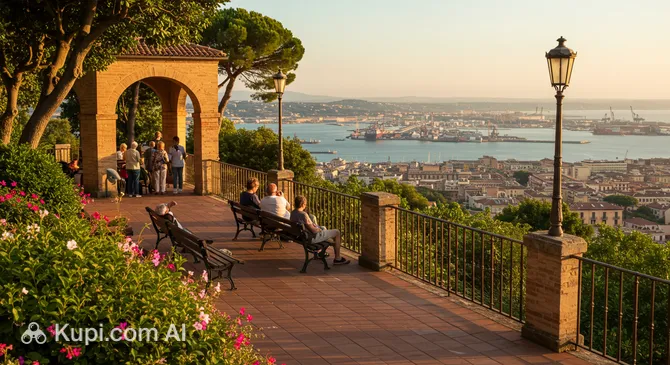
For those looking for a pleasant place to relax and enjoy the atmosphere of Civitavecchia, Chalet del Pincio is worth noting. This establishment, categorized as a "bar," offers a cozy stop while exploring the city. Here you can take a breather, enjoy a cup of coffee or a refreshing drink, while watching the slow pace of local life and soaking in the Italian flavor.

Chalet del Pincio. Illustration.
Source: Kupi.com AI

Traveler photos:

Local Cuisine

The gastronomy of Civitavecchia is a true celebration of flavors for connoisseurs of Mediterranean cuisine. Located on the coast of the Tyrrhenian Sea, the city is rightfully proud of its traditions of preparing the freshest seafood. Here, you can enjoy oysters, mussels, squid, and shrimp, prepared according to recipes passed down from generation to generation.

Among the dishes that are definitely worth trying in Civitavecchia, the famous "black rice" (risotto al nero di seppia) stands out, flavored with cuttlefish ink that gives it a unique taste and color. Equally popular is the thick and aromatic seafood soup "cacciucco", as well as pasta with a delicate sea urchin sauce. Meat lovers are recommended to try the local variation of "abbacchio"—young lamb roasted with rosemary and aromatic herbs. These dishes reflect the richness and diversity of the local culinary scene.

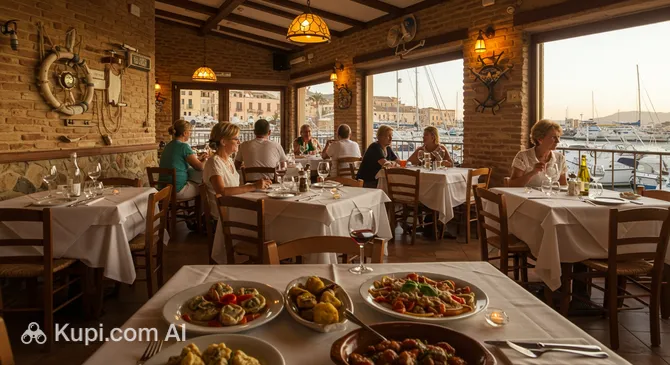
Il Delfino Restaurant. Illustration.
Source: Kupi.com AI

Traveler photos:

The meal is perfectly complemented by local drinks. White wines from the Lazio region are particularly popular and pair perfectly with seafood. The food culture in Civitavecchia is diverse: locals and tourists alike enjoy dining in cozy restaurants, such as Il Delfino Restaurant, as well as enjoying street food. On the busy streets and markets, you can try freshly caught fried fish, appetizing bruschettas with tomatoes and anchovies, and the famous Roman artichokes. Be sure to visit the local market, where fresh produce, homemade cheeses, and olive oil are sold – excellent gastronomic souvenirs.

Overall, the gastronomic scene of Civitavecchia is characterized by a commitment to fresh, high-quality ingredients, especially seafood, and the preservation of traditional recipes. This is a city where food is not just a necessity but an important part of culture and pleasure, capable of giving every traveler bright impressions.

Travel Tips

Welcome to Civitavecchia! This charming port city is the gateway to Rome and a wonderful place to explore the Lazio coast. To ensure your trip goes smoothly and leaves only pleasant impressions, we have prepared some practical tips.

  1. Clothing and Essentials: The climate in Civitavecchia is Mediterranean. In summer (June-August), take light clothing made of natural fabrics, a hat, sunglasses, and sunscreen. In spring and autumn, the weather is changeable, so layered clothing and a light jacket will come in handy. In winter, it can be cool and rainy, so warm clothes and an umbrella won't hurt. Comfortable shoes are your main companion for walks around the city and its surroundings. Don't forget an adapter for electrical appliances (in Italy, Type F and L sockets are used). When visiting churches (for example, the Cathedral of Saint Francis of Assisi), it is customary to cover your shoulders and knees.
  2. Transport in the City and Surroundings: The center of Civitavecchia is quite compact and pleasant to explore on foot, especially the port area and historic streets. For trips around the city and to the nearest suburbs, you can use local buses. However, Civitavecchia's main transport function is for trips to Rome: trains run regularly from here to the capital (travel time is about 1-1.5 hours), which is very convenient. Taxis are available in the city, but it is a more expensive option. Renting a car can be useful if you plan to actively explore the Lazio region, but it's not necessary for the city itself, and there might be parking difficulties.
  3. Financial Matters: The official currency in Italy is the Euro (EUR). You can exchange money at banks or exchange offices (cambio), but the rate at the port or airport may be less favorable. Credit and debit cards (Visa, Mastercard) are accepted in most hotels, restaurants, and large shops. However, it is always useful to carry some cash for small purchases, markets, or small cafes. ATMs (Bancomat) are widespread. Tips in restaurants are often included in the bill as "coperto" (service/bread charge), but if you particularly liked the service, you can leave an extra 5-10%.
  4. Health and Safety: Pharmacies (Farmacia) in Civitavecchia are easy to find by the green cross; some of them operate 24 hours a day on a rotating schedule (farmacia di turno). If medical assistance is needed, EU citizens can use an EHIC card. Tourists from other countries are strongly recommended to have travel insurance. For emergencies, call 112. Civitavecchia is generally a safe city. However, as everywhere, observe basic precautions: keep an eye on your belongings in crowded places (port, station, markets), especially beware of pickpockets. Avoid walking in poorly lit and deserted areas after dark.
  5. Language and Communication: The official language is Italian. In tourist areas, hotels, and restaurants, staff often speak English, but knowing a few basic Italian phrases will be very helpful and appreciated by locals: "Buongiorno" (Good day), "Grazie" (Thank you), "Prego" (You're welcome), "Scusi" (Excuse me). You can buy a local SIM card for mobile internet at mobile phone stores. Wi-Fi is available in many hotels, cafes, and restaurants.
  6. Local Etiquette and Communication: Italians are open and friendly people. When entering a shop or cafe, it is customary to say hello ("Buongiorno" in the morning and afternoon, "Buonasera" in the evening). Politeness is valued in communication. When visiting churches, maintain silence and respectful behavior. Don't be surprised by Italian expressiveness – it's part of their culture.
  7. What to Avoid: Try not to discuss controversial political topics or football loudly (unless you are sure of the interlocutor's preferences). Also, keep in mind that many shops and institutions may be closed for "riposo" (siesta) – a midday break, usually from 1:00 PM to 4:00-5:00 PM. Don't be offended if you aren't answered in English immediately – be patient and try to explain yourself with gestures or a translator app.
  8. Special Feature of Civitavecchia: The city is the largest cruise port in the Mediterranean. If your trip involves a cruise, plan the logistics of arriving at and departing from the port in advance. Civitavecchia is also famous for its seafood – be sure to try the fresh sea harvest in local trattorias. Don't miss the chance to visit the historic Michelangelo Fort, the symbol of the city, and the ruins of the ancient Roman Terme Taurine.

We hope these tips help you better prepare for your trip to Civitavecchia and enjoy every moment of your stay in this interesting Italian city. We wish you an unforgettable trip and bright impressions!

Entertainment & Nightlife

Civitavecchia, as an important port city, offers its guests various options for evening and nighttime relaxation. Although it is not a metropolis with a buzzing 24-hour life, you can find cozy spots to enjoy your time after a busy day.

Most evening activity is concentrated along the promenade and on the city's central streets. There are many bars, cafes, and restaurants where you can enjoy an aperitif, dinner, or simply have a glass of wine. The atmosphere in most establishments is quite relaxed and friendly, especially during the warmer months when summer terraces open. The crowd is mixed – local residents and tourists waiting for their cruise or having just come ashore.

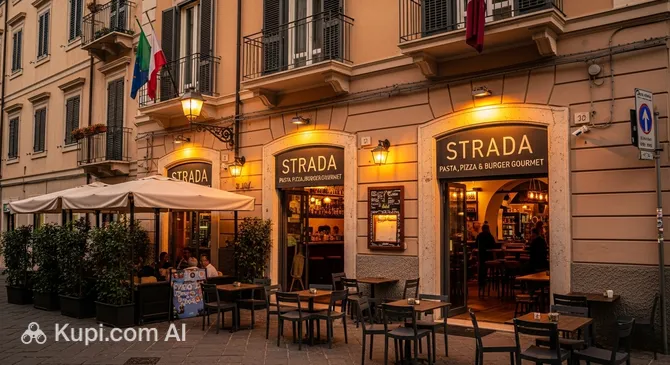
Among the popular spots for evening relaxation are establishments such as Chalet del Pincio, known for its pleasant atmosphere, or STRADA Pasta, Pizza & Burger Gourmet, where you can not only have a drink but also a delicious snack. Many bars stay open until late evening, and some turn into small dance floors on weekends. There aren't many specialized nightclubs in Civitavecchia, but during the summer season, some beach venues may host parties. As for concert venues, they are not as widely represented in Civitavecchia as in larger cities; live music is most often heard in bars or on temporary stages during city festivals. Night markets are also not a typical phenomenon for the city, but during the summer season or during holidays, themed fairs with evening sales of souvenirs and local products may be organized.

STRADA Pasta, Pizza & Burger Gourmet. Illustration.
Source: Kupi.com AI

Traveler photos:

Practical tips: The best time to visit bars is after 7:00 PM, when aperitif time begins. Average drink prices are quite moderate. In the central part of the city, many places are within walking distance. To get around at night, you can use taxi services; it is recommended to call a car by phone or through an app rather than hailing one on the street. The city is generally considered safe, but as everywhere, basic precautions should be taken, especially in less crowded places late at night.

Regarding the dress code, most bars and restaurants in Civitavecchia feature a smart casual or simply casual style. There are usually no strict requirements unless it is a special event or a high-end establishment.

During the day, there is also plenty to do in Civitavecchia. You can visit historical sites such as the Michelangelo Fortress or the Cathedral of Saint Francis of Assisi, stroll through the city market, or relax in one of the parks. While the city doesn't have large theaters or amusement parks, its historic center and promenade offer pleasant routes for walking and experiencing local culture.

Parks & Museums

Civitavecchia, a port city with a rich history, offers its guests not only seascapes but also the opportunity to relax in green oases and immerse themselves in cultural heritage through its museums and historical monuments.

One of the city's main green spots is Villa Comunale (La Pineta). This park, known for its tall pine trees, offers pleasant shade on hot days and is a popular place for walking and relaxation for both locals and tourists. Here you can find playgrounds and benches for quiet time. Another area for outdoor walks is Parco Uliveto, where you can enjoy a more peaceful atmosphere among olive trees.

To learn about the region's rich history, it is worth visiting the National Archaeological Museum of Civitavecchia (Museo Archeologico Nazionale di Civitavecchia). The museum is located in an 18th-century building and houses an impressive collection of artifacts ranging from the Etruscan period to the Roman era. The exhibition includes ceramics, sculptures, mosaics, and everyday objects found in the city and its surroundings, telling the story of the ancient port of Centumcellae.

Speaking of cultural heritage, one cannot fail to mention the Michelangelo Fortress. This impressive 16th-century fortification, although only partially attributed to the great master (the upper part of the main bastion), dominates the port and is a symbol of the city. It served to protect the port and today attracts tourists with its powerful architecture and historical significance.

Michelangelo Fortress. Illustration.
Source: Kupi.com AI

Traveler photos:

Another significant architectural and spiritual center is the Cathedral of Saint Francis of Assisi. Built at the end of the 17th century on the site of an older church, it is a beautiful example of Baroque architecture and houses important religious works of art. Its facade and interior decoration impress visitors.

Cathedral of St. Francis of Assisi. Illustration.
Source: Kupi.com AI

Traveler photos:

For those interested in ancient history who want to see something less obvious, we recommend visiting the Terme Taurine, also known as the Baths of Trajan. This archaeological complex is located just outside the city and consists of the ruins of ancient Roman baths with well-preserved mosaics and structures, offering a unique immersion into ancient life.

Getting Around

Getting around Civitavecchia is quite simple, thanks to the city's compact size and the availability of several modes of transport. Public transport is mainly represented by buses, which are the primary way to move around the city and its surroundings.

The main form of public transport in Civitavecchia is city buses. The route network covers key areas of the city, connecting the center with the periphery, as well as providing communication between the cruise port, the railway station, and the main attractions. The buses are usually easy to recognize by their colors. The city does not have transport systems such as a metro or trams.

The fare payment system on buses is standard for many Italian cities. Tickets (biglietti) must be purchased in advance – at tobacco shops (tabaccheria), newsstands (edicola), or sometimes in bars with the appropriate sticker. Buying a ticket directly from the driver, if possible, usually costs more. The price of a single trip on a city bus is typically a small amount, roughly 1-2 euros. After entering the bus, the ticket must be immediately validated in a special yellow or orange machine – this confirms its use and will save you from fines. It's best to check on-site for information about possible day or multi-day passes, as their availability depends on the transport company.

For trips outside Civitavecchia, especially to Rome and other cities in the region, the main choice is trains. Civitavecchia railway station is well-connected to the main rail network. Train tickets are purchased at station ticket offices, at ticket machines, or online. Remember that tickets for regional trains (Regionale) also often require validation on the platform before boarding.

Among alternative ways to get around Civitavecchia, taxis are popular. Taxi stands are usually located at the railway station, the port, and in central points of the city. This is a more expensive but comfortable option, especially if you are traveling with luggage. Also, given the size of the city, many of its central areas and the promenade are pleasant to explore on foot. It's worth checking on-site for bicycle rental options, as this can be a good way for leisurely rides along the coast.

Buses in Civitavecchia usually run from early morning until late evening. However, the schedule may change on weekends and holidays, when service intervals may be increased. It is recommended to check the current schedule in advance at stops or on the websites of local transport operators, if available.

Accommodation

In the city of Civitavecchia, travelers can find a variety of accommodation options to suit different preferences and budgets. Choices range from affordable guesthouses and apartments to mid-range hotels offering a comfortable stay. For those seeking more independence, apartment rentals are also available.

The most convenient areas for tourists to stay are those located in the immediate vicinity of the seaport, which is especially relevant for cruise ship passengers. The historic city center is also popular, as it is home to the main attractions and offers easy access to key points in Civitavecchia. Staying in these areas provides easy access to restaurants, shops, and transport hubs.

Regarding the price range, Civitavecchia offers both budget options and mid-range accommodation. It is most convenient to book a suitable hotel or apartment through popular online booking platforms or, in some cases, by contacting the property directly. To guarantee availability and get the best prices, especially during the peak tourist season or on major cruise departure days, it is recommended to book your accommodation in advance.

Nearby Cities

For those who want to explore the surroundings, Civitavecchia serves as an excellent starting point for day trips to several interesting nearby locations. Among them, the following stand out:

Rome, the capital of Italy, attracts travelers with its world-famous ancient ruins, such as the Colosseum and the Roman Forum, majestic cathedrals, and the rich Vatican Museums. A trip here is an immersion into millennia of history and culture. Not far from Civitavecchia is Cerveteri, where you can touch the mysteries of the Etruscan civilization by exploring the grand Banditaccia Necropolis, a UNESCO World Heritage site. And lovers of a medieval atmosphere should head to Viterbo, a former papal residence, with its beautifully preserved historic center, narrow streets, and old palaces.

Below is a more detailed list of some cities in the vicinity of Civitavecchia suitable for short trips, indicating their population and distance:

CityPopulationDistance
Santa Marinella18 9218 km
Tarquinia16 26918 km
Cerveteri37 97727 km
Ladispoli41 60428 km
Bracciano19 21932 km

These nearby destinations open up the full diversity of the Lazio region to travelers, allowing them to get to know its rich history, culture, and picturesque landscapes more deeply.

Shopping & Souvenirs

Civitavecchia, as a significant port city in Italy, provides its guests with shopping opportunities, although it does not claim to be a major shopping capital like Rome. Nevertheless, you can find a variety of shops selling clothes, shoes, accessories, and, of course, classic Italian goods. The city is not famous for any unique goods exclusive to it, but the focus is on the quality and style characteristic of Italian products.

Main Shopping Areas and Streets

The main commercial activity is concentrated in the heart of the city. The primary shopping artery is Corso Centocelle, along with its adjacent streets. It is here that you will find many boutiques, shops of famous Italian brands, and small family-run stores. Additionally, a number of shops catering mainly to tourists arriving on cruise ships are located in the immediate vicinity of the port.

Shopping Centers

In Civitavecchia itself, you are unlikely to find large modern shopping centers in the classical sense. Shopping here is rather represented by individual stores and elegant boutiques scattered along the city streets. If your goal is a large-scale trip to big malls, it is probably worth considering a trip to Rome, where the choice of shopping complexes is significantly wider.

Markets

In Civitavecchia, you can visit the traditional city market (mercato civico). This is a great place to immerse yourself in the local atmosphere and purchase the freshest products: vegetables, fruits, various cheeses, meat delicacies, and, of course, the fresh fish and seafood the coastal city is famous for. Periodically, especially at the height of the tourist season, small fairs may be organized in the city, selling souvenirs, local crafts, or antiques.

Souvenirs: What to Bring Back

From Civitavecchia, as from any part of Italy, it is worth bringing back gastronomic souvenirs. Look out for local extra virgin olive oil, regional wines, aromatic pasta in various shapes and varieties, and hard cheeses. In addition, hand-painted ceramics, small leather accessories (wallets, belts), silk scarves and, given the city's port status, maritime-themed souvenirs such as ship models or seashells are also popular.

Opening Hours and Payment Methods

Most shops in Civitavecchia adhere to the traditional Italian working schedule: roughly from 9:00-10:00 AM to 1:00 PM, followed by a lunch break (the so-called "riposo" or siesta), and then shops reopen from 4:00-5:00 PM until 7:30-8:00 PM. Large chain stores or those in tourist areas may operate without a break or have longer hours, especially in the summer season. On Sundays, many retail outlets may be closed, with the exception of some souvenir shops and stores in the port area. Cash in Euros and bank cards from international payment systems (Visa, Mastercard) are widely accepted. Nevertheless, it is always useful to have a small amount of cash for minor purchases, payments at markets, or in small cafes.

Tax Free

Tourists residing permanently outside the European Union have the opportunity to claim a Value Added Tax (VAT) refund on purchases made in shops participating in the Tax Free system. To do this, you must make a purchase for a certain minimum amount (check in the store), ask the seller to issue a special Tax Free check (fattura), and present it together with the unopened purchases and your passport at customs when leaving the EU. Refunds can be obtained in cash at refund points at the airport or back to a bank card.

Reached the end of the page?

That means the route is fully explored