Support

Panarea

Attractions

About

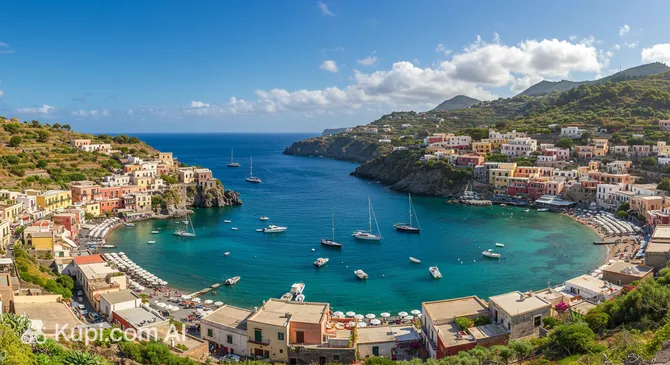
Panarea is a true gem of the Tyrrhenian Sea, the smallest yet most exclusive island of the Aeolian (Lipari) archipelago. This picturesque spot, which Italy is rightfully proud of, attracts travelers with its intimate atmosphere and refined beauty. The island is located north of Sicily, covering an area of only about 3.4 square kilometers, which creates a feeling of complete isolation from the outside world.

Panarea. Illustration.
Source: Kupi.com AI

Fewer than 300 people live here permanently, so a surprising sense of tranquility reigns on Panarea. Instead of noisy avenues and streams of cars, you will be met by quiet narrow streets where snow-white houses are surrounded by bright bougainvillea flowers. Although Panarea's history is rooted in ancient times, today this place is better known as an elite resort where time seems to slow down, allowing you to enjoy every moment.

The island's main treasures are its natural landscapes. Crystal clear waters and picturesque bays make Panarea an ideal destination for yachting and boat trips. From here, breathtaking views of the neighboring islands of Lipari and the Stromboli volcano open up, which are especially pleasant to admire at dawn from a cozy terrace. This place is designed for romantic trips and meditative relaxation, offering guests a unique combination of simplicity and luxury.

Weather Overview

The climate on the island of Panarea is typically Mediterranean, making it an attractive destination almost year-round. Summers here are hot and sunny: in July and August, the average air temperature reaches 26–27°C, and the water is perfect for swimming. During this period, precipitation is extremely rare — statistics record only 2–3 rainy days per month, so you're unlikely to need an umbrella.

The shoulder season is considered a wonderful time for long walks and exploring the nature of the archipelago without the exhausting heat. In May, the air warms up to a comfortable 18–19°C, and September retains its summer warmth with an average temperature of about 24°C. To plan your trip as accurately as possible, we recommend checking what the weather in Panarea is like during different seasons.

Winter on the island is mild; there are no frosts here, but humidity increases. In January and February, thermometers show an average of about 13°C, but the number of rainy days increases to 9–10 per month. Expect warm, dry summers and mild winters with occasional rain, characteristic of this region of Italy.

Interesting Facts

In addition to the main attractions, Panarea holds many fascinating secrets that make this island a truly unique place. Here are a few facts that will help you look at it from a new perspective:

  • A "secret island" for celebrities. Panarea is often called the most exclusive corner that Italy has to offer. Its reputation as an elite hideaway was established in the last century: world stars seek silence and privacy here, hiding from prying eyes far from noisy metropolises.

  • Ancient settlement on the cape. In the southern part of the island, on Cape Punta Milazzese, lies a real portal to the past. Archaeologists discovered a Bronze Age settlement here dating back to the 14th century BC. The foundations of the oval huts are perfectly preserved, and this site is considered one of the most interesting archaeological objects in the entire archipelago.

  • Breath of the volcano underwater. The volcanic origin of the island can be seen firsthand near the Lisca Bianca rock. The local legend of the "boiling sea" is true: there are underwater hot springs here, and right from a boat, you can see thousands of gas bubbles rising from the bottom.

  • Nature reserve. The island and its surrounding rocks are part of a protected natural area. Thanks to this, rare species of flora are preserved here, and the water around Panarea is incredibly transparent, attracting snorkeling and diving enthusiasts from all over the world.

How to Get There

A trip to this exclusive island is already the beginning of a great adventure, as it can be reached exclusively by sea. Since the island itself lacks an airport and railways, tourists must first reach one of the port cities that Italy is rich in, or Sicily. You can find out all ways to get to the city and the island of Panarea to create an itinerary that perfectly suits your plans.

In the town of Panarea itself, there is no airport, but travelers often choose Аэропорт Катания-Фонтанаросса (IATA: CTA) in the city of Catania. It is located about 129.9 km from the island in a straight line. This is Sicily's largest air hub, receiving many international flights. From here, a ground transfer to the port (usually Milazzo) is necessary to catch a ferry to the archipelago.

Another popular option is Аэропорт Фальконе — Борселлино (IATA: PMO), located in the city of Palermo, 180.8 km from Panarea. This is a major international airport with a developed infrastructure, from where you can also reach the ports providing sea connections to the Aeolian Islands.

Geographically, the closest is Аэропорт Тито Миннити (IATA: REG) in the city of Reggio Calabria — only 80.5 km from Panarea. However, it should be noted that it is located on the mainland, and the route will require crossing the Strait of Messina or taking a high-speed boat directly from Calabria.

Below is summary information on the main airports convenient for traveling to this region:

AirportPassenger trafficDistance
Tito Menniti Airport400 00081 km
Lamezia Terme International Airport2.7 mln106 km
Catania-Fontanarossa Airport12.3 mln130 km
Crotone310 000179 km
Falcone-Borsellino Airport8.9 mln181 km

If you prefer ground transport, it is important to remember that rail service is only available to port cities on the mainland or Sicily. A convenient starting point is Napoli Centrale station (IATA: INP) in the city of Naples, located approximately 255.4 km from Panarea. This is one of the most important transport hubs, and in the summer season, direct ferries and hydrofoils depart from the port of Naples to the Aeolian Islands.

An alternative option in the south of the mainland is Reggio di Calabria Centrale Station (IATA: RCC), located 76.8 km from the island. From here, it is easy to reach the port connecting the "toe of the Italian boot" with Sicily and the islands of the archipelago.

Here is a list of the nearest and most important railway stations for planning your trip:

StationPassenger trafficDistance
Reggio di Calabria Centrale Station77 km
Lamezia Terme Centrale Railway Station1 mln107 km
Salerno Railway Station6 mln228 km
Naples Centrale Station50 mln255 km
Mergellina Railway Station6.2 mln258 km

Main Attractions

Despite its modest size, Panarea offers guests a rich program: from diving into ancient history to relaxed rest in one of the most picturesque bays of the Mediterranean. The island, which Italy is rightfully proud of, charms with its combination of natural beauty and unique monuments of the past.

One of the island's most recognizable landmarks is Cala Junco Bay (Cala Junco). It is a natural amphitheater formed by solidified lava, where the water shimmers with all shades of turquoise and emerald. The bay is protected from the winds by cliffs, turning the sea into a calm natural pool, ideal for snorkeling. People come here not only for swimming but also to enjoy the breathtaking view of the rocky coast, especially in the rays of the setting sun.

Right above the bay, on Cape Punta Milazzese, lies a unique archaeological site — the Prehistoric Village (Villaggio Preistorico). This Bronze Age settlement, dating back to the 14th century BC, was discovered by archaeologists in the middle of the last century. Walking among the foundations of 23 oval huts, you can touch thousands of years of history and imagine how the ancient settlers lived, having chosen this place for its impregnability and strategic view of the sea.

The heart of the island's social and spiritual life is considered to be the Church of Saint Peter (Chiesa di San Pietro), located in the village of the same name. The 19th-century building is dedicated to the patron saint of fishermen and the island. From the square in front of the church, a magnificent panorama of the sea and neighboring islets opens up, and the mosaic on the facade tells biblical stories, reminding of the locals' close connection with the sea. This is where Panarea's main holidays and processions take place.

Beach lovers should visit Cala degli Zimmari (Cala degli Zimmari) — the only sandy beach on the island. It is often called the "Red Beach" due to the unusual reddish tint of the sand. This place is great for a comfortable entry into the water and a relaxed day by the sea, and the path to it lies through picturesque trails surrounded by Mediterranean vegetation.

Do not miss the opportunity to take a boat trip to the uninhabited islet of Basiluzzo (Basiluzzo), rising nearby. This majestic rocky massif of volcanic origin impresses with its basalt columns and underwater landscapes that attract divers from all over the world. Around it, you can find traces of an ancient Roman pier that has gone underwater, adding a touch of mystery to the walk.

Local Cuisine

Panarea's gastronomy is a true celebration of taste, where Sicilian traditions blend harmoniously with the gifts of the Tyrrhenian Sea. Since this island is part of Italy, food is held in high regard here, and the menu is based on the freshest seafood. The main delicacies to try are dishes made from fish, octopus, squid, and mussels caught by local fishermen right offshore. Seafood pasta is particularly popular, its flavor enhanced by the use of local herbs and spices.

Capers grown on the island hold a special place in local cuisine. They add zest to many dishes, including the famous insalata eoliana (Aeolian salad). This hearty and refreshing dish consists of boiled potatoes, sweet tomatoes, olives, tuna, and capers, generously drizzled with olive olive oil. Local taverns often serve delicate ricotta cheese and traditional bread baked according to ancient recipes, allowing you to experience the taste of authentic home cooking.

On a hot day, the best relief is cooling drinks made from local lemons and oranges — the citrus fruits here are incredibly fragrant. In the evening, the gastronomic scene is complemented by local wines: light, with subtle fruity notes, they are perfect for a leisurely dinner on an open terrace. Winemaking on the volcanic soils of the archipelago has its own unique characteristics, giving the drinks a distinctive character.

The food culture on Panarea is free from haste. Tourists and locals prefer to enjoy their meals in cozy family restaurants or buy fresh fruits and vegetables at small farmers' markets. In summer, the island comes alive with gastronomic festivals. This is a wonderful opportunity not only to taste the region's best dishes accompanied by live music but also to fully immerse yourself in the atmosphere of an authentic Mediterranean celebration.

Travel Tips

A trip to Panarea is an immersion into a world of refined relaxation and natural beauty, which requires a little preparation. To ensure your journey to this exclusive island is flawless, we have gathered a list of important recommendations that will help you feel confident and avoid minor inconveniences.

  1. Wardrobe and Footwear. The island's style can be described as "relaxed chic." During the day, light linen and cotton clothing is appropriate, and for the evening, you should bring something more elegant yet comfortable. The most important rule: forget about heels. The streets here are paved and uneven, and lighting is absent in some places, so flat sandals or quality sneakers are your best choice. Also, be sure to take a windbreaker or a shawl for boat trips and the evening chill.

  2. Transport Features. Panarea is an island without cars in the usual sense. Private cars are prohibited for tourists. The main way to get around is on foot, which allows you to enjoy the silence. If you need to reach a remote beach or hotel with luggage, use local electric taxis (golf carts). You can rent such a vehicle yourself, but their number is limited, so it's better to book in advance during high season.

  3. Finances and Payment. The currency is the Euro (EUR). Although many restaurants and hotels accept cards, it is highly recommended to carry cash. There are very few ATMs on the island (often only one or two), and they may not work or run out of cash during peak season. Panarea is considered one of the most expensive islands in the archipelago, so plan your budget with a margin. Tips are welcome but usually not mandatory if the bill already includes "coperto" (service charge).

  4. Health and Safety. The island is very safe; the crime rate here is practically zero. However, medical infrastructure is limited: there is a first aid point (Guardia Medica) and a pharmacy that may operate on a reduced schedule (siesta). For serious medical assistance, transportation to Sicily or Lipari will be required. Be sure to pack a personal first-aid kit, especially if you need specific medications, and don't forget powerful sunscreen.

  5. Communication. The official language is Italian, but thanks to its status as an international resort, service staff speak English well. Wi-Fi is available in most hotels and cafes, but the speed may be lower than usual. Mobile connection is stable in the village, but the signal may drop in secluded bays. Download offline maps in advance, although it's difficult to get lost here.

  6. Local Etiquette. In Italy, it is customary to say hello when entering a shop or cafe ("Buongiorno" during the day, "Buonasera" in the evening). Panarea has an atmosphere of privacy, so you shouldn't be noisy in the streets late at night. The dress code for dinner is elegant casual; appearing in swimsuits or shirtless outside the beaches is considered bad manners.

  7. What to Avoid. Do not waste water. Fresh water on the Aeolian Islands is a scarce resource, often delivered by tankers. Local residents highly value a careful attitude toward nature and resources. Also, do not try to take sand or stones from the beaches with you — this is prohibited by law and carries a fine.

  8. Useful Life Hack. Bring a small but powerful flashlight with you. Since street lighting is not available everywhere (this is intentional to preserve the atmosphere and for stargazing), returning from dinner through dark alleys will be much more comfortable with your own light source. Many tourists use their phone's flashlight, but a separate device is often more reliable.

Following these simple rules will allow you to quickly adjust to the rhythm of Panarea life and get the most out of your holiday. Leave the hustle and bustle on the mainland and enjoy every moment in this amazing corner of the Mediterranean!

Entertainment & Nightlife

Panarea's nightlife is a phenomenon that transforms this quiet daytime island into the social center of the entire archipelago. As the sun sets, Italy reveals its most glamorous side here: the embankment in the San Pietro port area fills with elegantly dressed people, and music from lounge zones mixes with the sound of the surf. There are no huge enclosed clubs in the megalopolis format here; local entertainment takes the form of exclusive parties on open terraces, where the sea breeze saves from the summer heat.

The island's main tradition is a long aperitif at sunset, smoothly transitioning into dancing. The epicenter of attraction invariably remains the legendary Hotel Raya. Its open terrace is known worldwide: it is customary here to watch the sun go down with a glass of prosecco or a signature cocktail, watching as the active Stromboli volcano begins to glow on the horizon in the twilight. Closer to midnight, this place transforms into a disco under the stars, where the fun continues until dawn. Another popular meeting spot is Banacalii, a bar with a relaxed atmosphere, great music, and a view of the port, where young people often gather before heading out to dance. For a more quiet and refined start to the evening, guests often choose Bridge Sushi Bar, which combines Japanese cuisine with Mediterranean flair.

The atmosphere of nighttime Panarea is unique: it's a mix of luxury and emphasized island simplicity. The crowd here is respectable — from Milanese fashionistas to world celebrities whose yachts are anchored offshore. The dress code can be characterized as "barefoot chic": elegant dresses and linen shirts are mandatory, but high heels are absolutely out of place here. The streets are paved with stone, and lighting is minimal, so comfortable flat shoes are not just a matter of style but of safety.

Speaking of daytime entertainment, Panarea does not offer noisy amusement parks or large theaters. Cultural leisure here is intimate and contemplative. You can visit a small branch of the Aeolian Archaeological Museum to see Bronze Age finds, or simply enjoy the "dolce vita." The main entertainment outside the beach is shopping in the San Pietro district. Narrow streets are lined with boutiques that often stay open late into the evening, offering exclusive clothing, ceramics, and jewelry. The evening promenade through the shops is a full part of the social ritual.

Practical tips for tourists:

Panarea is an extremely safe place where you can walk safely at any time of the day. However, the main feature is the absence of streetlights outside the central zone (this is done specifically not to interfere with the starlit sky). Be sure to carry a pocket flashlight or a charged phone for lighting the path. There are no traditional taxis, but electric golf carts run at night and can be called through a restaurant or hotel. Note that prices on the island are higher than the average for Sicily: the cost of a cocktail in popular places often starts from 15–20 euros. The best time for parties is August, when social life reaches its peak.

Parks & Museums

Panarea is not the kind of town where you will find huge museum complexes or classic city parks with fountains. This entire island, which Italy is proud of, is essentially one large nature reserve and an open-air museum. Here, the boundaries between wild nature and cultural heritage are blurred: paths lead through fragrant macchia thickets to the ruins of ancient civilizations, and the gardens of private villas blend seamlessly into natural landscapes of volcanic origin.

The main natural area for walking is the route to Punta del Corvo Peak. This is the highest point of the island (421 meters), and the climb here replaces a visit to any botanical garden. The trail passes through dense thickets of Mediterranean shrubs, wild olives, and pistachio trees. This place is interesting to tourists not only for its flora but also for its breathtaking panoramas: the summit offers a view of the entire Aeolian archipelago, and on clear days, you can even see the shores of Sicily.

Another unique natural attraction is the Spiaggia della Calcara zone. This beach and the adjacent territory are located in the crater of an ancient volcano. Here, nature demonstrates its fiery temperament: fumaroles — wisps of hot steam and gas — escape from cracks in the ground. This place attracts travelers with the opportunity to see volcanic activity in a safe but impressive format and feel the living breath of the earth.

Regarding cultural institutions, the center for preserving historical memory is the Panarea branch of the Aeolian Archaeological Museum (Sezione di Panarea del Museo Archeologico Eoliano). It is located in the San Pietro area, near the port. The exhibition is small but extremely important: it houses finds discovered on Cape Punta Milazzese. Visitors can see Mycenaean pottery, tools, and jewelry that tell the story of the lives of Bronze Age settlers. The museum will be of interest to those who want to understand the historical context before visiting the excavations themselves.

The role of "galleries" on Panarea is often played by seasonal art boutiques and studios that open during the summer in the town center. Many Italian and European artists are inspired by the beauty of the island and exhibit their works — paintings, ceramics, and sculptures — right in small exhibition halls or shops on the narrow streets. This is a great opportunity to get acquainted with contemporary art imbued with the spirit of the Mediterranean.

From an architectural point of view, the entire residential area of Panarea deserves attention as a unified ensemble. The local Aeolian style is strictly protected by law: cubic white houses with blue or green doors, terraces ("pulera") entwined with grapes, and ceramic tiles. A walk through the streets of San Pietro or Drautto allows you to enjoy the harmony of architecture that does not compete with nature but complements it.

For those looking for hidden gems, we suggest paying attention to the small Church of the Assumption (Chiesa dell'Assunta) in the Drautto district. It is less well-known than the main Church of Saint Peter but possesses a special charm of seclusion and silence, ideal for reflection away from the social hustle and bustle of the center.

Getting Around

Panarea's transport system is unique and entirely different from typical urban patterns. You won't find a metro, trams, or scheduled buses here, and the use of private cars by tourists is completely prohibited. The island is so compact that the main way to get around is on foot, allowing you to enjoy the silence and the absence of exhaust fumes.

The only equivalent of public transport and taxis on the island are electric golf carts (taxi elettrici). These small open vehicles cruise the narrow streets, connecting the port of San Pietro with the main districts (Drautto, Ditella) and beaches. They don't have route numbers, but drivers always wait for passengers at the ferry arrival pier. You simply approach a free vehicle and name your destination.

The payment system in electric taxis is simple but has its nuances. There are no travel passes or transport cards here. Payment is made exclusively to the driver, and most often in cash. The cost of a trip is usually fixed per person, rather than for the whole vehicle, and varies depending on the distance (on average from 5 to 10 euros per passenger one way). Rates may increase at night.

Water transport is an important part of the infrastructure. Special water taxis and small boats run between the port and remote bays, such as Cala Junco, and also take tourists to neighboring uninhabited islets (e.g., Basiluzzo). You can find them on the embankment; schedules and prices are usually written in chalk on boards near the pier. This is the most scenic way to get to the beach.

For those who prefer independence, there are rental points. You cannot rent a car here, but you can rent a scooter (often electric) or even a golf cart for personal use. However, the number of such vehicles is limited, and in high season, they must be booked in advance. Bicycles are less popular due to the hilly terrain but are also available for rent.

Tourists should keep a few practical tips in mind. First, always carry small cash, as payment terminals in taxis and boats are extremely rare. Second, mobile taxi apps (like Uber) do not work here. If you need a car late at night to return from a restaurant or club, it is best to ask the establishment's staff to call a driver by phone or arrange it with a taxi driver in advance.

Accommodation

Panarea is an island for exclusive holidays, so you won't find huge multi-story complexes or typical budget hostels here. The hotel base consists of intimate boutique hotels, cozy family-run guesthouses (B&Bs), and luxury resorts that blend harmoniously with the island's architectural style. Most accommodation options are built in the traditional Aeolian style: snow-white cubic houses with spacious terraces decorated with majolica and surrounded by bougainvillea flowers.

When choosing a place to stay, you should focus on the three main districts (contrade) into which the island's residential area is divided:

  • San Pietro (San Pietro) — the heart of Panarea, located right by the port. This is where the entire social life is concentrated: boutiques, restaurants, and night spots. It is an ideal choice for those who want to be in the center of events, love evening promenades, and do not plan long walks to reach civilization. However, it can be a bit noisy during the peak season.

  • Drautto (Drautto) — a district south of the port offering a more relaxed and quiet atmosphere. It is particularly popular with beach lovers as it provides the easiest access to the island's only sandy beach, Cala degli Zimmari, and the picturesque Cala Junco Bay.

  • Ditella (Ditella) — located north of the center. This part of the island is famous for its breathtaking panoramic views of the steaming Stromboli volcano and its proximity to thermal springs. Seclusion prevails here, making it suitable for a romantic vacation.

The price range on the island varies from high to very high. Panarea is considered one of the most expensive resorts in Sicily. Even modest apartments in high season can cost as much as a luxury suite on the mainland. Budget travelers should be prepared for significant expenses or consider a day trip from the neighboring island of Lipari, where accommodation is more affordable.

In addition to classic hotels, renting private villas and apartments is very popular. This is the most common way to stay for those coming for a week or more. You can rent a house through specialized agencies or popular online platforms, but you need to do so well in advance.

Booking tip: Panarea is a tiny island with a limited number of places. In the peak season (July-August), finding a free room on the same day is practically impossible. It is highly recommended to book accommodation at least 4–6 months before your trip. If you are planning a visit in August, it is best to take care of accommodation in winter or early spring.

Nearby Cities

For those who want to explore the surrounding area, Panarea serves as an excellent starting point for day trips to several interesting nearby locations:

Milazzo is the main port connecting the Aeolian Islands with Sicily, and often the journey to the archipelago begins here. The city is famous for its impressive fortified citadel and castle (Castello di Milazzo), which is one of the largest in Europe. A stroll through the old town ("Borgo Antico") will allow you to enjoy historical architecture and magnificent sea views.

Messina is the third-largest city on the island of Sicily, located by the strait of the same name. It attracts tourists with its majestic Cathedral, whose bell tower houses the world's largest astronomical clock with moving figures. Messina is rich in fountains, beautiful squares, and museums holding masterpieces of art saved after the devastating earthquakes of the past.

Reggio di Calabria is a city on the mainland, located directly opposite Sicily. It is famous for its promenade, often called "the most beautiful kilometer in Italy" thanks to its lush vegetation and panoramic views of Mount Etna. The city's main cultural gem is the National Archaeological Museum, where the famous "Riace Bronzes," unique ancient bronze statues, are displayed.

CityPopulationDistance
Stromboli40021 km
Lipari12 81922 km
Salina4 20022 km
Milazzo31 23148 km
Patti13 26656 km

These nearby destinations provide insight into the diverse culture and landscapes of the region.

Shopping & Souvenirs

General Overview: Shopping on Panarea is fundamentally different from typical shopping in large cities. You won't find chain mass-market stores or huge department stores here. Trade on the island, which Italy is famous for, is imbued with an atmosphere of exclusivity and "barefoot luxury." Local boutiques offer unique products: from designer clothing in the "Moda Panarea" style to exquisite interior items. Shopping here is more of a leisurely ritual performed in the evening after the beach, strolling between the white houses and enjoying the sea breeze.

Main Shopping Areas and Streets: The center of the island's commercial life is the San Pietro port area. It is here, along the embankment and on the narrow streets climbing up the hill, that most shops are concentrated. Walking through these picturesque alleys, tourists find elegant boutiques hidden behind modest facades selling items of the highest quality. There are no noisy avenues; everything is within walking distance, creating a cozy and intimate setting.

Shopping Centers: Given the tiny size of the island and its status as a nature reserve, there are no large shopping centers on Panarea. This is a conscious choice in favor of preserving authenticity and tranquility. Fans of large-scale mall shopping will have to postpone this activity until they visit the mainland or major Sicilian cities such as Catania or Palermo.

Markets: There are no classic large markets here either, but in the morning hours near the port, you can find local fishermen selling their fresh catch directly from their boats. There are also small shops and stalls with fruits and vegetables brought from Sicily or grown on neighboring islands. This is a great opportunity to buy juicy peaches, tomatoes, or figs for a light snack.

Souvenirs: From a trip to Panarea, it is worth bringing back items that reflect the spirit of the Aeolian Islands. First and foremost, look for handmade sandals — local craftsmen make them from high-quality leather right in front of you, custom-fitting them to your feet. The number one gastronomic souvenir is capers (capperi), which grow here in abundance, as well as the sweet dessert wine Malvasia. Art lovers will appreciate traditional Aeolian ceramics with bright patterns and jewelry made from coral or volcanic stone.

Opening Hours and Payment: Shops on the island follow a special resort schedule. They open in the morning (around 10:00), but they always close for a long siesta in the afternoon (from about 13:00 to 17:00 or 18:00) when the heat peaks. However, in the evening, trade comes alive and continues until late at night — many boutiques stay open until midnight or even 1:00 AM, adjusting to the rhythm of social life. Both cash euros and bank cards are accepted, but it is always better to have cash for small purchases.

Tax Free: Since Panarea is part of Italy (European Union), tourists from non-EU countries are entitled to a VAT refund (Tax Free) when purchasing goods above a set minimum (usually around 155 euros) in a single receipt. Look for "Tax Free Shopping" or "Global Blue" stickers in shop windows and remember to ask for a special form when paying for your purchase.
Reached the end of the page?

That means the route is fully explored