Support

Vulcano

About

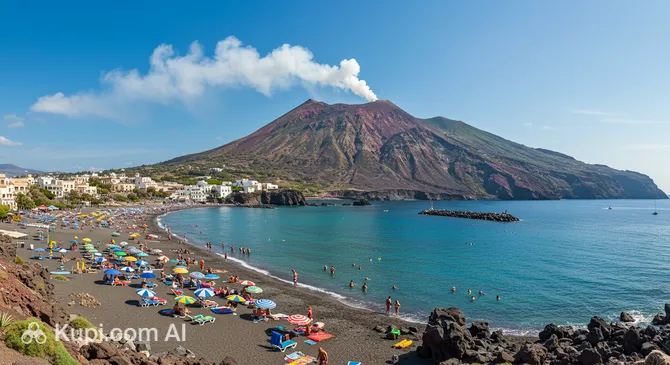
Vulcano is not just a town, but a true natural theater located on the volcanic island of the same name in the Tyrrhenian Sea. This picturesque corner is part of the Aeolian Archipelago off the northern coast of Sicily and belongs to the wonderful country of Italy. A very special atmosphere reigns here: the air is filled with a light scent of sulfur, and hot vapors rise from the depths of the earth, constantly reminding travelers of the slumbering power of nature.

Vulcano. Illustration.
Source: Kupi.com AI

Despite its worldwide fame, Vulcano maintains a cozy and intimate feel, with a permanent population of only about 940 people. There is no noise and bustle of big cities here; instead, you'll find the sincere hospitality of locals and a sense of time slowing down. Administratively part of the Province of Messina, this island represents a world of its own, where the history of Vulcano is written by nature itself, creating a unique landscape for living and relaxation.

The main magnets for tourists are the unique geological phenomena. Travelers come here to see the active Fossa crater, observe fumaroles, and experience the healing power of the famous sulfur mud baths. In addition to wellness treatments, the island offers relaxation on exotic black volcanic sand beaches and swimming in the warm thermal waters of the sea.

Vulcano is an ideal place for those seeking harmony with nature and new impressions. Whether it's climbing to the crater at sunset or a relaxing day in open-air natural spas, this island will give you unforgettable emotions and a desire to return again.

Weather Overview

The climate on the island can be described as mild Mediterranean, making it attractive for visiting almost all year round. Summer here is sunny and warm: in the hottest months, July and August, the average temperature stays around 25–26°C, with maximum values reaching 28°C. During this period, precipitation is minimal — only 4–6 wet days per month, which guarantees excellent conditions for a beach holiday.

The winter season on Vulcano is characterized by an absence of frost. Even in January and February, night temperatures rarely drop below 10°C, and during the day the air warms up to 11–13°C. However, travelers should be prepared for precipitation: November, December, and January are the wettest months, when the number of rainy days can reach 14–15. Expect warm dry summers and mild winters with frequent but usually short-lived rains.

The shoulder season, especially May and September, delights with comfortable warmth (about 18–23°C) and is suitable for long hikes to the crater. To choose the ideal time for a visit and not depend on the whims of nature, we recommend checking the detailed weather in Vulcano before planning your trip.

Average monthly temperature

Average monthly precipitation

Interesting Facts

In addition to its well-known natural beauty, Vulcano holds many fascinating stories and geological secrets that not all travelers are aware of. This island is not just a resort, but a living legend where ancient myths are closely intertwined with reality.

  • The Ancestor of the Name: Vulcano is considered the "godfather" of all fire-breathing mountains on the planet. Its name gave rise not only to geological formations worldwide but also to the Roman god of fire. According to ancient Greek beliefs, it was here, in the depths of the island, that the forge of the god Hephaestus was located, where he forged lightning bolts for Zeus himself.

  • Breath of the Earth: The island is famous for its fumaroles — special openings in the surface through which hot gases escape. This is one of the few places in Europe where tourists can witness the "breathing" of the earth firsthand and smell the characteristic scent of sulfur, reminding them of the turbulent underground life.

  • The Sleeping Giant: The last large-scale eruption here occurred in 1888–1890, when locals witnessed the appearance of new lava flows. Since then, the volcano has been under close scientific observation, but its crater is open to visitors: travelers can climb to the summit to see the traces of the past elements.

  • Abode of Legends: Many tales are connected to Vulcano, and according to one version, it was here that the myth of the Cyclopes was born. The island's unique landscapes and the echoes in its caves have inspired writers and artists for centuries, and local landscapes have repeatedly served as backdrops for films.

How to Get There

Vulcano is an island, so there is no direct land connection. A journey here is always a bit of an adventure involving a sea crossing. Usually, tourists fly to Sicily or the southern part of mainland Italy and then transfer to a ferry or hydrofoil. You can find all possible routes and more details on how to get to Vulcano on a dedicated page of our guide.

The nearest and most convenient hub for most travelers is Catania-Fontanarossa Airport (IATA: CTA). It is located in the city of Catania, approximately 151 km from Vulcano. This is a major international hub receiving many flights. From Catania airport, you can reach the port of Milazzo by bus or taxi (travel time about 2 hours), from where ferries to the Aeolian Islands depart regularly.

An alternative is Tito Minniti Airport (IATA: REG), located in the city of Reggio Calabria on the mainland (about 69 km from Vulcano in a straight line). You can also consider Lamezia Terme International Airport (IATA: SUF) in the city of Cosenza. Although it is geographically quite close (about 41 km in a straight line across the sea), the logistics will require a transfer to the port and a subsequent crossing.

For clarity, here is a summary of the main airports:

AirportPassenger trafficDistance
Lamezia Terme International Airport2.7 mln41 km
Tito Menniti Airport400 00069 km
Crotone310 000110 km
Catania-Fontanarossa Airport12.3 mln151 km
Comiso Airport260 642217 km

If you prefer rail transport, keep in mind that there is no railway on the island of Vulcano itself. The nearest stations are on the mainland or in Sicily. One of the key hubs is Napoli Centrale station in the city of Naples (about 279 km from Vulcano). This is a convenient option for those who want to combine a train trip with a direct ferry from Naples to the Aeolian Islands.

You can also use the Lamezia Terme Centrale station in the city of Cosenza (approximately 43 km in a straight line). From the train stations, you will need an additional transfer (bus or taxi) to the nearest port providing sea connections to the island.

Below is information about the nearest major railway stations:

StationPassenger trafficDistance
Lamezia Terme Centrale Railway Station1 mln43 km
Reggio di Calabria Centrale Station66 km
Salerno Railway Station6 mln243 km
Naples Centrale Station50 mln279 km
Brindisi Railway Station2.5 mln281 km

Main Attractions

Attractions:

Vulcano is a compact island where the main treasures are created by nature itself, though man-made sites also deserve travelers' attention. The heart of the island and its most impressive point of attraction is the Great Crater (Gran Cratere della Fossa). The climb takes about an hour and is accessible even to unprepared tourists. From the top, a breathtaking panorama of the entire Aeolian Archipelago opens up, and the sight of smoking fumaroles and fields of yellow sulfur creates the sensation of a trip to another planet.

Another hallmark of the area is the famous mud baths (Fanghi di Vulcano) and black volcanic sand beaches. Natural pools rich in sulfur compounds attract those looking to improve their health and experience unique open-air spa treatments. After bathing in the healing mud, tourists usually head to wash it off in the warm sea waters near the coast, where hot springs bubble up from the bottom, creating a natural jacuzzi effect.

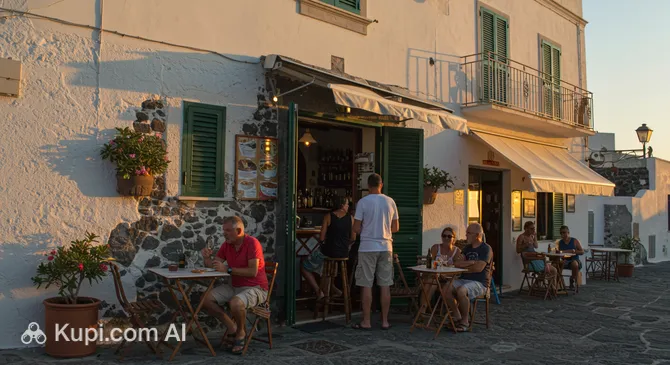
After active walks and wellness treatments, it’s worth dedicating some time to the local gastronomy. One of the popular spots for a sweet break is Peccati di Gola Bar and Pastry Shop. This establishment is famous for its authentic Sicilian pastries. Tourists come here to try traditional cannoli with ricotta or refreshing granita, which becomes a real lifesaver on a hot day.

Peccati di Gola Bar and Pastry Shop. Illustration.
Source: Kupi.com AI

Traveler photos:

For a more substantial lunch or dinner, travelers often choose Manitta Restaurant. This place is valued for its cozy atmosphere and excellent menu, which emphasizes the freshest seafood and Aeolian cuisine. Here, you can enjoy not only the flavors but also the hospitality characteristic of Southern Italy, turning an ordinary meal into a small cultural event.

Also worth noting is Da Ribaudo. This colorful spot is great for getting acquainted with local culinary traditions in a casual setting. Visiting such small but atmospheric locations allows you to better understand the rhythm of life for the islanders and feel the true taste of Vulcano, hidden from the eyes of those who limit themselves only to seeing the volcano.

Local Cuisine

Vulcano's cuisine is a bright and original reflection of Sicilian culinary traditions, enriched by the bounty of the Tyrrhenian Sea. The leading role here is played by the freshest seafood: tuna, swordfish, squid, and octopus. Local chefs prefer to prepare them simply but with heart — grilled or baked with aromatic herbs to preserve the natural taste of the ingredients.

Travelers wishing to get acquainted with the authentic flavors of the island should definitely order "pasta alla eoliana." This dish embodies the spirit of the region, combining pasta, ripe tomatoes, capers, olives, and anchovies. For a light snack, "panelle" — traditional crispy chickpea flour fritters — are perfect. The vegetables and goat cheese served in local restaurants have a special rich flavor thanks to being grown on fertile volcanic soils.

The sweet side of Vulcano is represented by the famous almond cookies and granita — an icy dessert made of lemon or fig that perfectly refreshes on a hot afternoon. The gastronomic experience would be incomplete without tasting local drinks: wine produced from grapes grown on the slopes of the volcano and homemade liqueurs infused with citrus and herbs.

The food culture on the island encourages leisurely relaxation. Locals and tourists love to spend time on open terraces, enjoying the sea breeze. An excellent spot for such a break is Café del Corso, where it's pleasant to have a cup of coffee or an aperitivo. In addition, it's worth visiting the farmers' markets, which turn into a real festival of colors and aromas: here you can buy olive oil, pickled vegetables, and fresh fruit directly from the producers.

Travel Tips

Welcome to Vulcano! To ensure your acquaintance with this unique island is as comfortable as possible and without unpleasant surprises, we have prepared a list of important practical recommendations that will help you enjoy your holiday without being distracted by everyday trifles.

  1. Clothing and Equipment. For the climb to the crater, be sure to bring closed, comfortable shoes with a non-slip sole (sneakers or trekking boots) — it is dangerous to walk on loose soil in flip-flops. If you plan to visit the mud baths, bring an old swimsuit that you don't mind throwing away: the pungent smell of sulfur is almost impossible to remove, and the fabric may change color.
  2. Transport. The island is compact, and it's convenient to get around the village on foot. To explore remote corners, it's best to rent a scooter, bicycle, or e-bike at rental points near the port. A car here would be more of a burden due to traffic restrictions and narrow roads.
  3. Finances. The official currency is the Euro. Although hotels and large restaurants accept cards, it is critically important to have a supply of cash on the island. Small cafes, souvenir shops, or when paying for umbrellas on the beach may not have terminals. There are few ATMs on the island, and they are sometimes empty, so it is better to withdraw money in advance before taking the ferry.
  4. Health and Safety. Be careful with the sun: there is almost no shade on the volcanic slopes, so a hat and high SPF sunscreen are mandatory. People with asthma or respiratory diseases are not recommended to stay near active fumaroles for long due to the high concentration of sulfur gases. A pharmacy is located in the port area, but it works with a siesta break.
  5. Communication. The main language is Italian, but many in the tourist zone understand English. Mobile connection and 4G work stably in the port and village area but may disappear near the crater or on remote beaches. Wi-Fi is available in almost all cafes.
  6. Local Etiquette. A relaxed atmosphere prevails on the island, but rules of decency are strictly observed. It is not customary to enter shops or restaurants (even open terraces) in swimsuits or with a bare torso — put on a T-shirt or tunic. Also, remember the siesta: from 1:00 PM to 4:00 PM, life on the island comes to a standstill, and many establishments close.
  7. What to Avoid. Categorically, you should not approach fumarole openings (smoking cracks) closely or try to touch the steam with your hand — the gas temperature at the outlet can reach hundreds of degrees, which risks serious burns.
  8. Important Nuance. Before visiting the mud baths or swimming in the sea in areas with underwater fumaroles, be sure to remove all silver jewelry. Upon contact with sulfur, silver turns black instantly, and it will be extremely difficult to return it to its previous appearance.

By following these simple tips, you will be able to avoid minor troubles and fully immerse yourself in the magic of Vulcano. We wish you a safe journey and the brightest impressions from your encounter with the slumbering volcano!

Entertainment & Nightlife

Nightlife in Vulcano differs significantly from the loud parties of Ibiza or Mykonos. You won't find massive nightclubs with booming bass until morning here. Instead, the island offers a relaxed "dolce vita" atmosphere, where the evening begins with a leisurely aperitivo at sunset and smoothly transitions into an open-air dinner. The epicenter of evening activity is the Porto di Levante area and its surrounding streets, where most establishments are concentrated.

The traditional evening ritual on the island starts with watching the sun go down. Tourists and locals gather on the west coast or at viewpoints to enjoy the picturesque vistas. One such place is Affaccio del Corso — a popular spot offering a magnificent panorama. It’s an ideal location to start the evening, where you can take beautiful photos and feel the sea breeze before heading to the bars.

After sunset, life moves to cozy bars and cafes. One of the best-known spots for evening relaxation is Peccati di Gola Bar and Pastry Shop. In the evening, there is a lively atmosphere here: guests come not only for sweets but also for excellent cocktails or a glass of local Malvasia wine. This establishment is perfect for those who want to spend time in pleasant company without unnecessary pretension.

Another point of attraction is Café del Corso. Located in a bustling zone, it becomes a hub for socialization where you can meet travelers from all over the world. Background music often plays here, setting the mood for long conversations. The dress code in most establishments is democratic: casual or smart casual is appropriate everywhere, though beachwear is not encouraged in the evenings.

Regarding practical tips, night walks in Vulcano are perfectly safe. Lighting on the main streets is good, and the crime rate is extremely low. Nevertheless, if you stay late at a remote restaurant, it's worth thinking about your return in advance: there are few taxis on the island, and calling one at night can be problematic, so it's better to count on a walk or arrange with a driver beforehand.

During the day, entertainment on the island is predominantly nature-based. There are no large amusement parks or theaters here. The main leisure activities include relaxing on beaches, boat trips around the archipelago, and, of course, visiting the famous mud baths. History buffs can browse small souvenir shops and local artisan workshops, which often stay open until late evening.

Parks & Museums

Vulcano is a unique place where the concept of a "city park" takes on a completely different meaning. There are no usual squares with manicured lawns here, as the entire island is a grand natural open-air reserve. The cultural and natural heritage of this area is inextricably linked to volcanic activity, which created landscapes resembling sets for science fiction films.

One of the most impressive natural zones is the Valley of Monsters (Valle dei Mostri), located on the Vulcanello peninsula. This is not a man-made garden, but a geological phenomenon: wind and sea have carved bizarre figures resembling animals and mythical creatures out of frozen lava for centuries. A walk here at sunset, when shadows lengthen and the "monsters" come to life, leaves a lasting impression and serves as an excellent alternative to traditional parks.

The heart of the island is the Isola di Vulcano Nature Reserve. This protected area covers the slopes of the main crater and surrounding zones. Here you can see rare plant species adapted to life on sulfurous soils, such as the bright gorse, which covers the black slopes with a yellow carpet in spring. This place is ideal for those who want to study the island's geology not from textbooks but in person, observing fumaroles and landscape changes.

As for museums, Vulcano is more focused on the contemplation of nature; however, curious tourists should visit the Volcanology Center (Centro Operativo INGV). Although it is not a museum in the classical sense, exhibitions and lectures explaining the nature of volcanism in the Aeolian Islands are often held here. Visitors can learn about monitoring the crater's activity and the history of geological observations, making the subsequent ascent to the summit more meaningful.

To dive into the rich history of the archipelago, it is highly recommended to take a short trip to the neighboring island of Lipari (just 10 minutes by boat), where the Aeolian Archaeological Museum is located. This is one of the most important museums in the Mediterranean, housing artifacts found on Vulcano as well: from prehistoric ceramics to Greek theatrical masks. It serves as the main cultural center for all the islands of the archipelago.

As an insider tip: head to the southern part of the island, to the Gelso area. Here, away from the tourist port, you'll find an old lighthouse and a secluded church surrounded by wild vegetation and silence. This place rarely makes it into standard guidebooks, but it is here that you can feel the authentic, untouched atmosphere of the island and enjoy solitude against the backdrop of majestic nature.

Getting Around

Given the compact size of the island, the public transport system on Vulcano is extremely simple and concise. You won't find a metro, trams, or railway tracks here. All transport logistics rely on bus services, taxi services, and, what is most popular among tourists, the rental of individual transport.

The only type of classic public transport is the buses of a local company (usually Scaffidi), which run along the main routes. The main line connects the port (Porto di Levante) with the Vulcano Piano plateau (a residential area in the center of the island) and the remote beach at Gelso on the southern tip. This is a reliable way to get to remote corners if you don't plan to drive yourself.

Paying for the bus is as simple as it gets. There are no special transport cards or mobile apps for payment here. Tickets are purchased directly from the driver upon boarding with cash. The fare is usually a few Euros one way (the price may vary slightly depending on the distance). We recommend always having small bills and coins with you, as change for large banknotes may not be available.

The bus schedule is highly seasonal. In the peak of summer (July–August), trips are quite frequent, allowing tourists to move easily between beaches and attractions. However, in the low season and winter, the number of trips is sharply reduced, sometimes to just a few per day. The current schedule is always posted at the bus stop in the port and on the windshield of the buses themselves.

The most popular alternative to buses is vehicle rental. Immediately upon arrival at the port, you will see many agencies offering rentals of scooters, ATVs, bicycles, and e-bikes. Also popular are "Meharis" — light open-top cars that have become a sort of symbol of summer holidays on the islands. A driver's license is required to rent motorized equipment. This is the best way to be independent of the schedule and explore the island at your own pace.

There is also a taxi service functioning on the island. Local taxis are not the usual sedans, but most often electric minivans or microbuses. They can be found at the rank by the port or called by phone through a hotel/restaurant. There are usually no meters in these cars; prices are fixed for specific routes, but it is better to clarify the fare with the driver before boarding.

In the Porto di Levante and Porto di Ponte areas, where the main tourist life, hotels, and mud baths are concentrated, it is most convenient to move on foot. Distances here are small, and a walk from the ferry pier to the black sand beach will take only 5–10 minutes. Walking allows you to best feel the atmosphere of this unique place without missing a single detail.

Accommodation

The choice of accommodation on the island of Vulcano, despite its modest size, is quite diverse and capable of satisfying the needs of travelers with different budgets. The bulk of the room stock consists of small cozy mid-range hotels, family-run bed and breakfasts (B&Bs), and apartments rented out by locals. There are no large chain hotels here, but there are several resort complexes that offer guests exclusive access to thermal pools and spa treatments directly on-site.

When choosing a place to stay, it is important to consider the island's geography and your holiday plans. The most popular and convenient area is Porto di Levante. This is where ferries dock, and where the famous mud baths, black sand beaches, and the start of the trail to the crater are located. Living here is convenient due to the proximity of infrastructure, but you should take into account the specific smell of sulfur, which can be felt when the wind changes.

For those seeking peace and cool air, the Vulcano Piano area, located on a plateau in the center of the island about 7 km from the port, is an excellent option. A more rural, authentic atmosphere reigns here, and the air is fresh and free of sulfurous impurities; however, you will definitely need a rented vehicle to stay in this zone. Fans of complete seclusion should consider the Gelso area on the southern tip of the island — it is the most remote and quiet corner with a picturesque lighthouse and uncrowded beaches.

The main booking tip is to plan your trip in advance. Vulcano is a very popular destination, especially in July and August, during the peak holiday season (Ferragosto). At this time, the best accommodation options are booked several months in advance, and prices reach their maximum. If you want to save money and avoid crowds, consider a trip in June or September.

The price range on the island varies from medium to high, and in general, staying here is more expensive than on mainland Italy or neighboring Sicily. There are practically no budget hostels, but you can find inexpensive rooms in guest houses. Booking is available through major international online platforms, though many apartment owners also work through local rental sites.

Nearby Cities

For those who want to explore the surrounding area, Vulcano serves as an excellent starting point for day trips to several interesting nearby places. Convenient sea connections allow you to reach major cultural centers in Sicily and mainland Italy to diversify your beach holiday with new experiences.

Messina is the nearest large city on the Sicilian coast, often called the "gateway to Sicily." People come here to see the famous Cathedral with the world's largest mechanical and astronomical clock, which puts on a show at noon. A walk through the city will allow you to admire the Fountain of Orion and enjoy the panorama of the Strait of Messina.

Reggio Calabria is located on the opposite shore of the strait, on the very "toe" of the Italian boot. This city is famous for its promenade, which the poet Gabriele d'Annunzio called "the most beautiful kilometer in Italy." The main cultural gem here is the National Archaeological Museum of Magna Graecia, which houses the famous ancient bronze statues known as the "Riace Warriors."

CityPopulationDistance
Vibo Valentia33 64219 km
Rosarno14 77621 km
Pizzo9 32925 km
Gioia Tauro20 07626 km
Polistena10 37333 km

These nearby destinations provide insight into the region's diverse culture and landscapes, combining the island atmosphere with the dynamics of big cities.

Shopping & Souvenirs

Shopping on Vulcano is not a chase for global brands or a marathon through huge malls. It is, above all, an opportunity to touch the authentic culture of the island and take home a piece of its fiery character. Local trade is focused on uniqueness and handmade work: here you will find goods that cannot be bought in large cities. The atmosphere in the shops is relaxed and friendly, turning the process of choosing souvenirs into a pleasant part of the vacation.

The heart of the island's shopping life is the Porto di Levante area. Most shops are concentrated on the streets leading from the port to the mud baths and the main beach. Strolling here, you will find many colorful shops where windows are full of bright beachwear, ceramics, and jewelry. It is an ideal place for a leisurely promenade after lunch or at sunset, when the heat subsides and the streets fill with tourists.

If you are used to massive shopping centers, Vulcano will surprise you with their complete absence. The island maintains its identity, avoiding the construction of large commercial complexes. All shopping here consists of visits to small private boutiques and souvenir shops, where owners often know their customers by sight and are ready to personally help with the choice.

Markets on the island are informal and seasonal. In the tourist zone, you can often find open pavilions and stalls resembling mini-bazaars. They sell everything from straw hats and swimsuits to local artisan products. Food stalls attract with the scents of fresh fruit, spices, and traditional Sicilian delicacies, creating a lively and colorful atmosphere of a southern market.

The choice of souvenirs on Vulcano is truly special. The island's signature items are products made of lava stone and obsidian — volcanic glass that has been processed here since ancient times. Also very popular is sulfur-based cosmetics: soaps, creams, and healing muds created based on local natural resources. This is an excellent and useful gift that will remind you of the island's healing power.

One cannot forget gastronomic purchases. Tourists often take home the famous Malvasia sweet wine and marinated capers, which are considered some of the best in the region. For sweet souvenirs, we recommend stopping by Peccati di Gola Bar and Pastry Shop. Here you can buy traditional sets of Sicilian almond paste cookies, which travel well and will be a delicious reminder of the trip.

When going shopping, it is important to remember the local daily routine. Siesta here is sacred: many shops close around 1:00 PM and reopen only after 4:00 PM or 5:00 PM, then working until late. Regarding payment, despite the development of cashless payments, cash Euros remain the preferred method, especially in small kiosks and souvenir shops where terminals may be missing or temporarily out of order.

The Tax Free system in Italy applies to tourists from non-EU countries for purchases over a certain amount. However, on Vulcano, where small businesses predominate, finding shops that issue such checks can be difficult. If you are planning a costly purchase, such as jewelry or valuable ceramics, it is worth checking with the seller in advance about the possibility of an VAT refund.
Reached the end of the page?

That means the route is fully explored