Support

Stromboli

About

Stromboli is not just a picturesque island, but a true natural legend, known worldwide as the "Lighthouse of the Mediterranean." This unique corner, where a majestic volcano meets the azure waters of the Tyrrhenian Sea, possesses a special magnetic atmosphere. Here, life flows at a rhythm dictated by nature itself, and travelers come for unforgettable impressions and the feeling of the primordial elements.

Geographically, the island is part of the Aeolian (Lipari) archipelago, located north of Sicily, and is a territory belonging to Italy. The climate here is mild and Mediterranean, but the main feature is the constant volcanic activity that shapes the landscape and the daily lives of the locals. The island's population is small — only about 400 people, creating a sense of seclusion and intimacy that is rare for popular resorts.
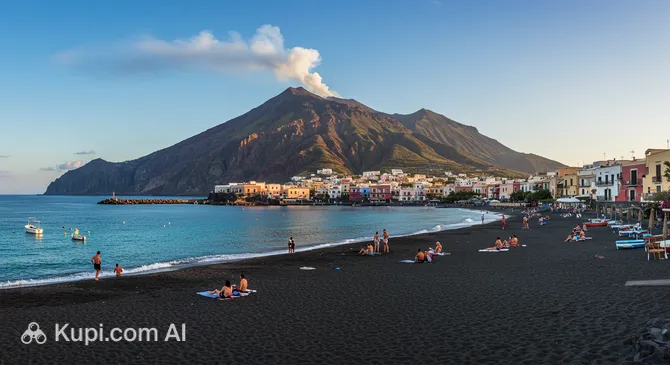
Stromboli. Illustration.
Source: Kupi.com AI

Despite its modest size, the history of Stromboli is rich with events dating back to antiquity. Since ancient times, people have learned to coexist with the formidable volcano, using the fertile volcanic soil for winemaking and agriculture. Today, the island attracts not only geologists but also romantics inspired by Roberto Rossellini's famous film, which made these places world-renowned in the mid-20th century.

The main attraction, of course, is the volcano itself. Tourists can observe the spectacular lava flow at the Sciara del Fuoco ("Stream of Fire"), which is particularly impressive at night from the deck of a pleasure boat. No less interesting are the black volcanic sand beaches, such as Piscità and Ficogrande, which contrast with the white walls of the local houses. A walk through the narrow streets of the main settlement, San Vincenzo, will provide breathtaking views.

A visit to Stromboli is a chance to touch the living energy of the Earth. If you are looking for a place to forget the hustle and bustle of the city and enjoy the dramatic beauty of nature, this island will be an ideal stop on your Italian itinerary.

Weather Overview

The island's climate is perfect for travel, offering guests a classic Mediterranean atmosphere. Summer on Stromboli is hot and sunny: in the peak months of July and August, the average air temperature rises to 26–27°C. This is the driest time of year when rain is a great rarity, and the number of humid days is minimal, which is ideal for beach vacations and night observations of the volcano.

The winter period here is very mild; there are no frosts. Even in the coldest months of January and February, the temperature stays in a comfortable range of 12–14°C. However, keep in mind that with the arrival of November and December, cloudiness increases, and the number of days with precipitation rises to about 12 per month, so an umbrella might be useful.

When planning your trip, especially if your goal is trekking to the crater, it is important to check the forecast, as the weather in Stromboli can affect the availability of tourist routes. Expect warm, dry summers and mild winters with occasional rain.

Interesting Facts

Помимо невероятных пейзажей и действующего вулкана, Стромболи скрывает множество любопытных деталей, которые удивляют даже опытных путешественников. Вот несколько фактов, раскрывающих уникальный характер этого места:
  • Life without streetlights. There is virtually no street lighting on the island at night. This is not a technical issue but a conscious choice: total darkness is necessary so that residents and guests can fully enjoy the sight of glowing lava and the bright starry sky, uninterrupted by city lights.

  • The smallest port in the world. In the tiny settlement of Ginostra, located on the southwestern slope, lies the port of Pertuso. It is officially listed in the Guinness World Records as the smallest port in the world, capable of accommodating only one boat at a time.

  • Cinematic fame. Until the mid-20th century, the island was a quiet fishing corner until filming began for Roberto Rossellini's movie. The director's scandalous romance with Hollywood star Ingrid Bergman brought the world's press attention to Stromboli and turned it into a fashionable tourist destination.

  • A scientific benchmark. The activity of the local volcano is so characteristic and unique that it gave its name to an entire geological term. Scientists worldwide now use the "Strombolian eruption type" to describe rhythmic lava ejections of moderate intensity.

How to Get There

A journey to a volcanic island is always an exciting adventure that begins long before arriving at the port. Since Stromboli is a small island, it does not have its own runway or railway station. Tourists will need to plan a combined route: first reaching one of the major transport hubs in Sicily or the mainland, and then transferring to a ferry or hydrofoil. You can find out more details about how to get to Stromboli by studying all the logistical nuances, and below we look at the main arrival points.

There is no airport in the town of Stromboli itself, so travelers most often choose to fly to Sicily. One of the most popular options is Catania-Fontanarossa Airport (CTA), located in the city of Catania, about 148 km from the island (as the crow flies). This is a major international hub receiving many flights. From here, you need to take a bus or taxi to the port of Milazzo (travel time to the port is about 2–2.5 hours), from where regular ferries depart to the island.

An alternative and convenient option on the Italian mainland is Lamezia Terme International Airport (SUF), located near the city of Cosenza (distance to Stromboli is about 90 km). This is an important regional hub, convenient for those planning to travel by sea from the ports of Calabria or Naples. The car journey to the nearest port takes about 1.5–2 hours.

For clarity, here is a summary of the main airports through which you can build a route:

AirportPassenger trafficDistance
Tito Menniti Airport400 00089 km
Lamezia Terme International Airport2.7 mln90 km
Catania-Fontanarossa Airport12.3 mln148 km
Crotone310 000163 km
Falcone-Borsellino Airport8.9 mln198 km

Railway travel also requires a transfer to sea transport, as there are no rails on the island itself. A convenient starting point can be the Napoli Centrale station in the city of Naples. Although it is about 242 km from Stromboli, direct ferries and boats to the Aeolian Islands run from the port of Naples during high season. This is an excellent choice for those who want to combine the trip with a tour of Italy's southern capital.

Another option is the Lamezia Terme Centrale station, located in the Calabria region (near the city of Cosenza), about 91 km from the destination. From here, it is convenient to reach the ports on the Tyrrhenian coast. A taxi or bus ride to the pier will take about 1.5 hours.

Below are the nearest and most significant railway stations for planning your trip:

StationPassenger trafficDistance
Reggio di Calabria Centrale Station85 km
Lamezia Terme Centrale Railway Station1 mln91 km
Salerno Railway Station6 mln212 km
Naples Centrale Station50 mln243 km
Mergellina Railway Station6.2 mln245 km

Main Attractions

Despite its compact size, the island offers travelers a unique set of experiences, where nature and time have acted as the primary architects. Stromboli's attractions are not museums with dusty exhibits, but living, breathing locations that allow you to feel the power of the elements and the charm of the Italian hinterland.

One of the most photographed spots is Strombolicchio — a tiny volcanic islet-rock rising from the sea about 1.5 kilometers from the coast. It is essentially the "grandfather" of the current volcano, a remnant of an ancient vent that is hundreds of thousands of years old. At the top of the inaccessible cliff sits a lighthouse, reached by more than 200 steps carved directly into the stone. Although landing on the rock itself is often restricted to preserve a rare lizard species found only here, a boat trip around Strombolicchio with a swim in the crystal-clear waters at its base is a must-do.

The heart of social life and a magnificent viewpoint is Piazza San Vincenzo, named after the church of the same name that dominates the landscape. The temple, with its characteristic yellow and white facade, is the main landmark of the village. From the square's terrace, a breathtaking panoramic view of the sea and the Strombolicchio rock opens up. It is the perfect place to watch the sunset while enjoying an aperitif at one of the local cafes, observing as the sun slips behind the horizon, painting the sky and sea in incredible hues.

For those seeking complete seclusion, the village of Ginostra, located on the opposite side of the island, will be a true discovery. It can only be reached by sea (or by a difficult and often dangerous mountain trail), and the place is famous for its isolation. There are no cars here, and goods are transported by mules. The main feature of Ginostra is its unique atmosphere of silence and the smallest port in the world, squeezed between the rocks. A walk through the narrow stepped streets of this settlement transports tourists back in time, showing the islanders' way of life without embellishment.

The absolute magnet for all guests remains the Sciara del Fuoco. This is a wide, sloping gully on the northwestern side of the volcano, down which red-hot lava and rocks roll directly into the sea. Although this process can be observed from land (from certain safe altitudes), the best view is from the water. Evening boat excursions allow you to see the fiery streams glowing in the dark, hissing as they touch the water — a sight that is impossible to forget.

Local Cuisine

Stromboli's cuisine is a vivid reflection of the island's volcanic character and the generosity of the Tyrrhenian Sea. Gastronomic traditions here are closely intertwined with Sicilian ones but have their own unique accent. The main stars of the table are always the freshest seafood, which fishermen bring to the port early in the morning. You should definitely try totani (local squid), which are masterfully prepared here: they are stuffed, grilled, or stewed in sauce with potatoes and tomatoes.

A special place in local culinary arts is held by capers and olives, which grow directly on the mineral-rich volcanic soil. They give dishes a rich, piquant flavor. The island's signature dish is pasta alla strombolana. Recipes can vary from restaurant to restaurant, but the classic version consists of spaghetti with a sauce of tomatoes, plenty of capers, olives, garlic, mint, and sometimes anchovies. This simple but incredibly aromatic dish perfectly captures the Mediterranean spirit.

Speaking of drinks, it's impossible not to mention the famous Malvasia (Malvasia delle Lipari). This sweet, amber dessert wine is called the "nectar of the gods" and is produced in the Aeolian Islands. A glass of cool Malvasia is the perfect end to dinner, especially when paired with local almond cookies. In the heat of the day, the best choice is a refreshing granita—an icy dessert made from fruit juice or coffee, which is traditionally eaten with a fluffy brioche bun, often replacing breakfast with this combination.

The food culture on Stromboli is characterized by relaxation and a lack of rush. It is not customary to hurry here: dinners start late, often after sunset, when the heat subsides or tourists return from evening excursions to the volcano. Most establishments are cozy family-run trattorias and restaurants with open terraces offering views of the sea or the smoking summit. Street food is represented in bakeries (panificio), where you can buy arancini (stuffed rice balls) or focaccia for a quick snack before heading into the mountains.

Travel Tips

Traveling to Stromboli is an encounter with wild nature, so preparing for a trip to this unique island in Italy requires special attention to detail. To ensure your vacation is as comfortable and safe as possible, we have gathered the main recommendations to help you avoid surprises in this corner of the Mediterranean.

  1. Clothing and Essentials. The most important item in your suitcase is a headlamp or pocket flashlight. There is absolutely no street lighting on the island, and moving around at night without light is impossible. For trekking to the viewpoints, sturdy boots are a must (going in flip-flops is dangerous and uncomfortable), and a windbreaker will come in handy for evening walks when the breeze blows from the sea.

  2. Transport. Stromboli is a car-free zone for tourists. Here you can only go on foot or move around in electric carts and three-wheeled scooters (moto-ape), which work as taxis and help deliver luggage from the port to the hotel. You cannot rent a car here, and there is nowhere to drive one anyway.

  3. Finances. The official currency is the Euro. Although cards are accepted in many restaurants and hotels, it is highly recommended to have a supply of cash. There are very few ATMs on the island (usually one or two), and they may not work or may run out of bills, especially during the high season. Tipping is welcome but remains at your discretion (usually 5–10% of the bill).

  4. Health and Safety. The pharmacy (Farmacia) is located in the San Vincenzo area, but it has limited hours and a siesta. Bring a basic first-aid kit, motion sickness medication (for the ferry), and sunscreen. Be careful on the beaches: jellyfish are sometimes found in the water.

  5. Communication. Locals speak Italian, but English is well understood in the tourism sector. Mobile service and 4G work stably in the village, but the signal may disappear on the volcano slopes or in remote bays. It is useful to download an offline map of the island in advance.

  6. Local Etiquette. Life on the island flows slowly. It is customary to say hello when entering small shops and to keep quiet during the afternoon rest (siesta). Since the island is small, a respectful attitude toward the peace of local residents is extremely important.

  7. What to Avoid. It is strictly forbidden to climb to the volcano's crater without a certified guide above the permitted level (usually 290 or 400 meters, depending on activity). This is deadly dangerous and punishable by heavy fines. Also, do not walk barefoot on asphalt or black sand at noon—you can get burns.

  8. Additional Tip. If you plan to return to the mainland or Sicily on the last ferry, always check the weather forecast and the schedule in advance. In case of heavy seas, trips may be canceled, so it is better to have a Plan B or allow for one extra day in case of a storm.

Stromboli teaches travelers to slow down and contemplate the majesty of the elements. By following these simple practical tips, you can feel confident and fully immerse yourself in the magical atmosphere of the "Lighthouse of the Mediterranean" without being distracted by domestic inconveniences.

Entertainment & Nightlife

Nightlife on Stromboli is fundamentally different from the noisy parties of Ibiza or Mykonos. Here, an atmosphere of "barefoot chic" prevails, where luxury lies in simplicity, and the starry sky acts as the main decorator. Since there is no street lighting on the island, the evenings have a special charm: the darkness is dispersed only by the lights of establishments, the moonlight, and, of course, the glow of the active volcano.

The epicenter of evening activity is the town's main square — Piazza San Vincenzo. This is where tourists and locals flock after sunset. Tradition calls for starting the evening with a leisurely aperitif. The crowd here is eclectic: from tired but happy trekkers in hiking boots to elegant Italians arriving on yachts. The dress code on the island is as relaxed and democratic as possible, so evening gowns and heels are best left at home — comfortable shoes are a necessity here.

Among the specific establishments that have become island legends, several places stand out:

  • Ritrovo Ingrid — perhaps the most famous bar-restaurant on the island, named after actress Ingrid Bergman. It is located right on the main square and is famous for its terrace with panoramic views of the sea and the volcano. It is the perfect spot for watching the sunset with a cocktail in hand.

  • Tartana Club — a cult spot for those who want to continue the fun after midnight. This is the island's historic club where discos and parties take place. Here, you can dance to modern rhythms and feel the energy of the Italian summer in the company of young people.

  • Il Canneto — another popular spot known for its granita and excellent selection of drinks. A more tranquil atmosphere reigns here, perfect for long conversations accompanied by the sound of the surf.

A unique feature of the local "nightlife" is the night boat tours to the Sciara del Fuoco. Many tourists prefer the deck of a pleasure boat over bars to watch the fireworks of eruptions against the black sky from the water. It’s a spectacle that replaces any laser show.

As for safety, Stromboli is an exceptionally peaceful place. Crime is virtually non-existent, and you can walk safely at any time. However, there is an important nuance: due to the lack of streetlights, pitch darkness falls immediately after sunset. Be sure to bring a flashlight with you or keep an eye on your phone's charge to light your way, especially if you move away from the central square.

Daytime entertainment on the island is inextricably linked with nature and relaxation. There are no large shopping malls or amusement parks here. Guests spend time exploring cozy shops with ceramics and souvenirs on Via Roma, sunbathing on black sand beaches, or going on boat trips around the island to the Strombolicchio rock.

Parks & Museums

The cultural and natural landscape of Stromboli is unique: there are no familiar city parks with fountains or huge museum complexes. The entire island is essentially one large open-air museum and nature reserve, where the exhibits are solidified lava flows, rare plants, and commemorative sites related to cinematic history and geology.

Natural Zones and Protected Territories

Since the island is the summit of an active volcano, the concept of a "park" here transforms into wild nature trails. The main green area can be considered the trails to the Observatory (Osservatorio). This is a picturesque route passing through thickets of Mediterranean maquis, wild reeds, and yellow broom. A walk here allows you to enjoy the contrast between the lush green vegetation and the black volcanic ash, while the air is filled with the aromas of herbs and the sea.

Special attention should be paid to the Marine Reserve around Strombolicchio. Although landing on the rock itself is restricted to preserve the population of the rare Aeolian lizard, the waters around it are a true underwater garden. This spot attracts divers and snorkelers with its water clarity and wealth of marine flora, preserved thanks to the territory's protected status.

Museums and Cultural Centers

For those who want to understand the nature of this place, the INGV Information Center (National Institute of Geophysics and Volcanology), located near the port, is a must-visit. It is not just a tourist office, but a full-fledged scientific museum in miniature. Here you will find visual models of the volcano, rock samples, and information stands explaining the mechanisms of "Strombolian activity." A visit here will help you better understand the powerful processes occurring right beneath your feet.

Another important cultural point is the House-Museum of the film "Stromboli, Land of God" (Casa Rossellini). Although it is a private residence and access to the interior may be limited, the building where director Roberto Rossellini and actress Ingrid Bergman lived during filming in 1949 has become a pilgrimage site for cinephiles. A commemorative plaque is installed on the facade, and in the nearby souvenir shops, you can find archival photographs and books telling how Hollywood changed the fate of this fishing island.

Architecture and Monuments

The architectural dominant of the settlement is the Church of San Vincenzo Ferreri. This 18th-century temple is interesting for its typical Aeolian architecture: simple lines, whitewashed walls, and bright ocher accents. The church stands on an open terrace facing the sea and serves not only as a spiritual center but also as a symbol of the resilience of local residents in the face of the elements.

Insider Tip

To find silence and an authentic atmosphere, head to the Piscità area. Here, away from the main square, you can wander among old villas buried in bougainvillea and find secluded black sand coves where nature seems completely untouched by man.

Getting Around

A public transport system in the sense a city dweller is used to does not exist on Stromboli. Here you won't find a metro, trams, trolleybuses, or regular buses. Due to the island's miniature size and narrow streets, which are often just paved paths, the use of large vehicles is physically impossible. The entire island is essentially one large pedestrian zone, where the main method of movement remains your own feet.

The only type of motorized "public" transport is small electric golf carts and the famous three-wheeled "Moto Ape" scooters. They function as taxis and freight transport. These nimble little vehicles meet tourists at the port upon ferry arrival and help deliver heavy luggage to hotels or apartments. You can call them through the hotel reception or find them at the stand by the pier, but flagging one down "by hand" on the narrow streets can be difficult.

The payment system for such electric taxis is as simple and conservative as possible: cash rules here. There are no transit cards, validators, mobile apps, or contactless payment via terminals in the transport. The cost of a trip is usually fixed or negotiable; the price is often set per person or per piece of luggage rather than per vehicle. An average ride through the village can cost between 10 and 20 euros, so it is extremely important to have small bills with you.

A specific form of transport can be considered water taxis. Since reaching the village of Ginostra on the opposite side of the island by land is extremely difficult and dangerous, local boatmen operate regular and private trips between the port of San Vincenzo and Ginostra. Tickets for these water shuttles are bought on-site, and prices depend on the season and time of day.

As for alternative ways to get around, car rentals are not possible on the island, and entry with one's own vehicle for non-residents is prohibited during the season. Car sharing also does not exist here. Bicycle rentals are rare, as the terrain with steep climbs and volcanic sand makes cycling exhausting and inconvenient for most tourists. Scooters (mopeds) can be rented at some points, but their number is limited.

Main tip for the tourist: count on walking. Distances in the residential area are small—the entire village of San Vincenzo can be walked from end to end in 20–30 minutes. However, always keep in mind that streets often go uphill. If you plan to move around in the dark when transport is no longer operating (usually after midnight taxi activity decreases), be sure to carry a flashlight, as there is no street lighting on the roads.

Accommodation

Accommodation on Stromboli is an integral part of immersion in the island's atmosphere. Here you won't find massive skyscraper hotel chains or standard "all-inclusive" resort complexes. The hotel infrastructure is harmoniously integrated into the landscape: most accommodation options are traditional Aeolian houses—white cube-shaped buildings with flower-covered terraces and columns supporting reed canopies.

The main housing stock is concentrated in two locations with completely different spirits. The most popular and convenient area is San Vincenzo. This is the heart of the island, where the port, shops, and restaurants are located. Staying here puts you within walking distance of the start of trekking routes and black sand beaches like Scari. If you are looking for peace and proximity to the sea, look into the Piscità area. This is a more secluded zone with villas and access to cozy coves, ideal for a quiet getaway.

For lovers of extreme seclusion, there is an option to stay in the village of Ginostra on the opposite side of the island. It’s important to remember that it can only be reached by sea, and getting to the "center" in the evening won't be possible. This is a choice for those who want to completely detach from civilization, enjoying the silence and sounds of nature without electric streetlights.

Tourists are offered a wide range of housing: from budget rooms in family guesthouses (B&Bs) to luxury villas and boutique hotels. Prices on the island are generally higher than on mainland Italy, especially during the high season. "Luxury" here is understood not as golden faucets, but as privacy, a private terrace with panoramic views of the sea and the active volcano, and authentic interior design.

Booking Tip: Stromboli is a very small island with limited space. In the peak months (July and August), demand many times exceeds supply. It is highly recommended to book accommodation 4–6 months before your trip. If you plan a one-day visit with an overnight stay to see the night eruption, take care of your lodging in advance, as finding a free room "on the spot" during the season is almost impossible.

Accommodation can be booked through popular international online platforms, but many local owners of apartments and small pensions prefer direct communication through their own websites or correspondence. The average price range varies from moderate (in the off-season) to high, but the unique experience of sleeping at the foot of the "Lighthouse of the Mediterranean" is definitely worth it.

Nearby Cities

For those who want to explore the surroundings, Stromboli serves as an excellent starting point for day trips to several interesting nearby locations:

One of the most convenient directions for a visit is Milazzo. This city is often perceived only as a transit port, but it deserves separate attention. The main gem here is the majestic Milazzo Castle (Castello di Milazzo), one of the largest fortified complexes in Europe, towering over the city. A walk through the old quarters of "Borgo Antico" will give you a sense of traveling back in time, and local restaurants will offer excellent Sicilian dishes.

A bit further away is Messina—the "gateway to Sicily." The city is famous for its Cathedral, whose bell tower houses the world's largest astronomical clock. At noon, you can watch a mechanical performance with gilded figures, which attracts many tourists. Messina is also interesting for its fountains, wide avenues, and unique view of the strait separating the island from the mainland.

If you are ready to cross the strait, it is worth visiting Reggio Calabria on mainland Italy. This city is famous for its promenade, which the poet Gabriele D'Annunzio called "the most beautiful kilometer in Italy." Here you will find the National Archaeological Museum, home to the famous "Riace Bronzes"—ancient bronze statues that have become a symbol of the region. It is a wonderful place to get acquainted with the history of Magna Graecia.

CityPopulationDistance
Panarea28021 km
Salina4 20042 km
Lipari12 81943 km
Vulcano94060 km
Milazzo31 23163 km

These nearby destinations provide insight into the diverse culture and landscapes of the region.

Shopping & Souvenirs

Шопинг

Shopping on the island of Stromboli is fundamentally different from the typical shopping trips in large Italy cities. Here you won't find multi-story malls, outlets, or boutiques of world-famous luxury brands. Trade on the island is intimate, seasonal, and very authentic. It is more of a pleasant addition to walks, an opportunity to purchase unique handmade items and local delicacies that will remind you of your volcanic adventure.

Main Shopping Streets

All commercial life on the island is concentrated in the main settlement—San Vincenzo. The main artery for shopping is Via Roma, which gently climbs from the port to the main square. Walking along it, you will encounter a succession of small boutiques and souvenir shops. The second center of attraction is Piazza San Vincenzo itself, where shops with clothing, ceramics, and books are located around the church. Here you can buy everything from beach accessories to elegant outfits in the "Aeolian chic" style.

Shopping Centers

There are absolutely no shopping centers or supermarket chains on Stromboli. This is a deliberate policy to preserve the unique character of the island. All trade is conducted in small private shops, often located on the first floors of residential buildings. This creates a special cozy atmosphere where owners know their customers by face and are always ready for a chat.

Markets

There are no classic markets with stalls here, but their function is performed by early morning spontaneous sales in the port. Early in the morning, fishing boats arrive in the Scari area, and the freshest catch can be bought directly from the boat. This is the best place to find swordfish or squid for dinner. Fruits and vegetables are sold in small grocery stores (alimentari), where the assortment depends on the season and deliveries from Sicily.

Souvenirs: What to Bring Back

The choice of souvenirs on Stromboli is dictated by the island's nature. The most popular gift is jewelry made from lava stone and obsidian. Local craftsmen make stunning bijoux from them: bracelets, pendants, and earrings. It is also worth paying attention to:

  • Ceramics: Bright plates and tiles depicting the volcano ("Iddu," as the locals call it) or lemons, hand-painted.
  • Textiles: T-shirts with creative eruption prints or natural linen clothing, ideal for the hot climate.
  • Gastronomy: Be sure to buy a jar of marinated capers, which grow everywhere here, and a bottle of sweet Malvasia wine.
  • Books: The local bookstore on the square has an excellent selection of photo albums and literature about volcanoes.

Working Hours and Payment

When planning your shopping, remember the sacred rule of siesta. Shops usually open around 9:00 or 10:00 AM, work until 1:00 PM, and then close for a long break. Evening trade resumes after 5:00 or 6:00 PM and continues until late at night, often until 10:00–11:00 PM, especially during high season. Most souvenir shops and boutiques accept bank cards, but in small grocery stores or when buying small items, cash euros will come in very handy. There are few ATMs on the island, and they do not always work, so a supply of banknotes is necessary.

Tax Free

The tax refund system (Tax Free) theoretically operates on Stromboli, as in all of Italy, for purchases over 154.94 euros in one receipt. However, in practice, only a few shops on the island issue the corresponding documents, as most retail outlets belong to small businesses. If you plan a large purchase (for example, jewelry or expensive clothing), it is better to check with the seller in advance about the possibility of arranging a tax-free refund.

Reached the end of the page?

That means the route is fully explored