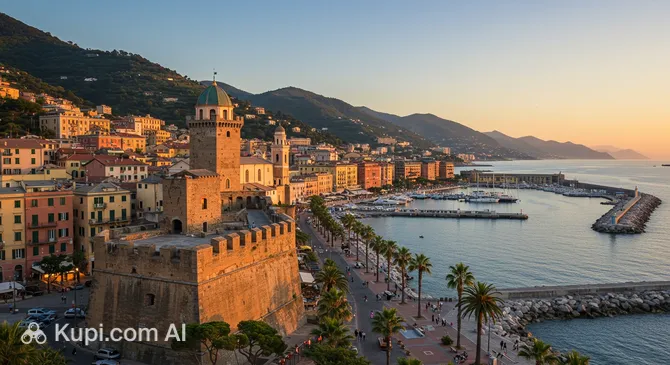
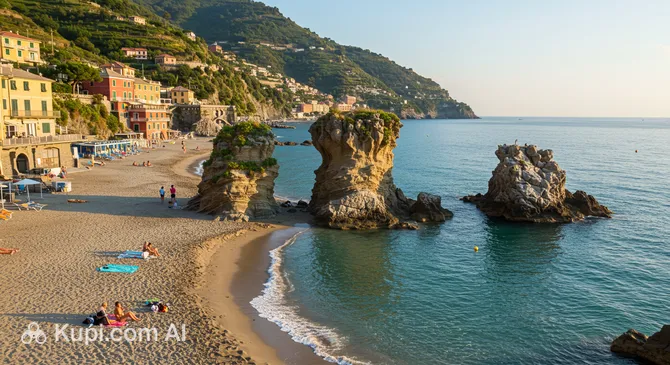
Savona is a charming city, a true gem of the Ligurian coast of Italy, nestled on the famous Riviera di Ponente. Just an hour's drive from Genoa, it serves as an excellent starting point for exploring picturesque coastal routes and offers guests a unique blend of history and maritime romance.
The city is blessed with a mild Mediterranean climate, with gentle sunshine almost year-round, making it an attractive destination at any time. With a population of about 60,632 people, Savona is an important port center and the administrative heart of the province of the same name, while maintaining the atmosphere of a leisurely and welcoming Italian provincial town.
Savona. Illustration.
Source: Kupi.com AI
Savona fascinates with its harmonious combination of antiquity and modernity. Here you can stroll through medieval streets leading to cozy squares, admire ancient towers, and, of course, visit the impressive Priamar Fortress, which rises proudly above the city and the sea. Let's not forget the magnificent beaches of Savona, many of which have been awarded the prestigious "Blue Flag" for their cleanliness and facilities.
If you are looking for an authentic Italian experience away from the crowded tourist paths, but with a rich cultural heritage and magnificent landscapes, Savona is exactly the place that will give you unforgettable impressions and a desire to return again.
When planning a trip to Savona, it's worth considering the local climate. Summer here is warm and sunny, with temperatures perfectly suited for relaxing by the sea. The average temperature in the hottest months, July and August, is around 22-23°C, with maximums reaching 26-27°C. Winters in Savona are mild: the average temperature in January stays at approximately 4.8°C, and in December – 5.0°C, while minimum temperatures rarely drop significantly below 1-2°C.
Overall, Savona is characterized by warm summers with occasional but usually short-lived rains, and cool winters when precipitation is also possible but not heavy. The amount of rainfall throughout the year is modest, averaging 2-3 mm per month, with a slight increase to 4-5 mm in May, October, and November, when there are also more rainy days. To get a complete picture of the weather conditions, we recommend reviewing the detailed information on the Savona Climate page.
Average monthly temperature
Average monthly precipitation
Interesting Facts
Beyond its picturesque landscapes and famous landmarks, Savona hides many surprising stories and little-known facts that can reveal this charming Ligurian city in a new light. Here are just a few of them:
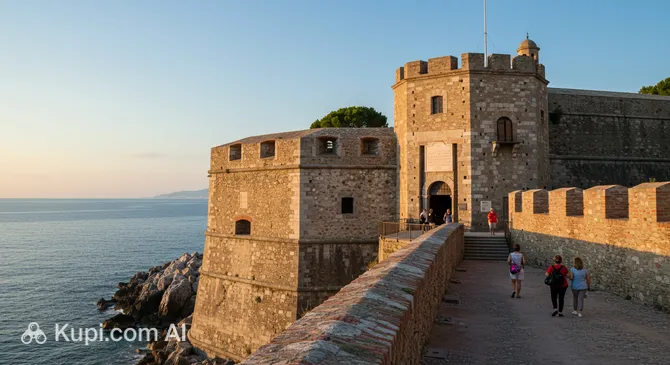
Priamar Fortress. Illustration.
Source: Kupi.com AI
Traveler photos:
Ancient Roots and Rivalry with Genoa: Savona's history dates back centuries, as far as the Bronze Age, with the first written mentions of the city dating to the 3rd century BC. There is a legend that, in alliance with the Carthaginians, the Savonese once destroyed Genoa, which long established the city's reputation as independent and proud.
The Majestic Priamar Fortress: This symbol of the city, built in the 16th century on the shore, is considered one of the most impressive fortresses in Liguria. Today, it hosts archaeological excavations, museums, and even a modern open-air theater, making it not just a historical monument but a living cultural center.
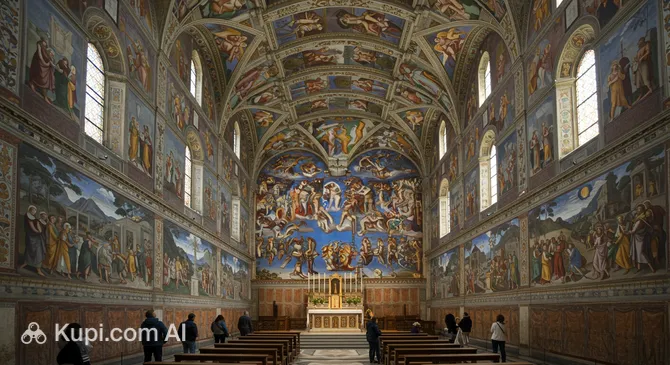
Its Own Sistine Chapel:Savona is the birthplace of Pope Sixtus IV, a famous patron of the arts. It was by his commission that the city built its own Sistine Chapel. This architectural gem, second in fame only to its world-renowned Roman namesake, still amazes with its splendor.
Medieval Atmosphere: Savona has beautifully preserved numerous medieval towers and narrow ancient streets. Walking through them, you can literally feel the breath of history, while locals are happy to share legends about brave sailors and mysterious events from the past.
How to Get There
There are several convenient ways to reach Savona, a picturesque city on the Ligurian coast of Italy. The main options for travelers are flights to nearby international airports followed by a transfer, as well as train journeys through the region's major railway hubs.
Although Savona does not have its own passenger airport, the city is well-connected to several major air hubs. The most convenient airports for arrival are:
The nearest and very convenient option is Cristoforo Colombo Airport (IATA: GOA), located in Genoa, approximately 32 km east of Savona. This is a major international airport, from which Savona can be reached by car or taxi in about 45-60 minutes. Public transport options are also available, usually involving a train or bus from Genoa.
Another popular choice, especially for international flights, is Nice Côte d'Azur Airport (IATA: NCE) in Nice, France. It is located about 124 km west of Savona. This is a very large international airport with a wide choice of destinations. The drive from Nice Airport to Savona will take about 1 hour 30 minutes to 2 hours, depending on traffic. There are also bus and train routes connecting Nice with the Italian coast.
It is also worth considering Turin Airport (IATA: TRN), located in Turin, approximately 119 km north of Savona. This is a significant international airport offering many flights. The journey by car from Turin Airport to Savona takes about 1 hour 45 minutes to 2 hours. From Turin, Savona can also be reached by train, though this may require a transfer.
For convenience, here is summary information on the main airports used to reach Savona:
Railway connection is another excellent way to reach Savona, especially if you are traveling through Italy or from neighboring European countries. Savona has its own railway station, which is well-integrated into the national network, but for a wider choice of international and high-speed routes, one might consider arriving at the major stations in nearby Genoa.
The main transit hubs in the region are the railway stations of Genoa. Genova Piazza Principe (IATA: GPP) is located about 38 km from Savona. This is one of the two main stations in Genoa, serving many national and international trains, including high-speed ones. Regional trains run regularly from here to Savona, with the journey taking about 30-45 minutes.
Another important station is Genova Brignole (IATA: GEP), located about 39 km from Savona. It is also a major transport hub with a large number of routes. As with Piazza Principe, Savona is easily accessible from Brignole station by regional train.
Below is information about some major railway stations in the region through which you can plan your route to Savona:
Additionally, Savona is easy to reach by car thanks to Italy's extensive motorway network, such as the A10 (Autostrada dei Fiori). If you are traveling in your own or a rented car, this will provide flexibility in moving around the Liguria region. Upon arrival in Savona, local buses or taxis can be used for moving around the city and its surroundings.
Main Attractions
Savona, a charming city on the Ligurian coast of Italy, offers tourists many interesting places to visit. Here, history blends harmoniously with maritime landscapes, creating a unique atmosphere for exploration.
One of the city's main gems is the majestic Priamar Fortress. This impressive fortification, built by the Genoese in the 16th century, towers over the sea and the port. Today, the fortress grounds house the Archaeological Museum and the Sandro Pertini Art Museum, offering visitors a deep dive into the region's history and the chance to enjoy works of art. Additionally, the fortress walls offer breathtaking panoramic views of Savona and the Ligurian Sea.
Priamar Fortress. Illustration.
Source: Kupi.com AI
Traveler photos:
An equally significant attraction is the Sistine Chapel of Savona. It should not be confused with its world-famous namesake in the Vatican; the Savona chapel was commissioned by Pope Sixtus IV, a native of this area, as a mausoleum for his parents. Inside, you can see exquisite Rococo frescoes and stucco work, and learn more about this region's connection to the papal throne. This place attracts lovers of art and history with its refined beauty and unique story.
Sistine Chapel of Savona. Illustration.
Source: Kupi.com AI
Traveler photos:
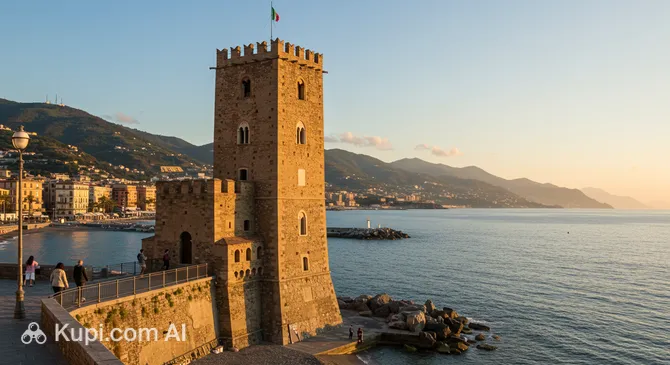
A symbol of the city and its maritime past is the Leon Pancaldo Tower, often called simply "Torretta." This medieval tower, located at the entrance to the old port, is named after Leon Pancaldo, a Savonese navigator who participated in Magellan's circumnavigation. The tower is a popular spot for photos and serves as a reminder of Savona's glorious maritime traditions.
Torre Leon Pancaldo. Illustration.
Source: Kupi.com AI
Traveler photos:
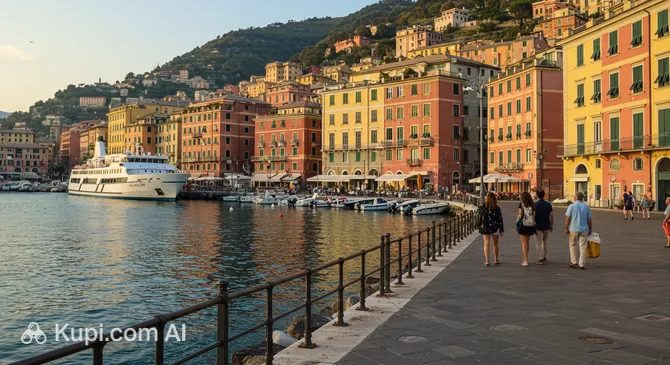
A walk through the Port of Savona is a must. It is not only an important transport hub but also a lively place with many cafes, restaurants, and shops. Here you can watch the arriving and departing cruise liners and yachts, enjoy the fresh sea breeze, and feel the rhythm of a seaside city. The port is the starting point for many boat trips and an important center of economic and tourist life in Savona.
Port of Savona. Illustration.
Source: Kupi.com AI
Traveler photos:
Local Cuisine
The cuisine of Savona is a true embodiment of Ligurian culinary traditions, where the freshness and quality of local products play the leading role. Travelers here can expect a gastronomic adventure full of the aromas of the sea and the land. The hallmark of the city is undoubtedly the famous focaccia—a soft flatbread generously seasoned with olive oil, served almost everywhere. Another iconic dish that is definitely worth trying is farinata, a thin, crispy chickpea flour flatbread baked in a wood-fired oven. It is an ideal option for a quick and satisfying snack, loved by both locals and visitors alike.
Savona's location on the Ligurian coast determines the abundance of fresh seafood on the local menu. Be sure to try the mussels, anchovies, squid, and various fish prepared according to simple yet exquisite recipes. One cannot overlook the famous Ligurian pesto—an aromatic sauce based on basil, pine nuts, garlic, Parmesan cheese, and olive oil. It is served not only with pasta but also as a complement to vegetable dishes and fish.
As for drinks, pay attention to the local Ligurian wines, especially the whites, which pair perfectly with seafood and light snacks. Of course, no meal in Italy is complete without a cup of aromatic espresso. For dessert, treat yourself to traditional sweets: almond biscotti, a piece of panettone (especially during the Christmas season), or a serving of delicious homemade ice cream (gelato).
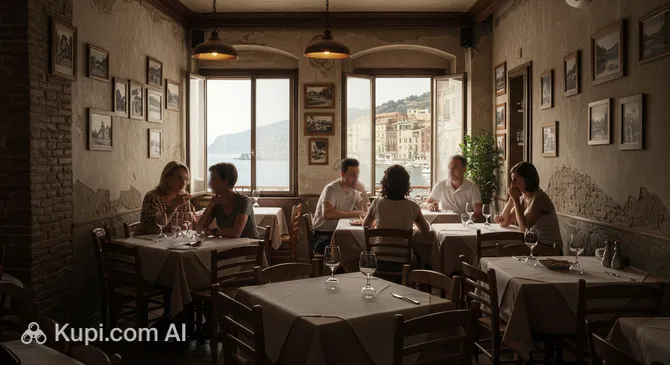
Osteria La Farinata. Illustration.
Source: Kupi.com AI
Traveler photos:
The dining culture in Savona encourages a leisurely enjoyment of food. Locals and tourists love to gather in cozy trattorias and osterias, where you can taste authentic dishes in a family atmosphere. Street food is also popular, especially farinata and slices of pizza. To fully experience the gastronomic flavor of Savona, visit the local markets where fresh vegetables, fruits, cheeses, and, of course, seafood are sold. If you want to try real farinata, one of the iconic places is Osteria La Farinata, where this dish is prepared according to traditional recipes.
Travel Tips
Welcome to charming Savona! To ensure your journey through this beautiful Ligurian city goes smoothly and leaves only pleasant impressions, we have prepared some practical tips. They will help you find your way and enjoy every moment in Italy.
Clothing and Essentials:
The climate in Savona is Mediterranean. In summer (June-August), bring light clothing made of natural fabrics, swimwear, sunglasses, a hat, and sunscreen. In spring and autumn, the weather is changeable, so layered clothing is useful: T-shirts, sweaters, and a light jacket or windbreaker. In winter (December-February), a warmer jacket, sweater, and scarf will be needed. Be sure to bring comfortable shoes for walking on the cobbled streets of the old town and the embankment. For visiting churches, such as the Cathedral of the Assumption of the Virgin Mary, it is advisable for women to cover their shoulders and knees. Don't forget a power adapter (type F/L).
City Transport:
Getting around Savona is quite simple. The main form of public transport is the TPL Linea buses. It's best to buy tickets in advance at tobacco shops (tabacchi), newsstands, or special vending machines. The city center is compact and perfect for walking. Taxis are available but more expensive. Taxi apps may have limitations; it's more reliable to use official taxi stands or call by phone. Car rental is not necessary for moving within the city but can be useful if you plan to explore the surrounding Ligurian coast. Keep in mind that parking in the center can be difficult.
Finances: Currency, Cards, Tipping:
The official currency in Italy is the Euro (EUR). You can exchange money at banks or exchange offices (cambio); avoid exchanging at airports and hotels due to less favorable rates. Credit and debit cards (Visa, Mastercard) are widely accepted in most shops, restaurants, and hotels. ATMs (Bancomat) are easy to find throughout the city. International cards usually work without problems. A rough daily budget can vary, but Savona can be slightly more affordable than Italy's major tourist hubs. Tipping (la mancia) is not always mandatory, as a service charge (servizio incluso) is often already included in the bill in restaurants. However, if you enjoyed the service, you can leave 5-10% of the bill or simply round it up.
Health and Safety:
Savona is generally a safe city. However, as everywhere, take basic precautions: watch your belongings in crowded places, especially at markets, the station, and the port area, particularly in the evening. Avoid displaying expensive jewelry and large amounts of cash. Pharmacies (Farmacia) are easily recognized by a green cross. Information about pharmacies on duty at night or on weekends can usually be found on the door of any pharmacy. For medical assistance, EU tourists will need an EHIC card. Citizens of other countries are strongly advised to have travel medical insurance. The city's main hospital is Ospedale San Paolo di Savona.
Communication and Internet:
The official language is Italian. In tourist areas, hotels, and some restaurants, staff may speak English, but do not rely on this everywhere. Learn a few basic phrases in Italian: Ciao (Hello/Goodbye), Grazie (Thank you), Prego (You're welcome/Please), Sì/No (Yes/No), Scusi (Excuse me), Non capisco (I don't understand). This is very much appreciated by the locals. A SIM card can be purchased at mobile operator stores (TIM, Vodafone, WindTre); you will need a passport for this. Free Wi-Fi is available in many hotels, cafes, and restaurants.
Local Etiquette and Socializing:
Italians are friendly and sociable. A handshake is the standard greeting. Use "Buongiorno" (Good morning/day) before lunch and "Buonasera" (Good evening) in the afternoon. "Ciao" is a more informal greeting. Address strangers and older people with "Lei" (formal You). In public places, especially in churches and on transport, try not to speak too loudly. Italians value politeness and good style in clothing, especially when visiting restaurants in the evening.
What to Avoid:
Try not to sit at a table in a cafe or restaurant without waiting for a waiter to seat you, especially if you see empty but set tables. Do not expect everyone everywhere to speak English fluently, especially in small shops or establishments away from the main tourist routes. Also, avoid overly revealing clothing when visiting religious sites.
Special Tip for Savona:
Be sure to visit the local indoor market, Mercato Civico. It's a great place to feel the authentic atmosphere of the city and try fresh Ligurian delicacies such as focaccia, pesto, fresh seafood, and local cheeses. Also, take note of shop opening hours: many may be closed for "riposo" (the equivalent of a siesta) in the afternoon, usually from 1:00 PM to 4:00 PM.
We hope these tips make your stay in Savona as comfortable and rewarding as possible. We wish you an unforgettable journey through this sunny corner of Liguria!
Entertainment & Nightlife
Savona, a charming city on the Ligurian coast, offers its guests not only beautiful beaches and historical sights but also a cozy, albeit not overly vibrant, evening and nightlife. Here you won't find massive nightclubs as in large metropolises, but you can enjoy the pleasant atmosphere of an Italian evening in numerous bars and restaurants.
Most evening activity is concentrated in two main areas: around the old port of Darsena and in the historic center (centro storico). The Darsena transforms in the evening: it's pleasant to stroll along the embankment, admiring the yachts, and stop by one of the bars or restaurants with a water view. The historic center, with its narrow streets and ancient buildings, offers a more intimate atmosphere for dinner or an aperitivo.
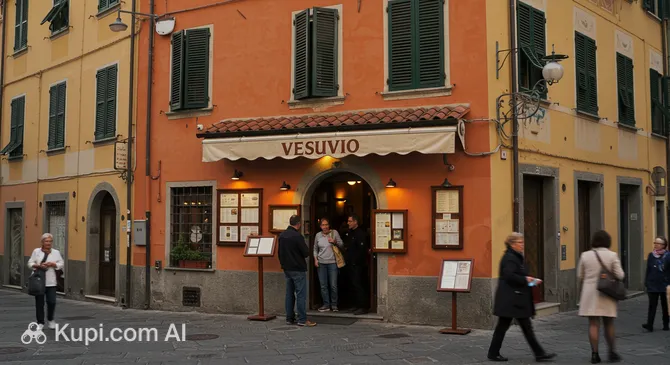
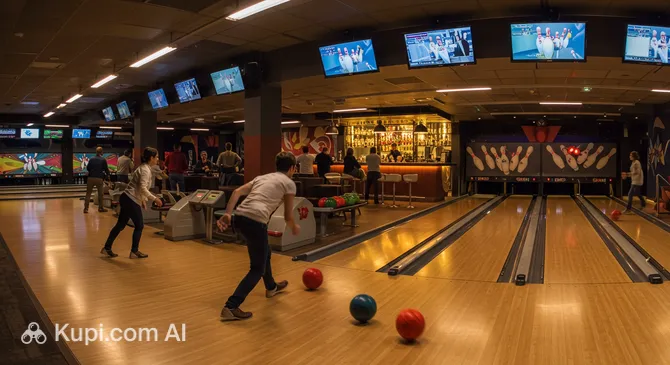
Evening entertainment in Savona mainly revolves around gastronomy and socializing. Numerous restaurants and trattorias offer Ligurian dishes. For example, you can visit Osteria La Farinata, known for its traditional flatbreads, or the restaurant Vesuvio for classic Italian cuisine. Enotecas (wine bars) are also popular, where you can taste local wines accompanied by light snacks. Later at night, some bars may offer music, but loud discos and nightclubs in the city center are rare; they are more often located on the outskirts or in neighboring resort towns. For those looking for a more active evening, Bowling Savona can be a good option.
Vesuvio. Illustration.
Source: Kupi.com AI
Traveler photos:
Savona Bowling. Illustration.
Source: Kupi.com AI
Traveler photos:
The atmosphere of Savona at night is usually relaxed and friendly. The crowd is mixed, from locals to tourists. Italians love to start the evening with an aperitivo—a drink with snacks—from about 7:00 PM to 9:00 PM, followed by dinner, which can last until late, especially in the summer months. The dress code in most establishments is quite casual; smart casual will be appropriate almost everywhere.
The best time for evening walks and visiting establishments is after 7:00 PM, when the daytime heat subsides and the city comes to life. Prices in Savona's bars and restaurants are moderate, especially compared to major tourist centers in Italy. At night, you can move around the city center on foot. For longer distances or returning to the hotel late at night, it is recommended to use taxis; they can be called by phone or found at designated taxi stands.
Regarding safety, the central areas of Savona are generally safe for evening and night walks. However, as in any other city, common precautions should be observed: watch your personal belongings and avoid poorly lit or deserted places late at night.
During the day, Savona also offers many interesting things to do. You can explore historical monuments such as the majestic Priamar Fortress, which now houses museums, or visit the unique Sistine Chapel of Savona (not to be confused with the Vatican one). The city's symbol, the Leon Pancaldo Tower, is also worth seeing. Shopping enthusiasts can visit the Il Gabbiano shopping center or Le Officine.
Parks & Museums
Savona, a charming city on the Ligurian coast of Italy, offers its guests not only picturesque sea landscapes but also a rich cultural heritage that can be explored through its green zones, museums, and historical monuments.
Although Savona is primarily a bustling port city, you can find beautiful places for outdoor relaxation here. The main natural attraction for lovers of sun and sea is Lo Scaletto dei Pescatori Beach, where you can enjoy the Ligurian coast. Besides this popular beach, Savona's promenade itself offers pleasant routes for walking, and the city features small squares that add greenery to the urban landscape.
Lo Scaletto dei Pescatori Public Beach. Illustration.
Source: Kupi.com AI
Traveler photos:
Savona's cultural life is centered within its historical walls and museums. The majestic Priamar Fortress, towering over the port, is not only an important historical monument but also home to several museums, including the Archaeological Museum and the Sandro Pertini Art Gallery. This site is a must-visit for those who want to delve into the region's history and art.
Priamar Fortress. Illustration.
Source: Kupi.com AI
Traveler photos:
Equally significant is the Sistine Chapel of Savona, built by order of Pope Sixtus IV, a native of these parts. Although smaller than its famous Roman namesake, the chapel impresses with its elegance and serves as the mausoleum for the Pope's parents. This place is steeped in the history and art of the Renaissance.
Sistine Chapel of Savona. Illustration.
Source: Kupi.com AI
Traveler photos:
A symbol of the city and its maritime past is the Leon Pancaldo Tower, also known as "La Torretta." This medieval tower, located at the entrance to the old port, welcomes ships and recalls Savona's rich navigational history. A walk through the city's historic center will also reveal many other architectural gems, including ancient churches and palazzos.
Torre Leon Pancaldo. Illustration.
Source: Kupi.com AI
Traveler photos:
To feel the authentic atmosphere of Savona, visit the local markets where you can find fresh products and chat with the residents. And in the evening, take a stroll along the embankment when the lights come on and the city takes on a special charm, far from the tourist hustle of the main sights.
Getting Around
Public transport in Savona is mainly represented by a bus network managed by the company TPL Linea. Buses are the primary way of moving around the city and its surroundings, connecting the center with various districts, suburbs, and neighboring settlements. The route network is quite developed, allowing you to reach most places of interest to tourists.
Paper tickets are used for fare payment. They can be purchased at tobacco shops (tabaccherie), newsstands (edicole), and at authorized TPL Linea sales points. Sometimes tickets can also be bought from the driver, but usually with a small surcharge. There are different types of tickets: single-use (typically valid for a certain time, such as 75 or 90 minutes from the moment of validation, allowing for transfers), and sometimes day passes or multi-trip passes are available, which can be more economical if you use transport frequently. The estimated cost of a single ticket is around 1.50 - 2.50 euros, but prices may change.
It's important for tourists to remember that a purchased ticket must be validated immediately after entering the bus in a special machine—usually a small yellow or orange device. Without a validation mark, the ticket is considered invalid, and a fine may be issued during an inspection. Buses in Savona run according to a schedule, which can be found at stops or on the transport company's website. Operating hours usually cover the period from early morning to late evening, but the frequency of service may decrease on weekends and holidays.
One of the interesting features of Savona's transport system is the funicular (Funicolare di Savona), which connects the city with the hill where an important sanctuary—Santuario di Nostra Signora della Misericordia—is located. This is not only a convenient way to reach the attraction but also an opportunity to enjoy panoramic views during the ascent.
As an alternative to public transport, you can use taxi services in Savona. Taxi stands are usually located near the station and at key points in the city; a car can also be called by phone. For moving around the compact historic center of the city, walking is an excellent option. In some areas, especially along the embankment, bicycle rentals may be available, providing a pleasant way to explore the coastal part of the city.
Accommodation
When planning a trip to Savona, you will find a variety of accommodation options to suit different preferences and budgets. The city offers a wide selection, from cozy guest houses and apartments to mid-range hotels and more comfortable options. Here you can find both budget housing and rooms with a higher level of service.
Many tourists prefer to stay in areas close to the historic center of Savona to be within walking distance of major attractions such as the Priamar Fortress or the Sistine Chapel. Accommodation options near the port are also popular, especially for those planning boat trips or cruises. If your goal is a beach holiday, look for hotels and apartments near the coast, for example, in the Lo Scaletto dei Pescatori beach area.
Port of Savona. Illustration.
Source: Kupi.com AI
Traveler photos:
The price range for housing in Savona varies from budget options to mid-range and high-end segments. It is recommended to book accommodation in advance, especially if your trip falls during the peak tourist season (summer months) or during major events. This will help you not only guarantee availability but also potentially find better deals.
You can book accommodation through popular online booking platforms, which offer a wide selection and the ability to compare prices and reviews. Also, some hotels and apartments offer direct booking through their websites, which can sometimes be more advantageous.
Nearby Cities
For those who want to explore the surroundings, Savona serves as an excellent starting point for day trips to several interesting nearby locations:
Genoa, located just 38 km away, is a major port city with a rich history and culture. Here you can stroll through the narrow streets of the medieval center, visit the magnificent Palazzi dei Rolli (a UNESCO World Heritage site), and the famous Aquarium of Genoa.
Albenga (35 km from Savona) attracts with its well-preserved historical center, known as the "city of a hundred towers." This place is rich in Roman ruins and early Christian monuments, including a 5th-century baptistery.
Not far away is Alba (56 km), a gastronomic gem of Piedmont. This city is world-famous for its white truffles and excellent wines, such as Barolo and Barbaresco; it is especially attractive during the autumn festivals.
A full list of some nearby cities with their population and distance is presented in the table below:
These nearby destinations offer a glimpse into the diverse culture and landscapes of the region.
Shopping & Souvenirs
Savona offers a pleasant experience for shopping enthusiasts, combining the charm of boutiques in the historic center with the convenience of modern shopping malls. The city isn't famous for ultra-exclusive goods, but here you can find high-quality Italian clothing, shoes, accessories, as well as local delicacies and handicrafts, especially the ceramics for which the Liguria region is historically known.
The main place for shopping in Savona is Via Paleocapa and the surrounding streets in the historic center. This is where shops of famous Italian and international clothing brands, shoe boutiques, jewelry stores, perfumeries, and accessory shops are concentrated. It's also worth paying attention to small shops offering products by local artisans. A stroll along these streets is a pleasure in itself thanks to the beautiful architecture.
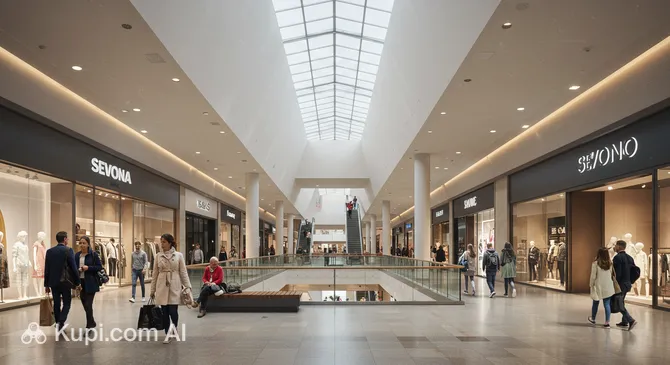
For those who prefer to shop under one roof, there are several shopping centers in Savona. One of the most popular is the Il Gabbiano shopping center, offering a wide selection of clothing, electronics, and home goods stores, as well as a supermarket and a food court. Another major complex is the Le Officine shopping center, which also features many shops and entertainment options.
Il Gabbiano Shopping Center. Illustration.
Source: Kupi.com AI
Traveler photos:
An integral part of Italian shopping is the markets. In Savona, it's worth visiting the Mercato Civico (Civic Market), usually located in an indoor pavilion. Here you can find the freshest local products: fruits, vegetables, cheeses, meat delicacies, seafood, as well as flowers and spices. It's especially lively here in the mornings. Sometimes mobile markets are also organized in the city, selling clothes, shoes, household goods, and souvenirs.
As souvenirs from Savona and the Liguria region, it's worth bringing back local ceramics—traditional painted plates, vases, or tiles. Gastronomic souvenirs are also popular: the famous pesto sauce, Ligurian extra virgin olive oil, local wines (such as Pigato or Vermentino), anchovies, and other delicacies. Small shops in the city center offer a good selection of such products.
Shops in Savona usually operate from Monday to Saturday. Typical opening hours are from about 9:00-10:00 AM to 12:30-1:00 PM and after the lunch break (siesta) from 3:30-4:00 PM to 7:30-8:00 PM. Large shopping centers and some shops in tourist areas may work without a break and on Sundays, especially during the peak season. Both cash (Euros) and bank cards (Visa and Mastercard are most common) are accepted for payment. In small shops and markets, it's preferable to have cash with you.
For tourists who are not residents of the European Union, a value-added tax (VAT) refund system, known as Tax Free, is available in Italy. If you make purchases of a certain amount in stores participating in this system (they usually have a corresponding sticker), you can issue a special Tax Free check and, when leaving the EU, get back part of the funds spent. Check the conditions and minimum purchase amount directly at the store.