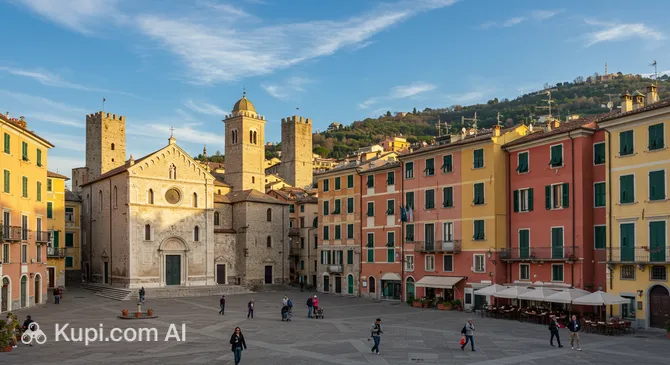
Albenga is a true treasure for connoisseurs of antiquity and the unique Mediterranean atmosphere. The city is nestled along the coast of the Ligurian Sea, located just an hour's drive from Genoa. It is here that sunny Italy reveals its most authentic side to travelers, combining sea freshness, a mild climate, and medieval charm.
Albenga. Illustration.
Source: Kupi.com AI
This compact city, home to about 24,000 people, is often called the "city of a hundred towers." In the historical center, dozens of majestic structures still rise, creating a unique architectural ensemble. The ancient history of Albenga is felt on every street, where fortress walls and cathedrals harmoniously coexist with cozy residential quarters.
The atmosphere here encourages slow-paced relaxation: time seems to slow down, allowing you to enjoy walks, explore local delicacies, and relax on sandy beaches. Albenga is an ideal choice for those seeking a harmony of antiquity and comfort while avoiding noisy crowds of tourists. It is a wonderful place for family holidays or a romantic trip that you will want to return to again and again.
Weather Overview
Albenga's climate is characterized by the mildness typical of the Ligurian coast, making the city pleasant to visit practically all year round. Summer here is warm and comfortable: the average temperature in July and August is about 22°C, with daytime highs reaching 25°C. This allows you to enjoy walks and beach relaxation without sweltering heat. Winters are cool, with average values around 5–6°C, so you should bring warm clothes for a trip in January or February.
When planning your trip, it's useful to know that the weather in Albenga can be changeable. Precipitation occurs regularly throughout the year: the spring period, especially May, is characterized by the highest number of rainy days, while precipitation is less frequent in winter. Overall, expect a moderately warm summer and a fresh winter, but don't forget an umbrella, especially in the spring.
Average monthly temperature
Average monthly precipitation
Interesting Facts
In addition to its main sights, Albenga holds many fascinating secrets and historical mysteries that make a walk through the city a real adventure. Here are a few facts that will help you look at this place in a new way:
"The City of a Hundred Towers" — this is Albenga's unofficial nickname. In the past, about a hundred towers actually rose here, each belonging to a noble family and demonstrating their influence. Today, fewer remain, but the surviving structures create a unique medieval silhouette for the city.
The historical city center is a real "time machine." It is considered one of the best-preserved in the region: cobbled streets and ancient facades have remained virtually unchanged since the Middle Ages, immersing guests in the atmosphere of past centuries.
In Albenga, you can touch the origins of Christianity in Italy. The 5th-century Baptistery of Saint John the Baptist is located here, featuring a unique 6th-century mosaic inside—a recognized masterpiece of early Christian art.
The city's coast is known not only for beach relaxation but also for archaeological treasures. In the 1950s, a sunken Roman ship with a cargo of amphorae was found near the shore, making the city an important site for researchers of antiquity.
The city's main cathedral is dedicated to Saint Michael the Archangel for a reason. Legend has it that the saint personally appeared to the locals and protected the city from impending disasters, becoming its celestial patron.
How to Get There
When planning a trip to the Ligurian coast, it is important to think through the logistics in advance to reach your destination with maximum comfort. You can explore all available routes and details on the how to get to Albenga page, and below we will look at the main transport hubs located nearby.
Albenga itself does not have its own airport, so travelers usually fly into neighboring large cities. The closest option is Genoa Cristoforo Colombo Airport (IATA: GOA), located in Genoa, approximately 65 km from Albenga. This is a medium-sized gateway handling both domestic and European flights. A trip by car or taxi along the A10 motorway from here will take roughly 1 hour.
Another popular choice, especially for international tourists, is Nice Côte d'Azur Airport (IATA: NCE). It is located in France, in the city of Nice, at a distance of about 91.7 km from Albenga. This is a major international hub with a huge passenger flow, receiving many flights from all over the world. The drive by car from this airport to your destination will take approximately 1.5 hours.
For convenience, here is summary information on the main airports used to reach the resort:
Railway communication is another convenient way to reach the region. There is a train station in Albenga itself, but if you are traveling from far away, your path will likely lead through major hub stations in neighboring metropolises. One of the key transit points is Genoa Piazza Principe Station, located in the city of Genoa (approximately 69.6 km from Albenga). Regional trains regularly depart from here along the coast.
Another important transport hub is Turin Porta Nuova Station in the city of Turin, located 120.3 km from the resort. It is one of the largest stations in Italy with a massive passenger flow. A car journey from Turin to Albenga via the A6 motorway takes about 2 hours, but many travelers prefer transferring to a direct train to the sea.
Below is a table with the nearest major railway stations that can serve as transfer points:
While the city's historical center is a magnet for history buffs, modern Albenga offers other locations for comfortable relaxation and entertainment. Travelers should pay attention to popular spots where they can enjoy the sea, shopping, and local cuisine.
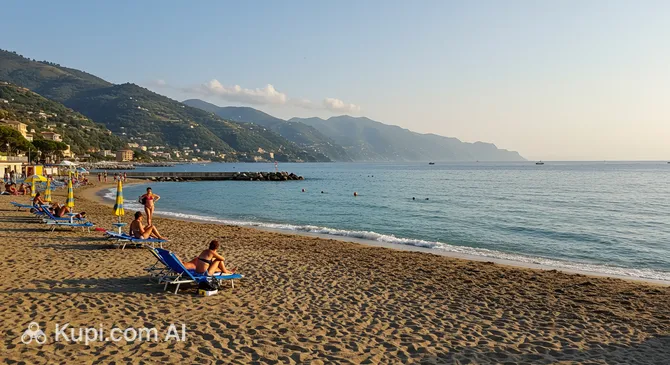
One of the most famous places for a beach holiday is Baba Beach. This elegant beach club is famous for its high level of service and stunning views of the picturesque Gallinara Island. Tourists appreciate it for its well-maintained grounds, comfortable sun loungers, and special atmosphere of relaxation. Additionally, this place is often chosen by pet owners, as excellent conditions have been created for a comfortable stay with pets.
Baba Beach. Illustration.
Source: Kupi.com AI
Traveler photos:
If you want to spend time shopping, it's worth visiting the Le Serre Shopping Center. This large complex houses many shops selling clothes, shoes, electronics, and household goods. For tourists, it is a convenient opportunity to purchase everything they need in one place, take a break from the summer heat in air-conditioned comfort, and stroll through the center's galleries.
Getting to know Liguria is impossible without tasting the local cuisine. The Trattoria del Mare restaurant attracts guests with the freshest seafood and traditional Italian recipes. It is an excellent place for a family lunch or a romantic dinner, where you can enjoy the authentic taste of the region and a hospitable environment.
Local Cuisine
Albenga's gastronomic scene is a vivid reflection of Ligurian traditions, where the leading roles are played by the treasures of the sea and the freshest farm products. The city's signature item is rightfully considered to be the local variety of artichokes known as "Spinoso di Albenga." These tender vegetables with a characteristic slight bitterness are prized by gourmets throughout Liguria, and trying them here is a must for any traveler.
It is impossible to imagine lunch in this region without the famous Pesto alla Genovese. The sauce, prepared according to old recipes from fragrant local basil, pine nuts, and olive oil, perfectly complements pasta. Fans of simple and hearty food should order warm focaccia with herbs, served straight from the oven, or taste fresh seafood: mussels, squid, and anchovies are prepared simply here to preserve their natural maritime flavor.
Ricaroka Hotel Restaurant Pizzeria. Illustration.
Source: Kupi.com AI
Traveler photos:
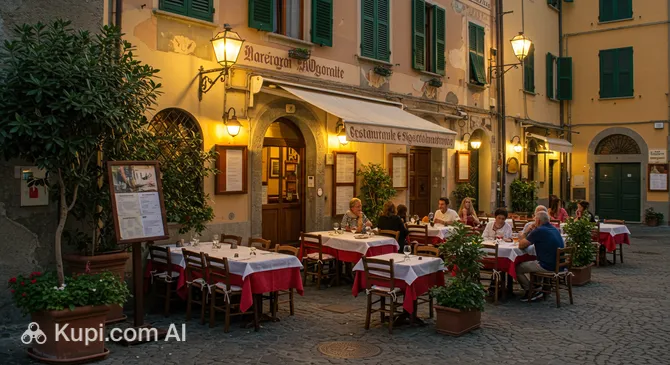
The food culture in Albenga is very relaxed: locals enjoy buying cheeses, sausages, and seasonal fruits at street markets, while spending their evenings in cozy eateries. If you are looking for a place to enjoy authentic pizza or local cuisine, take note of Ricaroka Hotel Restaurant Pizzeria. This establishment perfectly captures the spirit of Italian hospitality and offers a varied menu suitable for both a quick snack and a full dinner.
As for drinks, it is customary to accompany a meal with a glass of local white wine, which perfectly highlights the taste of fish dishes. Those with a sweet tooth should look for traditional Ligurian pastries with almonds and fragrant honey. Additionally, gastronomic festivals dedicated to wine, basil, and artichokes take place in the city throughout the year, where you can immerse yourself in the festive atmosphere and try rare homemade treats.
Travel Tips
Preparing for your trip to Albenga is the key to ensuring your holiday goes smoothly and without unpleasant surprises. We have compiled a list of important nuances to help you feel confident in this ancient Ligurian city and enjoy every moment of your journey.
Clothing and Footwear. The city's historical center is paved with old cobblestones, so be sure to bring comfortable flat shoes—heels will be inappropriate and potentially hazardous here. Given the changeable maritime climate, even in summer it's worth having a light cardigan or windbreaker for evening walks. If you plan to visit active cathedrals, such as St. Michael's Cathedral, remember the dress code: shoulders and knees must be covered.
Transport Nuances. The historical part of Albenga is compact, and it is best to get around on foot. Be careful with car rentals: the city center is a ZTL (restricted traffic zone) where only residents are allowed to enter; violations result in hefty fines. For trips around the outskirts, it is more convenient to use regional trains or rent a bicycle, as parking can be difficult during the peak season.
Finances and Payment. The currency is the Euro. Bank cards are accepted in most restaurants and supermarkets (for example, in the previously mentioned Le Serre Shopping Center), but for buying souvenirs, coffee in small bars, or groceries at the market, it is better to have cash with you. Tipping in Italy is not a strict obligation, as a service charge ("coperto") is often already included in the bill, but rounding up the bill or leaving 1–2 euros as a thank you to the staff is always welcome.
Health and Safety. Albenga is a quiet and safe city, but standard precautions at beaches and the station won't hurt. Pharmacies are marked with a green cross sign (Farmacia); duty pharmacies operate on a schedule usually posted on the door of any pharmaceutical point. The unified emergency services number is 112. Water from street drinking fountains is generally safe and tasty unless there is a "Non potabile" sign.
Communication and Internet. There is free Wi-Fi in tourist areas, hotels, and many cafes, but for a stable connection, it is better to purchase a local SIM card (main operators: TIM, Vodafone, WindTre). You can do this at mobile shops in the city center or shopping malls; a passport is required for registration. English is understood in hotels and large restaurants, but in small shops, communication may only be in Italian, so an online translator on your phone will be very helpful.
Local Etiquette. Italians value politeness. When entering a shop or cafe, it is customary to say hello ("Buongiorno" during the day or "Buonasera" in the evening) and goodbye ("Arrivederci"). At markets and vegetable stalls, never touch fruits and vegetables with your bare hands—sellers provide disposable gloves for this or handle the items themselves.
Things to Avoid. Do not walk around the city in swimwear or bare-chested outside the beach area—this is considered bad manners and in some Ligurian municipalities can be punished with a fine. Also, do not order a cappuccino after lunch or dinner: for locals, this is exclusively a morning drink, and such an order will immediately identify you as an inexperienced tourist.
Gastronomic Tip. As a tasty and practical souvenir from Albenga, bring back a bottle of local olive oil or a jar of pesto. It's better to buy them not in souvenir shops, but in regular grocery stores or at the weekly farmers' market where the locals themselves shop—this way you are guaranteed a high-quality product at a fair price.
Following these simple rules will help you quickly blend into the rhythm of local life and feel at home in Albenga. We wish you unforgettable experiences and an easy journey through this picturesque corner of Italy!
Entertainment & Nightlife
Entertainment and Nightlife:
Albenga's nightlife is unlike that of noisy clubbing capitals; instead, it features an atmosphere of relaxed elegance that Italians call "dolce vita." As the sun sets, the city transforms: historical towers are softly illuminated, and the doors of wine bars and cozy enotecas open in the narrow streets of the old town (Centro Storico). The main fun here begins with the traditional ritual of aperitivo around 7:00 PM, when locals and tourists gather for a glass of prosecco or spritz accompanied by light snacks.
The center of evening activity is focused on two main areas. The first is the historical center, where small bars with live music and an excellent selection of Ligurian wines are hidden in the labyrinth of alleys. The second is the promenade (Lungomare), where life buzzes during the warmer months. Here, beach venues transform into open-air lounge zones where you can dance to the sound of the waves or simply enjoy the sea breeze with a cocktail in hand.
If you are looking for specific places for an unforgettable evening, be sure to stop by Baba Beach. In the evening, this venue changes its format: from a beach club, it turns into a stylish setting for pre-parties and late-night relaxation with a view of Gallinara Island, where DJs often play and a fashionable crowd gathers. For those who prefer to start the night with a long and delicious dinner in an authentic setting, Trattoria del Mare is an excellent choice. This establishment is famous for its cozy atmosphere, perfect for leisurely conversations accompanied by fresh seafood dishes.
Also worth noting is Ricaroka Hotel Restaurant Pizzeria—a versatile spot where you can not only have a delicious dinner but also stay late in pleasant company, enjoying Italian hospitality. The crowd in Albenga's venues is mixed, ranging from young people to respectable couples, so everyone feels comfortable. The dress code in most places is smart casual; an excessively "beachy" look (shorts and flip-flops) is not encouraged in the evening, but strict evening attire is not required either.
Practical tips: Active nightlife here usually winds down by 2–3 AM, except on weekends during high season. The average price of a cocktail in a bar ranges from 8 to 12 euros. In terms of safety, Albenga is a peaceful city, and night walks are generally safe; however, it is better to stick to well-lit central streets. If you stay out late, keep in mind that hailing a taxi on the street is difficult—it's better to call for a car by phone or through an app in advance.
During the day, the city offers quieter, cultural entertainment. Guests can visit theaters, drop by unique museums dedicated to Roman heritage, or stroll through shady parks. However, it is the evening coolness and the lights of the nighttime venues that give Albenga that romantic charm for which many travelers return again and again.
Parks & Museums
Albenga's cultural and natural landscape goes far beyond the usual beach holiday. The city offers travelers a harmonious blend of picturesque walking routes and rich museum collections that reveal the centuries-old history of this Ligurian corner. You can spend the morning exploring ancient artifacts and dedicate the afternoon to reconnecting with nature against a backdrop of sea panoramas.
One of the main natural gems of the region is Gallinara Island (Isola Gallinara), located just a kilometer and a half from the coast. This small piece of land has the status of a regional nature reserve and is famous for its unique ecosystem. Although landing on the island itself is restricted to preserve rare species of birds and plants, boat trips around it are extremely popular. Tourists can enjoy the view of the island's rocky shores and lush vegetation while relaxing on the coast, for example, by visiting Baba Beach, which offers one of the best panoramas of the reserve.
For hiking enthusiasts, the historical trail Via Iulia Augusta will be a real discovery. This ancient Roman road, connecting Albenga with the neighboring town of Alassio, has today turned into a picturesque trekking route. A walk here is a journey through the centuries: the path passes by the ruins of a Roman necropolis and amphitheater, while breathtaking views of the Ligurian Sea open up from above. The route is not difficult and is well-suited for tourists of any fitness level who wish to combine physical activity with sightseeing.
To dive into the city's rich past, visit the Roman Naval Museum (Museo Navale Romano), located in the ancient Palazzo Peloso Cepolla. The museum's exhibition is unique: its centerpiece is the finds from a Roman merchant ship that sank off the coast of Albenga in the 1st century BC. Visitors can see hundreds of perfectly preserved amphorae that carried wine and oil, and learn about the technologies of ancient shipbuilding. This is a must-visit place for everyone interested in archaeology and maritime history.
No less significant is the Diocesan Museum (Museo Diocesano), located in the Bishop's Palace. It houses an impressive collection of religious art, from medieval frescoes and tapestries to Renaissance paintings. A visit to the museum is often combined with a visit to the famous early Christian Baptistery, as these sites form a single cultural complex. This space allows you to feel the spiritual depth and artistic skill of the masters of the past who shaped Albenga's appearance.
As an insider tip, we recommend stopping by the Sommariva Olive Oil Museum. This is a small but very atmospheric exhibition created by one of the oldest oil-producing families in the region. Here you can not only learn about traditional methods of pressing Liguria's "liquid gold" but also see ancient presses and tools used by peasants hundreds of years ago.
Getting Around
Albenga's transport system is fairly simple and convenient for travelers, as the city itself is compact and the main attractions are concentrated within walking distance of each other. There are no subways, trams, or trolleybuses here. The main form of public transport is buses, which connect the city center with the promenade, outlying districts, and neighboring resorts. The main transport operator is the TPL Linea company, which serves the entire province of Savona.
The bus network makes it easy to reach popular beaches or take a trip to neighboring Alassio. Stops are marked with "Fermata" signs and include schedules, but it's worth noting that intervals can vary depending on the season. In the summer, buses run more frequently and later, while in the winter and on weekends, the number of routes is reduced. Tourists may also be interested in the seasonal tourist train that runs along the coast during peak holiday times, offering a sightseeing trip without much effort.
An important part of the transport infrastructure is the railway connection. Albenga's train station is a convenient hub for moving along the Ligurian coast. Regional trains (Regionale) are often used as an alternative to buses for trips to neighboring cities: it's fast, inexpensive, and helps avoid potential traffic jams on coastal roads during the high season. A trip to neighboring towns takes literally a few minutes.
The fare system is standard for the region. Bus tickets must be purchased in advance—drivers rarely sell them, and if they do, the price is higher. You can buy transit tickets at newsstands (Edicola) or tobacco shops (Tabaccheria), marked with a sign with a large letter "T". The cost of a single trip is approximately 1.50 euros (valid for a certain time, usually 90 minutes). Weekly passes also exist, which are beneficial for longer stays.
Critically important: When entering a bus or before stepping onto a train platform, the ticket must be validated in a special machine (usually yellow or green). Without a date and time stamp, the ticket is considered invalid, and inspectors issue hefty fines with no discounts for tourists' lack of knowledge of the rules.
As an alternative to public transport, taxis are popular in Albenga. Hailing a car on the street is difficult; it is better to look for them at special stands (for example, at the station) or call by phone. Apps like Uber are not common here or operate with restrictions, so it is more reliable to use the services of local Radio Taxi companies. Trips around the city are not cheap, and rates increase at night or on weekends.
An excellent way to get around is by bicycle. The city is located on a plain (unlike many other Ligurian settlements), making cycling very comfortable. There are rental points in Albenga, and picturesque routes are laid out along the sea and the old Roman road. This is not just transport, but also an opportunity to enjoy the views at your own pace without depending on the bus schedule.
Accommodation
Where to Stay:
Albenga offers travelers various accommodation options suitable for both budget-conscious vacations and those who value comfort and privacy. Unlike neighboring fashionable resorts, you can find housing here at more affordable prices while maintaining a high level of service. The main selection consists of cozy family hotels, guest houses (Bed & Breakfast), and apartments that allow you to feel like a local.
When choosing a place to stay, you should consider the purpose of your trip. The historical center (Centro Storico) is ideal for romantics and history lovers: many mini-hotels here are located in restored medieval buildings with thick walls and atmospheric courtyards. Staying here means being within walking distance of museums and the best restaurants, though you will have to walk a bit to reach the beach.
For those who prioritize the sea, the best choice is the promenade area (Lungomare). This is where hotels offering rooms with views of the Ligurian Sea and Gallinara Island are concentrated. This is the most convenient location for families with children and beach lovers. Additionally, in the outskirts of the city, slightly further from the coast, agriturismo (farmhouses) are popular, where you can enjoy peace, nature, and fresh local products.
Booking tips: High season in Albenga falls in July and August. At this time, the demand for housing is at its peak, so it is recommended to plan your trip and book rooms 2–3 months before arrival. In the off-season (spring and early autumn), you can find excellent options even a couple of weeks before the trip, often at reduced rates.
The price range varies from budget (inexpensive campsites and hostels on the outskirts) to mid-range and above. There are few luxury five-star complexes here; the emphasis is on coziness and authenticity. Booking is available through popular international online platforms, but many small family hotels also accept reservations directly through their websites or by email, sometimes offering better terms or pleasant bonuses.
Nearby Cities
For those who want to explore the surroundings, Albenga serves as an excellent starting point for day trips to several interesting nearby locations:
Just an hour's drive away is majestic Genoa—the capital of Liguria and one of the most important port cities in the Mediterranean. This place is striking in its contrasts: narrow medieval "caruggi" streets sit alongside luxurious palaces on Via Garibaldi. Tourists should definitely visit the famous Aquarium of Genoa, one of the largest in Europe, and climb the ancient La Lanterna lighthouse to see the city from above.
Fans of high society and elegant architecture should head to Sanremo, known as the "City of Flowers." Famous for its luxurious villas, Art Nouveau casino, and music festival, this resort provides a sense of celebration and luxury. A walk along the Empress Promenade (Lungomare Imperatrice), lined with palm trees, is an excellent addition to the visit.
Very close by is Imperia—a unique city consisting of two historically distinct parts: Oneglia and Porto Maurizio. Porto Maurizio charms with its old town, "Parasio," located on a promontory, featuring a labyrinth of stairs and panoramic sea views. Imperia is also known for its history of olive oil production, to which a local museum is dedicated.
These nearby destinations provide a glimpse into the diverse culture and landscapes of the region.
Shopping & Souvenirs
Shopping in Albenga is a pleasant and relaxed activity, devoid of the hustle and bustle of huge metropolises. The city does not claim the title of a fashion capital, but it charms guests with its authentic shops and the high quality of local products. Here, modern storefronts harmoniously coexist with traditional family-owned shops where the owners know their regular customers by name. It is an ideal place for those who want to purchase unique regional products and handmade items.
The heart of the city's commercial life is the Historical Center (Centro Storico). Strolling through its atmospheric alleys, such as Via Medaglie d'Oro and Via Roma, you will find many clothing boutiques, jewelry workshops, and gourmet shops. For a more familiar shopping experience, head to Viale Martiri della Libertà, where shops for shoes, accessories, perfumes, and sporting goods are concentrated.
If you prefer to do your shopping in an "all-in-one-place" format, it is worth visiting the Le Serre Shopping Center. This is a modern complex located near the city center. It offers a wide selection of mass-market stores, electronics, household goods, and a large supermarket. It is a convenient location to buy everything you need for a beach holiday or to update your wardrobe while sheltering from the summer heat.
Le Serre Shopping Center. Illustration.
Source: Kupi.com AI
Traveler photos:
Special attention should be paid to the local markets, which are an important part of Italian culture. Every Wednesday, a large weekly market takes place in Albenga, occupying several streets. Here you can buy the freshest fruits, vegetables, cheeses, as well as clothing and textiles at very affordable prices. Connoisseurs of antiquity should check out the flea market, which usually takes place in the historical center on the third Sunday of the month—there you can find unique vintage items and interior decorations.
As souvenirs from Albenga, tourists most often bring home Liguria's gastronomic treasures. Be sure to buy a bottle of local extra virgin olive oil and a jar of traditional pesto genovese. Excellent gifts would be local wines, such as the white "Pigato" or the red "Rossese." Also popular are handmade Ligurian ceramics and cosmetics based on natural olive oil.
When planning your shopping, take the store hours into account. Most small private shops close for a siesta (lunch break) from approximately 12:30 PM to 3:30 PM, resuming work until 7:30 PM. Large shopping centers and supermarket chains usually operate without breaks. Bank cards are accepted almost everywhere, but at markets and in small souvenir kiosks, it is better to have some cash in euros.
For tourists living outside the European Union, a Tax Free system operates in Italy. If you make a purchase in a store marked with a special logo (usually Global Blue or Planet) for an amount exceeding the legally established minimum (currently around 70 euros), you are entitled to a VAT refund. Don't forget to ask for a special form at the checkout and present your passport.