Support

Izu-Ōshima Volcano Museum

Nearby attractions

About

Imagine a place where the power of the Earth's depths becomes tangible and clear. The Izu-Oshima Museum of Volcanology is a modern scientific and educational center located on a picturesque island in Japan. The museum is entirely dedicated to the study of formidable natural phenomena and, in particular, the main "architect" of these lands — the active Mihara volcano.
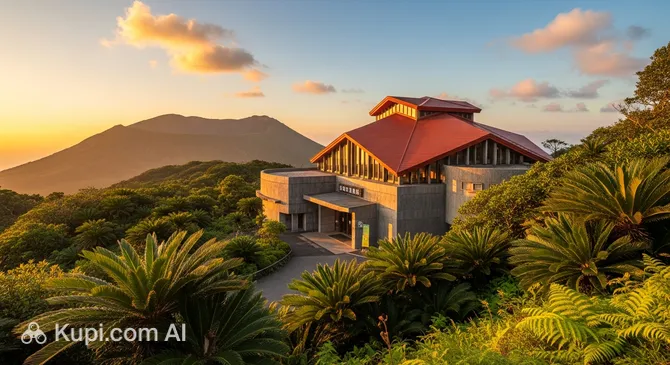
Izu Oshima Volcano Museum
Izu Oshima Volcano Museum. Иллюстрация. Источник: Kupi.com AI

Located in the city of Oshima, this museum serves as a gateway to the fascinating world of geology. Here, visitors can learn how volcanic activity shaped the Izu archipelago over thousands of years. The museum building has been fully renovated and re-equipped to become more than just an exhibition space — it is an interactive platform for tourists and researchers from all over the world.

The museum's exposition masterfully combines scientific precision with visual aesthetics. It’s not just a collection of stones, but a gripping story of the island's life, which is constantly changing under the influence of the fiery elements. For many travelers, a visit here is the starting point before ascending to the summit of Mt. Mihara, helping them better grasp the majesty and fragility of the region's nature.

Contacts

For the latest information regarding exhibitions or organizing group tours, you can use the official contact details of the institution.

How to contactContact
AddressЯпония, 〒100-0101 Tokyo, Oshima, Motomachi, 神田屋敷617
Phone+81 4992-7-5300
Websiteizuoshima-geonous.org

What to Do

Within the museum walls, an immersive dive into the world of seismic activity awaits you. One of the most striking experiences is visiting the special hall, where modern technology reproduces the sound and vibration of a real eruption. This allows you to feel, for a moment, as if you are inside a waking volcano while remaining completely safe.

Visual content lovers will appreciate the unique photo and video archives capturing moments of past eruptions. Detailed scale models clearly demonstrate the internal structure of the volcano and the mechanics of magma movement. Special attention is paid to the events of 1986: a separate exhibit tells the story of that eruption and its impact on the island's residents in detail.

Don't forget to visit the hall featuring an impressive collection of volcanic rocks and lava. Samples from not only the local slopes but also the world's largest volcanoes are on display, allowing you to compare their structure and color. This is a great opportunity to see rare minerals born in the very heart of the planet.

After your theoretical introduction to geology at the museum, be sure to take a walk through the southwestern part of the island. The knowledge you've gained will help you look at the bizarre black rocks and the desolate landscapes of Mt. Mihara in a new way, understanding the nature of every frozen flow beneath your feet.

Getting There

The journey to the museum begins with a trip to Izu-Oshima island, located about 100 kilometers south of Tokyo. Since the island is part of the Tokyo Metropolitan Prefecture, getting here from the city is quite simple. The most popular way is by high-speed ferry or a large passenger liner departing from the Takeshiba terminal in Tokyo, as well as boats from the Izu Peninsula.

The Izu-Oshima Museum of Volcanology itself is located in the town of Motomachi, which is the island's administrative and transport hub. The exact address for your GPS is: Japan, 〒100-0101 Tokyo, Oshima, Motomachi, 神田屋敷 617. From Motomachi Port, the museum is a 15–20 minute walk away, or just a few minutes by local bus.

If you prefer comfort, taxis are always waiting at the port. Given the compact size of the settlement, the ride will be short and inexpensive. For those arriving at the island's other port (Okada), it is better to take a scheduled bus that connects the main residential areas and tourist spots.

Ближайший город: Oshima

History & Facts

The history of the museum is inextricably linked with the activity of the Mihara volcano, which locals have revered as a deity for centuries. The last major eruption occurred in 1986. Japanese media called it "the Fire of the Gods" because of its incredible power and majestic spectacle. At that time, the eruption forced 13,000 residents to evacuate their homes. Surprisingly, the ancient Mihara shrine, standing directly in the path of lava flows, remained completely unscathed, giving rise to many new legends.

Many ancient myths are associated with Izu-Oshima island. The saddest of them tells of Princess Tosaki, who threw herself into the volcano's fiery crater due to unrequited love. In 1933, this story sparked a wave of romantic interest in the island among young people. The museum carefully preserves not only scientific data but also the cultural memory of these events, helping us understand how humans have coexisted with the unpredictable power of nature for centuries.

The region's geological past is captured in unique natural monuments. On the southwestern coast, you can see 30-meter-high cliffs that resemble a giant layer cake. These stripes are the result of hundreds of eruptions that occurred over one and a half million years. Each one left its mark, shaping the modern appearance of the island.

Beyond volcanology, the history of these lands includes the somber chapters of World War II. At that time, important military bases and observation posts were located on the island. Today, however, it is a peaceful research area where scientists from around the world study the processes of new land formation right in the middle of the ocean.

Time Needed

To explore all the museum's halls, study the interactive models, and watch the video materials at a leisurely pace, an average visitor will need about 2–3 hours. This is enough time to soak in the atmosphere and gain basic knowledge about the island's geology.

However, if you plan to combine your museum visit with a hike to the Mihara crater itself and a walk across the frozen lava fields, you should set aside a full day (from 6 to 8 hours). Remember that the island's natural landscapes are just as fascinating as the museum exhibits and require time for thoughtful contemplation.

Working Hours

The museum is open to visitors throughout the week, though the schedule varies slightly by day. From Monday to Tuesday, and from Thursday to Sunday, the doors are open from 09:00 to 16:30. On Wednesday, the museum stays open slightly longer — until 17:00.

Important note: Information is currently being received about a temporary closure of the museum (status: CLOSED_TEMPORARILY). Before planning your trip, we strongly recommend checking the current status and operating hours on the institution's official website to avoid disappointment.

DayWorking hours
понедельник09:00–16:30
вторник09:00–16:30
среда09:00–17:00
четверг09:00–16:30
пятница09:00–16:30
суббота09:00–16:30
воскресенье09:00–16:30

Nearby

Exploring the area around the museum will allow you to dive deeper into the history and natural beauty of the island. Near the town of Motomachi, there are many memorial markers and archaeological zones that tell the story of human life in the shadow of an active volcano.

Many interesting locations are within walking distance or a short bike ride away, making for a rich and easy-going outing. Below are the closest notable sites:

NameDistance
Sushikou1 km
Zakoya Kiyomaru1.8 km
Mt. Gairin Observation Deck (Mt. Mihara Summit Trailhead)2 km

Reached the end of the page?

That means the route is fully explored