Support

Zuihōden Mausoleum

About

The Zuihoden Mausoleum (瑞鳳殿) is an impressive mausoleum complex of the Date dynasty located in Sendai, Japan. It is the resting place of the famous daimyo Date Masamune, the founder of Sendai, as well as his heirs. The name "Zuihoden" poetically translates to "Pavilion of the Phoenix's Appearance," which sets the stage for an encounter with something special and majestic.
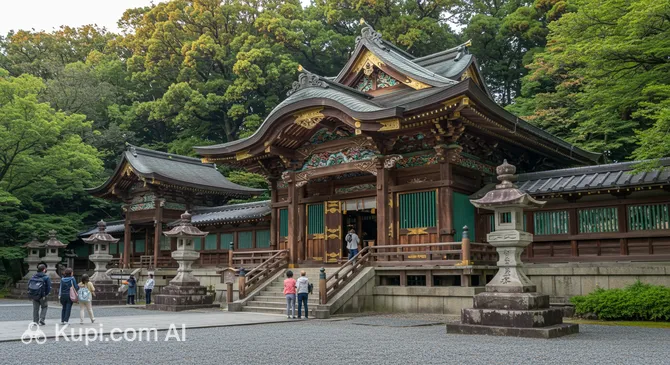
Zuihōden Mausoleum. Illustration.
Source: Kupi.com AI

Traveler photos:

The complex is renowned for its magnificent Momoyama-style architecture, which emerged in Japan in the late 16th and early 17th centuries. This style is characterized by rich, multi-colored wood carvings that contrast strikingly with dark lacquered surfaces and intricate decorative elements. In 1931, the temple was designated a National Treasure of Japan due to its elegance and historical significance.

While the original buildings were lost in 1945, the Zuihoden Mausoleum was meticulously reconstructed in its original splendor, preserving the authentic Momoyama style. Today, visitors can see not only the main mausoleum of Date Masamune but also the mausoleums of his successors, various monuments to clan members, and visit the adjacent museum, which displays artifacts related to the Date clan and the history of Sendai.

Contacts

To find the most current information regarding opening hours, ticket prices, and available tours at the Zuihoden Mausoleum, we recommend visiting the attraction's official website or contacting the tourist information centers in Sendai. Useful information can also often be found on Japan's travel portals.

The mausoleum is typically accessible by public transport from central Sendai. For instance, you can take the Loople Sendai sightseeing bus, which stops directly at the entrance, or a city bus to the "Zuihoden-mae" stop. From there, a short uphill walk is required.

How to contactContact
Address23-2 Otamayashita, Aoba Ward, Sendai, Miyagi 980-0814, Japan
Phone number+81 22-262-6250
Websitewww.zuihoden.com

What to Do

A visit to the Zuihoden Mausoleum offers a unique opportunity to touch the history of the powerful Date clan. The main attraction for visitors is, of course, the mausoleums themselves. After climbing a high stone staircase, you can view the three main burial sites. Taking center stage is the magnificent mausoleum of the founder of Sendai, Date Masamune. Located nearby are the mausoleums of his heirs: Date Tadamune, the second daimyo of the Sendai Domain, and Date Tsunamune, the third daimyo. Each represents a masterpiece of the exquisite architecture and rich decoration characteristic of the Momoyama period.

In addition to viewing the tombs, there is a small museum on the grounds. Previously, it exhibited artifacts discovered during archaeological excavations conducted on the mausoleum's territory. Visitors could also watch an interesting video documenting these excavations and the history of the Date clan, allowing for a deeper dive into the past to better understand the significance of this site.

Of particular interest to history buffs is the fact that during the 1974 archaeological study, the grave of Date Masamune himself was opened. This is a rare case of examining the burial of a modern-era daimyo. Scientists were able to study Masamune's skeletal remains, which were used to create a sculpted portrait of him. Valuable artifacts were also recovered from the grave, including a sword with which he was often depicted in life portraits. While the artifacts themselves may not always be available for direct viewing, knowing about these finds adds a special atmosphere to this historical site.

Getting There

The Zuihoden Mausoleum is nestled on a picturesque wooded hill in Sendai, near the famous Aoba Castle. This location provides a special atmosphere of tranquility, though it does mean a bit of a climb is required for the visit. However, don't worry—the path to this historical treasure is well-organized for visitors.

The most convenient and popular way for tourists to reach the Zuihoden Mausoleum is by using the special Loople Sendai sightseeing bus. This bus loops through the main attractions of Sendai, and one of its stops, "Zuihōden-mae," is located right at the foot of the hill where the mausoleum stands. Regular city buses also serve this stop. From there, you will enjoy a pleasant, albeit uphill, walk along shaded paths and stone staircases to the complex itself.

If you prefer a more direct and faster way to travel or are on a tight schedule, taxis are always available. A taxi ride from central Sendai to the Zuihoden Mausoleum doesn't take much time and will drop you off as close as possible to the start of the ascent, which can be convenient if you want to save your energy for exploring the complex.

Nearest city: Sendai

History & Facts

The history of the Zuihoden Mausoleum is inextricably linked with Date Masamune, one of Japan's most powerful and colorful daimyo (feudal lords), also known by the nickname "The One-Eyed Dragon." As the first ruler of the Sendai Domain, it was he who left detailed instructions regarding the location and manner of his burial. Date Masamune passed away in 1636 at the age of 70, and the following year, 1637, the magnificent Zuihoden was erected over his grave, becoming the embodiment of his final will and a symbol of respect for the founder of Sendai.

The Zuihoden Mausoleum has had a challenging history. Most of the original buildings, which were masterpieces of the lavish Momoyama-style architecture, were lost in 1945. Remarkably, however, the grove of ancient cryptomeria trees surrounding the mausoleum survived. In 1951, the Date family transferred ownership of the land to the city of Sendai. Thanks to the efforts of the authorities and the public, the complex was meticulously reconstructed in its original style, preserving its historical appearance and splendor.

One of the most intriguing facts in the history of the Zuihoden Mausoleum relates to archaeological research conducted in 1974. During this work, the grave of Date Masamune himself was opened. This allowed scientists to gain priceless information about the famous daimyo, his physical characteristics, and the burial rituals of that era. For five years after the excavation, the site was open for study, and the treasures and artifacts recovered from the grave could be viewed. Date Masamune played a key role in Japan's history, founding not only the prosperous Sendai Domain but also the city of Sendai itself, which remains the administrative and cultural center of Miyagi Prefecture to this day.

Time Needed

To tour the Zuihoden Mausoleum and see its main highlights, most visitors typically need about 1.5-2 hours. This is generally enough time to take a leisurely stroll through the complex, admire the magnificent architecture of the tombs of Date Masamune and his heirs, appreciate the rich carvings and decorative elements, and visit the small museum if that is in your plans.

Of course, the duration of your visit may vary. If you are short on time and only plan a quick look at the main structures, you might manage in 1 hour. However, to fully soak in the atmosphere, examine the details, take photos, and perhaps rest a while surrounded by the picturesque nature on the hill, it’s worth planning for a bit more time. Also, account for the time it takes to climb to the mausoleum from the nearest transport stop, as the complex is situated on an elevation.

Working Hours

When planning a visit to the Zuihoden Mausoleum, it is important to check the current opening hours in advance. As they are subject to change, the most reliable source of information is the attraction's official website or tourist information centers in Sendai. There, you can also find out if advance ticket booking is required, which can be particularly relevant during peak tourist seasons.

Typically, the Zuihoden Mausoleum, like many historical sites in Japan, is open to visitors year-round. However, admission hours may vary depending on the season—for example, they may be shorter during the winter months—or may have specific schedules on certain days of the week. Therefore, to ensure your visit goes smoothly, we recommend checking the latest information on official resources before your trip.

9:00 – 16:00

Nearby

A visit to such a significant site as the Zuihoden Mausoleum is a highlight in its own right. However, to get a more complete picture of Sendai and its rich history, it is worth paying attention to other interesting sites located nearby. Often, it is these small discoveries that allow for a deeper immersion into the atmosphere of this corner of Japan and reveal its many facets.

Exploring the area around the Zuihoden Mausoleum can significantly enrich your experience, complementing the picture of Sendai's historical and cultural heritage. Near this majestic burial site, you will find other memorial locations, many of which are also associated with the legendary Date clan and key moments in the city's history.

NameDistance
Equestrian Statue of Date Masamune0.9 km
Sendai Castle Ruins0.9 km
Shōchūhi Monument0.9 km
Sendai Castle Honmaru Ruins1 km
Aoba Castle Honmaru Hall1 km
Iroha Yokocho1.1 km
Sendai City Museum1.1 km

Have you reached the end of the page?

So the route has been studied inside and out