Support

Chausuyama Zoo

About

Chausuyama Zoo, located near Nagano in Japan, offers visitors a truly unique experience. This place is often associated with the world-famous Jigokudani Monkey Park and, in essence, is not a traditional zoo in the conventional sense, but rather a nature reserve. Here, in the picturesque Yokoyu Valley, Japanese macaques, also known as snow monkeys, live freely in their natural habitat.
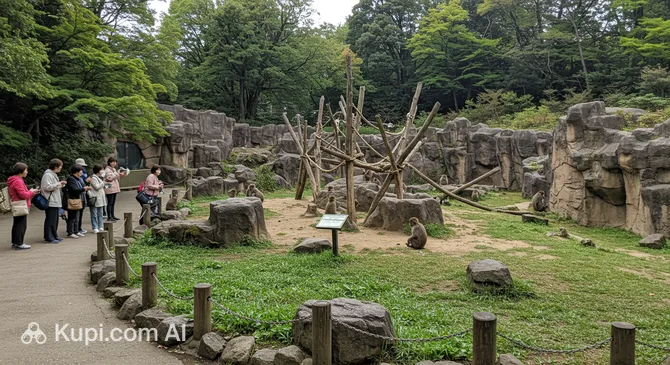
Chausuyama Zoo. Illustration.
Source: Kupi.com AI

Traveler photos:

The main highlight and world-renowned feature of this park is the opportunity to observe wild Japanese macaques bathing in natural hot springs — onsens. This amazing sight is especially impressive in winter, when snow blankets the surroundings and the monkeys serenely warm themselves in the steaming water. Jigokudani Park is the only place in the world where you can see such unusual behavior in wild primates, making it a true gem for nature lovers and photographers from around the globe.

The name "Jigokudani" itself translates to "Hell Valley." The area earned this name due to the thick steam rising from numerous hot springs, which, especially in cold weather, creates a mystical and somewhat harsh yet mesmerizing atmosphere. A visit to this corner of Japan will provide unforgettable impressions and allow you to touch the amazing world of wildlife while watching the lives of the famous snow monkeys.

Contacts

To plan your visit to Chausuyama Zoo and get the latest information on opening hours, ticket prices, or special events, it is recommended to contact the park administration or visit the official website. This will help you make your trip as comfortable and rewarding as possible.

How to contactContact
Address570-1 Shinonoiutabi, Nagano, 388-8016, Japan
Phone number+81 26-293-5167
Websitewww.chausuyama.com

What to Do

The main reason to visit Chausuyama Zoo, often referred to as the Jigokudani Monkey Park, is the unique opportunity to watch Japanese macaques bathing in hot springs. It is a truly captivating sight, especially in winter when the monkeys warm up in the steaming water against a backdrop of snowy landscapes. Visitors can photograph these amazing animals in their natural habitat and observe their complex social behavior and interactions.

The path to the monkeys' habitat is a scenic walk. A walking trail about 1.6 kilometers long leads from the park entrance to the main macaque pool. Walking this trail allows you to enjoy the beauty of the Yokoyu Valley and the surrounding nature. Information boards are installed along the trail and in the park itself, providing fascinating insights into the lives, habits, and ecology of Japanese macaques. This makes the visit not only exciting but also educational.

It is important to remember that to preserve the monkeys' natural behavior and health, feeding them is strictly prohibited. Park staff provide the macaques with the necessary food. After observing the monkeys and walking through the park, visitors can relax in one of the traditional Japanese onsens (hot springs) located nearby. This will be a pleasant addition to your experience at this unique location in Nagano.

Getting There

To reach Chausuyama Zoo, your first step is to travel to the city of Nagano. Nagano has excellent transport links; for example, you can get here from Tokyo on the Shinkansen high-speed trains in about 1.5–2 hours. Once at Nagano Station, you will need to transfer to the local Nagano Dentetsu line, which will take you to Yudanaka Station. This journey takes about 45 minutes.

From Yudanaka Station, there are several ways to continue to the zoo. The fastest way is to take a taxi, which will bring you to the park in about 15 minutes. Alternatively, you can take a bus to the Koen-guchi stop (about 15–20 minutes in transit). From this stop, it is a walk to the zoo entrance. It is also worth noting that in the winter season, special bus tours are often organized from Nagano Station, going directly to the park.

It is important to keep in mind that the final stage of the journey to Chausuyama Zoo is a walking trail about 1.6 kilometers long, leading through a picturesque forest. If you are taking the bus to the Koen-guchi stop, the walk from there to the park entrance will take approximately 30–40 minutes. In winter, this trail can be slippery and snow-covered, so we strongly recommend wearing comfortable, waterproof shoes with good grip and being prepared for a pleasant but somewhat demanding walk.

Nearest city: Nagano

History & Facts

Chausuyama Zoo, located in Nagano, offers visitors a chance to meet various representatives of the animal world. However, when speaking about the unique natural phenomena of Japan and Nagano Prefecture in particular, one cannot fail to mention the story that significantly influenced this region's reputation as a center for wildlife observation. This story is linked to the nearby and world-famous Jigokudani Monkey Park, whose philosophy and unique inhabitants have shaped a special interest in the interaction between humans and nature in this area.

The history of Jigokudani Monkey Park dates back to 1964. It was then that researcher Sogo Kawamura noticed the unusual behavior of wild Japanese macaques, which took a liking to hot springs for bathing during the harsh winter months. This observation inspired him to create a special place where people could safely watch this amazing spectacle while preserving the monkeys' natural habitat. The principle of respect for nature and its inhabitants, established at the founding of Jigokudani Park, has become a hallmark of the entire region.

Interestingly, even before the official opening of Jigokudani Monkey Park, locals and researchers noticed monkeys descending from the mountains to bathe in hot springs near traditional Japanese inns (ryokans). It is believed that young monkeys learned this behavior from humans, and over time it became part of their unique "culture." Today, the population of these famous Japanese macaques in Jigokudani Park is about 160. They move freely between their territory and the surrounding mountains but regularly return to their favorite hot springs, especially in the cold winter months.

This unique phenomenon of monkeys bathing in hot springs at Jigokudani Monkey Park gained worldwide fame after the 1998 Winter Olympics held in Nagano. Images of these incredible animals traveled the world, drawing extra attention to the region's natural wonders. In turn, Chausuyama Zoo, located in the same nature-rich region, complements this experience, offering visitors the opportunity to see a variety of wildlife and gain a deeper understanding of the importance of wildlife conservation.

Time Needed

To fully enjoy your visit to Chausuyama Zoo and observe its famous inhabitants, the Japanese macaques, it is recommended to set aside about 2–3 hours. This will provide enough time for a leisurely stroll and a chance to see the animals without any rush.

When planning your visit, keep in mind that the walk from the park entrance to the monkey habitat takes about 20–30 minutes each way. The trail, about 1.6 km long, passes through scenic mountainous terrain. Observing the Japanese macaques' behavior, play, and interactions usually takes from 1 to 1.5 hours. Don't forget to also account for the return walk.

If you plan to take many photos, study the information boards in detail, or visit during peak season when there might be more crowds, it's worth allowing a little extra time to ensure your visit is comfortable and leaves only pleasant memories.

Working Hours

Chausuyama Zoo is happy to welcome visitors year-round; however, its opening hours depend on the season. From April to October, you can visit the zoo from 8:30 AM to 5:00 PM. Between November and March, the hours are slightly shorter: from 9:00 AM to 4:00 PM. It's nice to note that the zoo is open daily, including national holidays, offering flexibility when planning your visit.

While advance ticket booking is usually not required, it is always recommended to check for current information on the official zoo website or contact them directly, especially if you are planning a trip during popular tourist periods. It is also important to consider that in the event of heavy snowfall or other adverse weather conditions, the zoo may be temporarily closed. To avoid surprises, it's best to confirm the operational status before heading out. Especially unforgettable experiences await those who visit the zoo in winter, when you can see the famous monkeys enjoying a dip in the hot springs against a snowy landscape.

9:30 – 16:30

Nearby

Visiting Chausuyama Zoo is undoubtedly a highlight, but the city of Nagano and its surroundings have much more to offer. Exploring nearby attractions will allow you to dive deeper into the region's atmosphere, learn about its culture and history, and discover other interesting sites to round out your trip.

By setting aside some time to explore what is near Chausuyama Zoo, you can get a more complete picture of Nagano and make your journey through Japan even more fulfilling. Below is a list of some interesting places located nearby.

NameDistance
Matsushiro Underground Imperial Headquarters8 km
MIDORI Nagano9.2 km
Yoshizaki Italian Wine Bar9.4 km
Monzen Terrace Enya10.1 km
Togakushi Museum of Natural History11.1 km
Joyama Zoo11.3 km
Kids' Ninja Village17.1 km

Have you reached the end of the page?

So the route has been studied inside and out