Support

Heian Jingu Shrine

About

Heian Jingu Shrine is one of the most significant and impressive Shinto shrines in Kyoto, the former imperial capital of Japan. This shrine is not just a religious site, but a true symbol of the city's rich cultural and historical heritage. Built in 1895 to mark the 1100th anniversary of the founding of Kyoto (then called Heian-kyo), it is dedicated to the spirits of the first and last emperors to rule from the city—Kanmu and Komei. The shrine immediately draws attention with its scale and vibrant architecture.

The architectural ensemble of the shrine is a 5:8 scale replica of the Heian period (794–1185) Imperial Palace, allowing visitors to get a sense of the grandeur and elegance of the ancient capital. Standing tall in front of the main entrance is a giant torii gate, which is considered one of the tallest in Japan and serves as the landmark's signature feature. Passing through it, you enter a spacious area where an atmosphere of majesty and tranquility prevails.
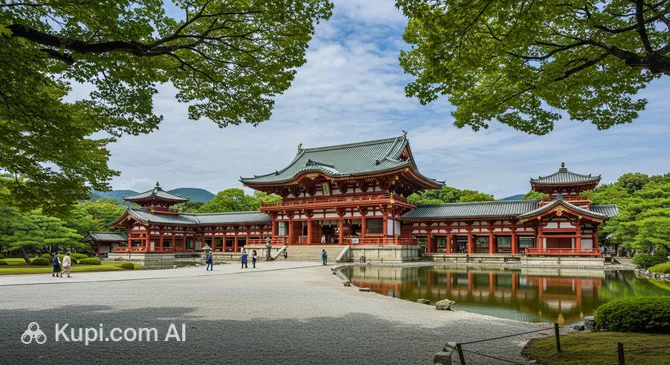
Heian Jingu Shrine. Illustration.
Source: Kupi.com AI

Traveler photos:

The picturesque gardens surrounding the main buildings add a special charm to the shrine complex. Designed in the traditional Japanese style, they are divided into four sections representing the four cardinal directions. These gardens are famous for their harmony with nature; here you can stroll by ponds with water lilies, admire the blooming irises and cherry blossoms in spring, and enjoy the peaceful silence. A visit to Heian Jingu is an opportunity to touch history and feel the spirit of old Japan.

Contacts

To get the most up-to-date information on opening hours, garden admission fees, and special events at Heian Jingu Shrine, we strongly recommend checking the official tourism portals of Kyoto. Accurate information can also be found at tourist information centers upon your arrival in the city. This approach will allow you to plan your visit effectively and stay informed about any temporary changes or events.

How to contactContact
Address97 Okazaki Nishitennōchō, Sakyo Ward, Kyoto, 606-8341, Japan
Phone number+81 75-761-0221
Websitewww.heianjingu.or.jp

What to Do

A visit to Heian Jingu Shrine offers many experiences for the traveler. A walk through its spacious grounds begins with passing through the famous vermillion Oten-mon gate, which leads to the main courtyard. Here, you can freely explore the main pavilions, built in the style of imperial architecture, and feel the scale of the place. The shrine grounds themselves are free to enter, allowing every guest to leisurely enjoy the majestic atmosphere.

The complex's pride is its four magnificent gardens, collectively known as "Shin-en," located around the shrine: North, South, East, and West. Each was designed by the famous master Ogawa Jihei and has its own unique character, offering distinct landscapes throughout the year. For example, in the South Garden, visitors will find an unusual artifact—an old streetcar installed to commemorate the launch of Kyoto's first tram route. Walking through these gardens is an opportunity to immerse yourself in the calming world of Japanese landscaping.

Heian Jingu Shrine is not just a monument but a living center of cultural life. Traditional Japanese festivals and Shinto rituals are held here regularly. A particularly vibrant event is the annual Festival of the Ages (Jidai Matsuri), celebrated on October 22. On this day, a grand procession moves from the former Imperial Palace to the shrine, with participants dressed in authentic costumes from different eras of Japanese history. The shrine also celebrates the birthdays of Emperors Kanmu and Komei, in whose honor the sanctuary was built, making a visit on these days especially memorable.

Getting There

Getting to Heian Jingu Shrine is quite simple, as it is conveniently located relative to Kyoto's main transport hubs. One of the fastest ways is to use the city subway. Take the Tozai Line to Higashiyama Station. From there, it’s a pleasant walk of about 10 minutes.

If you prefer surface transport to see more of the city along the way, take a bus. Buses No. 5 and No. 100 run regularly from Kyoto Station to the shrine. Get off at the "Okazaki Koen/Bijutsukan, Heian Jingu-mae" stop, located right next to the sanctuary. This option is especially convenient for those starting their journey from the city's main transport hub.

For travelers by car, there is parking available near the shrine. However, keep in mind that on days of major events and festivals, as well as on weekends, finding a free spot can be difficult due to the large influx of visitors. During such times, it is recommended to opt for public transport to avoid traffic jams and save time.

Nearest city: Kyoto

History & Facts

The history of Heian Jingu Shrine is inextricably linked to the history of Kyoto itself. Its construction in 1895 was a grand event marking the 1100th anniversary of the founding of the ancient capital, then known as Heian-kyo. The uniqueness of the sanctuary lies in the fact that its architecture almost entirely recreates the appearance of the Heian period Imperial Palace, albeit on a smaller scale. Originally, the shrine was dedicated to just one person—Emperor Kanmu, the founder and first ruler of the city.

A few decades later, in 1940, the shrine's pantheon was expanded. The spirit of Emperor Komei joined that of Emperor Kanmu. This choice was deeply symbolic, as Komei was the last ruler of Japan whose residence was in Kyoto before the capital was moved to Tokyo. Thus, the shrine became a monument uniting the first and last emperors of the city's "capital" period.

One of the most dramatic moments in the shrine's modern history occurred in 1976. A major fire destroyed nine of its buildings, including the most important one—the honden (main sanctuary). However, what happened next was a vivid testament to public love and devotion. Thanks to numerous donations from ordinary citizens and various organizations across the country, the complex was fully restored in just three years. This fact underscores how vital Heian Jingu is to the nation's cultural memory.

Time Needed

When planning a visit to Heian Jingu Shrine, it is worth setting aside 1.5 to 2.5 hours for a thorough and leisurely tour. This will be enough time to appreciate the grandeur of the main temple buildings, which are free to enter, and to enjoy the complex's crowning jewel—its magnificent gardens. A quick look at the main courtyard will take no more than 30 minutes, but to truly soak in the atmosphere, you should pay attention to its picturesque corners.

The bulk of your time will be spent walking through the famous "Shin-en" gardens that surround the shrine buildings. The gardens are divided into four sections, each with a unique landscape: there are ponds, elegant bridges—such as the famous Garyu-kyo (Sleeping Dragon Bridge)—and many flowering plants that change their appearance with the seasons. To walk through all four gardens, take photos, and rest a while contemplating nature, you will need at least an hour to an hour and a half.

Keep in mind that the duration of your visit may increase if you happen to catch a festival, such as the Jidai Matsuri, or want to take part in traditional rituals. More time may also be needed during peak seasons, such as the cherry blossom season in spring or maple leaf viewing in autumn, when the beauty of the gardens is particularly mesmerizing and attracts many visitors.

Working Hours

Heian Jingu Shrine is open to visitors year-round; however, it is important to remember that the operating hours for the main grounds and the famous gardens differ. The sanctuary's main courtyard is accessible daily, typically from 6:00 AM to 5:30 PM in the summer and until 5:00 PM in winter. The picturesque gardens, which require a separate admission fee, are open from 8:30 AM to 5:00 PM, with last entry 30 minutes before closing.

No advance ticket booking is required for a regular visit to the shrine and its gardens. Nevertheless, the schedule may change during festivals, such as the Jidai Matsuri on October 22, and on national holidays. Therefore, it is strongly recommended to check the current information regarding opening hours and possible changes on the shrine's official website or Kyoto tourism portals before your visit.

6:00 – 17:00

Nearby

Visiting such an iconic site as Heian Jingu Shrine is just the starting point for exploring the rich cultural heritage of Kyoto. To fully experience the atmosphere of the former imperial capital, it is worth exploring the surrounding area. The Okazaki district, where the shrine is located, is a treasure trove in itself, filled with historical monuments, peaceful gardens, and cultural sites.

A stroll through the nearby streets will allow you to discover other important temples, picturesque canals, and museums, each telling its own part of the city's story. Many interesting spots are within walking distance, making the exploration of Heian Jingu's surroundings a convenient and fascinating addition to your itinerary.

NameDistance
Nanzen-ji Aqueduct1.2 km
Kitsune Kyoto1.4 km
The Pink Kyoto1.4 km
Hikiniku to Come1.4 km
Kyoto BAL1.5 km
Kyoto Samurai and Ninja Museum2 km
Kyoto Gyoen National Garden2 km

Have you reached the end of the page?

So the route has been studied inside and out