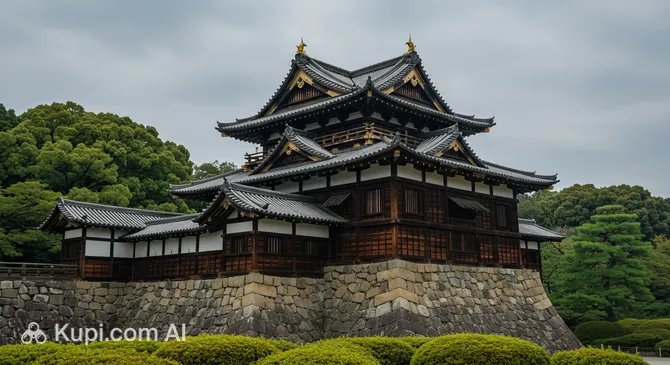
Nijō Castle is one of the most significant historical landmarks in Kyoto and all of Japan. This majestic castle complex was built in 1603 as the residence of the powerful shogun Tokugawa Ieyasu, the founder of the dynasty that ruled the country for over 250 years. Today, Nijō Castle is recognized as a National Treasure of Japan and is included in the UNESCO World Heritage list, highlighting its immense cultural and historical value.
Traveler photos:
The castle grounds feature a complex fortification system consisting of two concentric rings of walls and deep water-filled moats. Inside these rings are two main palace complexes: the Ninomaru Palace (the second line of defense) and the Honmaru Palace (the main line of defense), surrounded by magnificent gardens. The total area of the complex is an impressive 275,000 square meters, housing numerous buildings that demonstrate the power and wealth of the Tokugawa shogunate.
The main jewel of the castle is the Ninomaru Palace, which has been preserved in its original form and serves as a prime example of feudal-era palace architecture. Its interiors are decorated with lavish wall paintings and carved elements. One of the palace's most famous features is the so-called "nightingale floors"—an ingenious system designed for security: at the slightest step, the boards emit a chirping sound resembling birdsong, which alerted guards to the approach of intruders.
Visiting Nijō Castle is not just about seeing ancient buildings; it’s a true immersion into the history of medieval Japan. Walking through its halls, where vital state decisions were once made, and its peaceful gardens with ponds and carefully placed stones allows you to feel the spirit of the time and the grandeur of a bygone era. This is where the history of the shogunate ended when the last shogun returned power to the Emperor, making it a key point in the country's history.