Support

Sumiyoshi Taisha

About

Sumiyoshi Taisha is one of Japan's oldest and most revered Shinto shrines, located in the southern part of the vibrant city of Osaka. It is the main shrine among more than two thousand Sumiyoshi shrines scattered across the country, and it plays an important role in the spiritual life of the Japanese people. A visit to this place allows you to touch ancient traditions and feel the peaceful atmosphere.
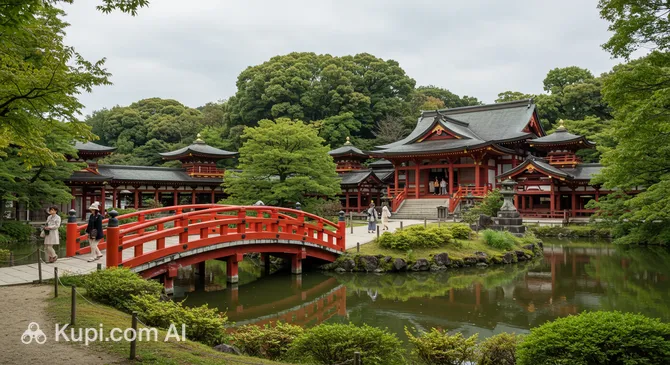
Sumiyoshi Taisha. Illustration.
Source: Kupi.com AI

Traveler photos:

The shrine is dedicated to the three sea deities (kami) of Sumiyoshi, who have been considered patrons of travelers, fishermen, and sailors since ancient times. Sailors and everyone whose life is connected with the sea come here to pray for safe voyages and good luck. It is believed that prayers offered at Sumiyoshi Taisha possess special power and help in maritime affairs and travel.

One of the most remarkable features of Sumiyoshi Taisha is its unique architectural style, known as "Sumiyoshi-zukuri." This style is characterized by straight, non-curved roofs, which distinguishes it from many other Japanese temples built later under the influence of Buddhist architecture from mainland Asia. This style is considered purely Japanese, as the shrine was founded before the widespread adoption of Buddhism in the country. The shrine complex consists of several buildings, each dedicated to a specific deity, and is famous for its picturesque arched bridge, Taikobashi (or Sorihashi), reflecting in the water.

Contacts

To find up-to-date information on opening hours, special events, or visit details for Sumiyoshi Taisha, we recommend checking the official shrine website or tourist information centers in Osaka. Generally, such significant landmarks are easily accessible by public transport, following the signs to the attraction.

How to contactContact
Address2-chōme-9-89 Sumiyoshi, Sumiyoshi Ward, Osaka, 558-0045, Japan
Phone number+81 6-6672-0753
Websitewww.sumiyoshitaisha.net

What to Do

Visitors to Sumiyoshi Taisha can immerse themselves in the atmosphere of an ancient Shinto sanctuary while exploring its unique grounds. The main activity is viewing the four main shrines, each dedicated to a separate kami (deity). These buildings, constructed in the rare Sumiyoshi-zukuri architectural style, represent an important part of Japan's cultural heritage. A walk through the shrine complex allows you to feel peace and tranquility, despite its location in the bustling city of Osaka.

One of the most memorable sights and a popular photo spot is the Sorihashi Bridge (also known as Taikobashi). This elegant, steeply arched bridge spans a pond and symbolizes purification before entering the main sanctuary. Crossing the bridge is a small adventure in itself and an important part of the visiting ritual. Interestingly, this bridge is immortalized in Japanese literature, notably in the short story "Sorihashi" by Nobel laureate Yasunari Kawabata.

For those interested in the history and culture of Japan, Sumiyoshi Taisha offers rich material for study. The shrine is mentioned in ancient Japanese chronicles such as the "Kojiki" and "Nihon Shoki," and it also plays an important role in the classic work "The Tale of Genji," where key scenes involving Lady Akashi take place. Visitors can try to imagine the events of centuries past that occurred within these walls.

Sumiyoshi Taisha becomes particularly lively during hatsumode—the first shrine visit of the New Year. At this time, the sanctuary attracts a huge number of pilgrims from all over the country, becoming one of the most visited places in Japan. Participating in New Year rituals, buying omamori (amulets), or simply observing the festive atmosphere can be an unforgettable experience. Various festivals and ceremonies reflecting the rich traditions of Shintoism are also held here throughout the year.

Getting There

Getting to Sumiyoshi Taisha in Osaka is quite straightforward, as the shrine is a well-known landmark and is well-integrated into the city's transport system. Generally, such prominent sites can be easily reached by public transport, which is highly efficient and convenient in Japan.

The main way to reach Sumiyoshi Taisha is by rail. The shrine is served by several lines. For example, you can take the Nankai Main Line and get off at Sumiyoshitaisha Station, which is just a few minutes' walk from the main entrance. Also nearby is the Sumiyoshi-Toriimae station on the Hankai Tramway line, providing another convenient option. Trains and trams run regularly, so you won't have to wait long.

If you prefer more flexibility or are traveling from an area without a direct rail connection to the stations near the shrine, you might consider taking a taxi. Taxis in Osaka are available everywhere, but this method will be significantly more expensive than public transport. A trip from central areas like Namba or Umeda will take some time depending on traffic conditions.

Before your trip, it is recommended to check the current schedule and the most convenient route using online maps or travel planning apps. Look for signs at the stations—they are usually duplicated in English, making navigation easier for international tourists. The entrance to the shrine grounds is easy to find by following the path from the nearest stations.

Nearest city: Osaka

History & Facts

Sumiyoshi Taisha is not just an ancient sanctuary, but one of the oldest in Japan, with history rooted in the 3rd century AD. Some sources even specify the exact founding year as 211. This fact is of great importance for understanding the shrine's unique architecture. Founded approximately 250 years before the official arrival of Buddhism to the Japanese islands, the complex showcases a pure Japanese style, free from the later continental influences so noticeable in many other temple structures across the country.

The legendary origins of Sumiyoshi Taisha are shrouded in tales recorded in Japan's oldest written records—the "Kojiki" and "Nihon Shoki." According to these texts, the shrine was founded by Empress Jingu herself. Upon returning from an expedition to Korea, she ordered the shrine to be built to offer prayers to the sea deities, or kami, asking for safe passage for her ships and protection in maritime affairs.

Originally, the shrine was dedicated to the Sumiyoshi Sanjin—three powerful sea gods considered patrons of sailors and travelers. Over time, Sumiyoshi Taisha also became a place to venerate the spirit of Empress Jingu herself. Additionally, the shrine played an important role as the guardian of the lineage of the powerful Minamoto clan. Valuable artifacts have been preserved here to this day, including some of Japan's oldest seals and items belonging to the Imperial family.

For many centuries, up until the Edo period, the grounds of Sumiyoshi Taisha had direct access to the sea, emphasizing its inseparable link with the marine element and making its scenery particularly famous. This unique location, along with its deep spiritual significance, has allowed the shrine to remain one of the most important religious and cultural centers not only of Osaka but of all Japan, maintaining its influence and appeal for pilgrims and visitors today.

Time Needed

To fully explore Sumiyoshi Taisha and soak in its atmosphere, most visitors will need approximately 1-2 hours. This time is usually enough to leisurely walk through the grounds, visit the four main shrines built in the unique Sumiyoshi-zukuri style, and, of course, cross the famous curved Sorihashi Bridge, which is the landmark's signature feature.

During this time, you can take memorable photos, feel the tranquility of this ancient Shinto shrine, and get acquainted with its main architectural and cultural features. If you plan a deeper immersion—for example, if you want to explore every corner in detail, spend time in quiet meditation, or visit the shrine during one of its many festivals—you should set aside a bit more time.

In any case, even a short visit to Sumiyoshi Taisha will leave a lasting impression and allow you to touch the rich history and spiritual traditions of Japan in the heart of Osaka.

Working Hours

Sumiyoshi Taisha shrine warmly welcomes visitors year-round, operating daily. However, visiting hours may vary slightly depending on the season. According to available information, during the summer period, the shrine doors are open to you from 6:00 AM to 5:00 PM. In the winter period, the schedule shifts slightly: the shrine can be visited from 6:30 AM to 5:00 PM.

Generally, for a standard visit and exploring the grounds of Sumiyoshi Taisha, advance ticket booking or registration is not required, and entry to the main grounds is often free. Nevertheless, during major festivals or special ceremonies, special conditions or opening hours may apply. Therefore, to get the most up-to-date information, especially if your visit coincides with holidays, it is recommended to check the official shrine website or clarify details at local tourist information centers.

6:00 – 17:00

Nearby

A visit to Sumiyoshi Taisha, one of the oldest Shinto shrines in Japan, is a profound and memorable experience in itself. However, to truly feel the multifaceted nature of Osaka and its surroundings, it is worth taking the time to explore the attractions located nearby. This will allow you to complement your impressions of the sanctuary with new discoveries and better understand the cultural and historical context of this amazing region.

Exploring nearby places can turn your trip into an even more enriching adventure. Whether it's modern architectural masterpieces, lively shopping streets, or other cultural sites, the area around Sumiyoshi Taisha offers various options for the curious traveler. Below is a list of some interesting places located within a reasonable distance of the shrine.

NameDistance
Abeno Harukas4.1 km
GHOST Osaka6.5 km
Shinsaibashi-suji Shopping Street6.5 km
Miyako City Osaka Hommachi Restaurant7.6 km
Liber Hotel Osaka Restaurant7.8 km
Osaka Museum of History8.2 km
Whitebird Coffee Stand9.6 km

Have you reached the end of the page?

So the route has been studied inside and out