Support

Ginkaku-ji (Silver Pavilion)

About

Ginkakuji, or the Silver Pavilion, is a famous Zen Buddhist temple complex located in the eastern part of Kyoto, in the scenic Higashiyama district. Despite its name, the pavilion was never covered in silver, but its understated elegance and harmony with nature make it one of the gems of Japan's culture. The temple's official name is Jisho-ji, which translates to "Temple of Shining Mercy." It was built in the late 15th century by Shogun Ashikaga Yoshimasa as a place for retreat and contemplation, and after his death, the villa was converted into a temple.
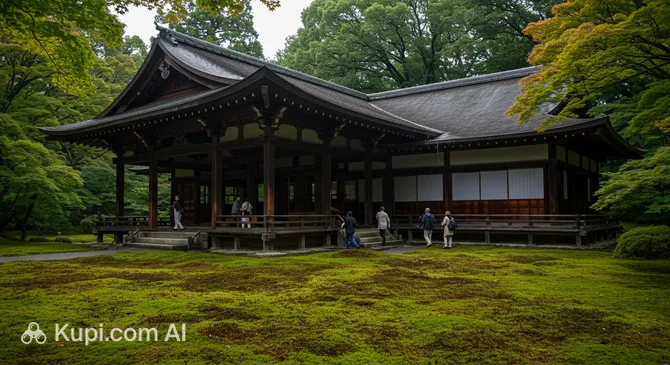
Ginkaku-ji (Silver Pavilion). Illustration.
Source: Kupi.com AI

Traveler photos:

The Ginkakuji complex is a prime example of Higashiyama culture, which values simplicity and refinement. It became a center for the development of many traditional arts, including the tea ceremony, ikebana, and Noh theater. The main attraction is the pavilion itself, a two-story building that combines different architectural styles. Although access to the interior of the pavilion is closed to the public, its exterior—reflecting the aesthetics of wabi-sabi (beauty in imperfection)—leaves a lasting impression.

Ginkakuji is particularly famous for its gardens. Here you will find a unique dry white sand garden, meticulously raked, with a large sand cone symbolizing Mount Fuji. Nearby lies a beautiful moss garden with picturesque ponds, islands, and bridges, creating an atmosphere of peace and tranquility. A walking trail leads up the hill, offering a magnificent view of the entire temple grounds and the surrounding city. Ginkakuji is a UNESCO World Heritage site and remains one of the most visited places in Kyoto, offering guests a chance to immerse themselves in Japanese aesthetics and philosophy.

Contacts

To confirm current opening hours, ticket prices, or to ask other questions, you can contact the temple complex administration. Please use the contact phone number provided below.

How to contactContact
Address2 Ginkakujichō, Sakyo Ward, Kyoto, 606-8402, Japan
Phone number+81 75-771-5725
Websitewww.shokoku-ji.jp

What to Do

The main activity at Ginkakuji is a leisurely walk and contemplation. A circular route is laid out for visitors, allowing them to see all the key parts of the complex. You can see the Silver Pavilion up close, admire other historic buildings, and, of course, spend time in the famous gardens that are the central elements of this site.

The route takes you past the unique "Ginshadan" white sand garden, which is designed to symbolize the sea, and then through the picturesque moss garden, which is especially beautiful in spring and autumn. Winding paths lead to a small hill, offering a classic panoramic view of the pavilion against the backdrop of greenery and city rooftops. This spot is a great point for photos and quiet contemplation.

In addition to exploring nature and architecture, Ginkakuji offers cultural immersion. The complex may host events dedicated to Japan's traditional arts, such as the tea ceremony, ikebana (the art of flower arrangement), and poetry. For photography enthusiasts and those seeking peace, this place provides many opportunities for beautiful shots and thoughtful relaxation away from the city's hustle and bustle.

Getting There

Getting to Ginkakuji (the Silver Pavilion) is quite easy, as it is located in the popular Higashiyama tourist district in eastern Kyoto. The most convenient way is to use public transport. City buses #5, #17, and #100 run regularly from Kyoto Central Station. You should get off at the Ginkakuji-michi stop, from where it is a pleasant ten-minute walk to the temple complex entrance.

For those who prefer more comfort or are traveling in a group, a taxi is a good alternative. The ride from the city center does not take long. Another interesting option is renting a bicycle. Traveling on two wheels through the picturesque streets of eastern Kyoto allows you not only to reach the pavilion but also to see other iconic spots along the way while enjoying the atmosphere of the old city.

Walking enthusiasts should consider the route along the famous Philosopher's Path (Tetsugaku-no-michi). This scenic path runs along a canal, connecting several temples and ending right at Ginkakuji. This walk, which is especially beautiful during the cherry blossom season, is a perfect addition to visiting the pavilion itself and allows for a deeper immersion into the peaceful atmosphere of the area.

Nearest city: Kyoto

History & Facts

The history of Ginkakuji (the Silver Pavilion) is inextricably linked to its creator—Shogun Ashikaga Yoshimasa. Construction of the villa began in 1482. Yoshimasa wanted to create a place of solitude that would reflect his aesthetic views. He modeled it after the famous Golden Pavilion (Kinkaku-ji), built by his grandfather, Ashikaga Yoshimitsu. However, unlike his grandfather, Yoshimasa was more immersed in the world of art than in politics. After his death in 1490, according to his will, the villa was converted into a Rinzai Zen Buddhist temple and officially named Jisho-ji.

One of the most intriguing facts about Ginkakuji is its name. Originally, the shogun planned to cover the pavilion in pure silver leaf to make it a "silver" counterpart to the "golden" Kinkaku-ji. However, due to various delays, financial difficulties, and perhaps Yoshimasa's own changing aesthetic preferences, this plan was never realized. Ultimately, the pavilion's unadorned dark wood became its signature feature. This "imperfection" perfectly embodied the Japanese concept of wabi-sabi—finding beauty in simplicity, asymmetry, and the passage of time.

Ginkakuji became more than just an architectural masterpiece; it was the heart of a new cultural era known as Higashiyama culture. During his retirement, Ashikaga Yoshimasa gathered prominent artists, poets, tea masters, and architects here. It was within the walls of this complex that many of Japan's traditional arts were developed and perfected, including ikebana, Noh theater, garden design, and poetry. Thus, Ginkakuji is not just a temple in Kyoto, but a monument to one of the most significant periods in Japanese cultural history, the influence of which is still felt today.

Time Needed

When planning a visit to Ginkakuji (the Silver Pavilion), it is recommended to set aside 1 to 2 hours. This is enough time to leisurely and fully enjoy the beauty and atmosphere of this iconic spot in Kyoto. During this time, you will be able to follow the entire route, view the pavilion, stroll through the gardens, and take commemorative photos without rushing.

A standard visit includes seeing the unique dry white sand garden, walking through the picturesque moss garden with its ponds, and, of course, climbing to the small observation deck on the hill. This is where the classic panoramic view of the entire complex opens up. If you are into photography or simply want to dive deeper into the peaceful atmosphere of this corner of Japan, it's better to plan for two hours.

Working Hours

You can visit Ginkakuji throughout the year, as the temple is open to guests every day. However, opening hours change depending on the season. From March to November, the pavilion's doors are open to visitors from 8:30 AM to 5:00 PM. During the winter period, from December to February, visiting hours are slightly shorter—from 9:00 AM to 4:30 PM.

Generally, advance booking or purchasing tickets ahead of time is not required for a standard visit. Nevertheless, as opening hours may change due to holidays or special events, it is highly recommended to check the latest information on Ginkakuji's official website or at local tourist centers before your trip.

8:30 – 17:00

Nearby

A visit to Ginkakuji is an immersion into the world of refined Japanese aesthetics, but your experience of this area of Kyoto would be incomplete without exploring its surroundings. The Silver Pavilion is located in the historic Higashiyama district, which is literally steeped in the spirit of old Japan. A walk through its picturesque streets will allow you to discover other iconic temples, gardens, and cultural sites located just nearby.

Exploring nearby attractions will enrich your experience and help provide a more complete picture of the cultural heritage of the former imperial capital. Many of these sites are within walking distance or a short bus ride away, making them ideal additions to your itinerary. Below is a list of interesting sites located near Ginkakuji.

NameDistance
Nanzen-ji Aqueduct1.9 km
Hikiniku to Come3.2 km
Kyoto Imperial Palace3.3 km
Kitsune Kyoto3.3 km
The Pink Kyoto3.3 km
Kyoto Gyoen National Garden3.3 km
Kyoto BAL3.4 km

Have you reached the end of the page?

So the route has been studied inside and out