Support

Kyoto Imperial Palace

About

In the heart of historic Kyoto lies a magnificent ensemble that served as the home of the country's rulers for centuries—the Kyoto Imperial Palace. This majestic complex in Japan is one of the most significant monuments of classical architecture, embodying the aesthetics and grandeur of imperial power.
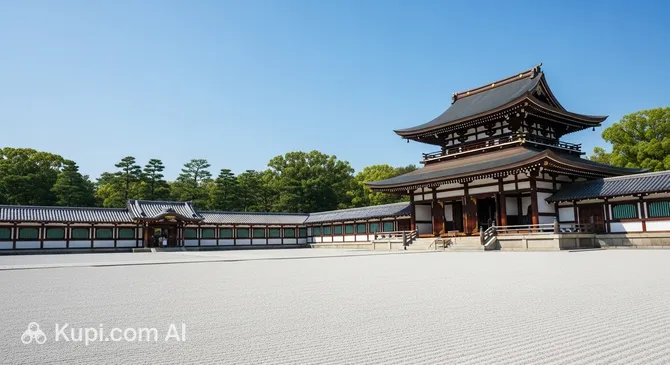
Kyoto Imperial Palace
Kyoto Imperial Palace. Иллюстрация. Источник: Kupi.com AI

The palace occupies a vast territory surrounded by austere white walls with six gates. The current buildings are a skillful reconstruction of the Heian period style, completed in 1855. Here, you can see luxurious halls for state ceremonies, the imperial living quarters, and the famous Shishinden hall with its characteristic hipped roof.

Of particular note is the Takamikura throne room, where the black lacquered throne, decorated with symbols of imperial dignity, stands on an octagonal pedestal. The gardens surrounding the buildings, with their pure white gravel and sacred trees, create an atmosphere of tranquility, allowing guests to experience the spirit of the ancient Japanese aristocracy.

Contacts

To clarify visiting details or book official tours, you can use the following contact information:

How to contactContact
Address内 Kyōtogyoen, Kamigyo Ward, Kyoto, 602-0811, Япония
Phone+81 75-211-1215
Websitekyoto-gosho.kunaicho.go.jp

What to Do

A visit to the palace offers a unique opportunity to literally touch history. The main activity here is strolling through the grounds, where you can examine the Kenrei-mon Gate and the majestic galleries in detail. Be sure to reach the main hall, Shishinden: for centuries, the nation's destiny was decided within its walls, and the most important enthronement ceremonies took place here.

For those who want to dive deeper into the daily lives of high-ranking officials, tours are available (by prior appointment), which reveal the purpose of various rooms, such as the reception halls for guests of different ranks. The visual perfection of the throne room with its unique decor and phoenix statues leaves a lasting impression on history and art lovers.

Beyond the palace walls, the Kyoto Imperial Park (Gyoen) awaits you. It is an ideal place for leisurely walks and landscape photography. Depending on the season, you can witness the delicate cherry blossoms in spring or the fiery maples in autumn. Locals often come here for picnics, creating a lively contrast between the solemn historical monument and the modern rhythm of city life.

Getting There

The attraction is located in the Kamigyo ward. It can be reached quickly from the central part of the city using the well-developed public transport network. The most convenient way is by metro. You can use the Imadegawa (Karasuma Line) or Marutamachi (Karasuma Line) stations, from which a walk to the complex gates will take about 10–15 minutes.

If you prefer buses, routes No. 9, No. 12, and No. 101 run from Kyoto Station. You should get off at the Kyoto Gosho Nishimon-mae stop; the journey will take 20 to 30 minutes depending on traffic. You can also always use a taxi, which is especially convenient if you are traveling in a large group.

For outdoor enthusiasts, a bike ride is an excellent option. Kyoto is a bicycle-friendly city, and the paths leading through the park areas to the palace allow you to enjoy the views of the old capital without any rush.

Ближайший город: Kyoto

History & Facts

The history of this place began back in 794, when Emperor Kanmu moved the capital to Heian-kyo (modern-day Kyoto). Over the centuries, the original building survived many trials: it repeatedly suffered from devastating fires and wear, which caused the imperial residence to periodically move to temporary structures. The palace finally secured its status as the primary and permanent residence only at the end of the 14th century.

In the 16th and 17th centuries, prominent historical figures such as Oda Nobunaga, Toyotomi Hideyoshi, and Tokugawa Ieyasu were involved in the restoration and expansion of the complex. However, fire continued to haunt the structure: the palace burned to the ground five times between 1653 and 1788. The current appearance of the ensemble is the result of a large-scale reconstruction in 1855, during which architects tried to recreate the Heian period style as accurately as possible.

The palace remained the home of the imperial family until 1868, when the capital was officially moved to Tokyo as a result of the Meiji Restoration. Despite the change in status, this place has retained its sacred significance: it was here that the solemn enthronement ceremonies of Emperors Taisho and Showa took place, emphasizing the unbreakable bond of Japan's eras and traditions.

Time Needed

To leisurely explore the main architectural sites and stroll through the surrounding gardens, it is recommended to set aside 2 to 3 hours. Roughly half of this time will be spent visiting the palace complex itself and its magnificent halls, while the rest can be spent contemplating the landscape delights of the Kyoto Imperial Park.

If you plan to participate in an official tour, take into account its fixed duration (usually about an hour) and add time for independent exploration of the grounds. This place invites quiet contemplation, so it's best not to try and see everything in a hurry.

Working Hours

When planning your visit, please note that the complex is open to the public from Wednesday to Sunday. Working hours are set from 09:00 to 15:20. Note that the last entry to the grounds is no later than 20 minutes before the official closing time.

Please be aware that Monday and Tuesday are closing days, and access to the attraction is unavailable at this time. Also, participating in some tours may require prior registration on the official website of the Imperial Household Agency.

DayWorking hours
понедельникЗакрыто
вторникЗакрыто
среда09:00–15:20
четверг09:00–15:20
пятница09:00–15:20
суббота09:00–15:20
воскресенье09:00–15:20

Nearby

The palace's location in the heart of the historic district makes it an ideal starting point for further exploration of the city. A stroll through the surrounding area will allow you to discover both traditional museums and modern entertainment centers that harmoniously complement the cultural landscape.

NameDistance
Kyoto Gyoen National Garden0.1 km
Shinpuhkan1.6 km
Nijō Castle1.7 km
The Pink Kyoto1.8 km
Kyoto Samurai and Ninja Museum1.9 km
Kitsune Kyoto2 km
Kyoto BAL2 km

Reached the end of the page?

That means the route is fully explored