Support

Tsuruga Railway Museum (Former Tsuruga Harbor Station Building)

Nearby attractions

About

Tsuruga Railway Museum is a unique space where history comes to life, recalling the time when Tsuruga was a world-class transport hub. The museum is located in a reconstructed building of the former port station, which served as the terminus for the legendary "Europe-Asia International Express," connecting East and West.
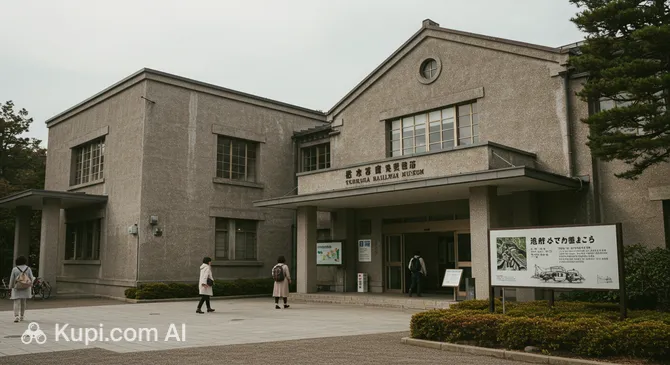
Tsuruga Railway Museum
Tsuruga Railway Museum. Иллюстрация. Источник: Kupi.com AI

In this part of Japan, the railway arrived earlier than in any other city on the Sea of Japan coast. Today, the museum introduces visitors to a rich railway legacy: it features authentic artifacts, such as antique rails and signals, alongside masterfully crafted models of luxury carriages and replicas of historical depots.

The exhibition highlights the city's role as a "gateway to Europe," telling the story of the era when ferries departed from here for Vladivostok to connect with the Trans-Siberian Railway. Located in Kanegasaki Ryokuchi Park, the museum building itself is an architectural landmark, inviting visitors on a nostalgic journey through the evolution of Japanese transport.

Contacts

For details regarding your visit or to arrange group tours, you can use the museum's official contact information.

How to contactContact
Address1-25 Minatomachi, Tsuruga, Fukui 914-0079, Япония
Phone+81 770-21-0056
Websitewww.city.tsuruga.lg.jp

What to Do

Inside the museum, you can immerse yourself in the atmosphere of early 20th-century travel. Be sure to take the time to watch the film "The History of Tsuruga Railways" — it vividly illustrates the city's transformation from a small port into an international hub. By following the information panels, you can trace the path of technical progress from the opening of the first line in 1889 to the milestone of AC electrification.

Of particular interest are the reproduced tickets and schedules for international routes. It is hard to imagine now, but one could once travel from Tokyo to Paris in just 17 days, with the journey passing right through this hall. The exhibition also features detailed models of Depots No. 1 and No. 2, which provide a sense of the scale of the railway infrastructure of the past.

For those who appreciate technical details, the museum offers a collection of actual equipment: antique spotlights, signaling devices, and track maintenance tools. While the exhibition is primarily geared toward adults and history enthusiasts, it impresses every visitor with its sense of heritage and the importance of technical progress.

Getting There

The museum is located at 1-25 Minatomachi, in the picturesque Tsuruga Port area, within Kanegasaki Ryokuchi Park. Getting here from other regions of Japan has become significantly easier thanks to the extension of the Hokuriku Shinkansen line — high-speed trains now bring passengers directly to Tsuruga Station.

From Tsuruga Station (JR Hokuriku Main Line), the museum can be reached on foot in about 15–20 minutes, enjoying views of the city. If you prefer public transport, you can take a local bus to the port stop. A taxi ride from the station will take no more than 5–10 minutes.

For those traveling by car, the route follows the Hokuriku Expressway. Exit at the Tsuruga IC interchange, from where it is about a 10-minute drive to the central port and the museum. Parking is available next to the building for visitors.

Ближайший город: Tsuruga

History & Facts

The history of this site is inextricably linked to the Meiji era, when in 1889 Tsuruga became the first city on the Sea of Japan coast to be connected to the railway. However, its true heyday began in 1912 with the launch of the famous "Europe-Asia International Express." Thanks to this route, the journey from Tokyo to Paris was shortened to just 17 days — a fantastic speed for that time, achieved through the seamless connection of ferries to Vladivostok and the Trans-Siberian Railway.

The building that houses the exhibition today is a meticulous reconstruction of the former port station. This was once a vital hub for international transport and cultural exchange. Tsuruga is often called the "bridge between Japan and the continent," and the museum vividly illustrates this status, showcasing the port's role as a major transit gateway.

The region's technological milestones are also highlighted. In 1957, Japan's first line fully electrified with alternating current (AC) was launched here. Five years later, in 1962, the Hokuriku Tunnel was opened; at the time, it was the longest in the country and the fifth longest in the world, marking a significant engineering triumph.

Time Needed

For a standard visit and to explore the main exhibition, most visitors need between 1 and 1.5 hours. This is ample time to view the train models, study the information panels, and watch the archival video footage.

If you are a true railway enthusiast or a history buff, we recommend setting aside about 2 hours. A detailed look at rare international tickets, antique block-system instruments, and the technical aspects of the line's electrification will allow you to fully appreciate the scale of the region's engineering heritage.

Working Hours

The museum is open to visitors daily from 09:00 to 17:00. Please note that Wednesday is a closed day — the exhibition is not accessible on this day. Last entry is permitted no later than 30 minutes before closing.

As the schedule may change during public holidays or special events, it is recommended to check the latest information on the city's official website before your visit.

DayWorking hours
понедельник09:00–17:00
вторник09:00–17:00
средаЗакрыто
четверг09:00–17:00
пятница09:00–17:00
суббота09:00–17:00
воскресенье09:00–17:00

Nearby

The museum's location in the port area makes it an ideal starting point for a walk. Exploring the surroundings allows you to immerse yourself further in the atmosphere of the old port city and see unique historical sites just a few steps away.

NameDistance
Kanegasaki Park0.2 km
Port of Humanity Tsuruga Museum0.3 km
Kanegasaki-gu Shrine0.4 km
Kehi Shrine Main Torii0.7 km
Uogin0.7 km
Kehi Shrine0.7 km
Chigusa Soba0.9 km

Reached the end of the page?

That means the route is fully explored