Support

Kehi Shrine Main Torii

About

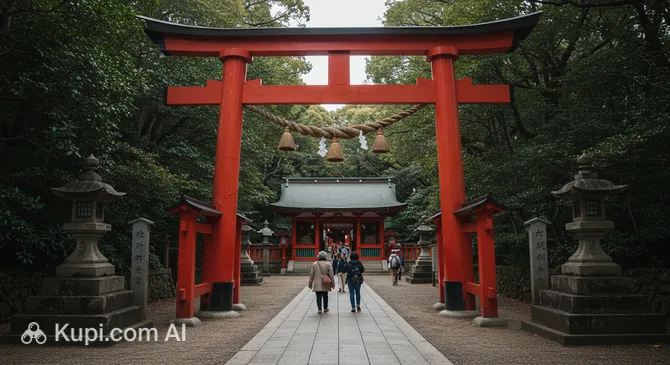
At the entrance to the ancient Shinto shrine of Kehi-jingu in the city of Tsuruga stand the majestic Great Torii of Kehi Shrine. This impressive architectural monument is a vibrant vermilion wooden gate standing 11 meters tall, considered one of the three greatest wooden torii in all of Japan, along with the famous gates in Itsukushima and Nara.
Kehi Shrine Main Torii
Kehi Shrine Main Torii. Иллюстрация. Источник: Kupi.com AI

Crafted from precious juniper wood, these torii are painted in the traditional cinnabar color, symbolizing protection against evil forces. They are designated as an Important Cultural Property and serve as the main recognizable symbol of Fukui Prefecture. The gate not only marks the boundary of the sacred territory but also stands as a magnificent example of the craftsmanship of Edo-period builders.

Beyond its architectural power, this place is known for its special energy. Just past the gate is a turtle statue from which flows the Chomeisui spring — the "water of longevity," which has been running here for over 1,300 years. Visitors come here to touch living history and feel the spirit of old Japan that so captivated the famous poet Matsuo Basho.

Contacts

For those planning a visit to Kehi Shrine, basic contact information will be helpful. Although it is an open religious site, it has an official administration and information resource.

How to contactContact
Address11-11-68 Akebonochō, Tsuruga, Fukui 914-0075, Япония
Phone+81 770-22-0794
Websitekehijingu.jp

What to Do

A visit to this site is primarily an opportunity to connect with spiritual traditions. First, stop at the gate itself to appreciate its scale and take memorable photos. Traditionally, when passing under the torii, visitors perform a slight bow to show respect to the shrine's deities. This is the perfect spot to feel the atmosphere of a so-called power spot.

Inside the complex, be sure to find the stone turtle statue. Sacred Chomeisui water flows from its mouth. It is believed that a sip of this water or simply washing your hands grants health and long life. Don't forget to explore further into the grounds to see the ancient pine tree, steeped in legends from the era of samurai battles, and the monument to the great haiku poet Matsuo Basho, who immortalized the beauty of Kehi in his verses.

If you are lucky enough to be here in early September, you will witness the vibrant Tsuruga Matsuri festival. During this time, large-scale processions with massive floats pass around the torii, traditional music plays, and the city is filled with festive energy. On regular days, this place is perfect for quiet meditation, especially at sunset when the sinking sun paints the red wood of the gate in fiery hues.

Getting There

Reaching this iconic location in the city of Tsuruga is quite easy. The most popular and convenient way for tourists is a walk from JR Tsuruga Station. The path takes about 15 minutes (approximately 1 km) along a straight road. Simply head north from the station along Kanno-ji Street, and the majestic red gate will soon be visible from a distance.

If you prefer to drive, take the Tsuruga-IC exit from the Hokuriku Expressway, after which the drive to the shrine will take only 5–10 minutes. Free parking for visitors is provided near the site.

You can also use local buses that run regularly from the central station or rent a bicycle right at Tsuruga Station. A bike ride through the city's port area is a great way to soak in the atmosphere before passing under the sacred torii arches.

Ближайший город: Tsuruga

History & Facts

The history of Kehi-jingu Shrine is rooted in deep antiquity: it was founded as early as 702. During the Heian period, this temple complex held an exceptional status, serving as the ichi-no-miya (chief shrine) of Echizen Province. It was revered as the most important spiritual guardian of the ancient Hokuriku-do road, and imperial messengers were frequent guests.

The torii as we see them today have a remarkable history. The first gates were erected in 810, but they were destroyed by a powerful storm in the 14th century. The current structure was reconstructed in 1645. Interestingly, the juniper timber used for construction washed ashore from Sado Island—this was considered a sacred sign, and the gate's pillars still symbolize the unbreakable bond between Tsuruga and that distant island.

In 1945, the shrine's main hall, then recognized as a National Treasure, was destroyed by fire. However, the Great Torii miraculously survived the flames, becoming a symbol of resilience and the continuity of generations. Today, they rightfully hold the status of an Important Cultural Property of Japan, reminding visitors of the times when the great poet Matsuo Basho celebrated the beauty of the moonlight here in 1689.

Time Needed

To leisurely explore the Great Torii and the Kehi Shrine grounds, 30–60 minutes is usually sufficient. This time is enough to take beautiful photographs of the gate, perform the ritual at the Chomeisui spring, and walk to the Matsuo Basho statue.

If your visit coincides with the Tsuruga Matsuri festival or if you plan to study the complex's architectural elements in detail, it's worth setting aside about 1.5 hours. The site invites quiet contemplation, so there's no need to rush away immediately after seeing the gate.

Working Hours

The Great Torii and the open grounds of Kehi Shrine are accessible 24 hours a day, daily. Entry to the grounds is completely free, allowing you to see the landmark at any time—whether in the early morning rays of the rising sun or late in the evening when the gate looks particularly mysterious.

However, if you plan to purchase omamori amulets or receive a goshuin temple stamp, you should aim for the standard operating hours of the shrine shops—typically from 9:00 to 16:30. It is recommended to check the official shrine website before your trip for specific times of seasonal festivals and rituals.

Круглосуточно

Nearby

A visit to Kehi Shrine can be complemented by a walk to other interesting city landmarks located within walking distance. This will allow you to learn more about the history of this ancient port city and enjoy its industrial and natural aesthetics.

NameDistance
Kehi Shrine0.1 km
Chigusa Soba0.2 km
Tsuruga Railway Museum0.7 km
Uogin0.7 km
Kanegasaki Park0.9 km
Port of Humanity Tsuruga Museum1 km
Kanegasaki-gu Shrine1.1 km

Reached the end of the page?

That means the route is fully explored