Support

Kazuemachi Chaya District

About

Kazuemachi Chaya-gai is a charming historic district located in the heart of Kanazawa. As one of the city's three preserved teahouse districts, it serves as a living monument to the Edo period. Walking through its narrow cobbled streets, you can feel the authentic atmosphere of old Japan, highly valued by travelers from around the world.
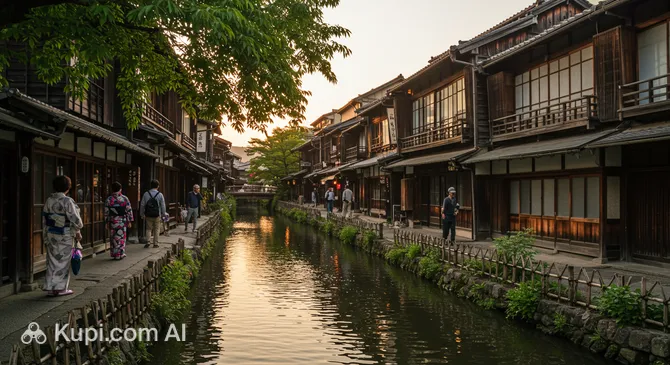
Kazuemachi Chaya District
Kazuemachi Chaya District. Иллюстрация. Источник: Kupi.com AI

The main feature of this place is the traditional wooden ochaya (teahouses) built in the classic machiya style. These buildings are distinguished by elegant lattice windows and carved eaves, creating a unique architectural rhythm. The district is nestled along the banks of the Asano River, which gives it a special charm, especially in the evening when the facades are bathed in the soft light of traditional lanterns.

Today, Kazuemachi remains an important cultural hub where you can still spot geisha hurrying to evening appointments. Unlike more crowded tourist areas, this quarter maintains a sense of quiet and noble tranquility, inviting guests to thoughtful contemplation and immersion in the traditions of Japanese hospitality and aesthetics.

Contacts

When planning a walk through this historic district in Kanazawa, it is helpful to have official information at hand. Although the area itself is open to visitors, details about specific establishments and special cultural events will help make your visit more fulfilling. Below are the main contacts for communication and navigation.

How to contactContact
Address2-5 Kazuemachi, Kanazawa, Ishikawa 920-0908, Japan
Websitewww.kanazawa-kankoukyoukai.or.jp

What to Do

The main pleasure in Kazuemachi Chaya-gai is aesthetic contemplation. We recommend starting your walk along the embankment, admiring how the old wooden facades are reflected in the river waters. This is an ideal spot for photoshoots: every turn of a narrow alley reveals a new shot, whether it’s an elegant window lattice or a traditional lantern at a teahouse entrance.

Visitors should look into the active ochaya (teahouses), where they can touch the world of high art. Tea ceremonies with matcha tasting are held here, and you can watch the graceful dances of geisha to the sounds of the shamisen. To fully immerse themselves in the authentic environment, many tourists choose to rent a yukata (summer kimono) for their walk, making them feel like part of the area's history.

Don't forget to visit the small shops and cafes hidden in the backstreets. There, you can try traditional sweets and purchase unique handmade souvenirs. Depending on the season, the district delights guests with special views: spring cherry blossoms or the vibrant colors of autumn maples, making every visit a unique event.

Getting There

The historic quarter in Kanazawa is easily accessible by public transport. Buses on routes #KK4 or #KK5 run from the city's main station (Kanazawa Station), where Shinkansen trains arrive. You need to get off at the Hashiba-cho or Owari-cho stop, after which the walk to the district itself takes no more than five minutes.

For those who prefer walking, the route from the famous Kenroku-en Garden or Kanazawa Castle takes about 20–30 minutes through very scenic streets. The path along the riverbank allows you to enjoy the city's peaceful atmosphere. If you are coming from Komatsu Airport, a taxi ride takes about 45–50 minutes and costs around 10,000 yen.

Within the city itself, it is convenient to get around on rented bicycles or scooters. However, keep in mind that the streets in Kazuemachi Chaya-gai itself are very narrow and pedestrian-only, so it is better to leave your transport at one of the nearby parking lots and enjoy a walk on foot.

Ближайший город: Kanazawa

History & Facts

The history of this unique district in Kanazawa dates back to the Edo period, when it was established as one of the tea house quarters for the entertainment of the samurai class. During that time, the powerful Maeda clan fostered a flourish of arts, and Kazuemachi became a place where geisha honed their skills in dance, music, and tea ceremonies.

The name "chaya" itself comes from traditional teahouses (ochaya), where powdered matcha tea was served. This beverage reached Japan in the 12th century thanks to the monk Eisai and eventually became the basis for the chanoyu ritual, closely linked to Zen Buddhist philosophy. By the 19th century, the district was thriving, remaining the cultural heart of the city where traditions were passed down through generations.

After the Meiji Restoration, many similar districts in Japan disappeared, but Kazuemachi managed to survive and preserve its original appearance. Today, it is recognized as an important cultural heritage site. Local authorities and residents have put immense effort into restoring the buildings so that modern tourists can see the same facades and cobbled streets once walked by samurai.

Time Needed

For a leisurely exploration of the architecture and atmosphere of Kazuemachi Chaya-gai, 1–2 hours is usually sufficient. This is enough time to walk through the main streets, take atmospheric photos, and enjoy the view of the Asano River.

If you plan to visit a teahouse for a ceremony, stop by a local cafe, or stay for dinner with a geisha performance, you should allow 2–3 hours or an entire evening. We especially recommend walking here at twilight when the street lanterns are lit and the district is transformed.

Working Hours

The grounds of the Kazuemachi Chaya-gai historic district are open to visitors 24/7, including weekends and holidays. You can freely walk the public streets at any time of day or night, enjoying the silence or the evening illumination.

It is important to remember that indoor establishments—teahouses, museums, and restaurants—have their own operating hours. Generally, they welcome guests from 10:00 AM to 10:00 PM. For attending closed events or tea ceremonies, it is recommended to book in advance, as many ochaya operate by appointment only.

Круглосуточно

Nearby

Exploring the surroundings of the Kazuemachi district will allow you to dive deeper into the rich history of this region. Thanks to its convenient location in the city center, you can easily walk to many other iconic sites that form the unique character of Kanazawa.

Below is a list of nearby points of interest to include in your itinerary:

NameDistance
Kanazawa Phonograph Museum0.1 km
Higashi Chaya District0.3 km
Ishikawa-mon Gate0.8 km
Kanazawa Shu Shu0.8 km
Kanazawa Castle Park0.8 km
Kanazawa Castle1 km
Kenrokuen Garden1.1 km

Reached the end of the page?

That means the route is fully explored