Support

Atsuta Shrine

About

Atsuta Shinto Shrine (Atsuta Jingu) is one of the most important and revered Shinto shrines in all of Japan. Located in a large green park in the south of Nagoya, this site attracts both pilgrims and tourists seeking tranquility and immersion in history. It is rightfully considered one of the city's main attractions, along with Nagoya Castle and the Tokugawa Art Museum.
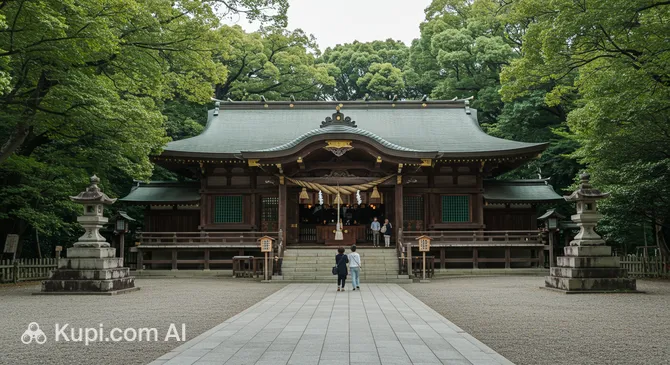
Atsuta Shrine. Illustration.
Source: Kupi.com AI

Traveler photos:

The shrine is dedicated to the Sun Goddess Amaterasu, and its most prized possession is the sacred Kusanagi-no-tsurugi sword—one of the country's three Imperial Regalia. Although the artifact itself is hidden from public view, its unseen presence fills the place with a special power and significance. This makes Atsuta a central place of worship and one of the most sacred sites in the Shinto tradition.

The temple ensemble is built in the austere and elegant Shinmei-zukuri architectural style, which was carefully reconstructed during the Meiji period. Walking through the well-kept grounds of the complex, surrounded by centuries-old trees, allows you to fully experience the harmony of traditional Japanese architecture and nature. A visit to the Atsuta Shrine is an opportunity to deeply feel the spiritual culture of Japan and take a break from the hustle and bustle of the city.

Contacts

To plan your visit and check the current event schedule and treasury opening hours, it is recommended to use the sanctuary's official contact details. The temple grounds themselves are open to visitors 24 hours a day.

How to contactContact
Address1-chōme-1-1 Jingū, Atsuta Ward, Nagoya, Aichi 456-8585, Japan
Phone number+81 52-671-4151
Websitewww.atsutajingu.or.jp

What to Do

Visiting the Atsuta Shrine is a chance to immerse yourself in a peaceful and spiritual atmosphere. Guests can stroll through the extensive temple complex, which feels more like a dense forest with picturesque streams. Here, you can admire traditional Japanese architecture in the Shinmei-zukuri style and see one of the main natural highlights—an ancient camphor tree that is over 1,000 years old. The complex grounds are dotted with many smaller shrines, each with its own significance, making the walk even more informative.

After exploring the temple buildings, it's worth taking time for cultural and gastronomic discoveries. The complex houses a treasury museum featuring a rich collection of art, including samurai swords, ritual masks, and other valuable artifacts. Afterward, you can relax in a local restaurant and try a Nagoya specialty—kishimen, wide flat noodles that are a must-try for foodies.

For those wishing to learn more about Japan's traditions, the numerous festivals held at the shrine throughout the year are of particular interest. One of the most colorful is the event on June 26th, dedicated to praying for a bountiful rice harvest. On this day, you can see women in traditional kimonos planting rice by hand while performing ancient songs. Another major event is the Atsuta Matsuri, held on June 5th, which features formal processions, music, and thousands of paper lanterns lighting up the grounds in the evening.

Getting There

Getting to the Atsuta Shinto Shrine in Nagoya is quite simple thanks to the well-developed public transport system. The sanctuary is conveniently located in the southern part of the city, making it easily accessible from anywhere. The primary and most convenient ways to get there are by train and metro, which provide fast and efficient travel.

There are several optimal routes for travelers. The fastest way is to take the Meitetsu Nagoya line trains to Jingu-mae station, which is just a three-minute walk from the shrine's eastern entrance. Another option is the JR Tokaido line to Atsuta station, from where it is about an 8-10 minute walk to the temple. You can also use the subway: take the Meijo line to Jingu-Nishi station, which is roughly a 5-7 minute walk from the complex's western gates.

In addition to rail transport, the shrine can be reached by city buses, many of which stop at the "Jingu-mae" entrance. For those who prefer comfort, a taxi ride from central Nagoya or the main station is a quick, though more expensive, option. If you are traveling by car, free parking is provided near the eastern entrance.

Nearest city: Nagoya

History & Facts

The history of the Atsuta Shrine dates back to ancient times. According to tradition, it was founded in the 2nd century AD, making it one of the oldest Shinto shrines in Japan. Some records state the sanctuary is over 1,900 years old, built to house one of the country's most important relics. This centuries-old history gives the place a special aura and significance.

Central to Atsuta's history and mythology is the sacred Kusanagi sword, one of the three Imperial Regalia of Japan. Legend says this sword was granted to the imperial family by the sun goddess Amaterasu. There is an intriguing theory that adds mystery to the artifact: some historians believe the original sword may have been lost in the naval Battle of Dan-no-ura in 1185, and today the shrine houses an exact copy. Regardless, the presence of the relic, even in replica form, makes Atsuta a place of immense spiritual power.

The shrine's architectural appearance is also noteworthy. During the Meiji period, the temple complex was carefully reconstructed in the traditional Shinmei-zukuri style. Characteristic of the most important Shinto shrines, this style is defined by simplicity and harmony with nature, which has preserved the authentic look of the ancient temple despite destructions and rebuilds throughout its long history.

Time Needed

When planning a visit to the Atsuta Shinto Shrine, you should allow for 1 to 2 hours. This is enough time for a leisurely stroll through the main grounds, viewing the primary temple buildings—including the main sanctuary—and visiting the famous thousand-year-old camphor tree. During this time, you can fully experience the peaceful atmosphere of this sacred place and take memorable photos.

If you want to dive deeper into history and culture, you should extend your visit. Exploring the treasury (Bunkaden) and the new sword museum (Kusanagi-kan), which display valuable artifacts including historical swords, will add at least another 30-60 minutes to your trip. Many travelers also take the opportunity to visit one of the local restaurants on the complex grounds to try Nagoya's famous "kishimen" noodles, which can take about an hour. Thus, for a full and relaxed experience of all aspects of the Atsuta Shrine, it is better to set aside around 3 hours or even half a day.

Working Hours

The grounds of the Atsuta Shinto Shrine are open to visitors 24 hours a day, year-round, allowing guests to enjoy its peaceful atmosphere at any time. However, specific opening hours apply to the treasury (Bunkaden) and the recently opened sword museum (Kusanagi-kan). Both museums are generally open from 9:00 AM to 4:30 PM, with last entry at 4:10 PM. Admission to the shrine grounds is free, but a small fee is charged to visit the museums.

Special reservations for visiting the shrine or its museums are usually not required. However, keep in mind that the treasury is closed on the last Wednesday and Thursday of every month, as well as from December 25th to 31st. As schedules may change, especially during festivals or public holidays, visitors are advised to check the official shrine website for the latest information before their visit.

Open 24 hours

Nearby

Visiting the majestic Atsuta Shrine is just the beginning of discovering the multifaceted city of Nagoya. To fully experience the atmosphere of this corner of Japan, it is worth spending some time in its surroundings. A stroll through nearby areas will allow you not only to see other interesting sites but also to better understand the cultural and historical context of this ancient sanctuary.

Near the shrine, you'll find both cozy parks and restaurants as well as more modern facilities that create a striking contrast with its thousand-year history. Exploring these places will enrich your trip and leave a more complete and vivid impression of your visit.

NameDistance
Nagoya City Science Museum4.3 km
The Conder House4.6 km
Nagoya City Science Museum4.6 km
Sky-Boat Ferris Wheel4.7 km
Midtown BBQ Nagoya4.8 km
Port of Nagoya Public Aquarium4.9 km
The Kawabun5.4 km

Have you reached the end of the page?

So the route has been studied inside and out