Support

To-ji Temple

About

To-ji (東寺), or the "East Temple," is one of the most significant Buddhist temple complexes in Kyoto and all of Japan. Located in the southern part of the city, it is considered a true symbol of the ancient capital and a major monument of the country's religious architecture. Founded in the 8th century, this temple was one of only three permitted in the city when it first became the capital and served to protect the city.

The main gem and dominant feature of the complex is the famous five-story pagoda. Standing at approximately 55-57 meters tall, it is the tallest wooden pagoda in Japan. This majestic structure, which has been rebuilt several times after fires, is visible from afar and is the hallmark of To-ji.
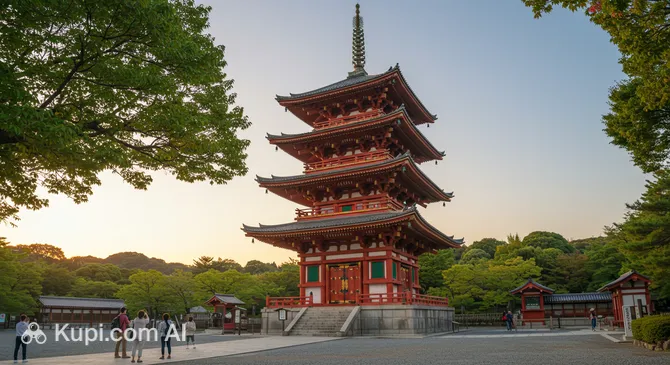
To-ji Temple. Illustration.
Source: Kupi.com AI

Traveler photos:

In addition to the pagoda, the temple grounds house other valuable buildings, such as the Golden Hall (Kondo) and the Lecture Hall (Kodo), where important Buddhist statues and relics are kept. The complex, a UNESCO World Heritage site, is surrounded by a picturesque garden with a pond, creating a peaceful atmosphere perfect for leisurely walks and contemplation.

Contacts

To plan your visit to To-ji Temple, you can use the contact information below. We recommend checking the current opening hours and ticket prices before your visit, for example, by calling the provided telephone number.

How to contactContact
Address1 Kujōchō, Minami Ward, Kyoto, 601-8473, Japan
Phone number+81 75-691-3325
Websitetoji.or.jp

What to Do

A visit to To-ji Temple offers a wealth of experiences. Guests can take a leisurely stroll through its vast and well-maintained grounds, enjoying the peaceful atmosphere. The famous five-story pagoda takes center stage in the landscape, looking especially picturesque against the backdrop of cherry blossoms in spring or crimson maples in autumn. For photography enthusiasts, the temple is of particular interest at sunrise and sunset, when its pagoda is gracefully reflected in the pond, creating breathtaking views. You can see carp and turtles swimming in the ponds on the grounds, which adds even more charm to the place.

For a deeper immersion into history and culture, it's worth stepping inside the temple halls. In the Golden Hall (Kondo), the main building of the complex, you can see ancient statues and relics related to the history of the Shingon school of esoteric Buddhism. It houses an important statue of the Yakushi Buddha dating back to 1603. The Lecture Hall (Kodo) features an impressive composition of statues, including the Five Wisdom Buddhas, bodhisattvas, and the formidable Heavenly Kings, designed to inspire awe.

Furthermore, the To-ji grounds regularly come to life thanks to the famous market known as Kobo-san, held on the 21st of every month. On these days, many people gather here to buy antiques, handmade items, traditional sweets, and souvenirs. It is especially crowded on November 21st, when the market coincides with the peak of autumn colors. On other days when there are no markets, the temple has a more tranquil and contemplative atmosphere, attracting lovers of history and art.

Getting There

To-ji Temple is very conveniently located, making it easily accessible for tourists. It is just a 15-minute walk from Kyoto Main Station. Walking from the station is a great way to reach the temple, allowing you to get a feel for the surrounding neighborhood. The famous five-story pagoda serves as a reliable landmark along the way, visible from many points in the city, making it hard to get lost.

If you prefer public transport, To-ji is easily reachable by bus. From Kyoto Station, it's just a few stops to the temple. The city's bus network is well-developed and is one of the most popular ways for tourists to get around. Additionally, taxis are always an option, which is slightly more expensive but offers a faster and more comfortable ride from the station.

For those traveling by car, there is a parking lot near the temple. However, please note that during major events, such as the famous Kobo-san flea market, or at the peak of the tourist season, finding a free spot can be difficult. During these periods, it is recommended to opt for public transport to avoid the hassle of searching for parking.

Nearest city: Kyoto

History & Facts

The history of To-ji Temple is inextricably linked to the establishment of Kyoto as the capital of Japan. It was founded in 796, shortly after the capital was moved, and was originally one of only three Buddhist temples officially permitted to operate in the city. This emphasized its special significance from the very beginning. A turning point in the temple's history came in 823, when Emperor Saga handed it over to the prominent monk Kukai, also known as Kobo Daishi.

Under Kukai's leadership, To-ji became the primary center of the Shingon school, one of the most important branches of Japanese esoteric Buddhism. Kukai transformed it from a place of prayer into a powerful educational and religious center whose influence spread throughout the country. As a result, To-ji secured its status as one of Japan's key shrines for centuries.

Throughout its more than thousand-year history, the complex has suffered from fires and been rebuilt multiple times, so its architecture reflects features of different eras—from Kamakura and Muromachi to Edo. Five of its buildings, including the famous five-story pagoda and the Golden Hall (Kondo), are designated National Treasures of Japan. In 1994, the entire temple complex was included in the UNESCO World Heritage list as part of the Historic Monuments of Ancient Kyoto, confirming its outstanding cultural significance.

Time Needed

When planning a visit to To-ji Temple, you should allow for approximately 1.5–2 hours. This is generally enough time for a thorough tour of the grounds, visiting the main halls such as the Kondo and Kodo, and taking a leisurely stroll through the picturesque garden with its pond.

However, if you want to immerse yourself deeper in the atmosphere, take photos, or simply meditate in the silence of the garden, you should set aside a bit more time. Your visit may be especially long if you happen to catch the famous Kobo-san market, which takes place on the 21st of every month. In this case, your sightseeing will be complemented by a fascinating exploration of numerous stalls selling antiques, souvenirs, and local delicacies, which can easily take another couple of hours.

Working Hours

The To-ji temple complex is open to visitors year-round. Standard operating hours are daily, usually from 8:30 AM to 5:30 PM. It is important to note that the last entry to the grounds is permitted 30 minutes before closing. During the winter period, the temple may close an hour earlier. Opening hours may also change depending on the season and special events.

For a regular visit to the temple and its grounds, advance ticket booking is generally not required. However, separate rules may apply for special exhibitions or events. Before your visit, it is recommended to check the official To-ji Temple website for the most up-to-date information on opening hours and any potential changes to ensure your visit is as comfortable as possible.

8:00 – 17:00

Nearby

Visiting To-ji Temple is a magnificent start to exploring the rich history and culture of Kyoto, but you shouldn't stop there. The temple's convenient location, especially its proximity to the city's main station, makes it an ideal starting point for further exploration of the ancient capital's treasures. A walk through the surrounding area will give you a more complete and multifaceted impression of a city where ancient traditions coexist harmoniously with modernity.

To help you plan your itinerary, we have prepared a list of interesting places located near To-ji Temple. By including them in your program, you can see different sides of Kyoto life—from bustling markets and modern museums to other iconic shrines.

NameDistance
Kyoto Aquarium0.8 km
Kyoto Railway Museum0.9 km
IMU Bar Kyoto2.5 km
Kyoto Resort Hotel2.8 km
Kyoto Yakiniku Enen Shijo Kawaramachi3 km
Kyoto Samurai and Ninja Museum3.3 km
The Hotel Seiryu Kyoto Kiyomizu3.4 km

Have you reached the end of the page?

So the route has been studied inside and out