Support

Byodoin Temple

About

Byodo-in Temple is a famous Buddhist temple located in Nara, Japan, although historically it is closely associated with the city of Uji. This temple is an outstanding architectural monument of the Heian period (794–1185) and serves as a striking symbol of the country's rich Buddhist culture and art. A visit to Byodo-in is an opportunity to touch ancient traditions and feel the spirit of bygone eras.
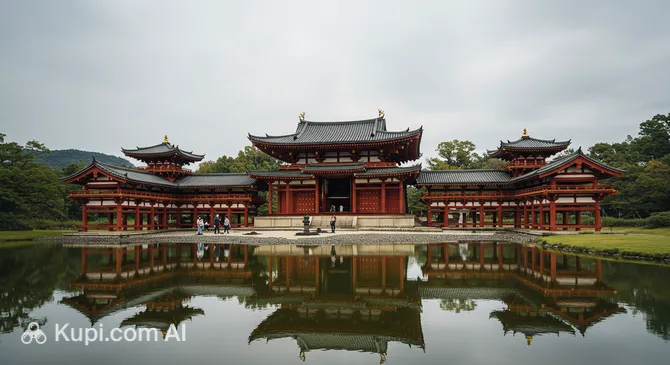
Byodoin Temple. Illustration.
Source: Kupi.com AI

Traveler photos:

The crown jewel of Byodo-in Temple is its main building—the Phoenix Hall (Hoodo). It is dedicated to Amida Buddha, and its roof is crowned with elegant figures of mythical phoenix birds, symbolizing rebirth. Surrounding the pavilion is a picturesque garden with a pond fed by the waters of the Uji River. This harmonious composition creates an atmosphere of incredible peace and tranquility, inviting visitors to contemplation.

The architecture of the Phoenix Hall and the entire temple complex carries deep symbolism. Byodo-in is considered the embodiment of the idea of the "Western Paradise"—the Buddhist Pure Land of Amida, a place of eternal bliss. The temple seeks to convey a sense of immortality and spiritual rebirth, making it not just an architectural masterpiece but also an important spiritual center. Due to its unique historical and cultural value, Byodo-in Temple was included in the UNESCO World Heritage list. It is recognized as a unique monument of history and architecture from Japan's Heian period, attracting pilgrims and tourists from all over the world who wish to see its beauty and soak in its special atmosphere.

Contacts

To get accurate and up-to-date information about visiting Byodo-in Temple—which is actually located in the city of Uji rather than Nara—we recommend contacting local tourist centers. Many travelers combine a visit to the temple with a trip to the neighboring city of Nara, so information bureaus in both cities can provide necessary details regarding opening hours, ticket prices, and transportation links.

How to contactContact
AddressRenge-116 Uji, Kyoto 611-0021, Japan
Phone number+81 774-21-2861
Websitewww.byodoin.or.jp

What to Do

Visiting Byodo-in Temple is a chance to experience the unique heritage of Japan. The centerpiece of the entire complex is the famous Phoenix Hall, built back in 1053. Its elegant Heian-period architecture, with side galleries resembling the wings of a mythical bird, leaves an indelible impression. Inside the pavilion is a revered statue of Amida Buddha, created by the famous sculptor Jocho. This structure is so significant to the country that its image graces the 10-yen coin.

Your tour of the temple shouldn't be limited to the Phoenix Hall alone. Be sure to stroll through the picturesque "Pure Land" style garden that surrounds the central building. A walk along Aji-ike Pond will provide a sense of peace and harmony. This location is perfect for taking stunning photos: the reflection of the Phoenix Hall in the still waters is one of the temple's most recognizable and beautiful views. Also on the grounds is the Hoshokan Museum, which houses national treasures, including the original temple bell and 52 wooden statues of Bodhisattvas.

Getting There

Although Byodo-in Temple is often mentioned in the context of trips to Nara, it is actually situated in the city of Uji, which lies between Nara and Kyoto. The most convenient and popular way to reach the temple is by train, thanks to the region's well-developed rail network. A train journey is not only fast but also allows you to enjoy scenic views along the way.

If you are traveling from the city of Nara, a trip on the JR Nara Line to Uji Station takes about 30-40 minutes. The journey from Kyoto is even shorter, taking approximately 20-30 minutes depending on the train type (rapid or local). From either station—JR Uji or Keihan Uji—Byodo-in Temple is a 10-15 minute walk away. This walk is a pleasant part of the journey itself, as it passes through the city's charming streets.

Besides the train, you can reach the temple by local buses or taxi. A taxi can be a convenient option if you are traveling with small children, heavy luggage, or simply prefer the comfort of a direct route to the entrance. However, for most tourists, the train is the optimal choice, combining speed, affordability, and the chance to soak in the regional atmosphere.

Nearest city: Nara

History & Facts

The history of Byodo-in Temple dates back to the Heian period and began not as a religious structure, but as a luxurious countryside villa. Originally, in 998, it was the estate of the powerful politician Fujiwara no Michinaga. His family effectively ruled Japan at the time, and the villa, located in picturesque Uji, served as a symbol of their immense influence and wealth.

A turning point in the site's history came after Michinaga's death, when his son, the regent Fujiwara no Yorimichi, decided to convert his father's villa into a Buddhist temple. This momentous event took place in 1052. A year later, in 1053, the central and most recognizable element of the complex was built—the Phoenix Hall (Hoodo), dedicated to Amida Buddha. This elegant structure became the embodiment of the artistic and religious ideals of its time, reflecting visions of the "Pure Land"—a Buddhist paradise.

Byodo-in Temple is not just a beautiful building, but a living testament to the rich culture of the Heian era, when Buddhism exerted a colossal influence on all spheres of life. Its architectural and historical value was recognized globally: in 1994, the complex was included in the UNESCO World Heritage list as an outstanding monument of Japanese architecture and religious art. Remarkably, the Phoenix Hall has never been destroyed in its multi-century history, making it one of the few original wooden structures preserved from the Heian period.

Time Needed

To fully explore Byodo-in Temple, it is recommended to set aside about 1.5–2 hours. This is usually enough time to leisurely enjoy the architecture, stroll through the famous garden, and visit the museum without missing important details. This approach will allow you to fully experience the atmosphere of this unique site.

This timeframe includes a visit to the legendary Phoenix Hall, a walk through the "Pure Land" style garden around the pond, and a visit to the temple's treasury—the Hoshokan Museum. Such a relaxed pace provides the opportunity to take beautiful photographs and truly absorb the serenity and beauty of this World Heritage site. If you are very short on time, a quick walk-through can be done in 45–60 minutes, but for complete immersion, it is better to allocate more time.

Working Hours

Byodo-in Temple and its grounds are generally open to the public daily. The main operating hours of the complex are approximately from 8:30 AM to 5:30 PM, though entry for visitors may stop 15 minutes before closing. It is important to note that viewing the interior of the famous Phoenix Hall often requires a separate ticket, which is sold for specific time slots with a limited number of participants. Therefore, especially during peak seasons, it is recommended to arrive early to ensure you can purchase a ticket for a convenient time.

While the temple welcomes guests year-round, the hours for specific areas, such as the Hoshokan Museum, may vary. Additionally, the schedule may change slightly depending on the season or due to special ceremonies and national holidays. To avoid any surprises and get the most accurate information, we strongly advise checking the current schedule on the official Byodo-in Temple website before your trip. This is especially important if you want to guarantee access inside the Phoenix Hall.

8:45 – 17:30

Nearby

Visiting such an iconic landmark as Byodo-in Temple is often the highlight of a traveler's itinerary. However, to truly feel the atmosphere of the region and the depth of its history, it is worth spending time exploring the surroundings. Strolling through the nearby streets, discovering other temples, or visiting parks can offer just as many vivid impressions and unexpected discoveries, enriching your overall trip experience.

Although Byodo-in Temple itself is in the city of Uji, its strategic location between the ancient capitals of Kyoto and Nara makes it an ideal starting point for further exploration. In the immediate vicinity of the temple and in the city of Nara itself, there are many other interesting places worthy of your attention. For example, in Uji, you can visit the Ujigami Shrine or walk along the picturesque river embankment. In Nara, the famous park with friendly deer, the majestic Todai-ji Temple, and Kasuga Taisha Shrine await you. To create an itinerary that suits you perfectly, we recommend contacting local guides or tourist information centers. They can help you select attractions based on your interests and available time.

NameDistance
Mizuya Chaya23.1 km
Susuruka23.7 km
Wanpaku Zoo27.7 km
Beer Museum29.6 km
Osaka Tenmangu Shrine34.4 km
Nara Rare Animal Zoo37.1 km
Shitennō-ji37.2 km

Have you reached the end of the page?

So the route has been studied inside and out