Support

Hozomon Gate (Senso-ji)

About

The Hozomon Gate (Senso-ji) is an impressive monumental gate that is an integral part of the famous Senso-ji temple complex. Located in Chiyoda, Japan, this gate serves as the grand entrance to the inner courtyard of one of the oldest and most revered Buddhist temples. It stands directly in front of the temple's main hall, inviting visitors to immerse themselves in an atmosphere of antiquity and spirituality.
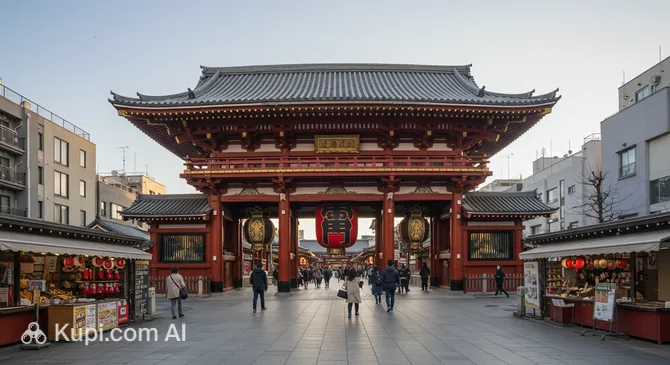
Hozomon Gate (Senso-ji). Illustration.
Source: Kupi.com AI

Traveler photos:

The name "Hozomon" translates as "Treasure House Gate." This is no coincidence, as the upper story of this majestic gate indeed serves as a repository for valuable relics and sacred Buddhist texts belonging to Senso-ji Temple. Thus, the gate not only functions as an entrance but also safeguards important cultural and religious artifacts.

The architecture of the Hozomon Gate is striking in its massiveness and adherence to traditional Japanese styles. The bright red color, characteristic of many temple buildings in Japan, makes it visible from afar. The gate is particularly famous for the two giant paper lanterns (chochin) hanging on either side and the imposing wooden sculptures located in the niches. These details make the Hozomon Gate (Senso-ji) one of the most photographed and recognizable parts of the entire Senso-ji temple ensemble.

Contacts

Planning to visit the majestic Hozomon Gate (Senso-ji)? It is part of the famous Senso-ji temple complex and is located at: 2 Chome-3-1 Asakusa, Taito City, Tokyo 111-0032, Japan. To clarify details of your visit, such as opening hours or event information, you can contact the Senso-ji temple representatives using the following contact details:

How to contactContact
Address2-chōme-3-1 Asakusa, Taito City, Tokyo 111-0032, Japan
Phone number+81 3-3842-0181
Websitewww.senso-ji.jp

What to Do

Passing through the majestic Hozomon Gate (Senso-ji), you enter the temple's inner courtyard, where a view of the Main Hall (Hondo) and the impressive five-story pagoda opens up before you. The gate itself, with its rich decoration and imposing size, often becomes a subject for photo shoots—a wonderful opportunity to capture its monumentality. Near the gate, you will also see guardian statues and traditional Japanese lanterns that give this place a special atmosphere.

In addition to exploring the architectural details, visiting the Hozomon Gate offers a chance to touch local culture. If you are lucky, you can observe rituals and ceremonies that periodically take place on the temple grounds. And on the bustling Nakamise-dori shopping street, which leads directly to the gate, you can take a leisurely stroll, picking out traditional souvenirs or trying various Japanese sweets—a perfect addition to your experience at Senso-ji Temple.

Getting There

Getting to Hozomon Gate (Senso-ji) is quite simple, especially if you use Tokyo's extensive public transport system. The gate is located in the bustling Asakusa district (Taito City), in the immediate vicinity of Asakusa Metro Station. This station is served by several lines: the Ginza line, the Asakusa line, and the Tobu Skytree line, making it easily accessible from different parts of the city.

From Asakusa Metro Station, the Hozomon Gate itself is just a 3–5 minute walk. Follow the signs leading to Senso-ji Temple—it's the main landmark in the area. The primary and most scenic route to the gate usually begins at the southern entrance through the famous Kaminarimon Gate. From there, you will walk along the colorful Nakamise-dori shopping street, lined with numerous souvenir shops and stalls selling traditional Japanese treats, which leads you straight to the Hozomon Gate.

The Asakusa area, where the Hozomon Gate (Senso-ji) is located, is very popular with tourists, so transport links are excellent. You can easily get here from central Tokyo, including districts like Chiyoda, as well as from other parts of the metropolis using the subway, trains, city buses, or taxis. The well-developed visitor infrastructure and numerous signs will help you find your way to this famous site with ease.

Nearest city: Chiyoda

History & Facts

The history of the Hozomon Gate (Senso-ji) dates back to the 10th century when it was first erected. Throughout its centuries-long history, the gate has repeatedly fallen victim to destruction, whether from fires or other disasters, but it has been rebuilt every time, demonstrating the resilience and significance of this structure. The current Hozomon Gate building that we see today was constructed in 1964. Interestingly, reinforced concrete was used for its construction, providing a modern solution to ensure durability after its previous destruction by fire.

The name "Hozomon," or "Treasure House Gate," was not chosen by chance. The upper story of this monumental structure traditionally served as a secure storehouse for the priceless relics of Senso-ji Temple and sacred Buddhist texts. Thus, the Hozomon Gate served not only a symbolic function as an entrance but also a practical one, protecting important cultural and religious artifacts. It is an integral part of the ancient Senso-ji temple complex, founded in the 7th century, which remains one of the most important centers of Buddhism in Tokyo to this day.

Despite its ancient history and numerous reconstructions, the Hozomon Gate continues to play an important role in the life of the temple and the city today. It is not just a silent witness to the past; the area around the gate and the Senso-ji temple complex itself regularly host colorful religious festivals and other public events. This attracts both locals and numerous tourists wishing to touch living tradition and experience the special atmosphere of this holy place.

Time Needed

To view the Hozomon Gate (Senso-ji) itself and its small surrounding area, a typical visitor won't need much time—usually 20–30 minutes is enough. During this time, you can carefully examine the gate's architectural details, the famous giant lanterns, the guardian statues, and take some memorable photos.

However, the Hozomon Gate is only one part of the large and famous Senso-ji temple complex. If you plan a more detailed exploration of this iconic site, including a visit to the temple's main hall, viewing the five-story pagoda, and strolling along the lively Nakamise-dori shopping street that leads to the gate, it is recommended to set aside 1 to 2 hours. This will allow you to slowly immerse yourself in the atmosphere of one of the oldest temples in Japan.

Ultimately, the total time you spend here will depend on your level of interest and how deeply you wish to explore. Some may limit themselves to a quick look at the gate, while others will want to explore every corner of the temple complex and enjoy its unique atmosphere.

Working Hours

The Hozomon Gate (Senso-ji), being part of the extensive Senso-ji temple complex, has a convenient visiting schedule. The gate itself, through which you pass into the temple grounds, is open 24/7, and access is completely free. This allows you to enjoy its majestic view at any time, whether it's early morning or late evening, and feel the special atmosphere of this historical site.

As for the main hall of Senso-ji Temple, it is usually open to visitors from 6:00 to 17:00. It is important to note that other interior rooms and pavilions within the temple complex may have their own specific operating hours. Therefore, to get the most up-to-date and accurate information, especially if you plan to visit specific sites within the complex or want to be aware of any possible changes, it is recommended to check the official Senso-ji Temple website in advance or clarify details on-site upon arrival.

6:30 – 17:00

Nearby

A visit to the majestic Hozomon Gate (Senso-ji) will undoubtedly leave you with unforgettable impressions. However, to make your journey through Chiyoda truly complete, we recommend exploring what lies nearby. Often, it is these walks through neighboring streets and discovering other interesting spots that allow you to feel the city's atmosphere more deeply and make unexpected discoveries.

The surroundings of the Hozomon Gate (Senso-ji) in Chiyoda hide many interesting locations, from cozy cafes and unique shops to other cultural sites. Don't limit your acquaintance with the city to just one attraction, as Chiyoda is ready to surprise you! Below, we have prepared a list of some notable nearby places that could complement your itinerary.

NameDistance
Nihonbashi Cinema3.6 km
Itoya Ginza5.2 km
Hibiya Midtown5.6 km
Imperial Hotel Tokyo5.8 km
Yoyogi Park10.4 km
The Manhattan Bar23.3 km
Takanodai Country Club28.2 km

Have you reached the end of the page?

So the route has been studied inside and out