Support

Tōdai-ji

About

Todai-ji, known as the "Great Eastern Temple," is one of the most famous and historically significant Buddhist temples in Japan, located in the city of Nara. This unique complex is a UNESCO World Heritage site and serves as the center of the Kegon school of Buddhism, attracting pilgrims and tourists from all over the world.

The temple's main hall, Daibutsuden, was considered the largest wooden structure in the world for many centuries. Its grandeur continues to amaze visitors today. The temple is officially included among the "Historic Monuments of Ancient Nara," highlighting its exceptional cultural value.
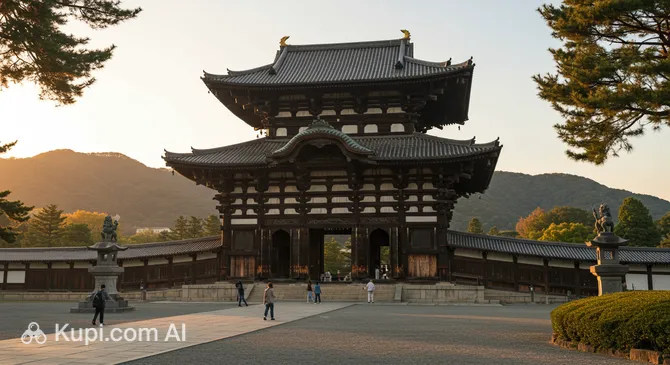
Tōdai-ji. Illustration.
Source: Kupi.com AI

Traveler photos:

The heart of Todai-ji is its main sanctuary—a giant bronze statue of the Great Buddha (Daibutsu). This monumental sculpture, one of the largest in the world, symbolizes spiritual greatness and is a must-visit for everyone interested in the history and culture of Japan.

Contacts

To plan your visit to the Todai-ji temple in Nara and get the most up-to-date information on opening hours, ticket prices, and special events, it is recommended to consult official sources. Below are the primary contact details available for inquiries.

How to contactContact
Address406-1 Zōshichō, Nara, 630-8587, Japan
Phone number+81 742-22-5511
Websitewww.todaiji.or.jp

What to Do

Visiting Todai-ji Temple is an opportunity to touch the greatness of Japanese culture and spirituality. The main goal for most travelers is to see the colossal bronze statue of the Great Buddha (Daibutsu), located in the Daibutsuden main hall. It is one of the largest Buddha statues in the world, and the hall itself was long considered the largest wooden building on the planet. Seeing this engineering and spiritual wonder leaves an unforgettable impression.

A stroll through the extensive grounds will reveal other treasures. Be sure to pass through the majestic Nandaimon gate, where you will be greeted by two eight-meter statues of the fierce Nio guardians—outstanding examples of Japanese sculpture from the Kamakura period. Don't miss the chance to visit other important pavilions, such as Hokke-do (Sangatsu-do) and the picturesque Nigatsu-do, whose veranda offers a beautiful panoramic view of Nara.

A visit to Todai-ji would not be complete without meeting its famous inhabitants. The temple is part of Nara Park, where hundreds of tame deer roam freely. These animals are considered sacred messengers of the gods and have become a true symbol of the city. Tourists enjoy feeding them special "shika-senbei" crackers, which are sold throughout the park. This is a unique and joyful experience for both children and adults.

For a deeper dive into history, stop by the Todai-ji Museum, which displays valuable relics and works of Buddhist art. And if you're looking for good luck, try crawling through the hole in one of the pillars in the main hall. It is the size of the Great Buddha's nostril, and according to legend, those who succeed will gain enlightenment in their next life. To conclude your walk, you can pick up some souvenirs at the local shops.

Getting There

Todai-ji Temple is located in the northern part of the famous Nara Park, making it very accessible for travelers. Nara itself is easily reachable from Japan's major tourist hubs, such as Kyoto and Osaka. A train ride on the JR or Kintetsu lines takes between 30 and 50 minutes, quickly bringing you to the ancient capital.

Upon arrival at one of Nara's railway stations (JR Nara or Kintetsu Nara), you have several options for reaching the temple. The most pleasant way is a stroll. The walk from Kintetsu Nara Station takes about 20-30 minutes, and from JR Nara Station—approximately 45 minutes. The route passes through the scenic park, where you can enjoy the city's atmosphere and meet the famous tame deer wandering freely throughout the grounds.

If you prefer a faster way or want to save your energy, you can take a city bus departing from both stations. The ride is short, and the "Todaiji Daibutsuden" stop is just a 5-10 minute walk from the temple's main building. This is an excellent alternative, particularly convenient for families with children or those short on time.

Nearest city: Ibaraki

History & Facts

The history of Todai-ji Temple dates back to the 8th century and is closely linked to the name of Emperor Shomu. Originally, in 728, Kinshosen-ji Temple was founded in memory of the late Crown Prince Motoi. Later, in 741, by decree of the Emperor—who sought to protect the country from disasters through Buddhism—monasteries began to be established across Japan, and Kinshosen-ji was granted the special status of the main provincial temple. This moment became a turning point in the history of the sanctuary.

The central event in the establishment of Todai-ji was the creation of a giant Buddha statue (Daibutsu). Its casting in sections took place from 745 to 749 and required colossal resources. The statue weighs about 380 tons and stands nearly 18 meters high. The solemn consecration ceremony held in 752 transformed the temple into the main center for Buddhist rituals, where prayers were offered for the peace and prosperity of the Japanese people.

Throughout its centuries-long history, the temple has suffered destruction several times, primarily from fires, but it was rebuilt each time. This remarkable resilience was made possible by the unwavering support of the imperial court and the deep faith of ordinary people who donated funds for reconstruction. Thanks to this, Todai-ji stands before visitors today in all its grandeur, serving as a living testament to the spiritual strength of the nation.

In addition to the majestic Buddha statue, Todai-ji is famous for its Shosoin Treasure House. It houses unique 8th-century artifacts that offer a glimpse into the culture and daily life of that era. Among the most valuable relics are the famous ceremonial swords, which are recognized as National Treasures of Japan and are a source of special pride for the temple complex.

Time Needed

To fully explore the Todai-ji temple complex, it is recommended to allocate 2 to 3 hours. This will be enough time to unhurriedly see the main attraction—the Great Buddha Hall (Daibutsuden), stroll through the adjacent Nara Park, and interact with the famous tame deer. You will also have time to visit several other significant buildings on the grounds.

If your time is limited, you can spend about 1–1.5 hours on your visit. During this period, you can focus on the essentials—visiting the Great Buddha Hall and taking some photos with the deer at the entrance. However, for a deeper immersion, it is worth planning more time. A full visit may include the Todai-ji Museum, which houses valuable relics, as well as a walk to the Nigatsu-do and Hokke-do pavilions, which offer scenic views. Such an extended route will allow you to fully experience the grandeur and peaceful atmosphere of this unique place.

Working Hours

Todai-ji Temple is open to visitors year-round, but its opening hours vary by season. It is recommended to plan your visit with these changes in mind to fully enjoy all the treasures of the complex. Advance ticket booking for individual visits is generally not required—they can be purchased on-site.

The primary pavilion, the Great Buddha Hall (Daibutsuden), operates on the following schedule: from April to October, it is open from 7:30 AM to 5:30 PM, and from November to March—from 8:00 AM to 5:00 PM. The operating hours for other facilities, such as the Todai-ji Museum, may vary, so it's worth checking the current information on the temple's official website before your trip, especially if your visit falls on a public holiday.

7:30 – 17:30

Nearby

Todai-ji Temple is located in the heart of Nara's historic district, within the grounds of the famous park. This makes it an ideal starting point for exploring other treasures of Japan's ancient capital. Most iconic sites are within walking distance or a short ride away, making it easy to create a rich itinerary and immerse yourself in the region's wealthy history.

Just a few steps from the main hall, you will find the Shosoin Treasure House, which houses priceless 8th-century artifacts, including items from the Silk Road. If you wish to switch eras, head to the Heijo Palace Remains Historical Park to walk through the site where the imperial palace once stood when Nara was the capital. For a family outing, the Ikoma Sanjo Amusement Park, located on a mountain, offers retro rides and panoramic views.

NameDistance
Shōsō-in Treasure House0.3 km
Nara Hotel1.2 km
Heijō Palace Site Historical Park4.2 km
Mahoroba Health Park Family Pool11 km
Ikoma Sanjo Amusement Park14.7 km
Akagi Ramen28.5 km
Osaka Castle28.7 km

Have you reached the end of the page?

So the route has been studied inside and out