Support

Megane Bridge (Shin-etsu Main Line No. 3 Bridge)

About

The Megane Bridge (Usui Third Viaduct), also known as the "Spectacles Bridge," is an impressive historical stone arch bridge located in the picturesque town of Karuizawa, Nagano Prefecture, Japan. The bridge earned its apt nickname from its two graceful arches, which, together with their reflection in the water, create a silhouette strikingly reminiscent of a pair of glasses—"megane" in Japanese.
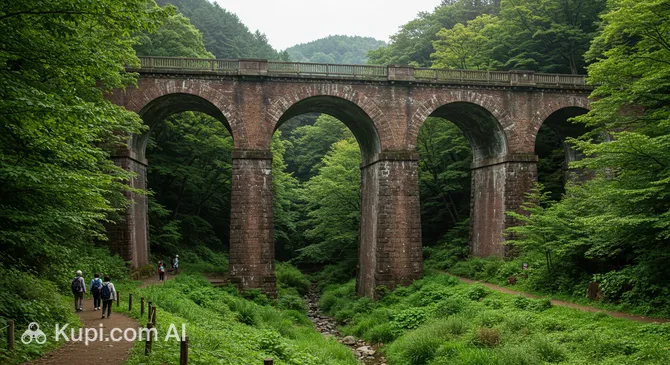
Megane Bridge (Shin-etsu Main Line No. 3 Bridge). Illustration.
Source: Kupi.com AI

Traveler photos:

This bridge is not just an engineering structure but a true cultural asset of Japan. The Megane Bridge is rightfully considered one of the three Great Bridges of the country, along with the famous Nihonbashi in Tokyo and the Kintai Bridge in Yamaguchi Prefecture. Its historical and architectural value attracts enthusiasts from all over the world.

Located at the foot of the majestic Mount Asama, the Megane Bridge offers visitors more than just a touch of history; it provides stunning natural views. This makes it one of the region's most popular tourist attractions and a wonderful place for walks and photography, where human creation and natural beauty blend harmoniously.

Contacts

As the Megane Bridge (Usui Third Viaduct of the Shin'etsu Line) is a historical site and a public attraction, it does not have specific contact information such as a phone number or email. For up-to-date information on access hours, potential restrictions, or nearby tourist services, we recommend contacting the Karuizawa Tourist Information Centers or visiting the official tourism portals of the region and Japan.

How to contactContact
AddressMatsuidamachi Sakamoto, Annaka, Gunma 379-0307, Japan
Websitewww.city.annaka.lg.jp

What to Do

Visiting the Megane Bridge (Usui Third Viaduct) is, first and foremost, an opportunity to enjoy magnificent views and take unforgettable photos of this historical wonder of engineering. The famous "spectacles" effect deserves special attention: when the bridge's arches are reflected in the water, they create the illusion of giant glasses, which gave the bridge its popular name. This sight attracts photographers and beauty lovers from around the world.

The area surrounding the bridge also offers many options for an interesting pastime. The town of Karuizawa, where the bridge is located, is famous for its picturesque landscapes reminiscent of European scenery. It is a popular summer resort with a pleasant, cool climate, making it an ideal place to escape the summer heat. Walking around the bridge will allow you to fully appreciate the beauty of the local nature.

Additionally, you can enjoy various active pursuits in Karuizawa. Tennis holds a special place here, being a sport of iconic significance for the town. It was on a tennis court in Karuizawa that the first meeting between Emperor Akihito and Empress Michiko took place, adding a special historical touch to the location. Thus, a visit to the Megane Bridge can be part of a broader exploration of the charming town of Karuizawa and its surroundings.

Getting There

Getting to the Megane Bridge (Usui Third Viaduct), located in the charming town of Karuizawa, typically begins with arriving in the town itself. Karuizawa is a popular resort and is well-connected to major cities in Japan, especially Tokyo, from where it is easily accessible by the Shinkansen high-speed train. Taking the Shinkansen to Karuizawa Station is a quick and comfortable way to start your journey to this historical structure.

From Karuizawa Station or the central part of town, the Megane Bridge can be reached in several ways. The most common options are local buses, whose routes often pass through popular tourist spots, or a taxi. A taxi ride provides more comfort and speed, taking you directly to the attraction. If you are traveling by car, it is advisable to check for parking availability near the bridge in advance.

For more active travelers, a walk or bike ride may be suitable depending on the distance from your accommodation in Karuizawa. This allows you not only to reach your destination but also to enjoy the region's picturesque scenery. Before your trip, it is recommended to check the current public transport schedule and possible routes at the Karuizawa Tourist Information Center to plan your journey most conveniently.

Nearest city: Karuizawa

History & Facts

The Megane Bridge (Usui Third Viaduct) is not just an architectural masterpiece but also an important witness to the history of Karuizawa's development. As a key element of the historical Shin'etsu railway line, this bridge played a significant role in transforming Karuizawa into one of Japan's oldest and most famous summer resorts. It was this railway artery that opened access to this mountain corner, contributing to its prosperity and popularity.

It was thanks to the improved transport accessibility, in which engineering structures like the Megane Bridge played a key role, that Karuizawa was able to flourish. From the 19th century, the town began to attract many people from different countries, including British-Canadian missionaries who are credited with establishing a European-style summer resort here. The atmosphere of Karuizawa, combining Japanese traditions with European charm, owes much of its history to these early settlers and guests, for whom the Megane Bridge might have been one of the impressive symbols of progress on the way to this secluded resort.

Karuizawa quickly gained fame as a place attracting prominent figures. Among those who enjoyed the coolness and beauty of this resort were world-renowned diplomats, writers, architects, and musicians, such as Edwin Oldfather Reischauer, studio potter Bernard Leach, and even John Lennon with his family. The Japanese elite, including members of the Imperial family, prime ministers, and artists, also highly valued Karuizawa, with many owning villas here. The Megane Bridge, being part of the transport system that provided access to the town, indirectly contributed to Karuizawa becoming a magnet for such distinguished guests.

Thus, the Megane Bridge is not only a monument to the engineering of its era but also a silent narrator of Karuizawa's rich history. It serves as a reminder of the times when the town was just beginning its journey toward fame as an international resort, and of the technological achievements that made this path possible, connecting the picturesque region with the rest of the world and attracting those seeking inspiration and solitude in its unique atmosphere.

Time Needed

Viewing the Megane Bridge (Usui Third Viaduct) itself and its immediate surroundings usually doesn't take much time. To admire the architecture, take a few commemorative photos—including the famous "spectacles" shot—and enjoy the views, about 30-60 minutes is enough for most visitors. This time is sufficient to walk across the bridge, if permitted, and appreciate its scale and beauty from different angles.

However, if you plan a more in-depth exploration, your stay might be longer. For example, if you wish to stroll leisurely along the paths around the bridge, study the information boards (if available), or simply relax in this scenic area enjoying nature, you should set aside up to 1.5-2 hours. Many tourists combine a visit to the bridge with other Karuizawa attractions, in which case the time spent at the bridge will be part of a longer sightseeing program.

Overall, the recommended time depends on your interest in such structures and your plans for the day. If you just want to "check it off" and take some beautiful pictures, an hour will be more than enough. If you are a connoisseur of history and architecture or simply enjoy leisurely walks in beautiful places, you can easily allocate a bit more time to visit the Megane Bridge.

Working Hours

The Megane Bridge (Usui Third Viaduct), being a historical engineering structure and a public attraction, is generally open to visitors year-round. Since it is essentially a bridge that is part of the landscape, it may not have strict operating hours, and access is typically free during daylight hours. Advance ticket booking or registration is usually not required to view the bridge.

Nevertheless, it is always recommended to check for current information before your visit. For the most accurate details regarding any regulated access—especially due to weather conditions or special events—it is best to contact the Karuizawa Tourist Information Center or check the official tourism websites of Nagano Prefecture or Japan. This will help you avoid surprises and plan your visit in the best possible way.

Open 24 hours

Nearby

Visiting such a significant site as the Megane Bridge (Usui Third Viaduct) certainly leaves a lasting impression. However, to make your trip to Karuizawa even more complete and memorable, we recommend dedicating time to other interesting places located nearby. Exploring the surroundings will allow you to get to know the culture and atmosphere of this picturesque corner of Japan more deeply.

Each new attraction is an opportunity to discover something unique, whether it is a historical monument, a natural site, or a cultural center. By expanding your itinerary, you will enrich your trip with new emotions and knowledge, making it truly rewarding.

NameDistance
Old Maruyama Substation2.7 km
Usui Pass Railway Heritage Park4 km
Kumanokotai Shrine4 km
Karuizawa Snow Resort5.3 km
Kyu Karuizawa Hotel Otowa no Mori5.6 km
Karuizawa New Art Museum5.7 km
Old Karuizawa Ginza Street5.7 km

Have you reached the end of the page?

So the route has been studied inside and out