Support

Tsurugaoka Hachimangu

About

Tsurugaoka Hachimangu is a famous Shinto shrine located in the city of Fujisawa, Kanagawa Prefecture, Japan. This iconic site is dedicated to Hachiman — the deity of war and the revered patron of the samurai. The sanctuary is one of the most famous and visited attractions in the Kanto region and plays an important role in the cultural and religious life of the local people.
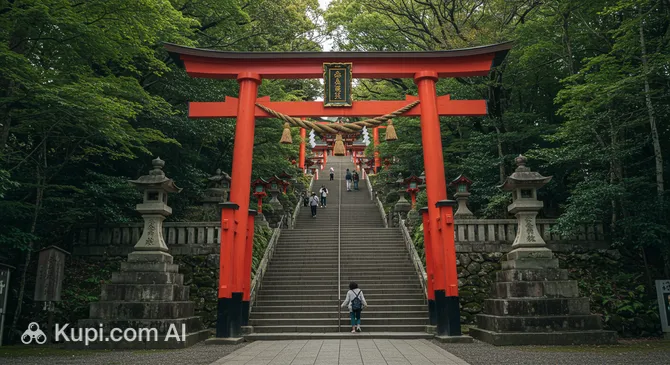
Tsurugaoka Hachimangu. Illustration.
Source: Kupi.com AI

Traveler photos:

The Tsurugaoka Hachimangu complex impresses with its traditional Japanese architecture and picturesque setting. Visitors are greeted by majestic torii gates, and an impressive stone staircase leads to the main hall. The shrine grounds feature well-kept gardens and serene ponds that create an atmosphere of peace and harmony, perfect for quiet walks and contemplation.

Visiting Tsurugaoka Hachimangu offers a unique opportunity to connect with the country's rich historical heritage. Traditional festivals and ceremonies are frequently held here, attracting both locals and tourists from around the world who wish to gain a deeper understanding of Japanese culture and spirituality. This is a place where history and modernity blend harmoniously, offering an unforgettable experience to every guest.

Contacts

To plan your visit to Tsurugaoka Hachimangu, one of the most important Shinto shrines in Japan, it is recommended to use official information. The sanctuary is located in the city of Kamakura, very close to Fujisawa, making it convenient to visit from neighboring cities. Below are the main contact details.

The shrine is approximately a 10-minute walk from JR Kamakura Station. Before your trip, we strongly advise visiting the official website to check current operating hours and the schedule of special events or festivals.

How to contactContact
Address2-chōme-1-31 Yukinoshita, Kamakura, Kanagawa 248-8588, Japan
Phone number+81 467-22-0315
Websitewww.hachimangu.or.jp

What to Do

A visit to Tsurugaoka Hachimangu is an opportunity to immerse yourself in the atmosphere of ancient Japan. Located in Kamakura and easily accessible from neighboring Fujisawa, this temple is one of the region's most important cultural centers. Guests can take leisurely strolls through its vast grounds, admiring the majestic architecture and picturesque natural scenery. Every building and landscape element provides a wonderful opportunity for photos against a backdrop of historical structures.

Beyond contemplation, the sanctuary offers a more active engagement with culture. Traditional Japanese ceremonies, festivals, and holiday events are regularly held on its grounds, providing a deeper understanding of local customs. Visitors can participate in purification rituals, purchase various amulets for good luck, or simply enjoy a moment of silence. After your walk, it's worth stopping by one of the nearby cafes to sample authentic Japanese cuisine.

Tsurugaoka Hachimangu is beautiful at any time of year, but it is especially transformed in spring and autumn. In spring, thousands of visitors flock here to admire the cherry blossoms (sakura), which paint the area in soft pink hues. In autumn, the sanctuary blazes with vibrant colors thanks to the crimson maple foliage, creating a truly magical atmosphere.

Getting There

Getting to Tsurugaoka Hachimangu is quite simple thanks to Japan's excellently developed transport system. Although the shrine is often associated with the city of Fujisawa, it is actually located in the neighboring and equally famous city of Kamakura. From Tokyo, you can reach Kamakura in about an hour on the JR Yokosuka or Shonan-Shinjuku lines. This is the fastest and most convenient way to reach the ancient capital of the samurai.

If your journey begins in Fujisawa, the trip to Kamakura will take very little time. You can use the JR line or choose a more scenic route on the famous Enoden retro train, which offers beautiful views of the coast. Upon arrival at JR Kamakura Station, the sanctuary is just a 10-15 minute leisurely walk away. The main road to the shrine, lined with trees and torii gates, is an attraction in its own right.

From Kamakura Station to Tsurugaoka Hachimangu, you can also take local buses or taxis, which are available right at the station square. This is a convenient option if you are short on time or want to save your energy for exploring the extensive grounds of the temple complex itself. In any case, the path to this iconic landmark is hassle-free and will be a pleasant part of your journey.

Nearest city: Fujisawa

History & Facts

The history of Tsurugaoka Hachimangu dates back centuries, making it not just a landmark but a living chronicle of Japan. Although the shrine was founded in 1063 by an ancestor of the Minamoto clan, it gained true prominence in 1180. That was when the first shogun of the Kamakura shogunate, Minamoto no Yoritomo, moved it to its current, more prominent hilltop location. This move transformed the sanctuary into the spiritual and cultural heart of the new samurai capital, Kamakura, located right next to the city of Fujisawa.

The shrine was dedicated to Hachiman — the Shinto god of war and the patron of the Minamoto clan, who was revered as the deified Emperor Ojin. Minamoto no Yoritomo's choice made the temple the main symbol of martial prowess and the spiritual strength of the samurai. The construction site was not chosen by chance but in strict accordance with Feng Shui principles: it is protected by mountains to the north and overlooks Sagami Bay to the south. Such careful planning emphasized the sanctuary's significance for the entire region.

The grounds of Tsurugaoka Hachimangu are full of legends and unique details. Until 2010, a thousand-year-old ginkgo tree grew by the main staircase, which, according to legend, witnessed the tragic assassination of a shogun in 1219. Although the mighty tree could not withstand a storm, its story lives on. There are also two ponds here, known as Genpei, which symbolize the two rival clans — the Minamoto (Genji) and the Taira (Heike). To this day, spectacular Yabusame festivals — horseback archery competitions — are held at the sanctuary, preserving ancient samurai traditions.

Over the centuries, Tsurugaoka Hachimangu has been rebuilt several times due to fires and natural disasters, but it has always been restored while maintaining its historical appearance. The current buildings date back to 1828, but they perfectly convey the atmosphere of the past. Today, it is not only an important pilgrimage site attracting millions of visitors but also one of the key monuments of national significance, where everyone can touch the great history of samurai Japan.

Time Needed

To fully enjoy your visit to Tsurugaoka Hachimangu, located in Kamakura near Fujisawa, it's worth setting aside enough time. For a complete tour of the sanctuary grounds and participation in rituals, it is recommended to allow 1.5 to 2 hours. This is enough time to leisurely climb the main staircase to the main building, admire the architecture, walk around the Genpei ponds, and feel the peaceful atmosphere of this iconic site in Japan.

Your visit can be shorter or longer depending on your interests. If you only want to take a few photos and see the main structures, you can manage in one hour. However, if you plan to visit the Kamakura Museum of National Treasures located on the shrine grounds, or catch one of the many festivals, such as Yabusame, then feel free to plan for half a day. It's also worth considering time for a stroll along the Dankazura approach leading to the shrine, which is a beautiful place for contemplation, especially during the cherry blossom season.

Working Hours

Tsurugaoka Hachimangu is open to visitors year-round, though operating hours vary by season. During the warmer months, from April to September, the grounds are accessible from 5:00 AM to 9:00 PM. Between October and March, the temple opens an hour later, from 6:00 AM to 9:00 PM. A special schedule is in place during New Year celebrations: from January 1st to 3rd, the sanctuary is open 24 hours a day to welcome numerous pilgrims. Entry to the main shrine grounds is free, so no prior reservation is required for a standard visit.

While a general schedule exists, we strongly recommend checking the official Tsurugaoka Hachimangu website for the most current information before your visit. This is particularly important as hours may change due to special ceremonies or festivals. Additionally, there is a treasure museum on the shrine grounds which may require a separate ticket and has hours that might differ from the sanctuary itself. Confirming details in advance will help you plan your visit and avoid any inconvenience.

6:00 – 20:00

Nearby

A visit to Tsurugaoka Hachimangu is just the beginning of your introduction to the rich history and culture of Kamakura, located in the immediate vicinity of Fujisawa. To fully immerse yourself in the atmosphere of Japan's ancient capital, it's worth taking some time to explore the surroundings. Within walking distance of the main shrine are other equally interesting temples, gardens, and cultural sites, each with its own unique story.

Strolling through the neighborhood will allow you to discover Kamakura's hidden gems, whether they be secluded shrines, picturesque gardens, or authentic cafes. Exploring nearby attractions will not only enrich your experience but also provide a more complete understanding of this historical region's significance. Below is a list of interesting places located very close to the sanctuary.

NameDistance
Egara Tenjin Shrine0.7 km
Kamakura Owl Forest0.8 km
Garden House Kamakura1 km
Zeniarai Benten Shrine1.3 km
Hokoku-ji Temple1.3 km
Ichijo Ekan Sanso1.5 km
Kamakura Resort Hotel2.2 km

Have you reached the end of the page?

So the route has been studied inside and out