Support

Hokoku-ji Temple

About

Hokokuji is an ancient Zen Buddhist temple and one of the most remarkable shrines in the city of Kamakura, located in Japan. Belonging to the Rinzai school, this temple attracts visitors with its peaceful atmosphere and unique natural features, serving as a magnet for both pilgrims and lovers of Eastern culture.
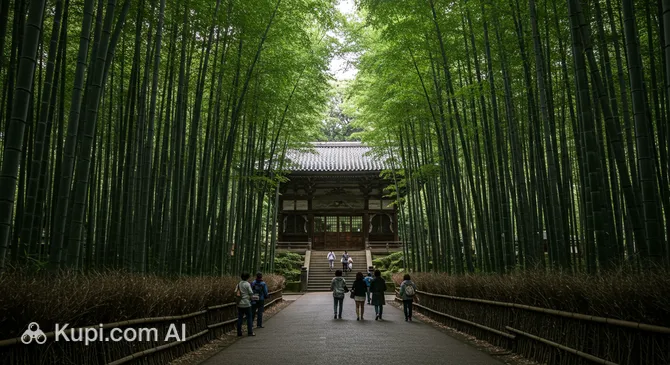
Hokoku-ji Temple. Illustration.
Source: Kupi.com AI

Traveler photos:

The main attraction of Hokokuji, drawing many visitors here, is its famous bamboo grove. More than 2,000 bamboo stalks grow on the temple grounds, creating a truly magical landscape and a sense of complete harmony with nature. It is no wonder the temple is popularly known as the "Bamboo Temple"—walking along its shaded paths amidst the rustling of tall stems gives an unforgettable feeling of calm and tranquility.

Beyond its natural beauty, Hokokuji holds significant religious importance. The main object of worship in the temple is a statue of Gautama Buddha (Shaka Nyorai), revered by believers. The temple also owns a statue of the goddess Kannon, which is kept in the Kamakura Museum of National Treasures. The temple grounds cover about 13,000 square meters. A visit to Hokokuji allows you not only to enjoy the serenity of the bamboo forest but also to experience Japan's ancient spiritual traditions.

Contacts

To get the most up-to-date information regarding opening hours, ticket prices, and special events at Hokokuji, we recommend visiting the official website. You can also find answers to frequently asked questions there to help plan your visit.

How to contactContact
Address2-chōme-7-4 Jōmyōji, Kamakura, Kanagawa 248-0003, Japan
Phone number+81 467-22-0762
Websitewww.houkokuji.or.jp

What to Do

Visitors to Hokokuji can immerse themselves in an atmosphere of tranquility by strolling through its famous bamboo grove. Well-maintained paths lead through tall, slender bamboo stalks, and the light filtering through the dense growth creates a truly magical atmosphere especially appreciated by photographers and nature lovers. Deep within the grove lies a cozy tea house where guests can rest and enjoy a cup of traditional Japanese matcha green tea while contemplating the peaceful landscape of the bamboo garden.

In addition to admiring the natural beauty, Hokokuji offers spiritual practices. The temple is known as a place for Zen meditation, or zazen. It is especially busy on Sundays when both pilgrims and locals gather for meditation in search of inner peace. On the temple grounds, you can also see a classic dry rock garden (karesansui), characteristic of Zen Buddhist temples and conducive to reflection and serenity.

Getting There

Hokokuji, often called the "Bamboo Temple," is located in the charming city of Kamakura. This peaceful landmark is easily accessible from Kamakura Railway Station in several ways, making it convenient for all visitors.

From Kamakura Station, you can reach Hokokuji by bus or taxi in about 15 minutes. Buses run regularly; look for routes stopping at "Jomyoji" or "Hokokuji-mae"—both stops are in the immediate vicinity of the temple. For those who prefer walking and want to soak in the atmosphere of Kamakura, the walk from the station takes about 25–30 minutes.

If you are traveling from Tokyo, the most convenient way to reach Kamakura is by taking the JR Yokosuka Line, which goes directly to Kamakura Station. From there, you can choose a bus, taxi, or walking route to Hokokuji. For visitors arriving by car, parking is available near the temple, making it a convenient option for exploring this region of Japan by private transport.

Nearest city: Fujisawa

History & Facts

Hokokuji, often referred to as the "Bamboo Temple" due to its famous bamboo grove, has a rich history dating back to the 14th century. Its founding in the city of Kamakura dates to 1334 and is associated with Ashikaga Ietoki, the grandfather of the first shogun of the illustrious Ashikaga dynasty, Takauji. Together with the revered monk Tengan Eko, who is considered the founding priest, Ashikaga Ietoki established this temple, which remains a significant spiritual center in Japan to this day.

The temple was built shortly after the end of the first Kamakura shogunate, making it a silent witness to major historical shifts in the country. Since its founding, Hokokuji has served not only as a religious institution but also as an important cultural hub for Kamakura and the entire Kanto region. It is also known as the family temple of the powerful Ashikaga clan, highlighting its historical significance.

For centuries, Hokokuji was a favorite place for worship and solitary contemplation for samurai and the aristocracy of the Kamakura period. Throughout its long and complex history, the temple has survived destruction several times, including serious damage during the Great Kanto Earthquake of 1923. However, it was carefully restored each time to preserve its unique atmosphere and characteristic architectural features, which continue to delight visitors today.

Working Hours

Hokokuji is usually open to visitors daily from 9:00 AM to 4:00 PM. It is important to remember that these opening hours may vary depending on the season and weather conditions. Therefore, we highly recommend checking for up-to-date information before planning your visit.

To get the most accurate schedule information and find out if advance ticket booking or tour registration is required, it is best to check the official Hokokuji website or local tourist information centers. Generally, the temple is open for visits year-round, but verifying the details will help make your trip as comfortable as possible.

9:00 – 16:00

Nearby

Visiting Hokokuji is undoubtedly a highlight, but you shouldn't limit yourself to just one site. Exploring the surrounding area will allow you to dive deeper into the atmosphere of Fujisawa and discover even more interesting places, each with its own unique charm. Short walks or quick trips to nearby sites will enrich your impressions and make your journey through Japan even more fulfilling.

There are several noteworthy places near Hokokuji that may interest you. Below is a list of some of them with distances provided to help you plan your itinerary more easily.

NameDistance
Ichijo Ekan Sanso0.2 km
Egara Tenjin Shrine0.8 km
Tsurugaoka Hachimangu1.3 km
Kamakura Owl Forest1.6 km
Garden House Kamakura1.9 km
Zeniarai Benten Shrine2.5 km
Kamakura Resort Hotel2.7 km

Have you reached the end of the page?

So the route has been studied inside and out