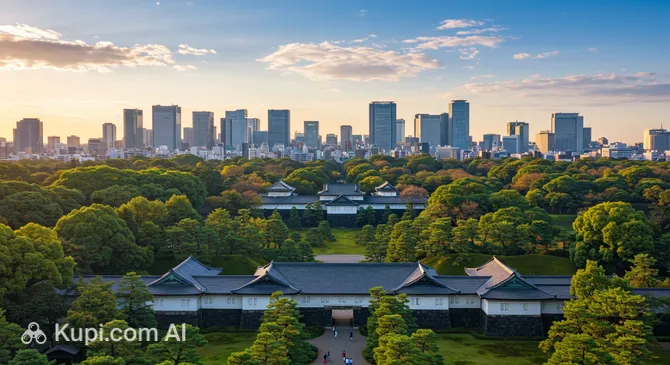
Chiyoda is more than just one of Tokyo’s 23 special wards; it is its true heart, the center of political and business life in Japan. This district uniquely combines the grandeur of imperial power, modern skyscraper architecture, and the tranquility of vast parks. Located in the very center of Tokyo, Chiyoda offers visitors the chance to immerse themselves in the country's history and culture while feeling the dynamic rhythm of one of the world's largest capitals.
Chiyoda. Illustration.
Source: Kupi.com AI
The main jewel of Chiyoda is undoubtedly the Imperial Palace, surrounded by ancient moats and picturesque gardens, such as the East Garden (Higashi-gyoen) and Kitanomaru Park. Walking through these places allows you to touch centuries of history and enjoy silence in the very heart of the metropolis. Additionally, the National Diet Building (Parliament) is located in Chiyoda, giving the district a special status.
The district is also famous for its business quarters, such as Marunouchi and Otemachi, which house the headquarters of major corporations and financial institutions. The famous Tokyo Station, with its impressive red-brick facade, is also located here. For art lovers, Chiyoda offers the National Museum of Modern Art and many other cultural sites.
Chiyoda is a place where the past meets the present, creating a unique atmosphere. A visit to this district will leave you with vivid impressions and allow you to better understand the essence of modern Japan. It is a must-see on the itinerary of any traveler wishing to experience Tokyo in all its diversity.
The weather in Chiyoda is characterized by clearly defined seasons. Summer, especially from June to August, is warm and humid: average temperatures range from 22.5°C in June to 27.9°C in August, and daytime highs in August can reach 30.9°C. Winter, from December to February, brings cool weather: average temperatures range from 4.9°C in January to 7.1°C in December, with nighttime lows in January dropping to 0.7°C.
Precipitation occurs in Chiyoda throughout the year, but its character changes significantly depending on the season. Summer months, particularly June and July, are characterized by high humidity and a significant number of rainy days—about 15 per month, corresponding to the monsoon rainy season, which brings frequent and sometimes heavy rainfall. Autumn, specifically September and October, can also be quite rainy (about 14–15 rainy days per month), sometimes influenced by passing typhoons that bring strong winds and downpours. Winter, by contrast, is a drier season; for example, in December and January, the number of rainy days decreases to about 6 per month, and precipitation more often falls as snow, though it usually melts quickly.
For a more detailed look at climatic features and the monthly weather forecast, you can visit the Chiyoda Climate page.
Average monthly temperature
Average monthly precipitation
Interesting Facts
Beyond the main attractions that immediately come to mind when Chiyoda is mentioned, this iconic district of Japan holds many surprising details and little-known stories. Ready to look at it from a different angle?
Few people know that the geographical center of the entire vast Tokyo Metropolitan area (including the islands and western Tama) is marked with a special sign specifically in Chiyoda—more precisely, on the grounds of the Imperial Palace.
The name of the district itself, Chiyoda (千代田), has a deep meaning and translates as "field of a thousand generations" or "rice field for a thousand generations." This name originally belonged to Chiyoda Castle, the predecessor of the current Imperial Palace, symbolizing longevity and prosperity.
Despite being home to the Emperor and the government, Chiyoda has the smallest permanent (nighttime) population of all 23 special wards of Tokyo. However, by day, its population increases many times over due to more than a million people commuting for work and study, making it one of the busiest business and administrative centers.
The world-famous multi-functional Nippon Budokan arena, which hosted the historic Beatles concerts in Japan and still holds major national martial arts competitions (judo, kendo, karate) and concerts by world stars, is located in the picturesque Kitanomaru Park, which is part of Chiyoda.
Part of the world-famous Akihabara district—the "Electric City" and a cult site for fans of electronics, video games, anime, and manga—administratively belongs to Chiyoda (the outer part of Kanda), although many associate it primarily with the neighboring Taito ward.
How to Get There
The most convenient way to reach Chiyoda, the central district of Tokyo, is by air. One of the main and closest air gateways is Haneda Airport (HND), officially known as Tokyo International Airport. It is located within Tokyo, approximately 16 km south of central Chiyoda. As a major international and domestic hub, Haneda handles numerous flights. A trip to Chiyoda by taxi or public transport (such as a train or limousine bus) usually takes between 30 to 45 minutes, depending on the chosen route and traffic conditions.
Another key international airport serving Tokyo and, by extension, Chiyoda, is Narita International Airport (NRT). It is located in the city of Tokyo (according to the data provided), approximately 58 km east of Chiyoda. Narita is also a major international hub. To get from Narita to Chiyoda, you can use express trains like the Narita Express, which takes about 60–90 minutes. Limousine buses are also available, but travel time may be longer. A taxi from Narita will be significantly more expensive and take longer.
For some travelers, Ibaraki Airport (IBR) might be relevant, located in the city of Ibaraki, about 80 km northeast of Chiyoda. This is a smaller airport often used by budget airlines and for domestic flights. The journey from here to central Tokyo by public transport (usually a bus to the nearest major station, then a train) can take about 1.5–2 hours. However, for most international tourists, Haneda and Narita remain the primary arrival airports for the region.
It is also important to note that Chiyoda, being the heart of Tokyo, has excellent rail connections. Tokyo Station, located directly in Chiyoda, is one of the largest transport hubs in Japan, handling both commuter trains and Shinkansen high-speed trains that connect the capital with other regions of the country. Therefore, if you are traveling within Japan, the train is often the most convenient way to reach Chiyoda.
For clarity, here is a summary of the main airports:
Chiyoda, as the historical and cultural heart of Tokyo, offers its guests many fascinating places. In addition to the world-famous Imperial Palace and its gardens, there are other attractions here that can enrich your journey. Here are some of them to look out for when planning your visit:
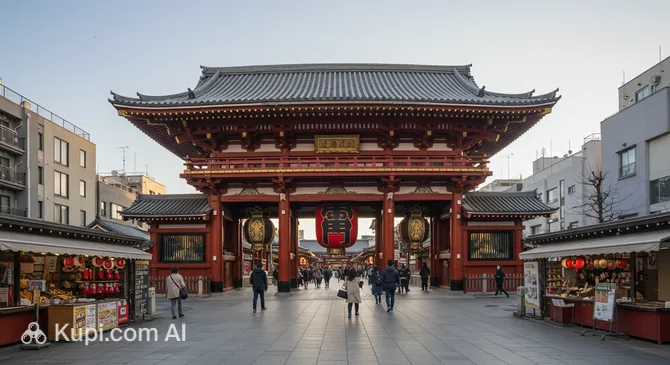
Among the iconic places that often attract the attention of Tokyo visitors and appear in lists of attractions, it is worth noting the Hozomon Gate (Senso-ji). Although the famous Senso-ji Temple, to which they lead, is located in the bustling Asakusa district, the gates themselves are a magnificent example of traditional Japanese temple architecture. This "Treasure House Gate" serves as the second main gate of the temple. Tourists are invariably impressed by its majestic appearance, the huge red lantern, and the fierce statues of the Nio guardian deities on the sides. It is a popular spot for commemorative photos and for getting to know the rich religious culture of Japan.
Hozomon Gate (Senso-ji). Illustration.
Source: Kupi.com AI
Traveler photos:
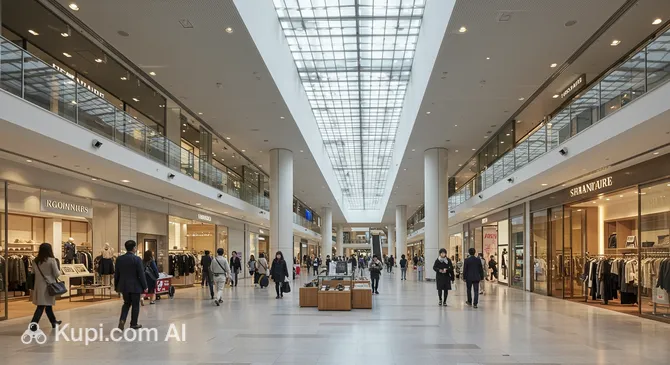
For lovers of modern architecture and shopping, Tokyo Midtown Hibiya will be of interest. This stylish multi-functional complex, located in the prestigious Hibiya district (part of Chiyoda), seamlessly combines high-end shops, a variety of restaurants, cinemas, and office spaces. Midtown Hibiya attracts with its elegant design, panoramic views of the Imperial Palace and the adjacent Hibiya Park, and a rich program of cultural events. Here you can feel the dynamic rhythm of modern Tokyo and enjoy first-class service.
Hibiya Midtown. Illustration.
Source: Kupi.com AI
Traveler photos:
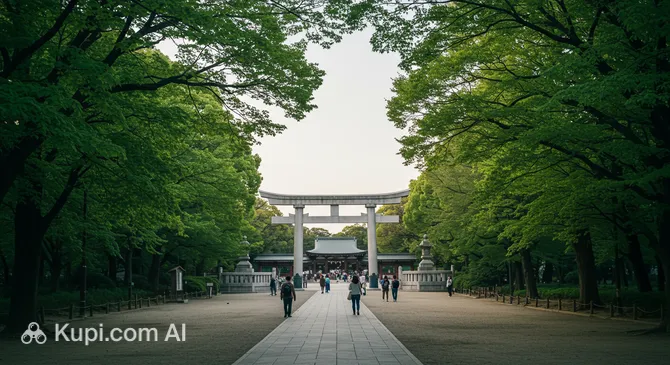
If you are looking for a place to relax in nature, Yoyogi Park, although located in the neighboring Shibuya district, is one of Tokyo's most beloved and visited urban parks. It is famous for its vast green lawns, shaded alleys, and picturesque ponds, creating an oasis of calm in the middle of the metropolis. Yoyogi Park is a popular spot for picnics, sports, and leisurely strolls, and on weekends you can often see street performers and musicians here, giving it a special, lively atmosphere. The famous Meiji Jingu Shinto shrine is located nearby.
Yoyogi Park. Illustration.
Source: Kupi.com AI
Traveler photos:
The Imperial Hotel Tokyo is not just a hotel, but a true legend located in the heart of Chiyoda, overlooking the Imperial Palace. Founded in the late 19th century, the hotel has a rich history and has hosted many world celebrities, political figures, and members of royal families over the decades. It is famous for its impeccable service, luxurious interiors, and, of course, its exquisite restaurants (although in the provided data it is listed as a restaurant, it is primarily an iconic hotel). For tourists, the Imperial Hotel is interesting as a historical monument, a benchmark of Japanese hospitality, and a place where you can touch the history of Tokyo.
Imperial Hotel Tokyo. Illustration.
Source: Kupi.com AI
Traveler photos:
Local Cuisine
The gastronomic world of Chiyoda is a true immersion into the culinary heart of Japan, where centuries-old traditions meet modern trends. As the central district of Tokyo, Chiyoda offers an incredible variety of flavors: from exquisite Michelin-starred restaurants to cozy family-run establishments and lively izakayas. Every gourmet will find something to their liking here, whether it's authentic Japanese cuisine or dishes from around the world.
Be sure to try the freshest sushi and sashimi—the hallmark of Japanese cuisine. In Chiyoda, there are many establishments where the skill of sushi chefs reaches incredible heights. Ramen is equally popular, represented here in all the diversity of regional styles—from rich tonkotsu to light shoyu. Fans of fried food should look out for tempura—delicate seafood and vegetables in a crispy batter—as well as tonkatsu—a juicy breaded pork cutlet. Many restaurants in Chiyoda specialize in kaiseki haute cuisine, which is a true art of presentation and combining seasonal products.
As for drinks, start with green tea—from classic sencha to rich matcha. Among alcoholic beverages, the absolute favorite is sake, available in a huge range of varieties and flavors. Japanese beer, shochu (a strong spirit), and umeshu (plum wine) are also popular. In numerous cafes and bars, you will find both traditional and modern cocktails based on local ingredients.
Imperial Hotel Tokyo. Illustration.
Source: Kupi.com AI
Traveler photos:
Food culture in Chiyoda is diverse. Locals and tourists often choose specialized restaurants for lunch or dinner. Luxurious venues, such as the restaurants in the Imperial Hotel Tokyo, offer world-class dining. Food courts and gourmet departments in large department stores (for example, in the Ginza district, which is partly in Chiyoda, or in complexes like Midtown Hibiya) are extremely popular; there you can find delicacies for every taste. For a quicker and more casual snack, numerous noodle shops and small eateries are always available.
Chiyoda's gastronomic scene attracts tourists with its incredible quality and attention to detail. Here you can enjoy dishes prepared according to ancient recipes as well as innovative culinary experiments. Immersing yourself in the world of Chiyoda's flavors is an essential part of a journey to the heart of Tokyo, promising unforgettable impressions.
Travel Tips
Planning a trip to Chiyoda, the very heart of Tokyo? Wonderful! To ensure your journey through this amazing district of Japan goes smoothly and leaves only pleasant impressions, we have prepared a few practical tips.
Clothing and Essentials: The climate in Chiyoda, as in all of Tokyo, is temperate, with four distinct seasons. In summer (June–August), it can be hot and humid, so bring light, breathable clothing. In winter (December–February), it is cool; you will need a warm jacket, hat, and gloves. Spring and autumn are the most comfortable seasons with moderate temperatures. Be sure to bring comfortable shoes, as you will be walking a lot. Don't forget an adapter for electrical appliances (Japan has 100V voltage and Type A and B sockets). A compact umbrella is useful any time of year. When visiting temples and shrines, choose modest clothing that covers shoulders and knees.
Transport: The best way to get around Chiyoda and Tokyo is the highly developed public transport system. Metro lines (Tokyo Metro and Toei Subway) and JR trains are at your service. We recommend purchasing rechargeable Suica or Pasmo cards for convenient fare payment. Taxis are available but quite expensive. Renting a car in central Tokyo is usually impractical due to heavy traffic, parking difficulties, and the excellent public transport.
Finances: The local currency is the Japanese yen (JPY). You can exchange currency at the airport, banks, or specialized exchange offices. Credit and debit cards (Visa, Mastercard) are accepted in many hotels, restaurants, and shops; however, it is always useful to have some cash on hand, especially for small establishments, temples, or markets. ATMs that accept international cards are easy to find in 7-Eleven, Family Mart, and at the post office. Regarding daily expenses, a rough budget per person in Chiyoda (excluding accommodation, but including food, local transport, and some entertainment) could be 15,000–25,000 JPY. This amount can vary depending on your preferences and travel style. Tipping in Japan is generally not practiced and can be perceived as an insult.
Health and Safety: Pharmacies (marked as "drugstore" or with the symbol 薬) are easy to find and sell over-the-counter medicines. If serious medical help is needed, Tokyo has hospitals with English-speaking staff. Chiyoda, and Tokyo as a whole, is considered one of the safest areas in the world. However, standard precautions, such as keeping an eye on your belongings in crowded places, are still wise.
Communication: The official language is Japanese. In tourist areas, hotels, and at major stations, many signs are duplicated in English, and staff may speak English. However, knowing a few basic phrases in Japanese (e.g., "Konnichiwa"—Hello, "Arigato"—Thank you, "Sumimasen"—Excuse me/I'm sorry) will be very helpful and appreciated by locals. For constant internet access, you can buy a local SIM card, rent a pocket Wi-Fi router, or use free Wi-Fi available in many hotels, cafes, and public places. Useful apps: Google Maps, HyperDia (for train schedules), Japan Travel by Navitime.
Local Etiquette: Japanese people are very polite and value respect for tradition. Greetings are often accompanied by a bow. On public transport, try not to make noise and avoid talking loudly on the phone. It is customary to remove shoes before entering private homes, some temples, and traditional restaurants. Avoid eating and drinking on the go on the street unless it is in a designated area.
What to Avoid: Try not to talk loudly on public transport—it is considered impolite. Also, never stick your chopsticks vertically into a bowl of rice, as this is associated with funeral rituals. Tipping is not customary.
Additional Tip: Chiyoda is the historical and administrative center of Tokyo, where the Imperial Palace is located. Be sure to plan a walk through its picturesque gardens (for example, the East Garden of the Imperial Palace is open to the public most of the time, and admission is free). Keep in mind that the district is also a major business center, so it can be very crowded on weekdays, especially during rush hours.
We hope these tips help you better prepare for your trip and enjoy every moment of your stay in the amazing Chiyoda district. Have a smooth journey and wonderful discoveries!
Entertainment & Nightlife
When the sun sets over Chiyoda, this business and historical center of Tokyo transforms, offering a variety of options for evening and night leisure. While Chiyoda might not be as famous for its rowdy nightclubs as Shinjuku or Shibuya, you will find plenty of stylish bars, refined late-night restaurants, and cozy spots for a quiet evening in the heart of Japan.
Nightlife in Chiyoda is concentrated in several key areas. Ginza (partially within Chiyoda) and Marunouchi are famous for their high-end bars, cocktail lounges, and restaurants, where a respectable crowd and businesspeople often gather. The atmosphere here is usually elegant and sophisticated, with many venues offering stunning views of the city at night. In the Yurakucho district, under the railway arches, you can find more casual but equally atmospheric izakayas and bars. The Kanda district offers more traditional Japanese drinking establishments popular with locals. The dress code in most Chiyoda venues is smart casual, but some elite bars in Ginza may require more formal attire.
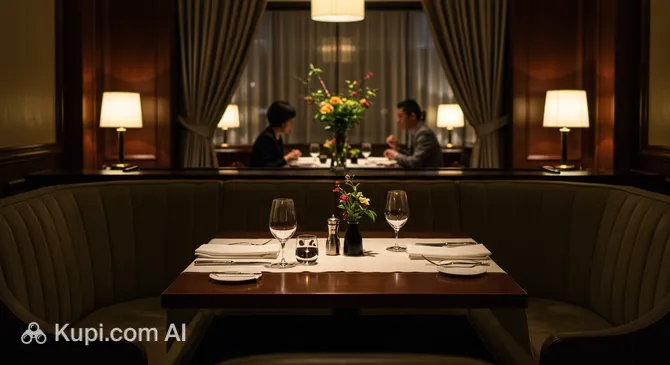
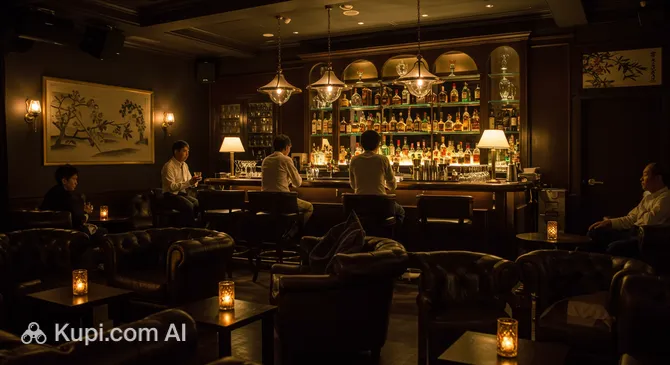
Among specific places where you can enjoy an evening, it is worth noting, for example, Bar Manhattan, which offers a wide selection of drinks in a stylish setting. For those looking for comprehensive entertainment, Midtown Hibiya is an excellent choice—a modern complex housing numerous restaurants and bars open late, as well as theaters. If you prefer a quieter evening, you can visit the Nihonbashi Cinema to watch the latest movie releases. While there aren't many large nightclubs in Chiyoda, you can find cozy bars with live music or DJ sets, especially in areas adjacent to major hotels.
The Manhattan Bar. Illustration.
Source: Kupi.com AI
Traveler photos:
When planning an evening out, keep in mind that many venues start to come alive after the working day ends, around 7:00 PM to 8:00 PM. Prices in Chiyoda, especially in the Ginza and Marunouchi areas, can be higher than the Tokyo average. Public transport, including the metro, runs until about midnight or 1:00 AM; after that, taxis become the primary mode of transport and are easy to hail. Chiyoda is considered very safe, even at night, making walks here comfortable.
During the day, Chiyoda offers a rich cultural program. You can visit numerous museums, such as the National Museum of Modern Art or the Science Museum, stroll through the picturesque gardens of the Imperial Palace, like the East Garden, or enjoy a performance at one of the famous theaters, such as the Imperial Theatre. For family fun, a visit to parks like Hibiya Park is perfect, or even a trip to the Chiba Zoo if you're willing to travel slightly outside the center.
Parks & Museums
Chiyoda is not only the political and business center of Japan, but also a place where you can enjoy tranquility in magnificent parks and touch the country's rich cultural heritage in numerous museums. This district offers a surprising blend of imperial grandeur, modern art spaces, and green recreational zones.
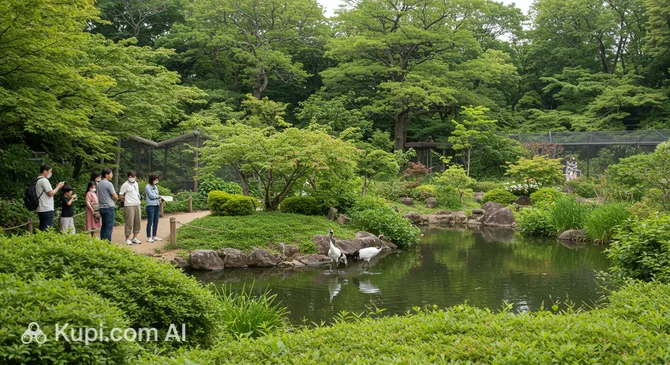
The heart of Chiyoda's green spaces is undoubtedly the East Garden of the Imperial Palace (Kokyo Higashi-gyoen). Located on the grounds of the former Edo Castle, this garden allows visitors to walk among historical ruins, enjoy traditional Japanese landscape design, and visit a small museum of imperial collections. Nearby is Hibiya Park—Japan's first Western-style park, known for its flower beds, open-air concert venue, and calm atmosphere. Although Yoyogi Park is slightly away from central Chiyoda, it is one of Tokyo's largest and most popular parks, attracting visitors with its vast lawns, wooded areas, and opportunities for active recreation.
Yoyogi Park. Illustration.
Source: Kupi.com AI
Traveler photos:
For art lovers, Chiyoda offers several outstanding museums. The National Museum of Modern Art, Tokyo (MOMAT) presents an extensive collection of Japanese art from the early 20th century to the present day, including painting, sculpture, prints, and photography. Next to it is the Science Museum (Kagaku Gijutsukan), which is especially interesting for families with children thanks to its interactive exhibits demonstrating achievements in science and technology. It is also worth visiting the Idemitsu Museum of Arts, where you can see beautiful collections of Japanese painting and calligraphy, as well as East Asian ceramics, and enjoy a panoramic view of the Imperial Palace.
In addition to the Imperial Palace itself, Chiyoda and its surroundings are rich in historical attractions. One such iconic site, even if located in the neighboring Asakusa district, but important for understanding Tokyo's cultural landscape, is the Hozomon Gate leading to the famous Senso-ji Temple. These majestic gates with huge red lanterns are a symbol of old Tokyo and a popular photo spot. An architectural gem of Chiyoda itself is the Renaissance-style Tokyo Station building, particularly its Marunouchi-side facade.
Hozomon Gate (Senso-ji). Illustration.
Source: Kupi.com AI
Traveler photos:
If you are traveling with children or simply love animals, you might consider a trip to the Chiba Zoo. Although it is outside Chiyoda, it is a popular spot for family fun, offering encounters with a variety of fauna.
Chiba Zoological Park. Illustration.
Source: Kupi.com AI
Traveler photos:
For a more authentic cultural immersion, take a walk through the Jimbocho district, famous for its second-hand bookstores and cozy cafes where you can find rare books and enjoy the atmosphere of old Tokyo. Also, don't miss the chance to visit one of the small but charming Shinto shrines hidden in the quiet streets of Chiyoda to feel the spirit of traditional Japan.
Getting Around
Getting around Chiyoda and all of Tokyo is incredibly convenient thanks to one of the most developed and efficient public transport systems in the world. As a central district, Chiyoda is perfectly served by all the city's main transport arteries.
The main modes of transport you will likely use are the metro and JR (Japan Railways) trains. Tokyo has two main metro systems: Tokyo Metro and Toei Subway. Their lines densely cover the entire city, including Chiyoda, providing quick access to almost any point. JR trains, especially the Yamanote Line which circles central Tokyo, also play a key role in getting around the city and connecting it to the suburbs. Buses also exist in Tokyo; they complement the metro and train network but are usually less intuitive for tourists to use due to the language barrier and more complex routes compared to the metro.
The fare payment system in Tokyo is very convenient. The simplest and recommended way is to purchase a rechargeable IC card, such as Suica or Pasmo. These cards can be bought at vending machines at most stations or at ticket offices. You simply load a certain amount of money onto the card, and each time you enter and exit the metro or train, you tap it against the turnstile—the correct amount is deducted automatically. Suica and Pasmo cards are interchangeable and work on most transport throughout Japan; they can also be used for payment in some shops and vending machines. Fares usually depend on the distance. You can also buy single tickets at station machines, but this is less convenient if you plan to move around a lot. For tourists, there are special passes, such as the Tokyo Subway Ticket for 24, 48, or 72 hours, giving unlimited access to all Tokyo Metro and Toei Subway lines, which can be beneficial with intensive metro use.
Here are some practical tips: tickets and IC cards are purchased from machines at stations (many have an English interface) or at ticket offices. To pass through the turnstile, tap your IC card on the reader or insert your paper ticket into the special slot (don't forget to take it back at the exit unless it's the end of your journey according to the ticket). Transport starts running early in the morning, around 5:00 AM, and finishes around midnight or 1:00 AM, depending on the line. During rush hours (mornings and evenings on weekdays), trains and the metro can be very crowded. Stations always have detailed maps and signs, often duplicated in English. Apps like Google Maps or HyperDia are very helpful for route planning.
As an alternative to public transport, taxis are always available. They are clean and safe, but significantly more expensive, especially for long distances. Japanese taxis have automatic doors that are opened and closed by the driver. Bicycle rental also exists in Tokyo, and for short trips in certain areas, it can be a pleasant option, but for moving across the whole city, it is less practical due to the scale and hilly terrain in some places. Car sharing in Tokyo is less popular among tourists compared to public transport.
A feature of the Tokyo transport system, and Chiyoda in particular, is its incredible punctuality, cleanliness, and organization. Despite the huge passenger flow, the system works like clockwork. This makes moving around the city predictable and comfortable, allowing tourists to easily reach all attractions.
Accommodation
In Chiyoda, Tokyo's central district, you will find a wide range of accommodation options to suit the needs of many different travelers. There are luxury hotels from global chains, more modest but cozy middle-class hotels, and modern apartments for those who prefer more independence. Although traditional ryokans (Japanese inns) are less common in this business district, they can be found in other parts of Tokyo.
When choosing a place to stay in Chiyoda, consider several key areas. The Marunouchi and Otemachi districts adjacent to Tokyo Station are full of high-end hotels offering excellent service and convenient access to transport hubs, making them an ideal base for exploring not only Chiyoda but all of Tokyo. Proximity to the Imperial Palace also adds prestige to hotels located in this part of the district. The Ginza district, partly within Chiyoda, is famous for its fashionable hotels. If you are looking for a quieter atmosphere or options in a different price range, consider the areas around stations like Kanda or Akihabara (on the border with Chiyoda), which also offer a good selection of accommodation.
As for booking, in Chiyoda, as in all of Tokyo, it is recommended to arrange accommodation in advance, especially if your trip coincides with peak seasons such as cherry blossom season (spring) or the autumn leaf-viewing period (momiji). Popular hotels can be fully booked several months in advance. The price range varies from relatively budget options (though there aren't many in central Tokyo) to mid-range and, of course, luxury segments. The most common booking methods are popular international online platforms and direct bookings via official hotel websites.
Nearby Cities
For those who want to explore the surrounding area, Chiyoda serves as an excellent starting point for day trips to several interesting nearby locations:
Each of these destinations offers a unique experience. For instance, exploring other districts of Tokyo beyond Chiyoda allows you to discover contrasting worlds: from the ultra-modern quarters of Shinjuku to the traditional atmosphere of Asakusa or the youthful energy of Shibuya. A trip to the Koto district to the east will introduce you to its waterfront areas, modern entertainment complexes, and picturesque parks, offering a fresh perspective on metropolitan life. Meanwhile, a visit to Adachi allows you to see a quieter, more residential side of Tokyo, with its local shrines and vast green spaces like Toneri Park, perfect for leisurely strolls.
These nearby destinations provide an insight into the region's diverse culture and landscapes. Each of these trips will offer new impressions and complement your journey through Japan.
Shopping & Souvenirs
Chiyoda, Tokyo's central district, offers truly impressive shopping opportunities to satisfy the most refined tastes and diverse interests. From luxury department stores and global brand boutiques to specialized shops with unique Japanese goods—there is something for everyone here. The district is famous for both its elite shopping zones and quarters dedicated to specific categories, such as electronics or books.
The main points of attraction for shopping lovers in Chiyoda and adjacent areas are:
Ginza: Although Ginza is partly outside Chiyoda, its influence on the district's shopping scene is enormous. It is a world-famous luxury quarter with flagship stores of international brands, prestigious department stores (such as Mitsukoshi, Matsuya, Wako), jewelry salons, and art galleries. You can also find high-end stationery and designer goods here.
Marunouchi: An elegant business district located around Tokyo Station. Here you will find stylish shopping centers such as the Marunouchi Building, Shin-Marunouchi Building, and Kitte, offering fashion, accessories, home goods, and fine dining. Walking the tree-lined streets of Marunouchi is a pleasure in itself.
Akihabara: Located on the border with Chiyoda, Akihabara, or "Electric City," is a paradise for fans of electronics, gadgets, anime, manga, and video games. Multi-story stores offer an incredible selection of goods, from the latest technology to collectible figures.
Jimbocho: A unique area known as "Book Town." A huge number of bookstores are concentrated here—from large chains to small shops selling antique and rare editions. It is the place for a leisurely search for literary treasures.
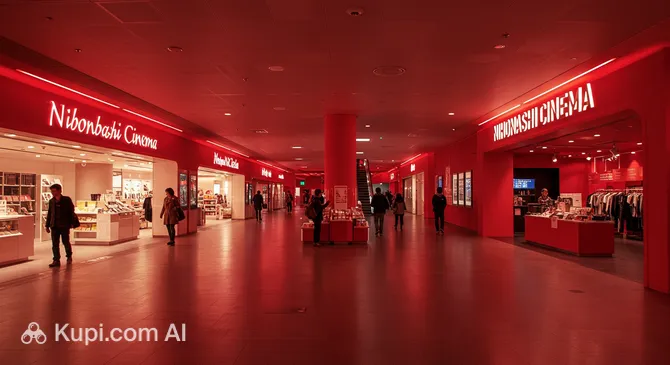
Several notable shopping complexes are located in Chiyoda. For example, Midtown Hibiya is a modern hub combining shops, restaurants, and entertainment venues. Another interesting spot is the complex known as Nihonbashi Cinema (part of the COREDO network), which, besides cinemas, offers visitors various shops and restaurants, representing an important shopping hub in the historical Nihonbashi area. Also in the Marunouchi area are well-known complexes like the Marunouchi Building and Kitte, offering a wide range of goods and services.
Nihonbashi Cinema. Illustration.
Source: Kupi.com AI
Traveler photos:
Regarding markets, Chiyoda is not famous for the large traditional street markets found in some other Tokyo districts. However, in the basement floors of many department stores (known as "depachika"), there are magnificent food departments reminiscent of covered gourmet markets, where you can find the freshest produce, ready-made meals, and high-quality sweets.
From Chiyoda and Japan in general, it is worth bringing back unique souvenirs. Look out for traditional Japanese crafts: ceramics, lacquer boxes, fans, and high-quality textiles. Japanese stationery is extremely popular—from pens and notebooks to designer writing sets. From Akihabara, you can bring back electronics or items related to anime and manga. Don't forget Japanese sweets (wagashi), various flavors of KitKat, and, of course, authentic green tea. Japanese cosmetics are also an excellent choice.
Most large stores and shopping centers in Chiyoda are open daily, usually from 10:00 AM or 11:00 AM to 8:00 PM or 9:00 PM. Small private shops may have individual schedules. Credit cards (Visa, Mastercard, American Express, JCB) are widely accepted in most establishments. However, it is recommended to always have some cash on hand, especially for purchases in small shops or at occasional markets. IC cards (Suica, Pasmo) can also be used for payment at some retail outlets.
For foreign tourists in Japan, a Tax-Free system is in place. You can get a refund on the consumption tax (currently 10%) when purchasing goods over 5,000 yen (excluding tax) at participating stores (look for the "Japan Tax-Free Shop" sign). To process the refund, you will need to present your passport with a valid tourist visa or short-term stay stamp. The procedure is usually carried out at a special counter in the store or shopping center on the day of purchase. Ensure that the purchased goods will be taken out of the country.