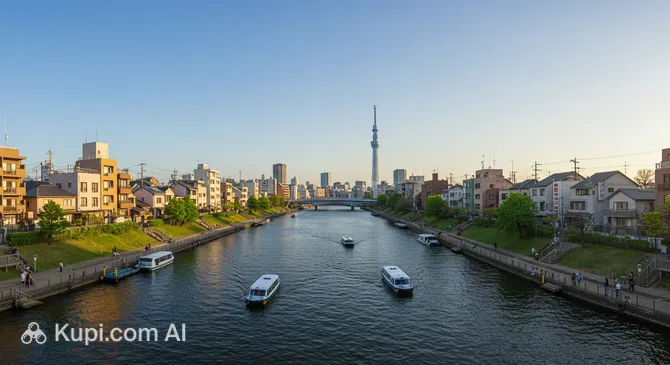
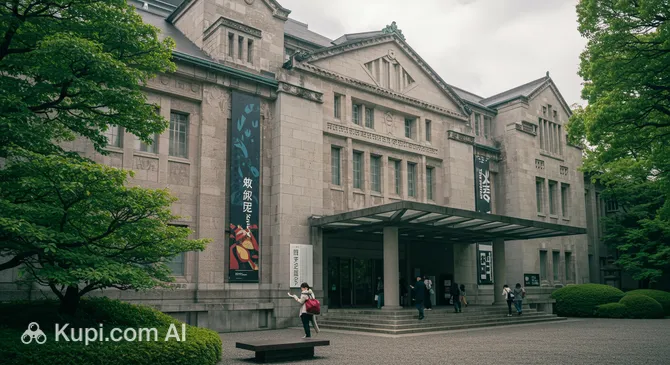
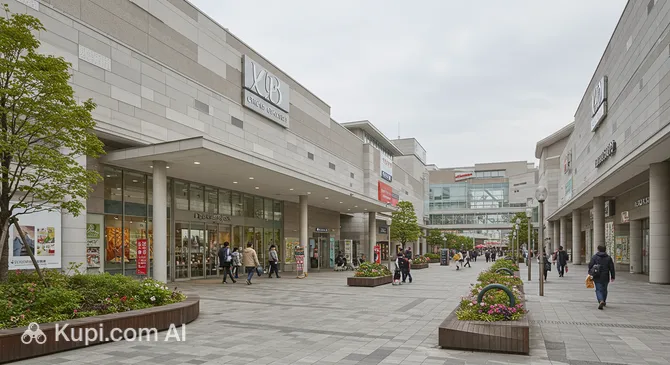
Arakawa is one of Tokyo's most soulful and authentic special wards, located in the northeastern part of the metropolis. Unlike the neon-lit tourist centers, this district has preserved the charm of "shitamachi"—the old town with its narrow streets, leisurely pace of life, and strong neighborhood ties. Situated in Japan, Arakawa offers travelers a unique chance to see the everyday life of Tokyoites without embellishment, immersing themselves in an atmosphere of sincere hospitality and nostalgia.
Arakawa. Illustration.
Source: Kupi.com AI
Geographically, the ward stretches along the banks of the Sumida River, covering just over 10 square kilometers. With a population of approximately 217,891 people, Arakawa represents a harmonious blend of residential neighborhoods and small industrial zones. For those interested in the area's past, it is worth exploring the details of its historical heritage, which traces its roots from the agricultural lands of the Edo period to its transformation into a major industrial center during the Meiji era.
The main magnets for visitors here are not giant skyscrapers, but cozy locations such as the "Fabric Town" in Nippori or the oldest municipal amusement park. A visit to this district is the perfect addition to a trip for those seeking tranquility, appreciating craftsmanship, and wanting to feel the true heartbeat of the Japanese capital.
Weather Overview
Arakawa is characterized by a humid subtropical climate typical of Tokyo, with distinct seasons. Winters here are cool and predominantly dry; average temperatures in January range from 0.6°C at night to 9.1°C during the day. This time of year is excellent for walks, as the sky usually remains clear.
Summer in the district is quite hot and humid. The peak temperature occurs in August, when the thermometer typically rises to +31°C, and high humidity can create a stifling feeling. The traditional rainy season arrives in June (average precipitation around 192 mm), and typhoons are possible in the fall, bringing heavy rains in September and October. Detailed information about the current city's climate can be found on meteorological resources.
When planning your trip, expect warm summers with occasional thunderstorms and cool, sunny winters. The most comfortable periods for visiting are considered spring (March–May), when you can catch the cherry blossoms on the banks of the Sumida, and autumn (November), when mild weather sets in with comfortable temperatures of +13...+18°C.
Average monthly temperature
Average monthly precipitation
Interesting Facts
Despite the name, the Arakawa River does not actually flow through the ward itself; its northern border is defined by the Sumida River.
The Arakawa Yuen amusement park, located in the ward, boasts the slowest roller coaster in the world—its speed is only about 13.7 km/h.
The Nippori district in Arakawa is known as "Fabric Town" due to the incredible concentration of textile shops, some of which have been operating here for over a century.
The ward has one of the highest densities of wooden buildings in Tokyo, giving its streets a unique Showa-era appearance.
The official symbol of the ward is the azalea flower, which can be found in many local squares and front gardens.
How to Get There
The Arakawa district has excellent transport accessibility, making it a convenient base for exploring all of Tokyo. The main transport gateways to the ward are Nippori and Minami-Senju stations. Nippori is especially important for international tourists, as it is the arrival point for the Keisei Skyliner express from Narita International Airport (travel time is about 40 minutes). You can find detailed information on how to get there from various points in the city on the operators' specialized pages.
Rail service is represented by the JR Yamanote (loop line), JR Joban, and the private Keisei line. Minami-Senju station is a major transit hub where JR trains and the Hibiya metro line intersect. A trip to Tokyo Central Station takes no more than 15 minutes, while bustling Shinjuku is about half an hour away.
Station
Passenger traffic
Distance
Nippori Station
16
1 km
Uguisudani Station
15
2 km
Asakusa Station
21
3 km
Okachimachi Station
16
3 km
Akihabara Station
23
4 km
Ōtsuka Station
15
5 km
For travelers who prefer ground transport, the Toei municipal bus network is well-developed in the area. However, it is worth noting that due to the narrow historical streets in some parts of Arakawa, traffic can be difficult, and a taxi will cost significantly more than a metro ride. The best way to move around the district for short distances is by walking or renting a bicycle.
Main Attractions
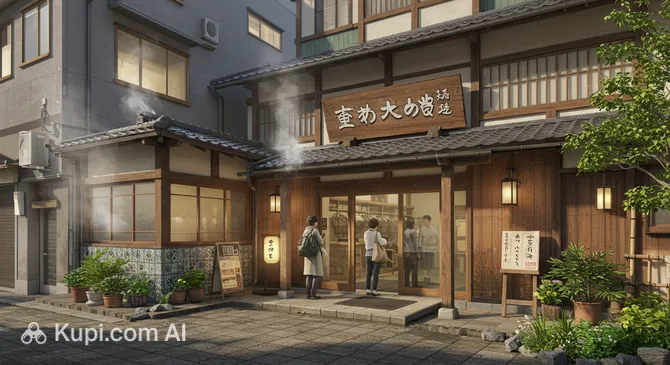
Although Arakawa is not considered Tokyo's main tourist hub, it hides many interesting spots that allow you to touch upon Japanese traditions and daily life. One such place is Sento Kotobuki-yu. This is a classic public bathhouse where you can relax in hot pools and experience the authentic atmosphere of the district, popular among locals of all generations.
Kotobuki Bathhouse. Illustration.
Source: Kupi.com AI
Traveler photos:
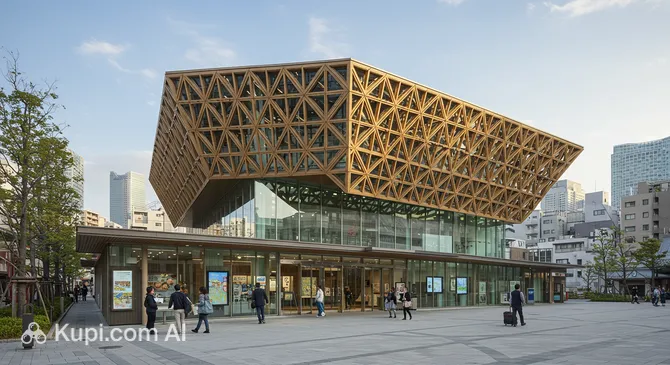
For those who want to better navigate cultural events and attractions in the surrounding areas, the Asakusa Culture Tourist Information Center is an excellent resource. Although it sits on the border of the wards, its modern architecture and observation deck make it a must-visit for any traveler exploring this part of the city.
Asakusa Culture and Tourist Information Center. Illustration.
Source: Kupi.com AI
Traveler photos:
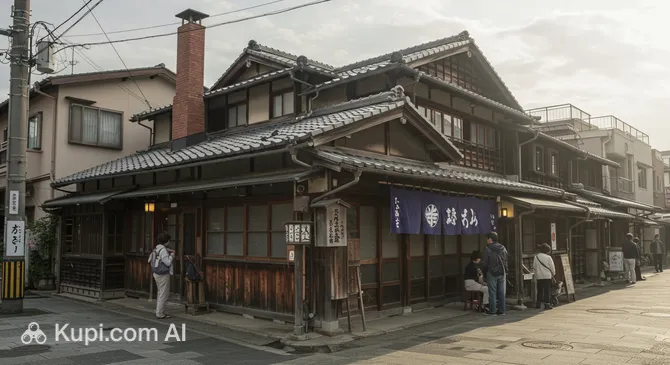
Another wonderful place to relax is Haginoyu—another sento-style establishment known for its cleanliness and variety of baths. Among other iconic locations, Nippori Fabric Town stands out, where over a hundred textile shops are concentrated on a single street, making it a true paradise for handicraft enthusiasts. Families with children will definitely enjoy Arakawa Yuen—a charming amusement park featuring the slowest roller coaster in the world.
Haginoyu. Illustration.
Source: Kupi.com AI
Traveler photos:
Local Cuisine
The gastronomic scene in Arakawa is steeped in the spirit of working-class Tokyo: simple, hearty, and affordable food is valued here. Along shopping streets like Joyful Minowa, you can find endless rows of stalls with street snacks: freshly prepared takoyaki (octopus dough balls), yakisoba, and various types of tempura. The morning market near Nippori station is a great place to try the freshest onigiri with a variety of fillings.
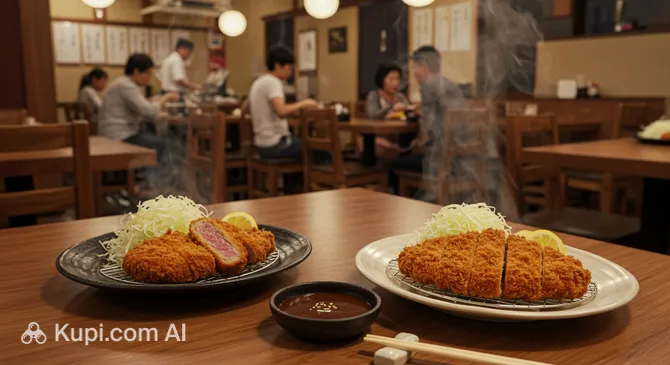
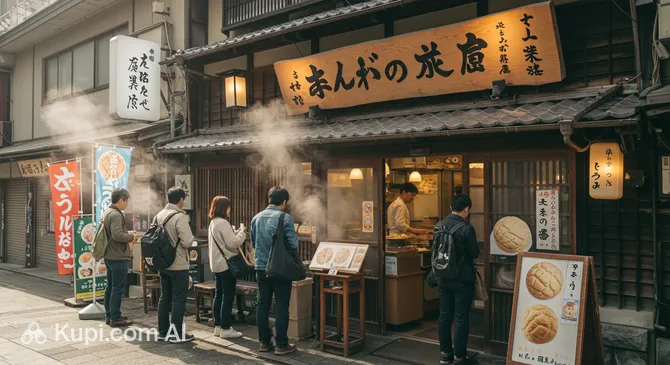
If you're looking for something more substantial, stop by Gyukatsu Motomura, which serves the famous deep-fried beef cutlet with a delicate, crispy crust. Those with a sweet tooth must try the famous Japanese melon bread at Asakusa Kagetsudo Melon Pan. Although the shop is located slightly away from the center of the district, its products are well worth the short walk.
Gyukatsu Motomura. Illustration.
Source: Kupi.com AI
Traveler photos:
The dining culture in Arakawa is closely tied to local izakayas—Japanese pubs where locals gather after work. It is common to order small portions of snacks to accompany beer or sake. A characteristic feature of the district is the abundance of family restaurants serving "home-style" Japanese food (teishoku), which costs significantly less than in the city's tourist centers.
Asakusa Kagetsudo Melon Pan. Illustration.
Source: Kupi.com AI
Traveler photos:
Travel Tips
Preparing for your trip to Arakawa will help you not only save time but also dive deeper into the local culture. Here are some practical tips to make your stay in this Tokyo district as comfortable as possible.
Clothing and Essentials: Choose comfortable shoes, as the district is perfect for long walks. In the summer months, light clothing made of natural fabrics is a must, while in winter, layering is best, as indoors can be quite warm due to heating. Don't forget a travel adapter (type A/B, 100 volts).
Transport: Be sure to get a Suica or Pasmo card. It will save you from having to buy tickets for every trip and allow you to pay for purchases in vending machines and small konbini convenience stores.
Finances: Although Japan is gradually moving towards cards, Arakawa remains a conservative area. Always carry cash yen for payments in small cafes and textile shops. Tipping culture does not exist—attempting to leave a tip may confuse the staff.
Health and Safety: The area is extremely safe. Pharmacies (Drug Stores) are found at every turn near stations. If you need medical assistance, look for large clinics in the Minami-Senju area, where you are more likely to find English-speaking staff.
Communication: The level of English among locals is average, so it's useful to have an offline translator. Learn basic phrases: "Arigato" (thank you) and "Sumimasen" (excuse me). Wi-Fi is available in hotels and major shopping malls, but for navigation, it's better to buy a SIM card or rent a pocket router.
Local Etiquette: Keep quiet on public transport. Be sure to remove your shoes when entering traditional homes or certain restaurants. Remember the rules for sorting trash—they are very strictly followed in Arakawa.
What to Avoid: Do not smoke while walking—there are specific smoking areas in the district, and fines apply for violations. Also, try not to photograph locals (especially children) without their explicit permission.
Bonus Tip: Be sure to take a ride on the Toden Arakawa tram—it's the most romantic and inexpensive way to see the non-tourist corners of the district.
May your introduction to Arakawa be filled with warm discoveries and bright impressions of the real Japan!
Entertainment & Nightlife
Evening and nightlife in Arakawa differ significantly from bustling districts like Shibuya or Shinjuku. Here, a quiet and cozy residential atmosphere prevails, where locals prefer to relax in small karaoke bars or family-run izakayas. Most activity after sunset is concentrated around major transport hubs like Nippori or Minami-Senju stations.
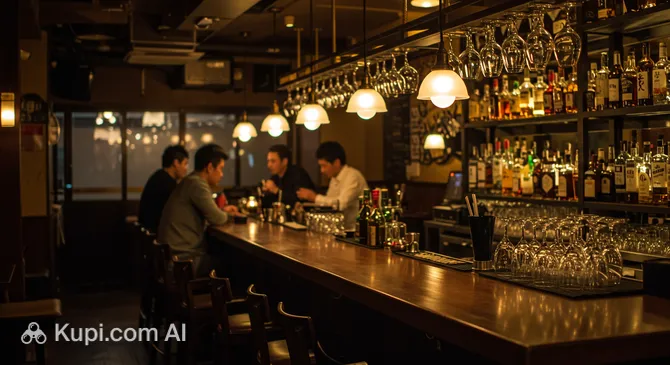
Those looking for classic bars and Western-style entertainment should check out the neighboring quarters. For example, you can visit LaVASARA Cafe & Grill, which offers an excellent combination of Japanese ingredients and European cuisine in a pleasant setting. If you're looking for a more active pastime with games, it's worth taking a short trip to the Ueno area, home to Beer Pong Bar GROVE Ueno or the specialized Darts & Karaoke Bar ZINO Ueno.
LaVASARA Cafe & Grill. Illustration.
Source: Kupi.com AI
Traveler photos:
Within Arakawa itself, daytime entertainment often involves strolls along the Sumida River embankments or visiting local festivals (matsuri) held at temples during the summer season. This is a great opportunity to see traditional dances and try street food in the company of local families, creating a sense of belonging to the real, non-tourist Japan.
Parks & Museums
The park areas of Arakawa are primarily places for quiet family recreation and leisurely strolls along the water. The most famous is the Arakawa Nature Park, sprawling along the banks of the Sumida River. It is a popular spot for picnics, especially in the spring when the riverbanks are colored pink with cherry blossoms. Another unique zone is Arakawa Yuen, which combines the functions of a small zoo, an amusement park, and a green square where you can escape the city bustle.
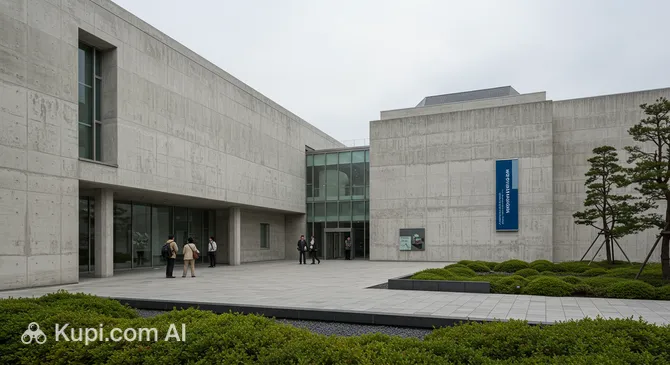
Although there are not many large state museums in Arakawa itself, its location allows for quick access to the country's main treasures. Nearby is the Tokyo National Museum — Heiseikan, which houses unique archaeological finds and artifacts illustrating the history of Japanese civilization. Lovers of Eastern art will also be interested in the Toyokan (Asian Gallery) of the Tokyo National Museum, which presents a rich collection from various Asian countries.
Tokyo National Museum - Heiseikan. Illustration.
Source: Kupi.com AI
Traveler photos:
For those who prefer smaller venues, the little galleries in the Nippori and Yanaka areas, located in converted old houses, are of great interest. These places preserve the spirit of the district's artisanal past and often exhibit works by contemporary Japanese artists and textile masters, continuing the traditions of the local neighborhoods.
Tokyo National Museum Toyokan (Asian Gallery). Illustration.
Source: Kupi.com AI
Traveler photos:
Getting Around
The public transport system in Arakawa operates with legendary Japanese precision and covers almost every corner of the district. The backbone of travel consists of the Hibiya and Chiyoda metro lines, as well as the JR Yamanote and JR Joban railway lines. A unique feature of the district is the Toden Arakawa tram line (the only one remaining in Tokyo), which moves slowly through residential neighborhoods, allowing passengers to enjoy views of the old town.
For fare payment, it is most convenient to use Suica or Pasmo contactless cards, which can be purchased and topped up at any station machine. They are valid on all types of transport, including trams and buses. The cost of a trip depends on the distance but averages 170–250 yen. It is worth remembering that during the morning and evening rush hours, Nippori and Minami-Senju stations can become very crowded.
As an alternative, many locals and tourists choose bicycles. The district's terrain is mostly flat, making cycling easy and pleasant. It is also easy to call a taxi in Arakawa via popular apps like Go or S.Ride; however, due to heavy traffic and narrow roads, this option may be slower than a metro ride. All transport stops operating around midnight and resumes service at five in the morning.
Accommodation
Accommodation options in Arakawa are primarily geared toward budget-conscious travelers and those seeking an authentic living experience. Unlike central districts, luxury five-star hotels are hard to find here, but there is a wide selection of budget business hotels, cozy guest houses, and apartments for long-term rent.
The area around Nippori station is considered the most convenient for staying. Thanks to the direct connection to Narita Airport and access to the Yamanote loop line, this location is ideal for active tourists. The Minami-Senju area is also popular, where housing prices are often lower than the Tokyo average, yet the main attractions can be reached in just minutes by metro.
For those who want to feel the spirit of old Japan, small family-run ryokans (traditional inns) offering tatami rooms operate in Arakawa. It is recommended to book accommodation in advance, especially during the cherry blossom or autumn foliage seasons, as available options in this district sell out quickly due to their attractive price points.
Nearby Cities
The Arakawa ward serves as an excellent starting point for exploring neighboring Tokyo districts, each with its own unique character. Thanks to the well-developed transport network, you can find yourself in a completely different atmosphere in just a few minutes by train or even a short walk.
Very close by is the Taito ward, home to cultural treasures like Ueno Park with its museums and the ancient Senso-ji Temple. For lovers of modern architecture and breathtaking views, head to Sumida ward, where the famous Tokyo Skytree is located. And for those seeking peace and an academic atmosphere, the Bunkyo ward, known for its magnificent gardens and universities, is ideal.
Exploring these surroundings will allow you to see the multi-faceted nature of the Japanese capital—from the quiet residential streets of Arakawa to the majestic temples and futuristic skyscrapers of neighboring districts. Each of these directions is easily accessible and offers plenty of experiences for a day trip.
Shopping & Souvenirs
Shopping in Arakawa is primarily about searching for unique items that are hard to find in chain stores. The ward's main pride is Nippori Fabric Town. This street, about a kilometer long, is literally packed with shops selling fabrics, buttons, and accessories. Designers and sewing enthusiasts from all over the world come here in search of high-quality Japanese textiles—from traditional cotton for kimonos to modern high-tech materials.
If you are interested in more conventional shopping and groceries, you should visit the Yoshiike Main Store. This large shopping center is famous for its massive seafood department and high-quality Japanese delicacies. Additionally, in the Minami-Senju area, there are modern shopping complexes such as Ario and Lumine, where popular Japanese clothing brands, electronics, and home goods are represented.
Yoshiike Main Store. Illustration.
Source: Kupi.com AI
Traveler photos:
Traditional shop opening hours in Arakawa are from 10:00 to 20:00, although smaller shops in the Fabric Town may close earlier or be closed on Sundays. Most large stores accept international bank cards, while small family-run shops still prefer cash. Don't forget to bring your passport—many large centers offer a Tax-Free system for tourists on purchases over 5,000 yen.