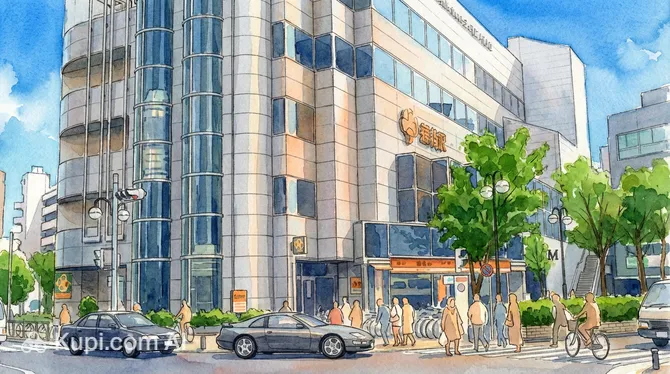
Shinozaki is a cozy and peaceful corner on the eastern edge of the vast Tokyo metropolis, located in the Edogawa special ward. Unlike the neon jungles of Shibuya or Shinjuku, this area offers travelers an authentic look at everyday life in modern Japan. There is none of the hustle and bustle of central districts here, but rather an abundance of traditional hospitality and a relaxed pace of life.
Geographically, Shinozaki borders the scenic banks of the Edogawa River, which serves as a natural border for the prefecture. With a population of about 252,844 people, this district is considered a classic residential neighborhood where modern high-rise apartment complexes harmoniously coexist with small private houses. The climate here is temperate monsoon, making walks pleasant at any time of year, especially in spring and autumn.
Shinozaki. Illustration.
Source: Kupi.com AI
Despite its reputation as a residential cluster, Shinozaki attracts outdoor enthusiasts with its spacious waterfronts and proximity to the water. Learning more about the history of this place, one can see how the area transformed from farmland into an important transport and residential hub. It is an ideal destination for those who want to escape the tourist crowds and feel the true rhythm of the Japanese capital.
We invite you to visit Shinozaki to enjoy the silence by the river, take a bike ride along the well-maintained paths, and see Tokyo from its most sincere and non-touristy side.
Weather Overview
Shinozaki is dominated by a temperate monsoon climate, characteristic of the entire capital region. The weather here is clearly divided into four seasons, each transforming the district's appearance in its own way. Travelers should expect a hot and humid summer with periodic rain, as well as cool but predominantly sunny and dry winters.
The coldest month is January, with an average temperature of about 5.4°C, while August brings real subtropical heat, with temperatures often rising above 30°C. Spring and autumn are the ideal times to visit: cherry blossoms bloom in March and April, and the temperature stays at a comfortable 10–18°C. Current weather in Shinozaki will help you choose your wardrobe more accurately before your trip.
A feature of the area is its proximity to the Edogawa River, which can contribute to slightly higher humidity in the summer months. June and September are considered the rainiest periods, so an umbrella will be your mandatory companion. During the rest of the year, the sky over Shinozaki often remains clear, providing excellent visibility and a pleasant atmosphere for walks.
Average monthly temperature
Average monthly precipitation
Interesting Facts
Shinozaki Station, which is the heart of the district, was officially opened on September 14, 1986, on the Toei Shinjuku Line.
The district is considered one of the most "water-oriented" in Tokyo—it takes just a 15-minute walk from the central station to reach the wide bed of the Edogawa River.
Despite its distance from the Imperial Palace, Shinozaki is part of the easternmost of Tokyo's 23 special wards.
It is home to one of the branches of the innovative Spaces office spaces, highlighting the integration of the traditional residential sector into the city's modern business environment.
Shinozaki is often chosen by families with children and office workers for its impeccable reputation as a safe and environmentally friendly suburb.
How to Get There
The transport accessibility of Shinozaki makes the district convenient for both living and visiting. Despite its suburban location, a developed network of railways and metro allows it to be easily integrated into any itinerary across Japan. You can check the detailed guide on how to get to the area to plan your trip as efficiently as possible.
The city's two main airports serve as the primary air gateways for travelers. Narita International Airport (NRT) is located about an hour to an hour and a half away; it can be reached via the Keisei Line with a transfer or by a convenient bus. Haneda Airport (HND) is closer to the southern part of the city, and the journey from there will take about 45–60 minutes by public transport.
The key hub of the area is Shinozaki Station (S-20), which belongs to the Toei Shinjuku Line. It provides a direct and fast connection to central districts, including Shinjuku (the journey takes about 35–40 minutes). This is one of the most reliable and popular ways to travel among local residents.
Station
Passenger traffic
Distance
Asakusa Station
21
9 km
Uguisudani Station
15
11 km
Okachimachi Station
16
11 km
Akihabara Station
23
11 km
Nippori Station
16
11 km
For those who prefer ground transport, regular bus routes run from the station, connecting Shinozaki with neighboring Edogawa and Kasai neighborhoods. If you plan to take a taxi from central Tokyo, be prepared to spend between 5,000 and 7,000 yen, depending on the time of day and traffic conditions.
Main Attractions
Since Shinozaki is primarily a residential area, it is difficult to find world-famous architectural monuments here, yet the local charm lies in the details. The main "attraction" for locals and occasional guests is the Edogawa River embankment. This is an ideal place for those who appreciate long walks or bike rides: it offers panoramic views of the water, and in spring, the banks are painted in the soft pink color of blooming cherry blossoms.
All district life is concentrated around Shinozaki Station. It is a modern transport hub surrounded by shopping rows and small plazas. Tourists will find it interesting to observe how Japanese everyday life is organized away from popular guidebooks: clean streets, tiny gardens by the houses, and cozy squares create a unique sense of home comfort.
For those looking for cultural leisure, the district offers a glimpse into small local temples hidden deep within the residential blocks. Although they do not claim to be architectural masterpieces, they preserve an authentic spiritual atmosphere. Shinozaki is not about "external glitz," but about the opportunity to slow down and see the real Japan in its natural state.
Local Cuisine
The gastronomic scene in Shinozaki is a classic cross-section of Tokyo cuisine geared toward locals. There are no pretentious Michelin-starred restaurants, but at every turn, there are establishments serving home-cooked, delicious, and honest food. The menu is based on traditional Japanese dishes: rich ramen, fresh sushi, and hot udon.
Many "family restaurants" and popular chain eateries, such as Yoshinoya or Sukiya, are concentrated around the metro station. These are great places for a quick and inexpensive meal of traditional gyudon (beef bowl). If you are looking for a more authentic experience, stop by one of the local izakayas, where a variety of yakitori (chicken skewers) or edamame are served with drinks.
Special attention should be paid to the small bakeries and confectioneries hidden in residential blocks. There, you can try fresh pastries with red bean filling or delicate matcha desserts. Street food culture is not very prominent here, but supermarkets near the station always sell freshly made bento boxes, perfect for a picnic by the Edogawa River while enjoying a meal in the fresh air.
Travel Tips
Planning a visit to Shinozaki means choosing the path of a true Tokyo explorer. To ensure your trip goes smoothly and leaves only pleasant impressions, we have prepared some practical recommendations.
Seasonal Wardrobe: It is very hot and humid in Tokyo during summer, so bring light clothing made of natural fabrics. In winter, it can be windy, especially near the river, so a windbreaker will be useful. Comfortable shoes are your main ally, as you will be doing a lot of walking.
Transport Card: Be sure to purchase a Suica or Pasmo card immediately upon arrival. This will save time in queues at ticket machines and allow you to easily transfer from the metro to buses.
Cash: While cards are accepted in supermarkets, small family cafes and izakayas in Shinozaki may ask for cash (yen). Always carry a small supply of banknotes.
Connectivity: Public Wi-Fi is not available everywhere in Japan. We recommend buying a local SIM card or renting a pocket Wi-Fi at the airport.
Etiquette and Silence: Shinozaki is a quiet residential area. Loud conversations on the street or on the phone in the metro are considered bad manners. A polite bow when greeting is always appreciated.
Safety: The district is extremely safe, but at night, walks right by the riverbed might be uncomfortable due to poor lighting. Stick to well-lit residential blocks.
What to Avoid: Do not leave tips in restaurants—this may offend the staff. All service is already included in the price.
Useful App: Download Google Maps or Hyperdia to track train schedules; the Japanese metro has many branches and can be confusing for a newcomer.
Shinozaki will give you peace and comfort if you follow these simple rules. Enjoy every moment of your Japanese adventure!
Entertainment & Nightlife
Entertainment in Shinozaki is of a quiet and family-oriented nature. You won't find loud night clubs or massive concert halls here—locals prefer to head to central Tokyo for boisterous parties. Nevertheless, the district's evening life centers around the metro station, where the signs of cozy izakayas (traditional Japanese bars) and small late-night eateries light up.
Karaoke boxes located near the transport hub remain a popular choice for young people and groups of friends. This is an excellent way to spend an evening in pure Japanese style. Otherwise, the district plunges into silence after 10:00 PM, making it safe and comfortable for those who value a good night's sleep.
During the day, the main fun moves to the banks of the Edogawa River. Here, you can often see families on picnics, joggers, and cyclists. During the warmer months, local festivals or sporting events are sometimes held in the open spaces by the river. For larger-scale entertainment, such as visiting theaters or major amusement parks, you can always take the direct metro line, which will take you to the heart of the metropolis's events in minutes.
Parks & Museums
The main natural treasure of Shinozaki is the extensive park area along the Edogawa River. It is not just an embankment, but a full-fledged recreational space with manicured lawns and wide paths. Locals come here to admire the sunset or go for a morning run. In spring, this place is transformed by cherry blossoms, creating a picturesque pink corridor along the water.
Small municipal parks are scattered near the residential areas, serving as oases of silence amidst the dense development. Although there are no large state museums in Shinozaki itself, the district takes pride in its cleanliness and the thoughtful landscape design of its public spaces. This is an excellent example of how the Japanese integrate nature into the urban environment.
For those craving cultural discoveries, we recommend heading to the neighboring Edogawa neighborhoods, which house interesting museums dedicated to the region's history and traditional crafts. The journey to them takes no more than 20 minutes by public transport, making Shinozaki a convenient base for quiet walks between visits to Tokyo's major cultural centers.
Getting Around
The public transport system in Shinozaki operates with legendary Japanese precision. The main artery connecting the district with the rest of the world is the Toei Shinjuku metro line. Trains run at intervals of 5–10 minutes, from early morning until midnight. This is the easiest and most reliable way to reach Tokyo's business center.
It is best to use contactless Suica or Pasmo cards for payment. They can be purchased and topped up at machines at the station. The cards are also accepted in most local shops and on buses, eliminating the need to constantly carry change. Remember that during "rush hours" (from 7:30 to 9:00 AM), trains can be very crowded, so if possible, plan your trips for a slightly later time.
Within the district itself, residents actively use bicycles—the most popular mode of transport for short trips. Convenient multi-level parking for bicycles is organized at the metro station. If you need to reach a location not covered by the metro, use the municipal buses. A taxi system is also available; you can call a car via apps or find one at a designated stand near the station exit.
Accommodation
Accommodation options in Shinozaki are primarily geared toward those looking for budget stays or who want to live like a local. There are practically no luxury five-star hotels here, but there is a wide range of apartments and small guesthouses, which are often listed on popular booking services.
The Edogawa district as a whole is known for more affordable rental prices compared to central Tokyo. A night in a cozy guesthouse or mini-hotel will cost an average of 5,000 – 10,000 yen. Many tourists choose this location precisely for the opportunity to save on accommodation without sacrificing convenient access to the metro.
If you are planning a trip during peak demand periods, such as the cherry blossom season in late March or "Golden Week" in May, we strongly recommend booking your accommodation in advance. Shinozaki is popular among expats and business travelers, so the best price-to-quality options are taken quite quickly.
Nearby Cities
Thanks to its location on the border of prefectures, Shinozaki serves as an excellent starting point for exploring the eastern outskirts of Tokyo and the neighboring Chiba Prefecture. Proximity to major transport arteries allows tourists to switch from the calm atmosphere of a residential neighborhood to the bright attractions of neighboring cities in minutes.
Just a few kilometers away is Edogawa, the administrative center of the district, where you can visit beautiful parks and zoos. It's also worth noting the city of Ichikawa, located just across the river. It attracts travelers with its historical temples and scenic walking areas. For lovers of old Tokyo, a trip to Katsushika, known for its authentic Shibamata district, is an excellent option.
Don't miss the opportunity to explore the surroundings: a short train or bus ride will reveal many interesting places—from massive aquariums in Kasai to theme parks in Urayasu. Each of these directions will provide new impressions and allow you to see the full diversity of the Japanese metropolis.
Shopping & Souvenirs
Shopping in Shinozaki is purely practical, which can be very useful for travelers looking to purchase quality Japanese goods at regular, non-tourist prices. The main shopping activity is concentrated right at the metro exit, where the large AEON and Seiyu supermarkets are located. Here you can find everything from fresh groceries and ready-made meals to clothing and household items.
For those looking for something unique or wanting to stock up on gifts, there are "100-yen shops" and small shops with home goods in the area. Special attention should be given to local drugstores, which in Japan are real treasure troves of high-quality cosmetics and hygiene products. Prices here are often lower than in central districts like Ginza.
If you need souvenirs with Japanese flair, check out the shopping arcades near the station. You'll often find shops selling traditional wagashi sweets and high-quality green tea. Most shops are open from 10:00 AM to 9:00 PM, while large supermarkets may stay open until late at night. Major retail outlets accept international bank cards, and Tax Free shopping is also available upon presentation of a passport.