Support

Katsushika

About

Katsushika is one of the most colorful and authentic special wards of Tokyo, cozily situated in the east of the metropolis on the banks of the scenic Edogawa River. This corner of Japan attracts visitors with its unique atmosphere, where ancient traditions and the modern city rhythm harmoniously intertwine, offering guests the freshness of water and the greenery of parks.
Katsushika. Illustration.
Source: Kupi.com AI

With a population of about 453,000 people, Katsushika is not just an administrative district, but a real cultural island within vast Tokyo. Here, it is easy to feel the spirit of old Edo while strolling through cozy residential neighborhoods, lively shopping streets, and quiet historical corners that stand side-by-side with modern developments.

The main charm of Katsushika lies in its authenticity and the opportunity to touch traditional Japanese culture. Among the iconic sites are the Taishakuten Temple and the lively Taishakuten-Sando street leading to it, lined with numerous shops and old tea houses. No less attractive is the vast Mizumoto Park, famous for its iris fields and opportunities for outdoor recreation. The city is also famous for its local holidays and festivals, immersing visitors in the atmosphere of real Japan.

Visiting Katsushika is an excellent opportunity for those seeking authentic experiences and wanting to see another side of Tokyo, away from the noisy central districts. This area will give you a unique combination of ancient temples, picturesque parks, delicious local cuisine, and warm hospitality, inviting you to slow down and enjoy the moment.

You can find more interesting facts on the Katsushika city history page.
Weather Overview

The weather in Katsushika is characterized by noticeable seasonal changes. Summer, especially in July and August, is typically hot and humid, with average temperatures reaching 28°C and frequent rain. Winters, from December to February, are quite cool, with the average January temperature being around 4.9°C and significantly less precipitation. Spring and autumn offer more moderate temperatures but can also be rainy, especially in October. Overall, expect a warm summer with occasional rain and cool, drier winters. For more detailed information, you can explore the Katsushika climate.

Average monthly temperature

Average monthly precipitation

Interesting Facts

Beyond its well-known landmarks and bustling streets, Katsushika holds many surprising stories and cultural features that make this Tokyo ward truly unique. Here are just a few interesting facts about this place:

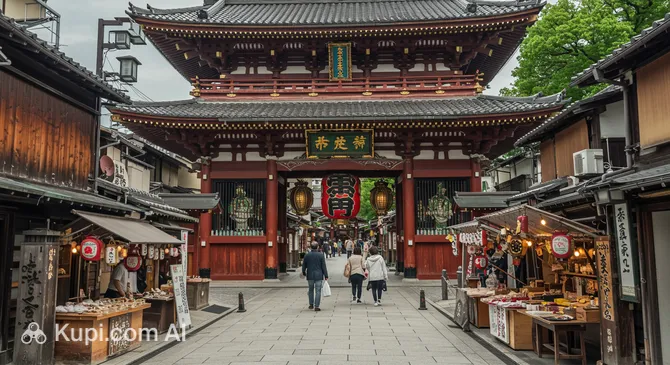
Taishakuten Approach. Illustration.
Source: Kupi.com AI

Traveler photos:

  • Birthplace of Hokusai: Katsushika is the birthplace of the world-famous ukiyo-e artist Katsushika Hokusai, creator of the iconic print "The Great Wave off Kanagawa." A museum in the area bears his name, and his works had a massive influence on the development of world art, even inspiring European Impressionists.

  • Fireworks Festival: Every year, Katsushika hosts one of Tokyo's most vibrant and large-scale fireworks festivals—the Katsushika Hanabi. Over 13,000 shells light up the night sky over the Edogawa River, as thousands of spectators gather on the banks to enjoy this spectacular show.

  • Taishakuten Temple and Tora-san: The famous Shibamata Taishakuten temple, founded in 1629 and known for its incredible wood carvings, is located here. The scenic Taishakuten Sando leads to the temple. This area also became famous thanks to the iconic Japanese film saga "It's Tough Being a Man" (Tora-san), and there is a memorial hall here dedicated to the main character.

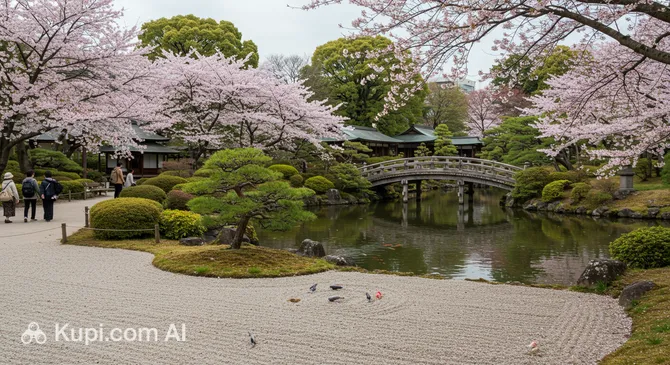
  • Picturesque Gardens: Katsushika is renowned for its beautiful gardens. For example, the Horikiri Iris Garden turns into a fragrant sea of thousands of irises every year during blooming season. Meanwhile, Mizumoto Park is the largest wetland park within Tokyo, offering perfect conditions for leisurely walks, picnics, and birdwatching.

How to Get There

The most convenient way to reach Katsushika, one of Tokyo's special wards, is by air, using one of the major international airports serving the Japanese capital. Although Katsushika does not have its own airport, the developed transport infrastructure makes it easy to reach the district from nearby air hubs.

The primary and most convenient option for most travelers is Haneda Airport (HND), located in Tokyo. This major international airport is about 22 km southwest of central Katsushika. A taxi or express bus ride from Haneda to Katsushika usually takes between 50 and 70 minutes, depending on traffic. You can also reach it from the airport by train with a few transfers.

The other major international hub serving Tokyo is Narita International Airport (NRT). It is significantly further away, about 49 km east of Katsushika. Travel time from Narita by taxi or limousine bus can take between 1.5 and 2 hours. Narita Airport is also well-connected to Tokyo by high-speed trains like the Narita Express, from which you can then transfer to local lines heading to Katsushika.

In addition to these two giants, there are other more distant airports that could be considered depending on your itinerary, but Haneda and Narita remain the most popular and convenient for international and most domestic flights to the Tokyo region.

For clarity, here is a summary of the main airports through which you can reach Katsushika:

AirportPassenger trafficDistance
Haneda Airport85.7 mln22 km
Narita International Airport40.8 mln49 km
Ibaraki Airport776 06371 km
Fukushima Airport250 000173 km
Matsumoto Airport112 618180 km

Upon arrival at one of the airports, Katsushika can be reached by various types of public transport, including trains (e.g., Keisei lines from Narita or Keikyu from Haneda, followed by transfers to local lines such as the JR Joban Line or Keisei Main Line), buses, or taxis. Within Tokyo, Katsushika is well-integrated into the city's transport network, making it easy to move around the district and to other parts of the capital.

Main Attractions

Katsushika, one of Tokyo's special wards, offers its guests a unique combination of traditional old-town atmosphere and modern amenities. Here you can find many interesting places, from picturesque parks to historical shrines, which allow for a deeper immersion into Japanese culture.

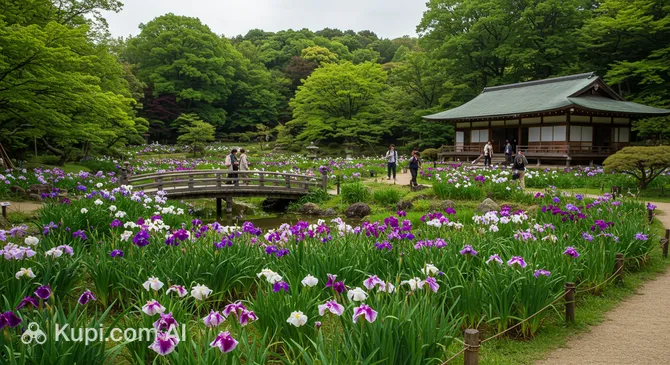
One of the district's gems is the Horikiri Iris Garden. This place is especially beautiful in early summer when thousands of irises of various varieties bloom, creating a breathtaking sight. The garden has a rich history and attracts visitors with its peaceful atmosphere and traditional Japanese landscape design.

Horikiri Iris Garden. Illustration.
Source: Kupi.com AI

Traveler photos:

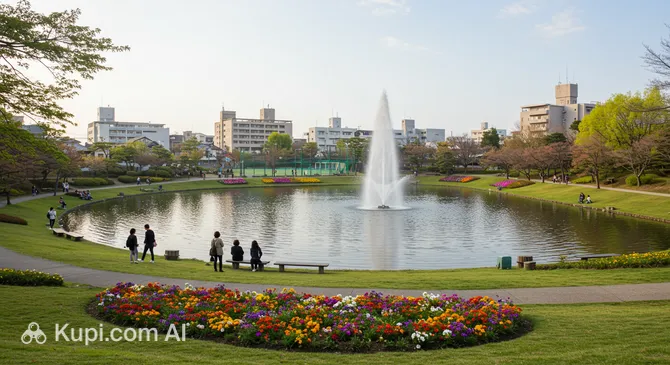
For lovers of nature and quiet relaxation, Mizumoto Park is perfect. It is one of the largest parks in Tokyo, offering vast green spaces, ponds, and diverse flora. Here you can enjoy a picnic, walk along scenic paths, or go birdwatching, making it an ideal place for family leisure.

Mizumoto Park. Illustration.
Source: Kupi.com AI

Traveler photos:

Equally interesting is Taishakuten Sando, the approach leading to the famous Shibamata Taishakuten Daikyoji Temple. This traditional street is full of the charm of old Japan: it is lined with numerous shops selling local delicacies, souvenirs, and handmade crafts. A walk along this alley is an opportunity to dive into a nostalgic atmosphere and try traditional Japanese sweets.

Taishakuten Approach. Illustration.
Source: Kupi.com AI

Traveler photos:

A modern oasis of tranquility is Katsushika Mirai Niijuku Park. This park offers well-equipped areas for relaxation and activities, including playgrounds and walking spaces. It is popular among locals and tourists alike as a place to relax and enjoy nature in an urban environment.

Katsushika Niijuku Mirai Park. Illustration.
Source: Kupi.com AI

Traveler photos:

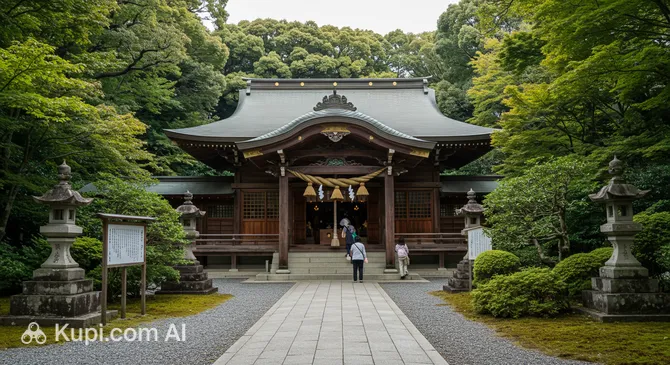
For those interested in the spiritual side of Japanese culture, Takagi Shrine is worth a visit. This Shinto shrine, with a history stretching back centuries, is a place of worship and traditional rituals. A visit to the shrine allows you to experience Japanese traditions and enjoy a calm, spiritual atmosphere.

Takagi Shrine. Illustration.
Source: Kupi.com AI

Traveler photos:

Local Cuisine

The gastronomy of Katsushika is a true immersion into the atmosphere of old Tokyo, where sincere, home-style flavors are valued. The district's cuisine reflects its soulful character, offering dishes prepared with love and time-tested recipes.

Among the dishes definitely worth trying in Katsushika are kamaboko—delicate fish cakes often prepared in small family shops using traditional techniques. Another iconic dish is yakisoba, delicious fried noodles with vegetables and meat or seafood, the aroma of which often fills the streets during local festivals and fairs. One cannot overlook senbei—crunchy rice crackers, which in many places, especially in the Shibamata area, are baked right in front of customers, creating an unforgettable aroma and offering a tasty souvenir.

Aji Yasu. Illustration.
Source: Kupi.com AI

Traveler photos:

For those with a sweet tooth, Katsushika offers a rich selection of traditional Japanese sweets—wagashi. Especially popular are dango—appetizing rice balls on skewers, often decorated according to the season. As for drinks, classic green tea and matcha are highly valued here, perfectly complementing the sweets. Among alcoholic beverages, sake is worth noting, and for non-alcoholic options, various teas and lemonades are popular.

Food culture in Katsushika is closely linked to local traditions. Locals and tourists often prefer small family restaurants and eateries where they can enjoy authentic dishes in a cozy setting. One place where you can get acquainted with local cuisine is Aji Yasu. Street food also plays an important role, especially during the numerous food festivals and fairs where you can try a wide variety of delicacies. Markets are also popular spots for discovering local products and prepared meals.

Overall, the gastronomic scene of Katsushika attracts with its authenticity, soulfulness, and the opportunity to touch real Japanese cuisine, far from the tourist glitz of major metropolises. It is an experience that allows you to feel the true taste of old Tokyo.

Travel Tips

Welcome to Katsushika! To make your journey to this charming corner of Japan as comfortable and memorable as possible, we have prepared some practical tips. They will help you navigate better and enjoy every moment of your stay.

  1. Clothing and essentials:

    The climate in Katsushika, as in all of Tokyo, features four distinct seasons. In summer (June-August), it is hot and humid, so choose light, breathable clothing. Spring (March-May) and autumn (September-November) delight with comfortable temperatures but can be rainy—layered clothing and a light jacket or umbrella will come in handy. In winter (December-February), it can be chilly, so stock up on warm clothes. Be sure to bring comfortable shoes, as you will be walking a lot. Don't forget an adapter for electronics (Japan uses type A and B sockets, 100V voltage) and a portable power bank. When visiting temples and shrines, choose modest clothing that covers shoulders and knees; be prepared to remove your shoes before entering.

  2. Getting around the city:

    Moving around Katsushika and all of Tokyo is most convenient via public transport. The network of trains (JR lines, Keisei, and others) and the subway is excellently developed. We recommend purchasing a rechargeable Suica or Pasmo transport card—this will save time and simplify fare payment. Buses also run through the city, but for tourists, trains are usually preferred. Taxis are available, but they are a more expensive way to travel; you can use apps like JapanTaxi. Renting a car for city trips is generally impractical due to heavy traffic, high parking prices, and the superb public transport system.

  3. Financial matters:

    The local currency is the Japanese yen (JPY, ¥). You can exchange money at airports, banks, or licensed exchange offices. Credit and debit cards (Visa, Mastercard) are accepted in many hotels, large shops, and restaurants, however, cash is still very important, especially in small establishments, local shops, and temples. International cards are usually accepted at Japan Post Bank ATMs and 24-hour 7-Eleven convenience stores (Seven Bank ATMs). An approximate daily budget (excluding accommodation) can range from 10,000 to 15,000 yen. It is important to remember that tipping is not customary in Japan and may be perceived as a misunderstanding; quality service is already included in the price.

  4. Health and safety:

    Katsushika, like Japan in general, is considered a very safe place. However, standard precautions, such as keeping an eye on your belongings, are always relevant. Pharmacies (薬局 - yakkyoku or ドラッグストア - doraggusutoa) are easy to find and offer a wide range of over-the-counter medicines. Not all of them operate 24/7, so it's useful to have a small first-aid kit with the essentials. Be sure to take out international medical insurance before your trip. In emergencies, call 119 (ambulance and fire service). Katsushika is primarily a quiet residential area, but as everywhere, avoid walking alone in deserted parks late at night.

  5. Communication and connectivity:

    The official language is Japanese. In Tokyo's tourist centers, staff often speak English, but in more residential areas like Katsushika, English proficiency may be lower. Learn a few basic phrases: "Konnichiwa" (Hello/Good day), "Arigato" (Thank you), "Sumimasen" (Excuse me/I'm sorry). For ease of communication, we recommend purchasing a tourist SIM card with internet access or renting a pocket Wi-Fi router—this can be done at the airport or ordered in advance online. Free Wi-Fi is available in many hotels, cafes, and at major railway stations. Useful apps include Google Maps for navigation, HyperDia or Jorudan for planning train routes, and Google Translate.

  6. Local etiquette:

    Japanese people highly value politeness and respect. Instead of a handshake, a slight bow (o-jigi) is more common. On public transport, try to speak quietly and not disturb other passengers. Eating or drinking on the go is not customary (except in designated areas). A crucial part of etiquette is removing shoes when entering private homes, some temples, traditional restaurants, and ryokans (Japanese-style inns). When giving or receiving something (like a business card or money), use both hands—it's a sign of respect.

  7. Things to avoid:

    To avoid offending locals and awkward situations, remember a few points. Never stick your chopsticks vertically into rice—this is associated with funeral rituals. It is also considered impolite to blow your nose loudly in public; if necessary, it's better to go to a restroom. Do not point your finger at people—use an open palm instead.

  8. Special tip for Katsushika:

    Katsushika is not only a quiet residential area but also a place with a unique atmosphere. This ward is known as the setting of the popular manga series "Kochira Katsushika-ku Kameari Kōen-mae Hashutsujo" (Kochikame). Fans can find statues of the characters and themed corners, especially around Kameari Station. Be sure to visit Shibamata Taishakuten Temple and the adjacent traditional Yamamoto-tei Garden—it is a wonderful opportunity to dive into the atmosphere of old Japan, away from noisy tourist routes.

We hope these tips help you plan an unforgettable trip to Katsushika. Enjoy every day, discover something new, and bring home only the warmest memories!

Entertainment & Nightlife

Katsushika, one of Tokyo's special wards, offers a unique perspective on nightlife that differs from the neon lights of Shinjuku or Shibuya. Here you will find a quieter, more authentic atmosphere where locals relax after a workday. Nightlife in Katsushika is centered around railway stations such as Kanamachi, Shin-Koiwa, and Kameari, which host many traditional Japanese pubs (izakaya), small bars, and cozy restaurants.

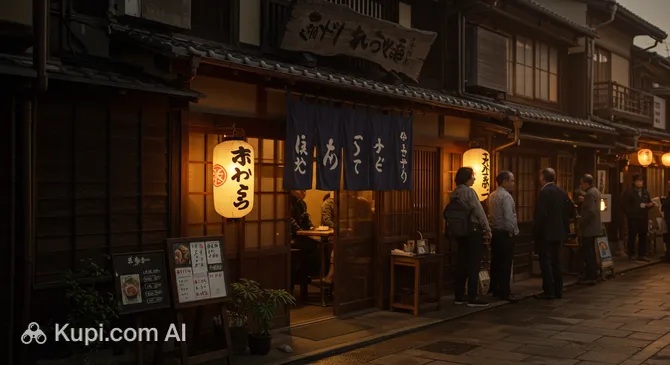
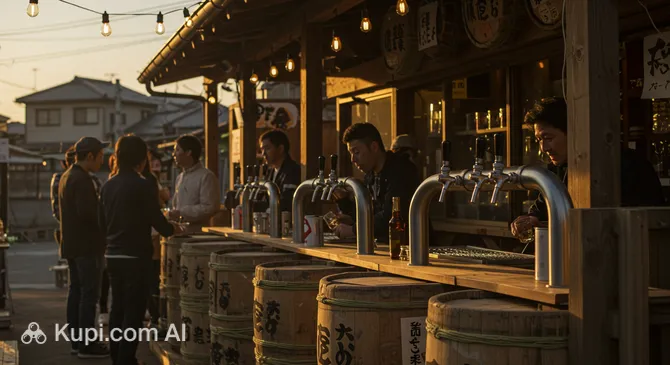
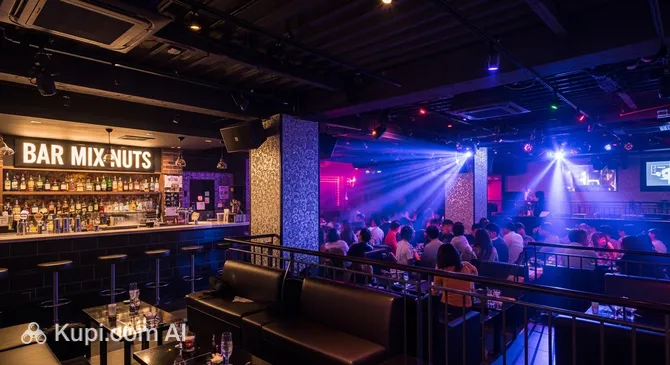
The atmosphere in local establishments is usually very friendly and welcoming. It is a great place to try local drinks like sake or shochu and enjoy Japanese cuisine in a relaxed setting. Many bars and restaurants stay open until late at night, especially on weekends. There is generally no dress code—comfort is valued. If you are looking for something specific, check out Sakaduki Brewing, where you can sample craft beer. For those who prefer a more lively club atmosphere, you can drop by Mix Nuts Bar. Another interesting spot, though located in a neighboring district but popular with locals, is Link Kita-Senju, which offers a good selection of drinks.

Sakazuki Brewing. Illustration.
Source: Kupi.com AI

Traveler photos:

The best time to visit nightspots is Friday and Saturday evenings when the atmosphere is most vibrant. Average prices in Katsushika's izakayas and bars are usually lower than in central Tokyo. Reaching the main nightlife spots is easy by train, but keep in mind that trains stop running around midnight. After that, the main option is a taxi, which is quite expensive in Japan. You can call a taxi via apps or find them at designated stands near stations.

Katsushika, like most of Japan, is considered a very safe area, and night walks here do not cause concern. However, basic precautions should always be observed. Police boxes (koban) are located everywhere and are always ready to help.

Bar Mix Nuts. Illustration.
Source: Kupi.com AI

Traveler photos:

During the day, Katsushika also offers plenty of interesting activities. You can visit beautiful parks like Mizumoto Park, one of the largest in Tokyo, or the picturesque Horikiri Iris Garden, which is especially beautiful during the blooming season. The district is also famous for the Shibamata Taishakuten Temple and its adjacent shopping street, Taishakuten Sando, where you can immerse yourself in the atmosphere of old Tokyo.

Parks & Museums

Katsushika, one of Tokyo's special wards, offers its guests a pleasant combination of well-kept green areas for relaxation and interesting cultural sites that allow for immersion into the local atmosphere and history.

Among Katsushika's parks, Mizumoto Park, the largest water park in Tokyo, stands out. It is a wonderful place for walking, picnics, and birdwatching, with extensive ponds, willow groves, and seasonal flowers. Its vastness allows for a break from the city bustle to enjoy nature. Another gem is the Horikiri Iris Garden, famous for its magnificent irises that bloom in early summer, creating a breathtaking sight. This garden has a long history and attracts many visitors during the blooming season. It is also worth visiting Katsushika Mirai Niijuku Park, a modern green space offering various recreational opportunities for the whole family.

Katsushika offers several unique places to dive into culture and history. Be sure to visit Shibamata Taishakuten Temple, which can be reached via the colorful Taishakuten Sando. The temple itself is famous for its incredibly beautiful wooden carved panels in the Daikyoden gallery, which you can look at for hours—it is a true work of art. Nearby is Yamamoto-tei, a perfectly preserved residence of a wealthy merchant from the early 20th century, where you can see a harmonious blend of Japanese and Western architecture and enjoy the view of a traditional garden. For fans of Japanese cinema, the Tora-san Memorial Hall, dedicated to the iconic movie character whose story is inextricably linked to the Shibamata district, will be of interest. Katsushika also has the Katsushika City Museum, which highlights local history and astronomy, offering educational exhibits for the whole family.

In addition to the iconic sites in Shibamata, Katsushika hides other corners with a historical atmosphere. For example, Takagi Shrine is a quiet and peaceful place where you can take a break from the city bustle and touch local spiritual traditions. Strolling through the area, you may also discover other small temples and historical markers telling the story of Katsushika's past.

For truly authentic experiences, beyond the famous landmarks, it is worth simply walking through the residential streets of Katsushika, paying attention to the small local temples and shrines often found in Japanese cities. Also, visiting one of the local markets can be an interesting experience, allowing you to see the daily life of citizens and try fresh products.

Getting Around

Public transport in Katsushika is well-developed and integrated into Tokyo's extensive transport system, making it easy to move both within the district and throughout the metropolis. The backbone of the transport network is the railway lines, supplemented by bus routes.

The main means of transportation in Katsushika are trains. The district is served by several railway lines, including JR (Japan Railways) lines such as the JR Joban Line, and private railway lines like the Keisei Main Line, Keisei Oshiage Line, and Hokuso Line. These lines provide fast connections to central Tokyo and other parts of the prefecture. Stations are conveniently located, and trains run frequently, especially during peak hours.

Buses play an important role in short-distance travel within Katsushika, connecting railway stations with residential neighborhoods, shops, and local attractions that are not always convenient to reach on foot from the stations. The route network is quite dense, and schedules are generally adhered to.

The fare payment system in Katsushika, as in all of Tokyo, is very convenient. The most popular method is rechargeable IC transport cards, such as Suica or Pasmo. These cards can be purchased from machines at most stations or at ticket offices. They are used to pay for travel on trains, buses, and even for purchases in some shops and vending machines. Simply touch the card to the reader on the turnstile when entering and exiting the station, and the correct amount will be deducted automatically. Fares usually depend on the distance. You can also buy single tickets from machines at stations by selecting your destination.

Tourists are recommended to purchase an IC card immediately upon arrival. You can top up the card at special machines at stations. When entering a train platform or a bus, you must tap the card against the validator; the same must be done when exiting. Public transport usually operates from early morning (about 5:00) until midnight, and sometimes a bit longer, but there are few night routes, so it's worth planning late trips in advance.

As an alternative to public transport, taxis are available in Katsushika. They can be found at special stands near stations or called by phone. Taxis in Japan are known for their high level of service, but they are significantly more expensive than public transport. For short trips around the district, you might consider bicycle rentals, which allow you to explore local streets at your own pace. In Tokyo, there are various smartphone apps (e.g., Google Maps, Jorudan, Navitime) that help plan routes and show schedules and fares, which is very convenient for tourists.

Accommodation

When planning a trip to Katsushika, you will find a variety of accommodation options to suit different budgets and preferences. This Tokyo ward offers both modern hotels and more traditional Japanese guest houses, as well as apartments for short-term rental, allowing for a deeper immersion into the local atmosphere.

For tourists, areas near major railway stations such as Kanamachi or Kameari can be particularly convenient. This will provide easy access not only to the attractions of Katsushika itself but also to other parts of vast Tokyo. Choosing accommodation in such locations will save time on travel and make your journey more comfortable.

In Katsushika, you can find hotels of various categories—from budget options for economical travelers to mid-range hotels offering a good level of comfort. While specific famous hotels are not listed in the provided attractions, the city offers a wide choice, including business hotels, often chosen for convenience and functionality, as well as small family-run inns. For a more authentic experience, you might consider staying in a ryokan (traditional Japanese inn) if any are available in your chosen area.

Regarding booking, as with most popular tourist destinations, it is recommended to arrange accommodation in advance, especially if your trip falls during peak season (such as cherry blossom time or major festivals). This will help not only guarantee availability but also secure better prices. The price range for accommodation in Katsushika varies: you can find both budget hostels and guest houses, as well as more expensive hotels. It is most convenient to book through popular online platforms or directly on hotel websites.

Nearby Cities

For those who want to explore the surrounding areas, Katsushika serves as an excellent starting point for day trips to several interesting nearby locations:

CityPopulationDistance
Edogawa697 9324 km
Adachi682 3265 km
Shinozaki252 8445 km
Sumida270 8235 km
Arakawa217 8916 km

These nearby destinations provide insight into the diverse culture and landscapes of the region, offering many options for exciting short trips from Katsushika.

Shopping & Souvenirs

Katsushika offers a unique shopping experience that differs from the bustle of Tokyo's major shopping districts. Here you will find more charm in the local streets, traditional goods, and the opportunity to immerse yourself in the daily life of the Japanese. The city is not so much famous for giant shopping malls as it is for cozy shops and stalls where you can find something truly authentic.

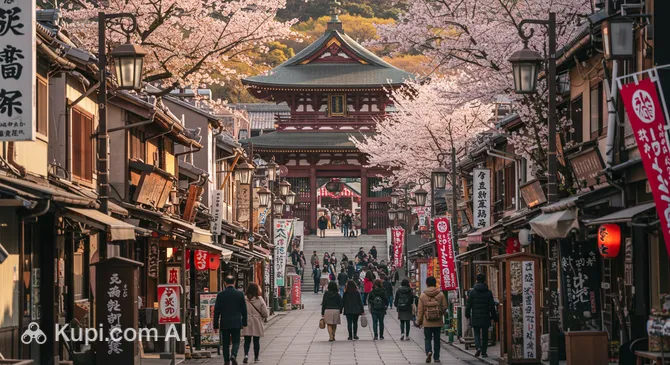
One of the main places for shopping and getting to know the local atmosphere is Taishakuten Sando. This picturesque street leading to the Taishakuten-Daikyoji Temple is filled with traditional shops, souvenir stalls, and restaurants where you can try local delicacies. Here you will find classic Japanese sweets, handicrafts, and souvenirs related to the history and culture of the Shibamata district.

Taishakuten Approach. Illustration.
Source: Kupi.com AI

Traveler photos:

Besides Taishakuten Sando, shopping areas are concentrated around Katsushika's major railway stations, such as Kanamachi, Kameari, or Shin-Koiwa. Here you can find so-called "shotengai"—shopping arcades or streets with many small shops offering daily necessities, clothing, groceries, and local specialties. These are excellent places to observe the life of locals and find interesting goods at reasonable prices.

In Katsushika, the focus is shifted from giant shopping malls to more traditional formats. Although some major stations have department stores or small shopping complexes, the main shopping happens on the shopping streets and in individual stores. This gives the shopping process a special, more soulful character.

As for markets, those in Katsushika are mainly oriented toward locals and offer fresh produce. There are fewer specialized tourist markets here, but on the shopping streets, you can always find stalls with local vegetables, fruits, and seafood, which in itself is an interesting experience.

As souvenirs from Katsushika, you should look for traditional Japanese sweets (for example, "kusa dango"—mugwort rice dumplings, especially popular in the Shibamata area), local crafts, ceramics, and textiles. You can also find souvenirs related to the popular Japanese film "It's Tough Being a Man" (Otoko wa Tsurai yo), which is set in Shibamata.

Most shops in Katsushika are open approximately from 10:00-11:00 until 19:00-20:00. Small private stalls may have their own schedules. Both cash and credit cards are accepted, especially in larger stores and department stores. However, in small shops and at some street stalls, cash may be preferred.

For foreign tourists in Japan, a Tax Free system is available. Look for corresponding signs in shops. Usually, to process a tax refund, you must make a purchase of a certain amount (usually over 5,000 yen) in one store within one day and present your passport. Conditions may vary slightly, so check directly in the store.

Reached the end of the page?

That means the route is fully explored