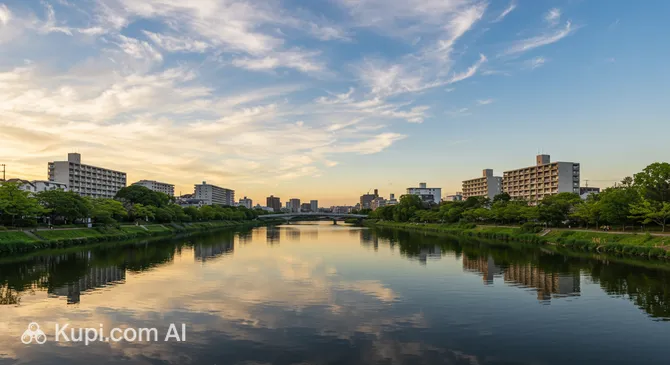
Edogawa is one of the 23 special wards of Tokyo, located on the easternmost edge of the Japanese capital, bordering Chiba Prefecture. Unlike the bustling central districts of the metropolis, this ward has a calmer, more family-oriented atmosphere. Stretching along the banks of the Edogawa and Arakawa rivers, it opens directly onto Tokyo Bay, which largely defines its character and the recreational opportunities available to residents and visitors of Japan.
Edogawa. Illustration.
Source: Kupi.com AI
As a primarily residential area with a population of about 700,000, Edogawa offers tourists a unique chance to see the daily life of Tokyoites away from the hustle and bustle of the tourist mainstream. There are fewer skyscrapers here, but many more open spaces, cozy low-rise neighborhoods, and green zones. The ward's rich historical heritage is closely linked to its waterways, which served as the city's transport arteries for centuries.
The main magnets for travelers here are the vast Kasai Rinkai Park on the coast, a magnificent aquarium, and one of the tallest Ferris wheels in the country. Edogawa is ideal for those seeking a balance between proximity to central Tokyo and the opportunity to relax in the quiet by the water. We invite you to explore this welcoming corner of the capital, where modern comfort meets traditional Japanese tranquility.
Weather Overview
The climate in Edogawa is typical of the capital region and is characterized by distinct seasonality. Summers here are hot and humid: in July and August, average temperatures often exceed +30°C. Due to the proximity to Tokyo Bay, the humidity can feel more intense; however, coastal breezes and the abundance of greenery in the parks make being outdoors slightly more pleasant than in the dense urban center.
Winters in the district are mild and mostly dry, with average temperatures around +5…+8°C. Snow falls rarely and usually melts quickly. The most comfortable times to visit are spring (April–May) and autumn (October–November), when the weather is mild and sunny, ideal for walks in Kasai Rinkai Park. You can study the detailed Edogawa's climate by month to better plan your wardrobe.
Precipitation is distributed throughout the year, but the peak of the rains occurs in June (the "tsuyu" season) and September, when typhoons are possible. Proximity to the water ensures better ventilation and air quality for the district compared to the central areas of the metropolis. Overall, Edogawa is a place where the sea's influence softens the urban climate, creating favorable conditions for outdoor recreation at any time of year.
Average monthly temperature
Average monthly precipitation
Interesting Facts
Edogawa is the easternmost of Tokyo's 23 special wards, serving as the capital's "eastern gateway" on the way to Chiba Prefecture.
The ward is home to one of the few free zoos in the metropolis—Edogawa Natural Zoo, which is incredibly popular with families.
The district is named after the Edogawa River, which forms the natural border between Tokyo and the neighboring cities of Urayasu and Ichikawa.
The local Ferris wheel in Kasai Rinkai Park long held the title of the tallest in Japan, offering breathtaking views of Tokyo Bay and Disneyland.
Thanks to reclaimed land and careful planning, Edogawa is considered one of the greenest wards in Tokyo, which is atypical for the densely built-up center of the metropolis.
How to Get There
Edogawa is excellently integrated into the city's transport network, making it easily accessible from both central Tokyo and international airports. Thanks to a well-developed system of railway lines and the subway, visitors can move quickly between key points in the city. You can find out how to plan your route by checking all ways to get to Edogawa.
The nearest major air hub is Tokyo International Airport (Haneda). The journey from there to the ward's stations takes about 40–60 minutes. If you are arriving via Narita International Airport, the trip will be slightly longer—from 60 to 80 minutes on JR lines or private expresses with one transfer.
The ward's rail service relies on two main arteries: the JR Keiyo Line, which runs along the coast (Kasai-Rinkai-Koen station), and the Tokyo Metro Tozai Line, which crosses the residential areas (Kasai and Nishi-Kasai stations). The trip from Tokyo Central Station to the coastal part of the ward takes only 15–20 minutes, making Edogawa a convenient base for travelers.
Main Attractions
While Edogawa is not a classic tourist hub, it boasts several unique spots that deserve attention. The crown jewel of the district is undoubtedly the coastal Kasai Rinkai Park. This massive space on the shores of the bay is a place where you can spend an entire day walking along the promenades or admiring the sea views. It is also home to the famous Tokyo Sea Life Park aquarium, known for its futuristic glass architecture and impressive displays of marine fauna.
Gyosen Park. Illustration.
Source: Kupi.com AI
Traveler photos:
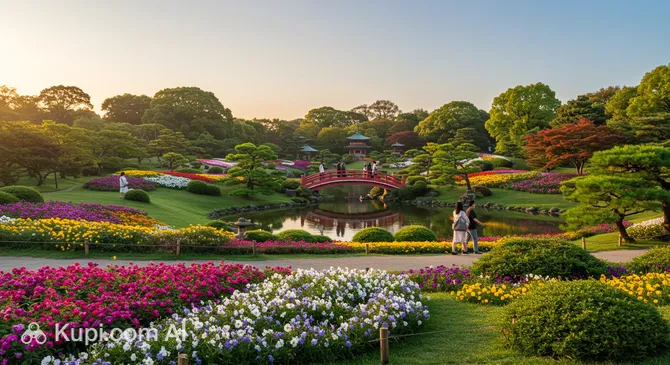
For those seeking cultural diversity, an interesting stop is ISKCON Tokyo—a Hindu temple that reflects the multicultural nature of modern Tokyo. Nature lovers and families should definitely visit Gyosen Park. This charming spot combines a traditional Japanese garden with ponds and bridges with a small free zoo where you can interact with animals in a peaceful setting.
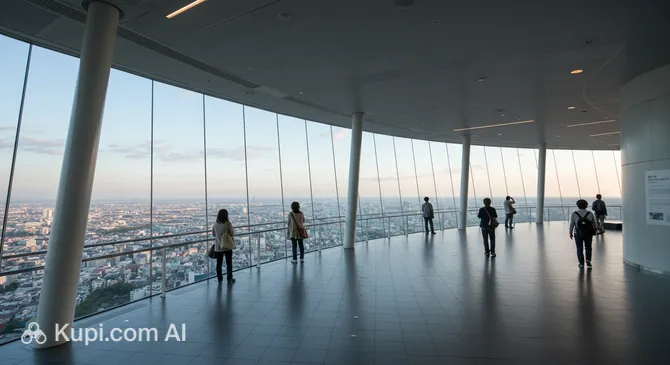
If you want to view eastern Tokyo from above, the I-link Town Observatory is an excellent choice. It offers panoramic views of residential neighborhoods, the winding rivers, and, on clear days, the majestic Mount Fuji. These locations allow you to see another side of Tokyo—as a city built for living, spacious and surprisingly green.
I-Link Town Observation Deck. Illustration.
Source: Kupi.com AI
Traveler photos:
Local Cuisine
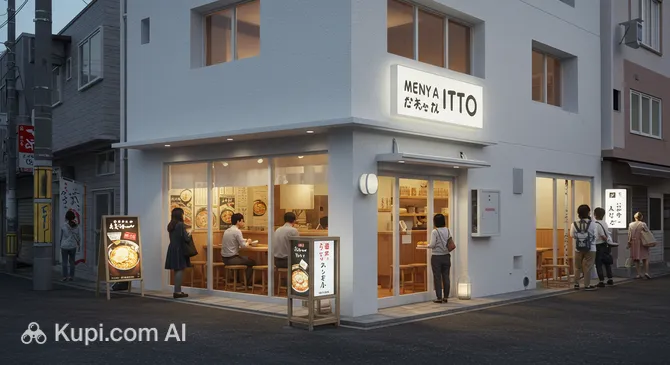
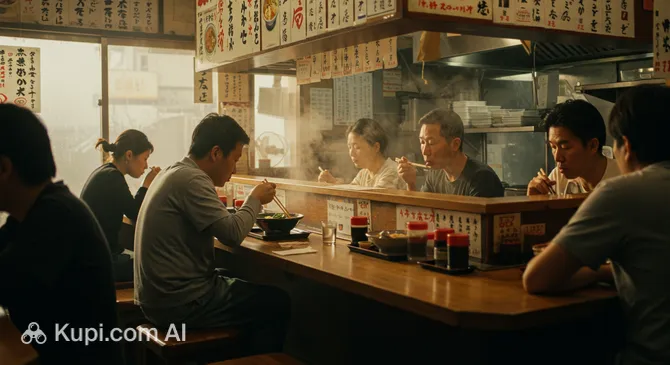
The culinary scene in Edogawa is a realm of authentic, everyday Japanese cuisine. You won't find pretentious Michelin-starred restaurants here, but you will find plenty of "locals-only" spots where the food quality is impeccable. The area is famous for its ramen shops. Be sure to stop by Menya Itto to try one of the best tsukemen in Tokyo, or appreciate the hearty portions at Ramen Jiro Kannana Ichinoe.
Menya Itto. Illustration.
Source: Kupi.com AI
Traveler photos:
Proximity to Tokyo Bay leaves its mark: seafood dishes are popular in the coastal Kasai areas. Locals often spend their evenings in small izakayas, ordering yakitori, fresh sashimi, and tempura. For drinks, they traditionally prefer cold Japanese beer, sake, or a "highball"—whiskey and soda, which perfectly complements a filling dinner.
The dining culture in Edogawa is very democratic. During the day, bento boxes from local supermarkets are popular, and they are lovely to eat on a bench in Kasai Rinkai Park. In the evening, life moves to the cozy dining rooms of family restaurants near the metro stations. The general character of the local cuisine is honest, delicious, and affordable food that gives a true insight into the culinary preferences of modern Japanese people.
Ramen Jiro Kannana Ichinoe. Illustration.
Source: Kupi.com AI
Traveler photos:
Travel Tips
A trip to Edogawa will allow you to see the real Tokyo through the eyes of its residents. To make your trip as comfortable as possible, we have prepared some practical tips.
Clothing and Footwear: Choose comfortable shoes, as the area has many parks and long promenades. In summer, Edogawa can be very humid due to its proximity to the bay, so bring clothes made of light, natural fabrics. In winter, sea winds make the weather feel colder than the thermometer suggests, so a windbreaker will not be out of place.
Transport: Be sure to purchase a Suica or Pasmo card. Try to avoid the Tozai subway line on weekdays from 7:30 to 9:00 AM—the passenger density at this time can be a real challenge for an unprepared tourist.
Finances: Despite its high-tech reputation, Japan still loves cash. Small cafes and local shops in Edogawa may not accept cards. It is most convenient to withdraw yen from ATMs at 7-Eleven stores, which are open 24/7. Tipping is not customary and may even confuse the staff.
Health and Safety: The area is extremely safe, even for nighttime walks. Drugstores are found at every turn near stations, selling not only medicine but also water, cosmetics, and snacks.
Communication: English is less common in Edogawa than in the center. Download an offline translator. A few simple phrases like "Arigato" (thank you) and "Sumimasen" (excuse me) will receive a very warm reaction from the locals.
Local Etiquette: Keep quiet on trains and do not talk on the phone. In parks, it is customary to take your trash with you if there are no bins nearby. You may be required to remove your shoes when entering some traditional establishments or temples.
What to Avoid: Do not try to cross the road on a red light, even if there are no cars—it is considered bad manners here. Also, do not smoke while walking; there are specially designated smoking areas near stations for this purpose.
Enjoy the relaxed pace of Edogawa and don't be afraid to turn off the main streets into the heart of the residential blocks—that is where the true charm of this district is hidden.
Entertainment & Nightlife
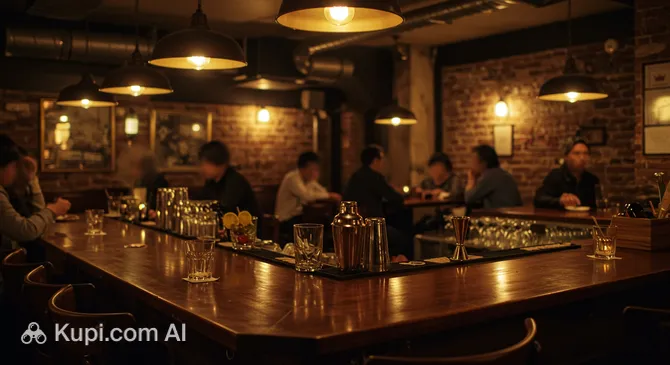
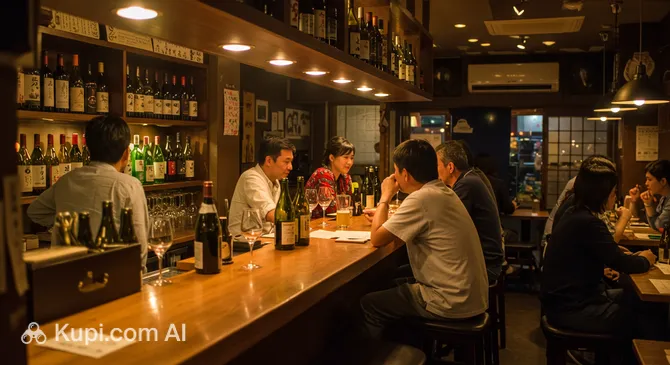
Nightlife in Edogawa is a far cry from the neon frenzy of Shibuya or Shinjuku. The atmosphere of a "home" neighborhood prevails here, with most evening entertainment centered around the metro and JR stations. You will find many cozy izakayas—Japanese pubs where locals gather after work. If you are looking for a relaxed setting, check out Huckleberry bar or visit ROMAE Pizzeria & Wine Bar, where you can enjoy good wine in pleasant company.
Huckleberry. Illustration.
Source: Kupi.com AI
Traveler photos:
During the day, Edogawa offers plenty of options for active and educational leisure. The main center of attraction is Kasai Rinkai Park with its massive Diamond and Flowers Ferris Wheel, which looks especially beautiful as it lights up at dusk. The ward's cultural heart—the Edogawa City Cultural Centre—regularly hosts concerts and exhibitions reflecting the life of the local community. This is a great opportunity to get acquainted with contemporary Japanese art away from the tourist crowds.
For those craving large-scale shows and themed attractions, Edogawa's proximity to the neighboring Urayasu district is a huge plus: the famous Tokyo Disney Resort is just a couple of train stops away. Returning to Edogawa after a noisy day, you will appreciate the quiet of its streets and the safety of nighttime walks. Taxis in the area operate flawlessly, and main thoroughfares remain well-lit even late in the evening.
ROMAE Pizzeria & Wine Bar. Illustration.
Source: Kupi.com AI
Traveler photos:
Parks & Museums
Parks and open spaces are something Edogawa can be truly proud of. The undisputed leader is Kasai Rinkai Park, sprawling right on the bay's edge. It is the perfect place for those tired of the concrete jungle, offering vast lawns for picnics, bird-watching areas, and spacious promenades. In the center of the park lies Tokyo Sea Life Park—a unique aquarium whose exhibits focus not only on tropical fish but also on the inhabitants of local coastal waters.
Another charming spot is Gyosen Park. This is a classic example of Japanese landscape art in miniature: neat paths, a koi pond, and seasonal plants like irises and azaleas. In the northern part of the park, you will find the Edogawa Natural Zoo—a small but very cozy zoo with free admission. Here you can see red pandas, penguins, and lemurs, making the park a favorite for outings with children.
Fans of industrial romance and panoramic views will enjoy the Arakawa River embankment, which features excellent cycling and jogging paths. While the ward lacks major world-class art galleries, the Edogawa City Cultural Centre often hosts local exhibitions, allowing visitors to get acquainted with the work of local artisans. These green and cultural oases make Edogawa one of the most comfortable places for walking in eastern Tokyo.
Getting Around
Public transport in Edogawa operates with legendary Japanese precision. The system is based on two key lines: the JR Keiyo Line, connecting the coastal zones with Tokyo Station, and the Tokyo Metro Tozai Line, which pierces the district from east to west. The Tozai Line is the fastest way to reach the capital's business center, although it is worth noting that it is one of the busiest lines in the city during the morning rush hour.
For traveling within the ward, it is most convenient to use the extensive bus network. Buses run between residential neighborhoods and metro stations, helping you reach parks and shopping centers. Fares are paid using universal contactless cards (Suica or Pasmo), which can also be linked to a smartphone. This eliminates the need to buy paper tickets every time and allows for easy transfers between different modes of transport.
Since Edogawa is a flat and spacious district, cycling is incredibly popular here. Huge multi-level bicycle parking lots are organized at every metro station. Many tourists also prefer to rent bicycles for rides along the river embankments or in Kasai Rinkai Park. This is an excellent alternative to taxis, which operate reliably in the area but are significantly more expensive than public transport.
Accommodation
Accommodation options in Edogawa are primarily aimed at those who value peace and a reasonable price-to-quality ratio. You won't find massive luxury skyscraper hotels here, but there is an excellent selection of chain business hotels and cozy apartments. Staying in this area is often significantly cheaper than in the central districts of Tokyo, while transport accessibility remains high.
The areas around Kasai and Nishi-Kasai metro stations are considered the most convenient for choosing accommodation. The main infrastructure is concentrated here: shops, cafes, and small hotels. Short-term rental apartments are also popular, allowing you to feel like a true Tokyoite by living in a regular residential block among local families.
It is recommended to book accommodation in Edogawa in advance, especially during school holidays and festivals, as the ward is popular with Japanese tourists visiting the nearby Disneyland. Using popular booking systems will help you find the best deals. If you are planning a long stay in the capital, Edogawa is a great budget-friendly solution without sacrificing comfort or safety.
Nearby Cities
Thanks to its location on the border of two prefectures, Edogawa serves as an excellent starting point for exploring the eastern part of the capital region and the bay coast. There are interesting locations nearby that can be easily reached in just a few minutes by train or bus.
The closest neighbor is the city of Ichikawa, known for its historical temples and pleasant green zones. It is also worth visiting the Katsushika ward, which has preserved the "shitamati" atmosphere of old Tokyo with its traditional shopping streets. Equally interesting is the Koto ward, offering modern entertainment on Odaiba island and picturesque canals.
Additionally, from Edogawa, you can easily reach the Sumida ward, home to the famous Skytree tower, or the quiet residential area of Shinozaki. We highly recommend setting aside time to explore these surroundings: each has its own unique character and allows for a deeper understanding of the multifaceted nature of Japanese life.
Shopping & Souvenirs
Shopping in Edogawa is practical and focused on everyday needs. You won't find high-fashion boutiques here, but you can fully appreciate the charm of Japanese "shotengai" shopping streets. Along the main metro stations like Kasai and Nishi-Kasai, there are numerous small shops selling everything from fresh fruit and seafood to household goods and mass-market Japanese cosmetics.
Fans of modern shopping centers should look for the mid-sized complexes near the stations. Here you will find popular Japanese chains for electronics, clothing (such as Uniqlo or GU), and 100-yen shops. For large-scale grocery shopping and household essentials, residents often choose large supermarkets like Seiyu or Aeon. Prices here are generally slightly lower than in the central tourist areas of Tokyo.
As for souvenirs from Edogawa, it is best to bring back traditional Japanese "wagashi" sweets from local confectioneries or unique household items that are hard to find outside of Japan. Shops usually operate from 10:00 to 20:00 or 21:00, while supermarkets are often open until late at night or 24/7. Cards are accepted almost everywhere, but small family-run stalls on the shopping streets may still require cash.