Support

Meguro

About

Meguro is not just a district in western Tokyo, but a true oasis of tranquility and comfort in the heart of one of the world's busiest metropolises. Stretching along the river of the same name, this corner of Japan is famous for its green embankments and a unique atmosphere where urban dynamics harmoniously blend with natural charm. Thanks to its excellent location, just a few minutes by train from Tokyo's central quarters, Meguro attracts both locals and travelers alike.
Meguro. Illustration.
Source: Kupi.com AI

With a population of about 287,000 people, Meguro manages to maintain a surprising atmosphere of intimacy and friendliness. Despite being part of the giant Tokyo, a special, more measured pace of life prevails here. Cozy streets, stylish cafes, small craft shops, and numerous parks where you can take a break from the city bustle create the unique character of this place. Meguro is also known for its safety, cleanliness, and high quality of life, making it an excellent choice for leisurely walks and discovering another side of the Japanese capital.

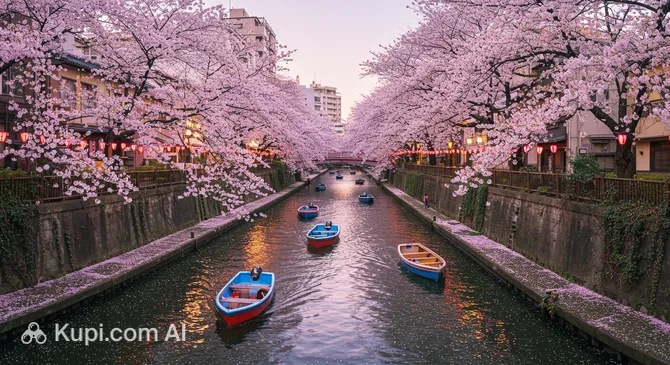
The main gem and trademark of the city is undoubtedly the Meguro River. Its embankments are especially transformed in spring during the cherry blossom season. Thousands of trees lean their branches over the water, creating an incredibly beautiful pink tunnel. During this time, the traditional Japanese flower-viewing festival — hanami — takes place here, attracting many residents and tourists. Evening illumination adds a truly magical atmosphere to this spectacle.

Beyond the famous river, Meguro offers guests other interesting places. Ancient temples, where you can touch history, harmoniously coexist with modern art galleries. Design enthusiasts will find original shops here, while foodies will enjoy authentic restaurants offering dishes for every taste. In Meguro, the past and present truly weave into a single whole, revealing the soul of Tokyo from its most exquisite and sophisticated side.

If you are looking for a place where you can feel the authentic spirit of Tokyo while taking a break from its frantic rhythm, Meguro will be a real discovery for you. This charming district invites you to enjoy its beauty, peace, and hospitality.

You can find more interesting facts on the Meguro city history page
Weather Overview

The weather in Meguro is typically characterized by warm summers with occasional rain and cool, drier winters. In the hottest months, July and August, the average temperature hovers around 26-28°C, with maximums reaching 30.6°C. In winter, particularly in January, the average temperature is about 4.7°C, with minimum values potentially dropping to 0.3°C.

Regarding precipitation, the highest amounts occur in the summer and autumn months. For example, June, July, and October see about 7 mm of rainfall, and the number of rainy days in July can reach 17. Winter months, such as December and January, are significantly drier: precipitation is only 1-2 mm, and the number of rainy days is about 6. For more detailed information on weather conditions by month, you can explore the Meguro climate.

Average monthly temperature

Average monthly precipitation

Interesting Facts

Beyond its well-known landmarks and lively streets, Meguro hides many amazing stories and little-known details. This district can surprise even the most seasoned traveler, and here are just a few of its secrets:

Watarium Museum of Contemporary Art. Illustration.
Source: Kupi.com AI

Traveler photos:

  • The famous Meguro River transforms into a fairytale "pink tunnel" in spring, thanks to the blooming of thousands of cherry trees along its banks. The evening illumination adds a special charm to this sight, creating a magical atmosphere that attracts photographers from all over the world.

  • Historically, Meguro was a haven for artists — painters, writers, and craftsmen. It is said that even today, in its quiet backstreets, you can find ancient tea houses that preserve the spirit of the Edo era and the traditions of tea ceremonies.

  • The name of the district, "Meguro," which means "black eyes," is steeped in legend. It is believed to be associated with one of the five protector Buddhas of ancient Edo (old Tokyo), each of whom had eyes of a specific color. It is said that in Meguro, at the Ryusen-ji Temple, there was a "black-eyed" Buddha protecting the city.

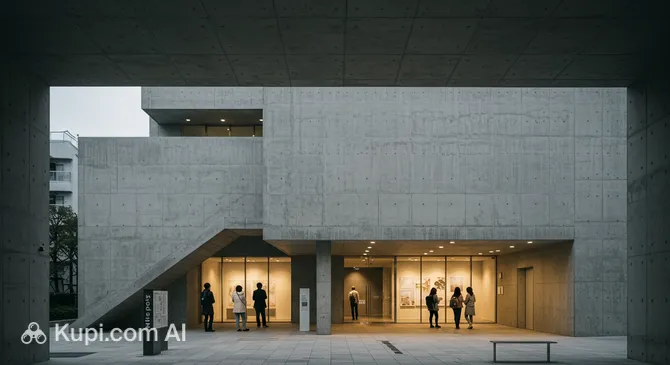
  • Meguro is not just about history, but also about modern art. The district is famous for its art festivals and cozy galleries. Among them, the Watari Museum of Contemporary Art stands out, where you can discover the latest trends in the Japanese and international art worlds.

How to Get There

Getting to Meguro, one of Tokyo's lively special wards, is quite easy, thanks to the excellent transport infrastructure of Japan's capital. The primary method for international and many domestic travelers is flying into one of the two main airports serving Tokyo.

The closest and one of the world's busiest airports is Haneda Airport (HND). It is located in Tokyo, only about 12.4 km from central Meguro. A taxi ride from here to Meguro will take about 40-50 minutes, depending on traffic conditions. Numerous public transport options are also available, including trains and limousine buses, which will take you to Tokyo's key transport hubs, from where Meguro is easily accessible. Haneda handles a vast number of both international and domestic flights, making it a very convenient choice.

Another major international hub serving Tokyo is Narita International Airport (NRT). According to the data provided, it is also located in Tokyo but is significantly further from the center — about 63.8 km from Meguro. The journey from Narita to Meguro usually takes between 1.5 to 2 hours, depending on the chosen transport: whether it's the Narita Express high-speed train, a limousine bus, or a taxi. Narita handles most long-haul international flights.

While other regional airports exist, such as Ibaraki Airport or Shizuoka Airport, for most tourists heading to Meguro, Haneda and Narita will be the most convenient and logical arrival points due to their scale and transport accessibility.

For clarity, here is a summary of the main airports that can be considered for a trip to Meguro:

AirportPassenger trafficDistance
Haneda Airport85.7 mln12 km
Narita International Airport40.8 mln64 km
Ibaraki Airport776 06388 km
Shizuoka Airport691 274167 km
Matsumoto Airport112 618171 km

In addition to air travel, Japan is famous for its excellent railway network. If you are traveling within the country, Tokyo can be easily reached by Shinkansen high-speed trains or other expresses from various regions. Once in Tokyo, for example, at Tokyo Station or Shinjuku Station, the Meguro district can be quickly reached by subway (lines such as Hibiya, Namboku, and Mita pass through stations in Meguro) or JR trains (Meguro Station is on the Yamanote loop line). Road connections are also well-developed, but traveling around Tokyo by car can be complicated by heavy traffic and limited parking spaces.

Main Attractions

Meguro, one of Tokyo's special wards, offers tourists a variety of attractions, from quiet temples and picturesque parks to lively shopping streets and unique museums. Here, everyone will find something interesting, immersing themselves in the atmosphere of both modern and traditional Japan.

Art lovers should visit the Watari Museum of Contemporary Art. This private museum, designed by the famous architect Mario Botta, features exhibitions by both Japanese and international artists. It is known for its bold programming and focus on current trends in art, making it an important point on Tokyo's cultural map.

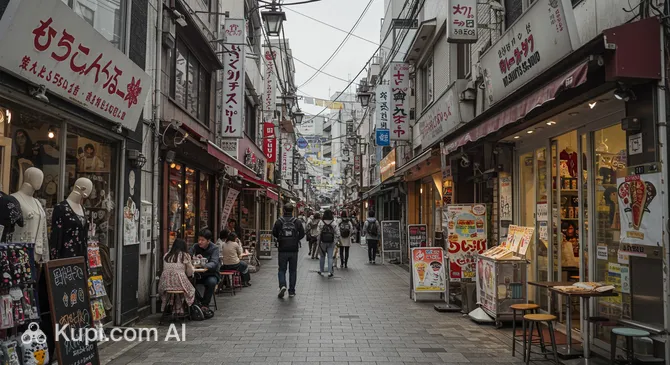
To experience youth culture and fashion, head to Takeshita Street. This famous pedestrian street is the epicenter of kawaii culture, where you can find unusual clothing and accessories, try colorful desserts, and observe the street style of Tokyo's youth. It is a must-visit for those who want to feel the pulse of modern Tokyo and its bright trends.

Takeshita Street. Illustration.
Source: Kupi.com AI

Traveler photos:

One significant historical site is Sengaku-ji Temple. This Buddhist temple of the Soto school is famous as the burial site of the 47 Ronin — legendary samurai whose story of loyalty and revenge became a symbol of the Japanese spirit of bushido. A visit to the temple and the small museum on its grounds allows you to touch an important chapter of Japanese history and culture.

Sengaku-ji Temple. Illustration.
Source: Kupi.com AI

Traveler photos:

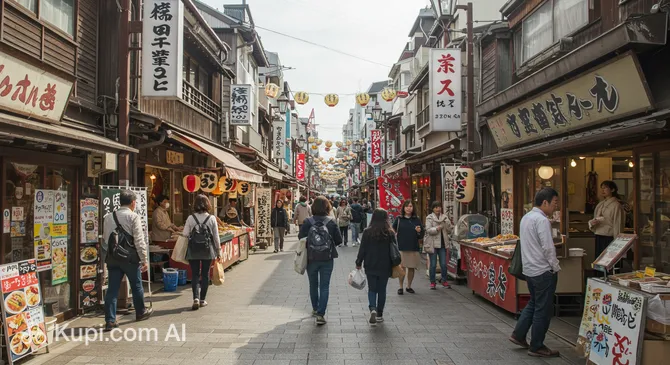
If you want to dive into the atmosphere of local shopping and try various street foods, take a stroll through Togoshi Ginza. This is one of the longest shopping streets (shotengai) in Tokyo, stretching for over a kilometer. Here you will find many small shops, cafes, and stalls offering local delicacies and goods. It's a great place to feel the everyday life of Tokyoites and find authentic souvenirs.

Local Cuisine

The gastronomic scene of Meguro is a pleasant surprise with its diversity, offering travelers both classic Japanese dishes and bold original creations. One of the main culinary delights here is, undoubtedly, tasting the freshest sushi and sashimi. They are prepared in small family restaurants where chefs proudly use fish just delivered from Tokyo's bustling markets, guaranteeing unsurpassed taste and quality.

Besides seafood, in Meguro, you should pay attention to local delicacies such as fragrant yakiniku grill and hearty ramen with a unique broth, the recipes for which are often kept secret. The river embankment and lively streets, such as the Togoshi Ginza shopping street, beckon with the aromas of street food. Here you can try takoyaki (appetizing batter balls with pieces of octopus), yakisoba (fried noodles with vegetables and meat), and traditional taiyaki fish-shaped cakes filled with sweet adzuki bean paste.

Togoshi Ginza Shopping Street. Illustration.
Source: Kupi.com AI

Traveler photos:

For those with a sweet tooth, Meguro suggests stopping by local confectioneries serving delicate mochi with various seasonal fillings and exquisite Japanese wagashi desserts, striking in their refined taste and artistic presentation. During the cherry blossom season, the district's gastronomic palette is enriched with special spring treats: temporary cafes open along the river, offering lemonade with sakura petals and desserts inspired by the gentle colors of spring.

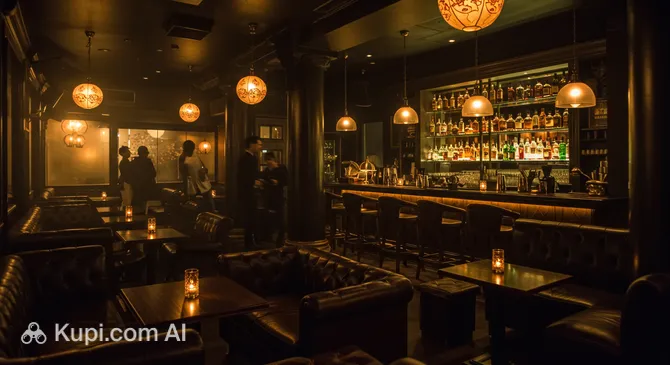
As for drinks, in Meguro you can enjoy traditional Japanese sake and shochu, as well as refreshing green tea or mugicha barley tea. During the sakura blooming season, be sure to try the aforementioned lemonade with sakura petals. For connoisseurs of stronger drinks and a special atmosphere, the Tokyo Whisky Library can be an interesting place, offering a wide selection of whiskeys from around the world.

Tokyo Whisky Library. Illustration.
Source: Kupi.com AI

Traveler photos:

The food culture in Meguro is multifaceted: locals and tourists alike enjoy visiting cozy family restaurants, lively street stalls, or specialized confectioneries. Regularly held gastronomic festivals bring together the district's best chefs, allowing guests to appreciate the full richness of the local cuisine. It is here in Meguro that you can experience the true taste of Tokyo — subtle, rich, and consistently inspiring, combining centuries-old traditions with modern culinary trends.

Travel Tips

Planning a trip to the charming Meguro district in Tokyo? Wonderful! To ensure your journey goes smoothly and leaves only pleasant impressions, we've prepared some practical tips. These recommendations will help you better navigate and enjoy everything this corner of Japan has to offer.

  1. Clothing and Essentials: The climate in Meguro, as in all of Tokyo, is clearly divided by seasons. In summer (June-August), it's hot and humid, so choose light, breathable clothing made from natural fabrics. In winter (December-February), it can be chilly, sometimes with snow, so warm clothes, including a hat and gloves, will be useful. Spring (March-May) and autumn (September-November) are the most comfortable seasons with moderate temperatures, ideal for layered clothing. Be sure to bring comfortable shoes, as you will be doing a lot of walking. Don't forget an adapter for your electronics (Japan uses type A and B sockets, 100V voltage). When visiting temples or shrines, of which there are many in and around Meguro, dress modestly: it is advisable to cover your shoulders and knees.
  2. Transport: The most convenient way to get around Meguro and Tokyo is by public transport. The subway network (Tokyo Metro and Toei Subway) and suburban trains (JR Lines) are excellent. Meguro Station is a major transport hub. Buses also run through the district, but the subway is usually easier for tourists. Taxis are available but quite expensive; you can use apps like JapanTaxi or Uber (although Uber in Tokyo mostly offers the more expensive Black options). Renting a car in Tokyo is generally not recommended due to heavy traffic, limited parking space, and an excellent public transport system. For convenience, purchase a Suica or Pasmo transport card — they can be topped up and used to pay for fares and small purchases.
  3. Finances: The local currency is the Japanese yen (JPY, ¥). You can exchange currency at the airport, banks, or exchange offices (some large stores also offer this service). Credit and debit cards (Visa, Mastercard) are accepted in many hotels, large stores, and restaurants, especially in tourist zones. However, cash is still very important, especially in small establishments, temples, and markets. International cards may not work in all ATMs; look for ATMs in post offices (Japan Post Bank) or at 7-Eleven stores (Seven Bank ATM) — they usually accept foreign cards. An approximate daily budget (excluding accommodation and large purchases) can range from 7,000 to 15,000 yen. Tipping is not practiced in Japan and can be perceived as an insult.
  4. Health and Safety: Pharmacies (薬, kusuri) are easy to find, marked with the corresponding kanji or the word "Drug Store". Some work until late evening, but few are open 24/7. If you need medical assistance, large hospitals have English-speaking staff. It is recommended to get travel insurance before your trip. Meguro, like Tokyo in general, is considered a very safe area. However, as elsewhere, watch your belongings, especially in crowded places and transport. Night walks here are quite safe.
  5. Communication: The official language is Japanese. In tourist areas, hotels, and major stations, staff often speak English, but knowing a few basic Japanese phrases (e.g., "Konnichiwa" – hello, "Arigato" – thank you, "Sumimasen" – excuse me/sorry) will be very helpful and appreciated by locals. A tourist SIM card or a portable Wi-Fi router can be bought/rented at the airport or online in advance. Free Wi-Fi is available in many hotels, cafes (e.g., Starbucks), subway stations, and at special hotspots. Useful apps: HyperDia or Jorudan (for route planning on public transport), Google Maps, GuruNavi or Tabelog (for finding restaurants).
  6. Local Etiquette: The Japanese are very polite and value respect for traditions. Greetings are usually accompanied by a bow (the depth of the bow depends on the situation and the status of the person you're speaking to). In public places, especially in transport, try not to talk loudly on the phone and avoid eating on the go (except in designated areas or at festivals). You must remove your shoes when entering a Japanese home, some temples, and traditional restaurants. Do not point at people with your finger.
  7. What to Avoid: First, do not leave chopsticks stuck vertically in rice — this is associated with funeral rituals. Second, avoid blowing your nose in public; if necessary, go to the restroom or do it as inconspicuously as possible.
  8. Meguro Speciality: Be sure to walk along the Meguro River, especially in spring during the cherry blossom season (usually late March to early April). This is one of the most famous places in Tokyo for cherry blossom viewing, as the riverbanks turn into a magical pink tunnel. The district is also famous for its stylish cafes, designer shops, and art galleries.

We hope these tips help you feel more confident in Meguro and get the most out of your acquaintance with this beautiful area of Tokyo. Have a great trip!

Entertainment & Nightlife

Meguro, one of Tokyo's special wards, offers its guests diverse opportunities for evening and night recreation. While it may not be as noisy as some of the metropolis's central districts, Meguro possesses its own unique charm, offering a more sophisticated and cozy atmosphere for those seeking quality entertainment after sunset.

Nightlife in Meguro is concentrated around its lively neighborhoods, such as Nakameguro, known for its stylish bars and restaurants along the canal, and Jiyugaoka, which offers quieter but elegant venues. Here you will find many traditional Japanese izakaya pubs, where you can enjoy local drinks and snacks in a relaxed setting. Small themed bars, wine cellars, and cocktail lounges are also popular. The atmosphere in most places is welcoming, and the crowd consists of both locals and expats. Many establishments stay open until late at night, especially on weekends. The dress code is usually casual or smart-casual, except for some more exclusive venues.

Tokyo Whisky Library. Illustration.
Source: Kupi.com AI

Traveler photos:

One interesting place for an evening is the Tokyo Whisky Library. As the name suggests, this establishment offers whiskey connoisseurs a rich selection of this drink in a sophisticated atmosphere. Such conceptual bars are not uncommon in Tokyo, and they attract those seeking not just a drink, but an entire experience. In addition to specialized bars, Meguro also features small clubs with live music or DJ sets, catering to a more mature and discerning audience.

To fully enjoy the nightlife of Meguro, it's best to head out closer to the evening when most establishments open. Prices can vary: from quite affordable in izakayas to higher in trendy cocktail bars. Public transportation in Tokyo, including trains and the subway, usually stops running around midnight. After that, the main mode of transport becomes taxis, which can be hailed on the street or ordered via an app. Meguro's neighborhoods are generally considered safe for night walks, but you should always take standard precautions, especially in unfamiliar places.

Although the focus here is on nightlife, Meguro also offers daytime entertainment. Art enthusiasts can visit, for example, the Watari Museum of Contemporary Art, which hosts interesting exhibitions. The district also has charming parks, such as Rinshinomori Park, and many designer shops and cafes, especially in the Nakameguro and Jiyugaoka areas, which are pleasant to explore during daylight hours.

Watarium Museum of Contemporary Art. Illustration.
Source: Kupi.com AI

Traveler photos:

Overall, Meguro offers a balanced mix of daytime activities and sophisticated nightlife, making it an attractive district for those who want to experience different facets of Tokyo.

Parks & Museums

Meguro, one of Tokyo's dynamic special wards, offers its visitors not only modern urban amenities but also wonderful opportunities for outdoor relaxation and immersion in cultural heritage. Green oases and significant cultural sites blend harmoniously here, making walks around the district particularly engaging.

Among Meguro's green zones, the Meguro River holds a special place. It is particularly famous in spring during the cherry blossom season, when its banks turn into a picturesque pink corridor, attracting thousands of visitors. Walks along the river are pleasant at any time of year, allowing you to enjoy the peace and beauty of nature in the heart of the metropolis. Another popular spot for relaxation is Rinshinomori Park, a former experimental forest plot and now a spacious park with diverse trees, a pond, playgrounds, and picnic areas. For those looking for a more modern outdoor solution, the Meguro Sky Garden is interesting — an impressive rooftop garden created above a highway interchange, offering panoramic views of the city.

Meguro's cultural life is also rich. Art lovers should consider the Watari Museum of Contemporary Art, which, although formally on the border with the Shibuya district, is easily accessible and offers interesting exhibitions by both Japanese and international artists. Meguro is also home to the Meguro Museum of Art, Tokyo, which focuses on works by 20th-century Japanese artists and modern authors associated with the district. In the Komaba area, which is part of Meguro, you'll find the Japan Folk Crafts Museum (Mingeikan), founded by Soetsu Yanagi. Its exhibition is dedicated to the beauty of everyday objects and Japan's traditional crafts, offering a deep dive into the "mingei" aesthetic.

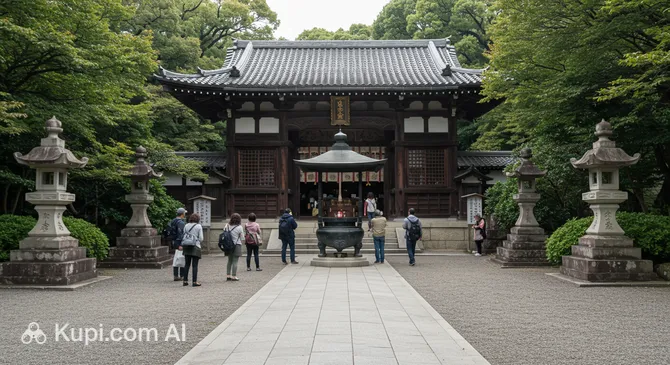
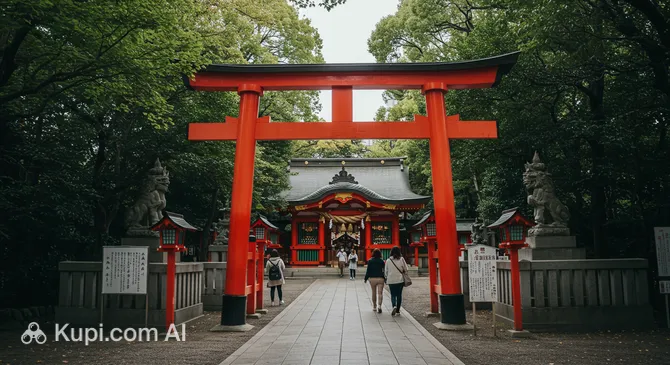
The district's historical heritage is represented by several iconic sites. One of the best known is Sengaku-ji Temple, the final resting place of the 47 Ronin, whose story of loyalty and honor is one of the most revered in Japan. A visit to the temple allows you to touch this important episode of Japanese history. Also noteworthy is Togo Shrine, dedicated to Admiral Togo Heihachiro, a famous figure in Japanese naval history. This quiet and peaceful place, surrounded by greenery, is ideal for quiet reflection.

Togo Shrine. Illustration.
Source: Kupi.com AI

Traveler photos:

For an authentic experience, we advise not limiting yourself only to well-known landmarks. Stroll through Meguro's quiet backstreets away from the main tourist routes, where you can discover small designer boutiques, cozy cafes, and traditional restaurants. Also look for the many small local shrines scattered throughout the district — they often preserve the atmosphere of old Tokyo and offer unexpected moments of peace.

Getting Around

Moving around Meguro and its surroundings is quite convenient thanks to a well-developed public transport system, which is part of the extensive transport network of a large city. The primary ways for tourists and locals to get around are trains and buses, providing access to almost any point.

Railway lines play a key role in Meguro's transport system. Meguro Station is a major transport hub served by JR East lines, such as the popular Yamanote loop line, as well as private railway lines like the Tokyu Meguro Line, and subway lines including Tokyo Metro Namboku and Toei Mita. These routes allow for quick access to central districts and other parts of the city. Bus routes complement the railway network, covering areas less accessible by train.

The fare payment system in Meguro is integrated into the overall city system. The most convenient way to pay is by using rechargeable smart cards, such as Suica or PASMO. These cards can be used on most trains and buses. You can purchase or top them up at station vending machines. Single-trip tickets are also available; the cost of a single ride on the subway or bus usually starts at around 180-200 yen and increases depending on the distance. For active tourists, day passes for specific lines or zones may be beneficial.

Tourists are recommended to purchase an IC card immediately upon arrival — it greatly simplifies travel. You touch the card to the turnstile at the entrance and exit of the station. Paper tickets are inserted into special slots on the turnstiles. Public transport usually starts operating early in the morning (around 5:00) and ends around midnight, sometimes a bit later. Planning routes is convenient using numerous mobile apps that show schedules and optimal paths.

In addition to public transport, alternative ways of moving around are available in Meguro. Taxis are easy to find, especially near stations, but they are a more expensive option. For leisurely walks and exploring local streets, you might consider renting a bicycle; bike-sharing systems are available in some areas. Car-sharing is less popular among tourists due to the specifics of driving and parking in a densely populated city.

Accommodation

In Meguro, travelers will find a variety of accommodation options to suit different preferences and budgets. There are cozy guesthouses and modern apartments for those who value home comfort and independence, as well as hotels of various categories — from budget hostels to mid-range hotels and more luxury offerings.

When choosing a place to stay in Meguro, it is worth looking at areas with good transport accessibility, which will allow you to easily reach local attractions such as Togo Shrine or Sengaku-ji Temple, as well as other interesting parts of Tokyo. Areas located near subway stations or railway lines usually offer the most convenience for tourists. Although specific popular hotels are not mentioned in the provided data, the city offers many options.

To ensure you get the best option, especially during the peak tourist season or during major events, it is recommended to book accommodation in advance. Early booking often allows you not only to choose from a larger number of available options but also to find better price deals.

The price range for accommodation in Meguro varies from affordable options for budget travelers to luxurious offers for those seeking maximum comfort and exclusive service. Most hotels and apartments can be easily booked through popular international online booking platforms, as well as directly on official hotel websites.

Nearby Cities

For those who want to explore the surroundings, Meguro serves as an excellent starting point for day trips to several interesting nearby locations:

CityPopulationDistance
Shibuya235 1932 km
Setagaya940 5094 km
Shinagawa415 7295 km
Minato260 4865 km
Shinjuku349 3856 km

Each of these destinations offers something unique. A trip to Tokyo is an immersion into the incredible rhythm of a global capital, where skyscrapers stand alongside ancient temples, and the choice of entertainment and attractions is truly limitless. Setagaya, one of Tokyo's largest special wards, attracts with its many parks, such as Kinuta Park and the picturesque Todoroki Valley, as well as art galleries and cozy cafes. Nerima is known as one of the centers of Japanese animation and offers visits to themed museums, as well as tranquility in Hikarigaoka Park. The Ota district is interesting for its coastal location, proximity to Haneda Airport, and various cultural sites, including Ikegami Honmon-ji Temple. The city of Honcho (Fuchu) attracts with its rich history; it is home to one of the region's oldest Shinto shrines — Okunitama, as well as extensive parks like Fuchu-no-Mori and the famous Tokyo Racecourse.

These nearby destinations provide an insight into the region's diverse culture and landscapes. Each trip promises new experiences, whether it's experiencing the lively atmosphere of the metropolis or exploring quieter areas.

Shopping & Souvenirs

Meguro offers a variety of shopping opportunities, from cozy designer boutiques and antique shops to modern shopping complexes. While Meguro may not be as famous for its giant department stores as some other Tokyo districts, it attracts connoisseurs of unique finds, high-quality goods, and a stylish atmosphere. Here you can find interesting furniture, interior items, fashionable clothing, and accessories.

One of the notable places for walking and shopping is the Togoshi Ginza shopping street, which is considered one of the longest shopping streets in Tokyo. Here you will find many small shops offering local food, clothing, and household goods. Also, although technically on the border with the neighboring Shibuya district but easily accessible from Meguro, is the legendary Takeshita Street in Harajuku — a mecca for youth fashion, eccentric outfits, and unique accessories. This place is a must-visit if you are looking for something truly unusual.

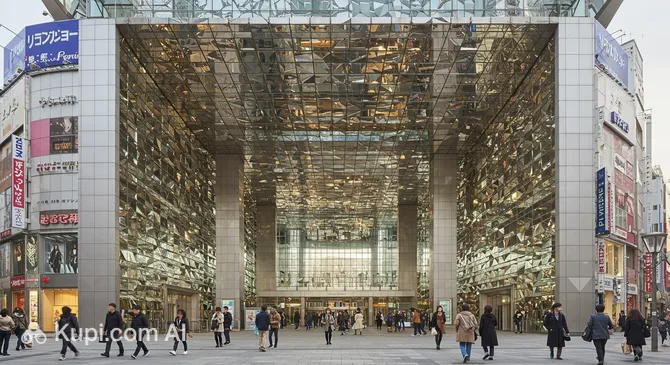
For those who prefer shopping in larger complexes, Tokyu Plaza Omotesando Harajuku is worth your attention. This stylish shopping center, located on the border with the Shibuya district and easily accessible from Meguro, offers a wide selection of famous brand stores, fashion, cosmetics, and restaurants. Its futuristic entrance with a mirrored escalator is an attraction in itself.

Tokyu Plaza Omotesando Harajuku. Illustration.
Source: Kupi.com AI

Traveler photos:

While Meguro is not famous for large traditional markets like Tsukiji, you can find small local weekend markets or farmers' fairs here, especially near parks or temples. For a larger-scale market experience, consider trips to other parts of Tokyo. However, strolling through the streets of Meguro, there is always a chance to stumble upon charming pop-up sales or flea markets with unique goods.

As souvenirs from Meguro, you can bring home designer interior items, handmade ceramics found in small galleries or antique shops, unique clothing from local designers, or vintage items. Traditional Japanese sweets found in local confectioneries and high-quality Japanese tea are also popular. Don't forget to check out the stationery stores — Japanese stationery is famous for its quality and design.

Most shops in Meguro, as in Tokyo as a whole, are open from about 10:00-11:00 to 20:00-21:00. Large shopping centers may stay open longer. Credit cards (Visa, Mastercard, AmEx) are accepted almost everywhere, but it's always useful to have some cash on hand, especially for purchases in small shops or at markets. Contactless payments and mobile app payments are also becoming increasingly common.

For foreign tourists in Japan, a tax refund system (Tax-Free) is in place. Look for stores with the "Japan Tax-Free Shop" logo. Usually, to qualify for a tax refund, you need to make a purchase of a certain amount (most often from 5,000 yen excluding tax) in one store on one day and present your passport. The refund can be obtained either immediately in the store or at a special refund point at the airport.

Reached the end of the page?

That means the route is fully explored