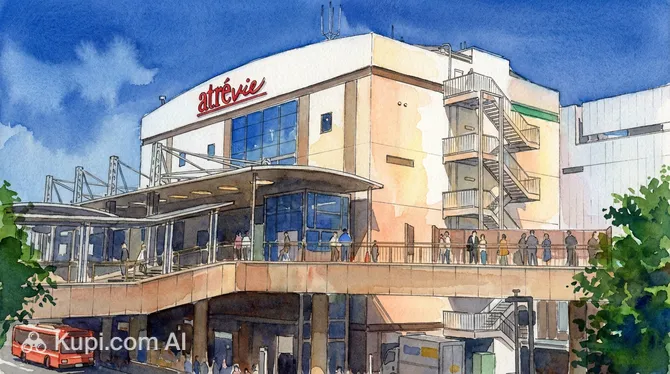
Located in the western part of the Tokyo Metropolis, Kamirenjaku is a charming and tranquil residential area within the city of Mitaka. This location is perfect for those who want to experience an authentic Japanese suburban atmosphere while remaining in close proximity to the bustling heart of the mega-city. The name translates to "Upper Renzaku" and boasts a fascinating history: it is derived from the Japanese name for the waxwing—a bird that was once the rightful master of these parts.
Geographically situated in Tokyo Prefecture, Japan, the area is home to over 194,000 people. Kamirenjaku is famous for its peaceful, contemplative environment, where modern middle-class residential complexes harmoniously coexist with cozy streets. Unlike the neon districts of central Tokyo, life flows at a steady pace here, making the area an excellent base for relaxation after busy sightseeing tours.
Kamirenjaku. Illustration.
Source: Kupi.com AI
While the district itself is not oversaturated with loud tourist sites, its main value lies in its convenient location. The famous Ghibli Museum is literally within walking distance, and the prestigious Seikei University is located right within the district. The rich history of Kamirenjaku's development as part of the 20th-century urban expansion has created a well-developed infrastructure and a comfortable environment.
Visiting this corner of Tokyo allows you to see the everyday life of the Japanese people without tourist embellishments. We recommend Kamirenjaku as a quiet place to stay, combining suburban silence with excellent transport accessibility to the capital's main attractions.
Weather Overview
The climate and weather in Kamirenjaku are determined by its location in the humid subtropical zone. The district is characterized by a clear change of the four seasons, each bringing its own colors to the suburban landscape. Summers here are hot and humid, especially in July and August, when average daytime temperatures often exceed 30°C. Winters, by contrast, are mild and mostly dry; snow falls rarely and usually melts quickly.
The most comfortable times to visit are spring (March–May) and autumn (September–November). During these periods, pleasant moderate temperatures of around 18–24°C are established, and nature delights the eye with either cherry blossoms or the bright colors of maples. Expect a warm summer with occasional typhoons and rain, peaking in June and September, and cool, sunny winters.
Due to its location at an altitude of 59 meters above sea level, the area is well-ventilated, which helps to endure the summer heat more easily compared to the densely built-up central blocks of Tokyo. When packing your suitcase, aim for layered clothing for spring and autumn, and for summer walks, be sure to bring sunscreen and an umbrella.
Average monthly temperature
Average monthly precipitation
Interesting Facts
Kamirenjaku is a place full of hidden charm and interesting details that reveal themselves to the attentive traveler. Here are a few facts about the area:
Ornithological roots: The district's name comes from the Japanese word "renzaku" (連雀), which means waxwing. These birds once lived in abundance in the local forests.
Geographical hierarchy: The existence of "Upper Renzaku" (Kamirenjaku) is closely linked to the neighboring district of Shimorenjaku ("Lower Renzaku"), reflecting historical administrative divisions and topography.
Educational hub: The district is home to Seikei University, considered one of Tokyo's prestigious private universities, giving the area the status of an intellectual suburb.
Typical suburb: With a population of approximately 194,460, the district is a classic example of a Japanese "bedroom community," where infrastructure is maximized for the comfort of families and office workers.
Legendary neighbor: Kamirenjaku borders Inokashira Park and is within walking distance of the Ghibli Museum, making it a strategically important spot for fans of Japanese animation.
How to Get There
The transport accessibility of Kamirenjaku is one of its main advantages. The district is excellently integrated into the overall network of the Tokyo metropolitan area, making travel between it and the city center fast and comfortable. The main passenger flow is handled by railway lines and an extensive network of bus routes, allowing travelers to reach key city hubs in 30–40 minutes.
Travelers arriving in Japan through international air hubs typically use Haneda Airport (HND) or Narita Airport (NRT). Although there are no airports in Kamirenjaku itself, high-speed trains and limousine buses provide reliable connections to these transport hubs. Detailed information on routes and travel times can be found in the section on how to get to Kamirenjaku.
The main transport hub serving the area is Mitaka Station. It is located on the JR Chuo Line, which connects the western suburbs with central Tokyo districts such as Shinjuku and Tokyo Station. During peak hours, trains run at frequent intervals, ensuring seamless communication for thousands of residents and visitors.
Station
Passenger traffic
Distance
Kichijōji Station
16
2 km
Ogikubo Station
16
6 km
Nakano Station
16
10 km
Yoyogi-Uehara Station
16
12 km
Shin-Ōkubo Station
16
13 km
For those who prefer buses, there are many routes connecting residential quarters with subway and railway stations. If you plan to travel by car, it is worth considering potential traffic jams on main highways during morning and evening hours. Overall, using public transport remains the most efficient and fastest way to get around.
Main Attractions
Although Kamirenjaku is primarily a quiet residential area, it serves as an ideal starting point for visiting iconic locations in the Tokyo area. The main magnet for travelers remains the legendary Ghibli Museum, dedicated to the work of Hayao Miyazaki. The museum is located in the immediate vicinity, and a walk there through the shady suburban streets is a treat in itself for animation fans.
At the heart of the district lies Seikei University, one of Japan's significant educational institutions. Its campus brings a youthful energy and an intellectual flair to the atmosphere. The architecture of Kamirenjaku's residential blocks also deserves attention: here, you can see how the functionality of modern Japanese homes combines with a traditional desire for comfort and greenery.
For those seeking tranquility, the area offers many cozy corners typical of Japanese suburbs. These include small shrines tucked between houses and local shopping streets where life has remained unchanged for decades. The lack of tourist crowds allows visitors to fully enjoy the authenticity and slow pace of the Japanese capital, making a visit to Kamirenjaku a truly special experience.
Local Cuisine
The gastronomic scene in Kamirenjaku is a true paradise for those seeking authentic Japanese cuisine without tourist surcharges. The area features many cozy establishments aimed at locals, which guarantees high-quality products and traditional flavors. Be sure to try the classic ramen with its rich broth, as well as seasonal udon and soba noodle dishes.
For a quick and satisfying lunch, restaurants specializing in donburi (rice bowls with various toppings) and fresh sushi are ideal. In the evening, the district comes alive thanks to small izakayas—Japanese pubs where various snacks are served with beer or sake, ranging from yakitori (chicken skewers) to fried tofu. In such places, you can feel the true spirit of Japanese hospitality.
Local confectioneries and tea shops deserve special attention. Given the proximity to park areas, you will often find cafes with artisanal desserts and matcha lattes, which make a great conclusion to a walk. The food culture in Kamirenjaku emphasizes attention to detail and respect for tradition, offering honest and delicious food at affordable prices.
Travel Tips
Preparing for a trip to Kamirenjaku will make your journey through Japan more comfortable and rewarding. Here are some practical tips to help you settle into this cozy area more quickly.
Seasonal clothing: In summer, bring light clothing made of natural fabrics, as Tokyo can be very humid. In winter, a mid-season jacket is sufficient. Be sure to wear comfortable walking shoes and remember the dress code when visiting temples—clothing should be modest.
Transport cards: Purchase a Suica or Pasmo card as soon as you arrive. This will save you from having to buy tickets for every subway or bus trip. You can top them up at any station terminal.
Financial matters: Cash (yen) is still preferred in Japan, especially in the small shops of Kamirenjaku. Nevertheless, international cards are accepted in supermarkets and large restaurants. It is best to withdraw money from ATMs in 7-Eleven stores.
Connectivity: You will need the internet for navigation. The best option is to rent a Pocket Wi-Fi or buy a tourist SIM card/eSIM right at the airport. Free Wi-Fi is less common in residential areas than in the center.
Local etiquette: In Japan, it is customary to greet with a slight bow. Try not to speak loudly on public transport and do not use your phone for calls in train carriages—it is considered bad manners.
Health and pharmacies: Drugstores are common in the area, but many medications are prescription-only. We recommend having a basic first-aid kit and insurance.
What to avoid: Do not leave tips in restaurants or taxis—it may confuse or even offend the staff. All service is already included in the price.
Tourist secret: Use Kamirenjaku as a quiet haven. It is quieter and cheaper than the center, and the Ghibli Museum is literally around the corner.
May your introduction to this welcoming district become one of the warmest memories of your trip. Have a pleasant journey!
Entertainment & Nightlife
In Kamirenjaku, the nightlife and entertainment industry follow the overall quiet rhythm of a residential district. You won't find noisy discos or massive concert halls here, but you can enjoy the cozy atmosphere of local establishments. Most activity is centered around small cinemas, bowling alleys, and game centers popular with locals and students from Seikei University.
Evenings in the area are best spent in classic Japanese bars known as izakaya. These are ideal places to try local snacks and drinks in the company of colleagues or friends after a work day. The crowd is friendly, and the atmosphere encourages long, relaxed conversation. If you crave bright lights, nightclubs, and large-scale shows, Shinjuku or Shibuya—world-class nightlife centers—are just 30–40 minutes away by train.
Safety in Kamirenjaku is at the highest level, making evening strolls through the well-lit streets absolutely comfortable. For late-night travel after trains stop running, taxis can easily be hailed via mobile apps. Kamirenjaku offers the kind of relaxation that allows you to recharge and gain strength before new adventures in the metropolis.
Parks & Museums
The cultural and natural life of Kamirenjaku is closely linked to its surroundings. While the residential area itself mainly contains small, cozy squares and playgrounds for local residents, true regional gems are located within walking distance. The main one is the Ghibli Museum in Mitaka, which is a must-visit for all lovers of art and animation.
For outdoor strolls, residents often choose nearby Inokashira Park—one of Tokyo's most beautiful and oldest parks. Here, you can rent a boat on the lake, visit a small zoo, or simply enjoy the cherry blossoms in spring. The park serves as a natural extension of the urban environment, offering a respite from the bustle of the metropolis.
History and architecture enthusiasts will find it interesting to explore the Seikei University campus, where modern academic buildings are harmoniously integrated into the green landscape. Good transport links also allow for quick access to major museums in central Tokyo, yet the peaceful atmosphere of Kamirenjaku's local park zones creates a unique sense of harmony with nature right within the city limits.
Getting Around
Public transport in Kamirenjaku operates with the impeccable precision for which Japan is famous. The transport system is based on JR East trains and an extensive network of city buses. The main link to the rest of the world is Mitaka Station, served by Chuo Line trains that take passengers to the heart of Tokyo in just half an hour.
For fare payment, it is most convenient to use Suica or Pasmo contactless cards. These cards work on all types of transport, including buses, and are also accepted at vending machines and many shops. The fare depends on the distance, and the card is validated both when entering and exiting the station.
Within the district itself, cycling is very popular—it is convenient thanks to the flat terrain and the availability of equipped parking at stations. Walking is also a pleasure due to the safety and well-maintained sidewalks. Please note that transport can be crowded during peak hours, so tourists are recommended to plan trips during off-peak times for greater comfort.
Accommodation
Accommodation options in Kamirenjaku are ideal for travelers who value home comfort and want to save money without sacrificing quality. Unlike the central districts of Tokyo, where high-rise business hotels dominate, small guest houses, modern apartments, and traditional Japanese minshuku prevail here. This is a great opportunity to live in a typical Japanese apartment and feel like a local.
Accommodation prices in this area are significantly lower than in Shinjuku or Ginza, while the quality of service remains at the traditionally high Japanese level. Kamirenjaku is particularly popular among budget travelers and couples, as the quiet environment promotes quality rest, and proximity to Mitaka Station allows for quick access to any attractions.
We recommend booking accommodation in advance, especially during the cherry blossom season (late March to April) and the autumn foliage period, as demand for cozy guest houses in the suburbs increases at these times. Popular online booking systems offer a wide choice of options, from minimalist hostels to spacious family apartments with kitchens.
Nearby Cities
Kamirenjaku serves as an excellent starting point for exploring the surroundings and the western part of the Tokyo metropolitan area. The well-developed railway network makes it easy to plan day trips to neighboring cities, each of which has its own unique character and set of attractions.
Just a few kilometers away is the city of Musashino, known for its picturesque parks and lively shopping zones. It is also worth visiting Chofu, home to the ancient Jindaiji Temple and a magnificent botanical garden. If you are interested in modern residential areas with developed infrastructure, head to Nishitokyo or the cozy Koganei.
Exploring these nearby cities will allow you to see multifaceted Japan beyond the standard tourist routes. Each of these destinations offers its own parks, temples, and local museums, making your journey through the Kanto region rich and varied.
Shopping & Souvenirs
Shopping in Kamirenjaku is focused on everyday comfort and offers guests a chance to immerse themselves in the atmosphere of typical Japanese life. Here you will find classic shopping streets called shotengai, where small family-owned shops stand alongside modern supermarkets. These are pleasant places to buy fresh fruit, local sweets, or Japanese household items.
For larger-scale shopping, residents usually head to Mitaka or Kichijoji stations, which house major department stores and shopping centers. There, you can find branded clothing, electronics, and cosmetics. Kamirenjaku itself also features 24-hour convenience stores (konbini), where you can buy necessities or a quick snack at any time of day or night.
If you are looking for unusual gifts, be sure to check out the souvenir shops near the Ghibli Museum—they sell unique items related to the characters of legendary animated films. Most shops in the area operate from 10:00 to 20:00, and payments are accepted in cash, by credit card, or via popular transport cards like Suica and Pasmo.