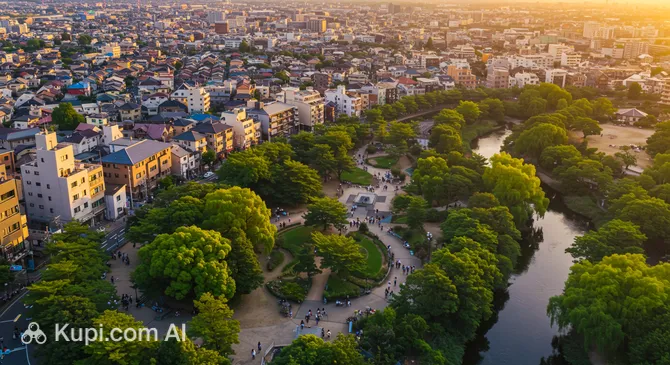
Suginami is a cozy and predominantly residential district in the western part of the Japanese capital, offering travelers a rare opportunity to see the authentic, non-tourist side of Tokyo. Located in Tokyo Prefecture, this area is home to more than 580,000 people. Unlike the neon jungle of Shinjuku, the district charms visitors with its calm atmosphere, well-maintained streets, and abundance of greenery.
Suginami. Illustration.
Source: Kupi.com AI
The rich history of Suginami can be traced through its ancient shrines and antique shops. Despite its status as a "bedroom community," the area is buzzing with life: from the youth culture in Koenji to the exquisite restaurants in Ogikubo. Visiting this part of Japan allows you to feel the rhythm of everyday life for ordinary Tokyoites without losing access to the metropolis's main attractions.
Weather Overview
Suginami is located in a temperate climate zone where all four seasons are clearly defined. Summer here is hot and quite humid, especially in July and August when temperatures often exceed **+30°C**. Winters, by contrast, are mild and dry: the thermometer rarely drops below zero, and sunny days are a delight to the eye.
The most comfortable times to visit are spring (March–May) and autumn (October–November). During these periods, the weather in Suginami is most favorable for long walks, and nature is painted in the vibrant colors of cherry blossoms or red maples. It's worth considering that dense urban development creates a "heat island" effect, so summer evenings here can be slightly warmer than in the suburbs.
Average monthly temperature
Average monthly precipitation
Interesting Facts
The **Omiya Hachimangu** shrine, founded in 1053, is often called the "navel of Tokyo" by locals due to its geographical position in the very center of the capital.
The district is officially recognized as one of the main centers of the Japanese **animation industry**: many studios are concentrated here, and there is a specialized Animation Museum.
The Ogikubo and Nishi-Ogikubo neighborhoods are a true paradise for collectors, thanks to the high concentration of **antique shops** and vintage stores.
The Koenji neighborhood is famous as a center of youth subculture, where second-hand clothing stores and independent music venues thrive.
How to Get There
Thanks to an extensive public transport network, Suginami is easily accessible from any point in the Japanese capital. The main transport arteries are the **Marunouchi** subway line and JR railway lines, which allow you to reach the central hub of Shinjuku in just 10-15 minutes. Detailed information about routes and tickets can be found on the page how to get to Suginami.
The nearest major international hub to the district is **Narita** Airport (NRT), located about 60 kilometers away. A trip from there by express train or limousine bus will take between an hour and an hour and a half, depending on traffic and the chosen type of transport.
Railway service within the district is represented by several key stations, such as **Koenji**, **Asagaya**, and **Ogikubo**. These stations serve as important transfer hubs connecting residential neighborhoods with Tokyo's business center.
Station
Passenger traffic
Distance
Ogikubo Station
16
2 km
Nakano Station
16
3 km
Kichijōji Station
16
5 km
Yoyogi-Uehara Station
16
5 km
Shin-Ōkubo Station
16
6 km
Yoyogi Station
18
6 km
Main Attractions
One of the district's most vibrant cultural highlights is the **Suginami Animation Museum**. This is a must-visit spot for all anime fans: here you can not only learn about the history of iconic series but also try your hand at being an animator using modern digital technologies.
History and architecture enthusiasts should head to the **Omiya Hachimangu** shrine. This majestic structure, surrounded by ancient trees, offers a sense of tranquility and allows you to touch traditions dating back to the 11th century. Near Wadabori Park, you'll also find the **Suginami City Museum**, which features interesting archaeological finds and everyday objects from different eras.
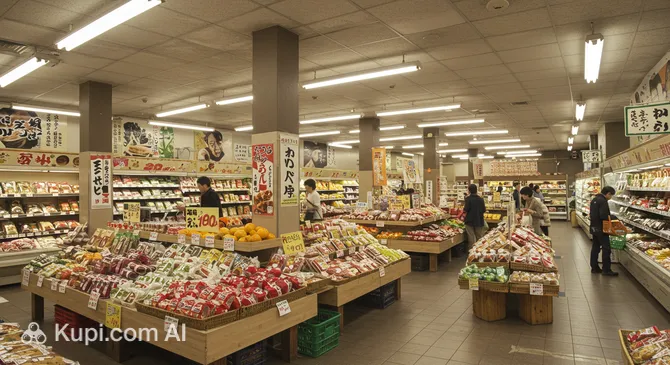
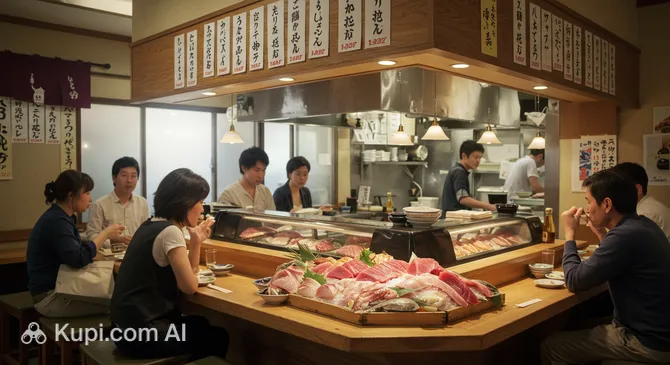
If you're looking for a unique gastronomic experience, be sure to visit the Tensuke restaurant, famous for its mastery of tempura preparation. Another landmark spot is Maguro Mart — a true paradise for fresh tuna lovers, where every dish turns into a small culinary show.
Tensuke. Illustration.
Source: Kupi.com AI
Traveller photos:
Local Cuisine
The gastronomic scene in Suginami reflects its residential character: small family-run establishments predominate here, offering honest and delicious Japanese food at reasonable prices. The Ogikubo area, for example, is considered one of the best places in Tokyo to try classic **ramen** or hearty udon.
A warm atmosphere prevails in local "izakayas" (Japanese pubs), and you can always find fresh seafood on the menu. For fish lovers, Maguro Mart is a must-visit, specializing in dishes made from the highest quality tuna.
Maguro Mart. Illustration.
Source: Kupi.com AI
Traveller photos:
Fans of traditional techniques should visit Tensuke, which serves perhaps the best tempura in the area. It is customary to accompany the meal with a cup of fragrant green tea, and in the evening, locals enjoy ordering cold Japanese beer or warmed sake. Prices in Suginami establishments are noticeably lower than in Ginza or Shibuya, making a local gastro-tour particularly pleasant.
Travel Tips
A trip to Suginami is a great chance to see Tokyo from the inside, and to ensure your trip goes smoothly, we have prepared some practical tips.
Clothing and accessories: Dress according to the season, but remember comfortable shoes — you'll be doing a lot of walking. No special dress code is required for visiting temples, but it's worth looking neat. Be sure to bring a Japanese-style power adapter (Type A).
Transport cards: To pay for subway and bus fares, it's best to purchase an IC card (Suica or Pasmo). This will save you from having to buy paper tickets every time.
Cash: Despite Japan's high-tech reputation, small shops and old restaurants in Suginami still prefer cash. Major cards are accepted in supermarkets and shopping centers.
Peak hours: Try not to use the subway on weekdays from 7:30 to 9:00 and from 17:00 to 19:00. At these times, trains heading toward the center and back can be critically overcrowded.
Safety: The district is considered one of the calmest and safest in the capital. Even night walks here cause no concern; however, always follow basic precautions.
Language barrier: English translations are often available at stations and in the menus of large cafes, but knowing a few phrases like "arigato" (thank you) or "sumimasen" (excuse me) will go a long way in communicating with locals.
Transport etiquette: It is customary to maintain silence on Japanese trains. Talking on the phone is considered rude, and be sure to use headphones for listening to music.
Enjoy every moment in this cozy corner of Tokyo, and it will surely reveal its secrets to you!
Entertainment & Nightlife
While Suginami may not compete with Shinjuku in terms of night-time drive, fans of evening entertainment certainly won't be bored here. The epicenter of activity is the **Koenji** area, known for its underground bars, live concerts, and independent clubs. Creative youth gather here, and the atmosphere is filled with a spirit of freedom and rock and roll.
In Ogikubo, you'll find more laid-back establishments — small wine bars and classic Japanese karaoke boxes where you can have a great time with friends. If you crave a massive party with world-class DJs, the capital's main dance floors in Shinjuku are just 15 minutes away by subway.
Safety at night in Suginami is excellent. The streets are well-lit, and to return to your hotel after the subway closes, you can always use a taxi, which is easy to call via mobile apps or hail directly on the street.
Parks & Museums
For those seeking solitude in the fresh air, Suginami offers several beautiful green zones. **Otaguro Park** is especially famous for its traditional Japanese gardens and picturesque pond; in autumn, they organize a spectacular night illumination of the red maples. No less popular is **Wadabori Park**, which is perfect for leisurely walks along the river.
The district's museum program can surprise even the most seasoned tourist. The main pride is the **Suginami Animation Museum**, where you can trace the entire development path of Japanese anime. If you're interested in local history, stop by the **Suginami City Museum**, whose exhibits tell the story of people's lives in this area from ancient times to the present day.
Also within reach is **Tekigaiso** park, the former residence of Prime Minister Fumimaro Konoe, which is of historical and architectural interest. These places provide a chance to take a break from the city bustle while remaining in the heart of the metropolis.
Getting Around
The public transport system in Suginami runs like a Swiss watch. The backbone of travel is the subway, including the **Marunouchi** and **Toshin** lines, which connect the district with Tokyo's largest hubs. Stations are very conveniently located, and from almost any point in the district, the nearest subway entrance can be reached on foot in 10-15 minutes.
In addition to the subway, Suginami has a well-developed network of bus routes. They are especially useful for traveling within the district when you need to reach remote parks or shrines. Payment is made upon boarding or exiting using universal cards like **Suica** or **Pasmo**, which can be topped up at any station machine.
For short trips, locals often use bicycles, which can be rented at specialized parking lots. If you prefer the comfort of a taxi, remember that it is a fairly expensive mode of transport but indispensable at night after the trains stop running (around midnight).
Accommodation
The choice of accommodation in Suginami has its own specifics: there are few large chain hotels, but cozy apartments and small **business hotels** are in abundance. This is an ideal option for those planning to stay in Tokyo for a week or longer, as prices here are significantly lower than in central tourist districts.
**Guesthouses** are also popular, where you can meet travelers from all over the world. The areas around Koenji and Ogikubo stations are the most convenient for staying due to their proximity to shops and restaurants. If you need a luxury hotel with a panoramic view, it's better to consider options in neighboring Shinjuku, which is easily accessible by train.
It is recommended to book accommodation in Suginami in advance, especially during the cherry blossom season or autumn foliage, when demand for affordable options in Tokyo rises sharply. Using popular international booking services will help you find the best value for money.
Nearby Cities
The location of Suginami makes it an excellent starting point for exploring not only the center of the capital but also other interesting corners of the Kanto region. Just a few minutes away by train is the neighboring district of Nakano, famous for its shopping arcade and geek culture, as well as the massive metropolis of Tokyo with its endless possibilities.
Destinations such as ancient Kamakura with its giant Buddha statue or picturesque Hakone, offering stunning views of Mount Fuji, are perfect for full day trips. You can also head north to the temples of Nikko to see masterpieces of Japanese architecture included in the UNESCO World Heritage list.
Proximity to major transport hubs makes it easy to plan routes of any complexity. Don't miss the chance to visit Setagaya, stop by Honcho, or Nerima to dive even deeper into the atmosphere of modern Japan.
Shopping & Souvenirs
Shopping in Suginami is primarily about searching for unique items and immersing yourself in local flavor. The **Koenji** area is considered a true Mecca for lovers of vintage and second-hand clothing: dozens of boutiques here offer rare finds at affordable prices. Meanwhile, in **Ogikubo**, it's worth searching for Japanese antiques and art objects from years past.
For more traditional shopping, the **Asagaya Pearl Center Shopping District** is ideal. This covered shopping street is filled with stalls selling fresh produce, traditional Japanese sweets, and handmade souvenirs. You can spend several hours here simply enjoying the atmosphere of old Tokyo.
Most shops are open from 10:00 to 20:00. In large retail outlets, a **Tax Free** system is available for tourists, allowing you to get a refund on the sales tax. Although the district is not overloaded with massive malls, its local markets and authentic shops will give you many more vivid impressions than standard shopping centers.
We use cookies and services to collect user information. This is essential for the functioning of the site and for marketing purposes. You can find out more in .