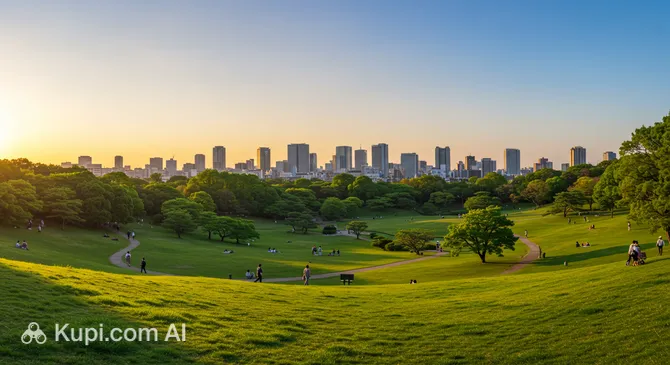
Nishitokyo is a cozy and modern city located in the western part of the Tokyo Metropolitan Area on the island of Honshu in Japan. The city was formed in 2001 through the merger of two municipalities, which is reflected in its name, literally meaning "West Tokyo." Despite its relatively young official status, the area has deep roots dating back to the Kamakura period, which you can learn more about in the section on the city's history.
Nishitokyo. Illustration.
Source: Kupi.com AI
Occupying an area of about 15.85 km², Nishitokyo is a typical and very comfortable "bedroom community" of the Japanese capital. Over 207,000 people live here, creating the atmosphere of a lively yet peaceful residential suburb. Unlike the neon jungles of central Tokyo, Nishitokyo is famous for its abundance of greenery, well-kept gardens, and public parks that offer residents and guests a long-awaited sense of tranquility.
One of the city's key features is its industrial significance: it is home to the headquarters of the famous Citizen Holdings corporation, which produces electronics and watches. For travelers, Nishitokyo is primarily interesting for its spiritual centers, such as the Tanashi Shrine. Visiting this city is a wonderful opportunity to see real, non-touristy Japanese life while remaining just a few dozen minutes away from the metropolis's main attractions.
Weather Overview
Nishitokyo is characterized by the moderate climate of the Kanto region with distinct seasonality. Summers here are usually hot and humid; the average maximum in August reaches 30.6°C. During this period, frequent rain is possible, and the atmosphere can be quite muggy, especially in July and August, when the number of humid days exceeds half the month. The abundance of city parks and gardens in Nishitokyo helps make the summer heat more bearable compared to the densely built-up city center.
Winter months in the city are quite cold but predominantly sunny and dry. In January, the average temperature is about 4.4°C, while at night the thermometer can drop to zero. Snow falls rarely and usually melts quickly. Autumn and spring are considered the most comfortable seasons for visiting: at this time, mild temperatures (14–22°C) set in and nature is painted in bright colors. Detailed information about the weather in Nishitokyo by month can be found on our dedicated page.
When planning a trip, it is worth considering the rainy season (tsuyu) in June, as well as the typhoon season in September and October, when the highest amount of precipitation falls. Overall, the city's climate is favorable for walks most of the year if you have suitable clothing and follow the forecasts.
Average monthly temperature
Average monthly precipitation
Interesting Facts
Shrine of the Five Dragons: Tanashi Shrine venerates five dragon gods of different colors, each responsible for a specific area of life: luck, education, business, and more.
Doll Festival: The city hosts an unusual annual festival called the "Tanabata Teru Teru Tunnel," during which the temple grounds are decorated with hundreds of traditional teru-teru bozu dolls, intended to "summon" good weather.
The Heart of Watchmaking: Nishitokyo is home to Citizen Holdings, housing the headquarters and production facilities of one of the world's largest watch manufacturers.
City of Communities: Nishitokyo has more than 43 officially registered interest groups — ranging from coffee lovers and board game clubs to sports clubs and networking associations.
Young Status: Although the history of these lands is ancient, the city of Nishitokyo as an administrative unit appeared on the map of Japan only at the beginning of the 21st century, becoming the first case of two cities merging in the Tokyo region in the new millennium.
How to Get There
Thanks to its location in the Tokyo region, Nishitokyo boasts excellent transport accessibility. The city is integrated into a dense railway network, making it easily reachable from both central Tokyo and neighboring prefectures. Detailed information on routes and tickets can be found in the section on how to get to the city.
While Nishitokyo does not have its own airport, travelers can easily use Tokyo's major aviation hubs. Haneda and Narita airports are connected to the city by express trains and bus lines. From Haneda, the journey by public transport takes about an hour, while from Narita, it takes a little over an hour and a half with a transfer in central Tokyo.
The railway service is the "heart" of Nishitokyo's transport system. One of the key points is Tanashi Station, located on the Seibu-Shinjuku line. Trains from here regularly depart for Shinjuku Station, one of the world's major transport hubs, with a travel time of about 30-40 minutes. Hibarigaoka and Hoya stations also play important roles, providing connections to other parts of the metropolis.
Station
Passenger traffic
Distance
Kichijōji Station
16
5 km
Ogikubo Station
16
8 km
Nakano Station
16
12 km
Yoyogi-Uehara Station
16
14 km
Shin-Ōkubo Station
16
15 km
It is worth remembering that during morning (7:00 to 9:00) and evening (17:00 to 19:00) peak hours, trains can be very crowded. For a comfortable journey, it is recommended to plan your trips during the daytime. Within the city, there is also a developed network of bus routes connecting residential neighborhoods with railway hubs.
Main Attractions
Although Nishitokyo is considered a residential area, there are several truly significant places worth visiting for their unique atmosphere. The city's main spiritual gem is the Tanashi Shrine. Founded back in the Kamakura period, it is considered a powerful "power spot" where five dragon gods are worshipped. Visitors are drawn here not only by the historical architecture but also by the chance to receive unique omikuji (fortunes) and beautiful goshuin (calligraphic seals).
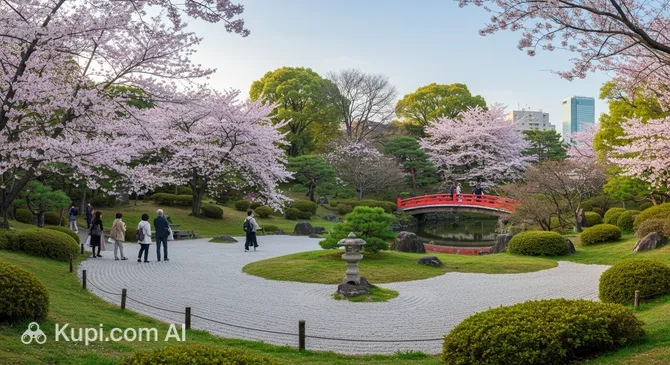
For those seeking a peaceful escape into nature, Musashiseki Park is a must-visit. This picturesque space with a pond is perfect for leisurely strolls under the shade of trees. It is especially beautiful during the cherry blossom season or when the autumn leaves change color, transforming the park into a vibrant canvas that attracts photography enthusiasts and those seeking quietude.
Musashiseki Park. Illustration.
Source: Kupi.com AI
Traveler photos:
Another interesting site is the Hikawa Shrine in Minamisawa. This small but highly revered shrine is hidden among the greenery of a city block and offers a sense of seclusion. Such places allow tourists to experience the traditional Japanese way of life, which is preserved away from the noisy tourist routes of central Tokyo Prefecture.
Local Cuisine
Nishitokyo's gastronomic scene will delight fans of authentic everyday Japanese cuisine. There are no pretentious Michelin-starred restaurants here, but there is an abundance of cozy "locals only" spots where food is prepared with soul. The basis of the local diet, as in the entire Kanto region, consists of ramen, sushi, and various donburi (rice bowls with toppings). Many small cafes offering quick and hearty lunches are concentrated along the main streets and near stations.
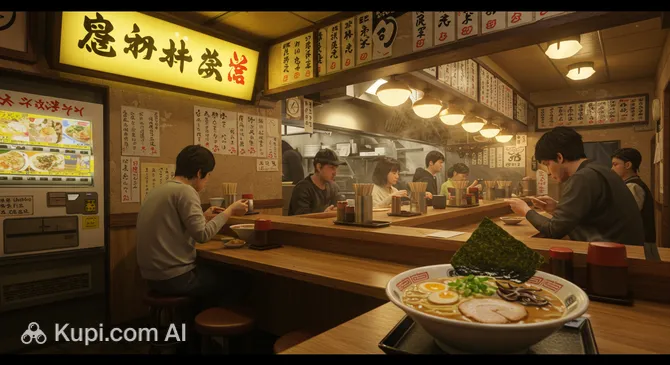
If you are a fan of hearty soup, be sure to visit Jiro Ramen Hibarigaoka. This establishment is known for its massive portions and rich broth, which is highly appreciated by locals. Another great option for noodle lovers is Ramen Chop, where you can try various versions of this popular dish.
Jiro Ramen Hibarigaoka. Illustration.
Source: Kupi.com AI
Traveler photos:
The food culture in Nishitokyo is closely tied to the rhythm of life in a suburban city. In the evening, residents often gather in small izakayas — Japanese gastro-pubs where various snacks (yakitori, tempura, edamame) are served with drinks. For drinks, try the local beer or classic sake. Simple, straightforward, and high-quality food is the main characteristic of this city's cuisine, allowing you to experience the true taste of Japanese daily life.
Travel Tips
Nishitokyo is a wonderful place for those who want to see everyday Japanese life at a comfortable pace. To make your stay as pleasant as possible, we have prepared some practical tips.
Clothing and Essentials: Choose clothing according to the season. In the Tokyo region, summers are very humid and hot, so lightweight breathable fabrics and sunscreen are essential. In winter, the air is dry and cool, so a warm jacket is required. Important: when visiting shrines, try to avoid overly revealing clothing, although there is no strict dress code.
Transport: Be sure to purchase an IC card (Suica or Pasmo) and top up its balance. This will save you from having to buy paper tickets every time and figure out the fares. Use navigation apps like Google Maps to avoid getting confused with transfers.
Finances: Although cards are increasingly accepted, cash is still important in Japan. Keep a supply of yen for payments in small shops and temples. You can withdraw money from ATMs in 7-Eleven stores (they operate 24/7 and accept international cards). There is no tipping culture in Japan; attempting to leave one may embarrass the staff.
Health and Safety: Nishitokyo is a very safe city. Pharmacies are easy to find by the sign "薬" (Kusuri). If emergency assistance is needed, there are multilingual hotlines for tourists in Tokyo.
Communication: English is less common in Nishitokyo than in central Tokyo. Learn a few basic phrases: "Arigatou" (thank you), "Sumimasen" (excuse me). Wi-Fi is available in cafes and at stations, but for constant connectivity, it is better to rent a pocket router or buy a tourist SIM card.
Local Etiquette: Maintain silence on public transport — in Japan, it is not customary to talk loudly (including on the phone) on trains. When entering rooms with tatami mats, be sure to remove your shoes.
What to Avoid: Do not eat or drink while walking on the street — it is considered impolite. Also, strictly follow the rules for waste sorting if using public bins.
Extra Tip: Visit Tanashi Shrine on a weekday morning — you can enjoy the silence and beauty of the place without the crowds of worshippers.
We hope these tips help you feel at home in Nishitokyo and fully enjoy the hospitality of this peaceful Japanese city. We wish you an unforgettable journey!
Entertainment & Nightlife
Nishitokyo's entertainment scene reflects its character as a peaceful residential suburb. Here you won't find noisy nightclubs with massive dance floors or 24-hour entertainment districts. Instead, the city offers cozy venues for evening relaxation with friends. The local crowd prefers spending time in small bars and restaurants located near key stations such as Tanashi or Hibarigaoka.
If you're looking for a place for a pleasant dinner with a glass of wine, check out Pasta and Wine Toretate Dining Mitaka or stop by Mia Bocca. These establishments offer a relaxed atmosphere and quality cuisine, perfect for ending a busy day. Overall, the city's nightlife winds down quite early, following the rhythm of working residents.
For those craving active night drive, the lights of Shinjuku or Shibuya are just a 30 to 50-minute train ride away. Daytime entertainment in Nishitokyo itself is centered in parks and local cultural centers. The city often organizes local festivals and fairs that allow for a deeper immersion into the local community. For safe night walks, Nishitokyo is ideal — the crime rate is extremely low, and the streets are well-lit.
Parks & Museums
Nishitokyo is rightfully considered one of the greenest corners of the metropolitan region. The city's layout successfully combines residential development with numerous islands of nature. The main place for relaxation and outdoor walks is Musashiseki Park. This park is famous for its pond, around which picturesque paths are laid, especially popular during the cherry blossom season and the time of vibrant autumn maples.
Musashiseki Park. Illustration.
Source: Kupi.com AI
Traveler photos:
From a cultural leisure perspective, the city offers not so much classic museums as historically significant sites. The spiritual and cultural heart of Nishitokyo is the Tanashi Shrine. Its architecture and rich history serve as a museum exhibit in themselves, allowing guests to witness the heritage of the Kamakura period firsthand. Also worthy of attention is the Hikawa Shrine in Minamisawa, which harmoniously complements the city's natural landscape.
For residents and guests of Nishitokyo, parks are not just recreation zones but also venues for local festivals and sports events. The lack of large art galleries is compensated for by the proximity to Tokyo, while Nishitokyo itself remains an ideal place for those who appreciate peace, clean air, and leisurely strolls among traditional Japanese architecture and well-tended gardens.
Getting Around
Nishitokyo's transport system is a flawlessly functioning mechanism, closely linked to Tokyo's city-wide network. The main mode of travel here is the railway. The Seibu-Shinjuku Line is the city's main transport artery with Tanashi, Hoya, and Hibarigaoka stations. Trains run with enviable regularity; however, you should consider the difference between "Local" and "Express" trains: the latter skip smaller stations, significantly saving travel time to the center.
In addition to trains, an extensive network of buses operates throughout Nishitokyo. They connect residential neighborhoods distant from the stations with railway hubs. Buses run strictly according to the schedule found at each stop or in special apps. Boarding usually occurs through the middle door, and payment is made at the exit to the driver, though rules can vary by carrier.
For fare payment, it is most convenient to use contactless IC cards such as Suica or Pasmo. They are accepted on all trains and buses in the region and can also be used for payment at vending machines and konbini stores. If you prefer alternative ways of getting around, taxi services are available in the city and can be hailed via apps (e.g., Go or Uber), though this will be significantly more expensive than public transport. Bicycles are also a very popular means of transport among locals due to the flat terrain and developed infrastructure.
Accommodation
The choice of accommodation directly in Nishitokyo may seem limited compared to central tourist areas of Tokyo. Since the city is a residential suburb, there are almost no major hotel chains or luxury resort complexes. The main stock of accommodation consists of small apartments for short-term rent and cozy guesthouses that allow you to feel like a local resident.
For those who prefer classic hotel service, the best solution would be to look for hotels in neighboring areas like Musashino or near major hub stations on the Seibu-Shinjuku line. There, you can find comfortable business hotels with a standard range of services. If you plan to visit during "Golden Week" (late April – early May) or during the cherry blossom season, it is necessary to book accommodation several months in advance.
The average price range in this area is lower than in the city center, making Nishitokyo an attractive option for budget travelers. When looking for accommodation, aim for proximity to Tanashi or Hibarigaoka stations, as this will ensure quick access to transport and the city's main retail points. Most bookings are made through popular international online platforms.
Nearby Cities
Thanks to its developed railway network, Nishitokyo serves as an excellent starting point for exploring the western part of the metropolitan area and neighboring prefectures. In just a few minutes, you can reach cities that offer their own unique parks and cultural sites.
Just three kilometers away is the city of Musashino, famous for its magnificent Inokashira Park and its proximity to the renowned Ghibli Museum. It is also worth visiting Koganei, home to the Edo-Tokyo Open Air Architectural Museum — a fascinating place featuring historical buildings from different eras. If you are interested in science and education, visit the neighboring city of Kodaira, which has interesting museums and spacious green zones.
Exploring these nearby destinations will allow you to see the diversity of the Tokyo region. Most neighboring cities are easily accessible via Seibu or JR train lines, making day trips easy and effortless even for first-time visitors to Japan.
Shopping & Souvenirs
Shopping in Nishitokyo is primarily about convenience and everyday needs. There are no giant shopping districts like Ginza here, but everything you need is close at hand. Most commercial activity is concentrated around the railway stations. For example, near Tanashi Station, there are large supermarkets and small shopping centers where you can find Japanese mass-market clothing brands, cosmetics, and household goods.
For those looking for something special, the small shops near traditional shrines may be of interest. At Tanashi Shrine itself, you can purchase unique souvenirs: omamori charms with dragon imagery, who are considered the protectors of this place. Also, in local confectioneries, you should look for traditional Japanese wagashi sweets, which are often bought as gifts.
Most shops are open from 10:00 to 20:00 or 21:00. Large supermarkets and shopping centers accept international credit cards, but small family-run shops may require cash. The Tax-Free system is available in some large cosmetics and electronics stores upon presentation of a passport. For a major wardrobe update or to buy world-class designer items, locals usually head to the neighboring districts of Shinjuku or Shibuya.