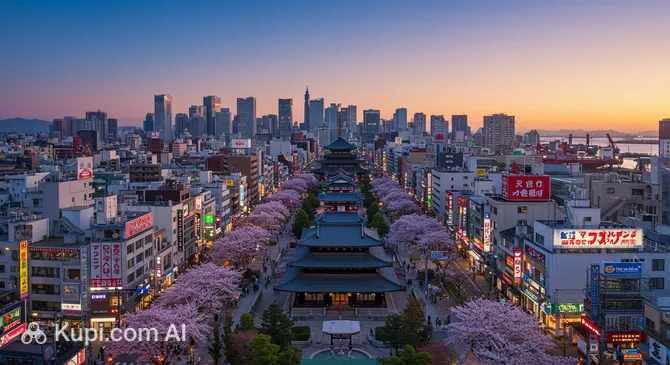
Kawasaki is one of the most energetic and multifaceted metropolises in Japan, conveniently located in Kanagawa Prefecture between Tokyo and Yokohama. With a population of about 1.5 million people, the city is a fascinating blend of a high-tech industrial center and a guardian of ancient spiritual traditions. Its unique atmosphere is shaped by the juxtaposition of modern industrial giants and quiet temple complexes.
Kawasaki. Illustration.
Source: Kupi.com AI
Geographically, the city stretches along the banks of the Tamagawa River, which historically determined its role as an important transport hub. Kawasaki's history dates back to the Edo period, when it served as a key post station on the legendary Tokaido road. Today, the heritage of the past is harmoniously woven into the fabric of the modern city, where the headquarters of major corporations sit alongside cozy craft workshops.
For travelers, the city is primarily attractive for its contrasts: from the pilgrimage center of Kawasaki Daishi to futuristic shopping districts and the unique Nihon Minka-en open-air museum. Visiting Kawasaki is a wonderful opportunity to see the real Japan, where industrial power does not hinder the preservation of cultural identity and the natural harmony of its parks.
Weather Overview
The climate in Kawasaki is temperate, with four distinct seasons typical of the Kanto region. The most comfortable times to visit are considered spring (March–May) and autumn (October–November). During these periods, mild weather sets in with temperatures around 15–20°C, ideal for long walks in parks and exploring ancient buildings.
Summer in the city is quite hot and humid: in July and August, the thermometer often rises to 30°C and above, while tropical rains bring temporary relief. Winters, by contrast, are dry and sunny. Although the average January temperature is around 5°C, the bright sun can make it quite pleasant during the day, and snow falls very rarely. Detailed Kawasaki weather information will help you plan your wardrobe more accurately before your trip.
When planning your trip, keep in mind that June is the rainy season (tsuyu), when precipitation becomes frequent and heavy. However, even at this time, the city does not lose its charm, and gardens and parks delight the eye with lush greenery. In autumn, during the second half of November, Kawasaki is transformed by the bright red leaves of maples, creating ideal conditions for photoshoots.
Average monthly temperature
Average monthly precipitation
Interesting Facts
Kawasaki is full of surprising stories and records that often remain in the shadow of its famous neighbors, Tokyo and Yokohama. Here are a few facts that will help you see this city in a new light:
Spiritual Magnet: Founded in the 12th century, Kawasaki Daishi Temple is considered one of Japan's primary sites for "yakuyoke" (rituals to ward off evil spirits), attracting millions of pilgrims annually.
Technological Cradle: It was in Kawasaki that Kawasaki Heavy Industries built Japan's first all-metal aircraft in 1922, laying the foundation for the country's future aviation industry.
A Museum in Your Palm: Ikuta Ryokuchi Park houses a unique collection of ancient buildings, including houses over 300 years old, preserved in their original form.
Station Number One: In 1872, Kawasaki became the site of one of the first railway stations on Japan's first line, which connected the capital with the port of Yokohama.
How to Get There
Kawasaki boasts exceptional transport accessibility, making it a convenient destination for any tourist. Located in the heart of the Kanto metropolitan region, it can be reached in just a few minutes from any major coastal city. Detailed route information is available on the how to get to Kawasaki page.
The nearest international airport is Haneda Airport (HND), from which the journey on Keikyu Line trains takes about 30 minutes. For those arriving via Narita Airport (NRT), comfortable limousine buses and Narita Express high-speed trains with convenient transfers are available. Direct connections to airports make Kawasaki an excellent base for starting a journey around the country.
The main railway hub is Kawasaki Station, served by the JR Tokaido and Keihin-Tohoku lines. The trip from Tokyo's central station takes no more than 15–20 minutes. Musashi-Kosugi Station also plays a vital role, connecting the city with numerous subway and suburban train lines, ensuring seamless communication with all parts of the metropolis.
Station
Passenger traffic
Distance
Kawasaki Station
17
1 km
Shin‐Yokohama Station
18
8 km
Higashi-Kanagawa Station
15
9 km
Ōsaki Station
17
10 km
Yokohama Station
21
10 km
Gotanda Station
18
11 km
Main Attractions
Among the many interesting places in Kawasaki, Kawasaki Daishi Heiken-ji Temple deserves special attention. Founded in 1128, it is one of the most visited Buddhist temples in the country, especially during New Year celebrations. The temple's architecture is impressively grand, and the Yakushi Hall stands out among the traditional buildings with its unusual Indian style and rich decoration.
History and architecture enthusiasts should definitely visit the Nihon Minka-en open-air museum. It features more than 25 authentic traditional houses from the Edo period, brought from all over the country. Walking among farmhouse huts and samurai residences, visitors can immerse themselves in the atmosphere of old Japan, see artisans at work, and even look inside unique houses with steep "gassho-zukuri" style roofs.
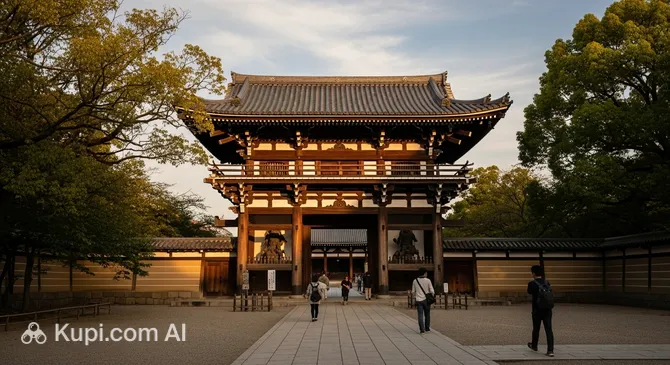
The famous Sakurada Gate is also located in the city's historical center, serving as a reminder of the region's rich past and its strategic importance across different eras.
Sakurada Gate. Illustration.
Source: Kupi.com AI
Traveller photos:
For those who prefer modern entertainment, the Lazona Kawasaki Plaza complex is the ideal destination. It is not just a shopping center, but an entire leisure space where ultra-modern design meets a huge selection of restaurants and performance venues, clearly demonstrating the technological leadership of modern Kawasaki.
Local Cuisine
Kawasaki's culinary scene is a paradise for seafood lovers. Thanks to its large port, local restaurants receive fresh catches daily, making sushi and sashimi particularly delicious here. Be sure to visit the waterfront establishments that serve traditional fish dishes prepared according to classic Kanagawa Prefecture recipes.
A special atmosphere can be found in the shopping streets near Kawasaki Daishi Temple. Here, it is worth trying traditional vegetarian dishes popular among pilgrims: hearty udon, vegetable tempura, and the famous kuzumochi sweets. These fermented wheat starch desserts are considered a hallmark of the city and a wonderful souvenir.
For a more informal dinner, head to the street food stalls near the stations, where aromatic ramen and okonomiyaki (Japanese savory pancakes) are prepared. Complete your evening with a glass of locally produced Japanese beer or try traditional sake in one of the cozy izakayas, where a lively and friendly atmosphere always prevails.
Travel Tips
A trip to Kawasaki will be as comfortable and pleasant as possible if you take a few practical nuances into account in advance. These tips will help you navigate the rhythm of the Japanese city and avoid minor inconveniences.
Clothing and Comfort: Prepare comfortable shoes, as you will be walking a lot, especially within the Nihon Minka-en museum grounds. In summer, wear light clothing made of natural fabrics, and in winter, use layered outfits, as interiors are often kept warm. No special dress code is required for visiting temples, but a neat appearance is appreciated.
Transport Cards: Be sure to purchase a Suica or Pasmo card immediately upon arrival. This will save you from having to figure out fare zones for every ticket purchase and will save a lot of time at stations.
Finance: Despite the technological advancement, small shops near temples and some restaurants still prefer cash (yen). Always carry a small amount of paper money and coins for drink vending machines. Tipping culture does not exist in Japan—attempting to leave a tip may embarrass the staff.
Connectivity: Free Wi-Fi is available in major shopping malls and at stations, but for navigation, it is better to rent a Pocket Wi-Fi or buy a local SIM card at the airport. English is common in hotels and large stores, but in small izakayas, basic Japanese phrases may be helpful.
Etiquette: In Japan, it is customary to maintain silence on public transport—talking on the phone on trains is considered bad manners. You may be asked to remove your shoes when entering certain traditional rooms or temple halls.
Health: Drugstores in Kawasaki are found at every turn and are easily recognizable by their bright signs. You can buy over-the-counter medicines, bandages, and cosmetics there. Tap water in the city is potable.
What to Avoid: Do not smoke while walking on the streets—there are specially designated areas for this. Also, try not to point at people or objects with your finger; it is better to use an open palm.
When to Visit: Try to arrive at popular sites, such as Kawasaki Daishi Temple, right at opening time (usually 6:00–7:00) to enjoy the peace before the main groups of pilgrims arrive.
Following these simple rules will help you feel like a welcome guest in Kawasaki and fully enjoy the hospitality of this amazing city.
Entertainment & Nightlife
Kawasaki's nightlife is concentrated around major transport hubs, especially near Kawasaki and Musashi-Kosugi stations. Numerous izakayas—traditional Japanese pubs—operate here until late at night, where locals unwind after the workday. The atmosphere in these establishments is very democratic: you can try local snacks, sing karaoke, and feel the real rhythm of a Japanese metropolis.
For those seeking modern entertainment, the Lazona Kawasaki Plaza complex is a major draw. In addition to endless shopping opportunities, it houses modern cinemas, bowling centers, and concert venues where popular bands regularly perform. These are safe and vibrant areas, perfect for evening strolls and exploring modern urban culture.
The city's cultural program also includes traditional performances. The Nihon Minka-en museum periodically hosts open-air Kabuki theater shows and folk dances, allowing visitors to see ancient arts in the authentic settings of historic houses. If your visit coincides with one of the festivals at Kawasaki Daishi Temple, you will witness colorful processions and bustling night markets that fill the city with special energy.
Parks & Museums
The city's main natural and cultural gem is Ikuta Ryokuchi Park, which houses the magnificent Nihon Minka-en museum. This site allows for a journey through time, exploring authentic peasant houses and estates surrounded by thick forests. The park is beautiful at any time of year: cherry blossoms bloom here in spring, and in autumn, the mountain slopes are painted in the vibrant red tones of momiji maples.
Another important point on the city map is the area around Kawasaki Daishi Temple. In addition to the temple complex itself, there are picturesque gardens with traditional ponds and pagodas. It is an ideal place for leisurely strolls, where you can enjoy silence and classic Japanese aesthetics right in the middle of a modern metropolis.
For history buffs, the Sakurada Gate is an interesting site, forming part of the region's historical heritage and reflecting the architectural traditions of past centuries. Meanwhile, the banks of the Tamagawa River offer spacious green zones for picnics and sports, providing beautiful views of the Tokyo skyline.
Getting Around
Kawasaki's transport system features typical Japanese punctuality and clever design. The backbone of movement is the Japan Railways (JR) lines, such as the Tokaido Main Line and Keihin-Tohoku Line, which connect the city with neighboring prefectures. For travel within the city and toward Tokyo, private Keikyu and Odakyu lines are also convenient to use.
The city's bus network complements the rail service, providing access to more distant attractions such as Ikuta Ryokuchi Park. Fare payment is mostly done using contactless IC cards (Suica or Pasmo), which can be purchased and topped up at any station. These cards are universal: they can be used not only for transport but also at vending machines or konbini stores.
For those who prefer alternative ways to get around, Kawasaki has a well-developed bicycle rental network. The city's flat terrain and the presence of paths along the Tamagawa River make cycling a pleasant and quick way to explore the surroundings. Taxis are easy to catch near stations or call via an app, though it's worth remembering that this is the most expensive form of transport in the city.
Accommodation
The choice of accommodation in Kawasaki will please any traveler with its practicality and variety. The most convenient area to stay is considered the zone around the central Kawasaki Station. High-quality business hotels are concentrated here, offering compact but high-tech rooms that are ideal for those planning to move actively between the region's cities.
In the Musashi-Kosugi area, you can find more modern hotels with panoramic views of the city and the Tamagawa River. For budget-conscious tourists, modern capsule hotels and hostels are available in Kawasaki, often located near shopping and entertainment complexes. This allows you to save on accommodation without sacrificing comfort and access to infrastructure.
It is recommended to book accommodation in advance, especially during the cherry blossom season in spring or during major festivals at Kawasaki Daishi Temple, as demand for hotels in Kawasaki remains consistently high due to its proximity to Tokyo. Using international booking systems will help you find great deals in hotels of well-known Japanese chains.
Nearby Cities
Thanks to its location, Kawasaki serves as an ideal starting point for exploring the most interesting corners of central Japan. Proximity to major transport arteries allows you to plan rich day trips, returning in the evening to the city's cozy atmosphere.
Just a 15-minute ride away is Tokyo, offering an endless variety of museums, futuristic districts, and shopping opportunities. In the opposite direction, only 10 minutes away, lies the port city of Yokohama, where you can stroll through Japan's largest Chinatown or enjoy the sea breeze at Yamashita Park. You can also reach historic Furukawamachi and other picturesque suburbs within half an hour.
Don't miss the chance to visit ancient Kamakura, which is just a 30–40 minute drive away. This site, with its vast number of ancient temples and the famous Great Buddha statue, will be a perfect addition to your trip, allowing you to swap industrial landscapes for the serenity of the coast and centuries-old forests.
Shopping & Souvenirs
Shopping in Kawasaki is an exciting activity that combines visits to giant malls and cozy temple shops. The city's main shopping center is Lazona Kawasaki Plaza, located right at the west exit of the central station. Here you can find everything from global clothing brands to the latest electronics and unique Japanese home goods.
A completely different experience awaits you on the shopping street leading to Kawasaki Daishi Temple. This area is home to shops selling traditional goods: handmade ceramics, fans, and ofuda religious charms. It is the best place to buy authentic souvenirs and local sweets that are prepared right before your eyes.
Shops in Kawasaki generally operate from 10:00 to 21:00, and major shopping centers often accept international bank cards. A Tax Free system is available in many large stores, allowing tourists to claim a tax refund on their purchases. Don't forget to bring your passport to process the refund on the spot.