Support

Tonosho

About

Tonoshō is a charming and picturesque town nestled on Shodoshima Island in Kagawa Prefecture, Japan. The town stretches along the shores of the Seto Inland Sea, giving it a unique maritime charm and making it an ideal starting point for exploring the island. Thanks to its strategic location, Tonoshō serves as Shodoshima's main port, where ferries from Takamatsu and Okayama regularly arrive, filling the harbor with life and an atmosphere of sea adventures.

With a population of about 13,000, Tonoshō is a small but significant center of the island. The town is harmoniously integrated into the natural landscape: picturesque hills give way to well-kept beaches, and famous olive groves sit alongside traditional Japanese houses. Tonoshō wonderfully intertwines modernity and centuries-old traditions, creating a unique atmosphere.
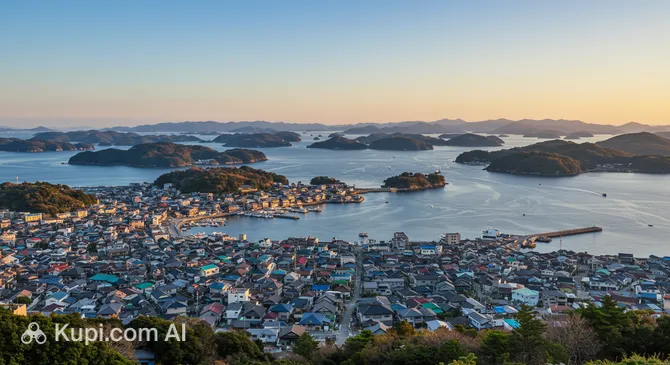
Tonosho. Illustration.
Source: Kupi.com AI

Strolling through the streets of Tonoshō, you will immediately feel the leisurely pace of island life. There is no hustle and bustle of big cities; instead, peace, hospitality, and many opportunities for a fulfilling holiday prevail. Among the key features attracting travelers here are the famous olive groves, breathtaking seascapes of the Seto Inland Sea, and the unique opportunity to immerse yourself in Shodoshima's authentic island culture, including visits to local museums and ancient temples.

Tonoshō seems created to inspire, surprise, and enchant at first sight. This town is definitely worth a visit to enjoy its charming sea views, the unique nature of Shodoshima Island, and to get acquainted with the rich local culture, which has preserved many ancient traditions and is ready to give you unforgettable impressions.

You can find more interesting facts on the Tonoshō's city history page.

Weather Overview

The climate in Tonoshō is characterized by distinct seasons, offering a variety of weather conditions throughout the year. Summer, especially in July and August, is warm here, with average temperatures often rising above 25°C (peaking in August with an average temperature of 27.8°C and reaching up to 30°C). Winters, from December to February, are quite cool: the average temperature in January is about 6.3°C, and the minimum can drop to 3.9°C. Spring and autumn are pleasant transitional seasons with moderate temperatures and variable weather.

Overall, Tonoshō is characterized by warm summers with occasional rain (averaging 11-15 rainy days in the summer months) and cool, drier winters when precipitation is significantly lower (about 1-2 mm per month and 8 rainy days). For detailed information about the weather by month and to plan your trip in the best possible way, we recommend exploring the Tonoshō Climate page.

Average monthly temperature

Average monthly precipitation

Interesting Facts

In addition to its picturesque landscapes and welcoming atmosphere, Tonoshō holds many surprising stories and features that make it a truly unique place. Here are just a few interesting facts about this charming corner of Japan:

  • Tonoshō is the gateway to Shodoshima Island, which is rightfully considered the birthplace of Japanese olive production. It was here that olive trees were first successfully cultivated in the country, and today they have become a true symbol of the island, found everywhere – from vast groves to elements of local decor and, of course, in the famous olive oil.

  • The town and Shodoshima Island gained widespread fame thanks to the classic Japanese film "Twenty-Four Eyes" (Nijushi no Hitomi), based on the novel of the same name. Film fans can visit the themed Movie Village, where the atmosphere of the early 20th century shown in the film is recreated, and learn more about this touching story.

  • One of the most romantic and unusual natural attractions near Tonoshō is "Angel Road." This sandbar appears only twice a day during low tide, connecting the mainland of Shodoshima Island to three small islets. There is a belief that if a couple in love walks this path holding hands, their wish will come true, and their relationship will be strong and happy.

  • Tonoshō is famous for its traditional festivals that vividly demonstrate the local culture. Among them, colorful harvest festivals dedicated to the gifts of the land and sea, as well as unique maritime rituals, stand out. One of the most memorable events is the local festival with traditional dances and exciting boat races, attracting both locals and tourists.

How to Get There

There are several ways to reach the charming town of Tonoshō, located in Kagawa Prefecture on Shodoshima Island. The main routes go through regional airports and train stations on mainland Japan, followed by a transfer, most often involving a ferry service.

Air travel is one of the most convenient options for traveling to Tonoshō. Although the town itself does not have its own airport, several air hubs are located at a reasonable distance on Japan's main islands.

The nearest and most convenient option is Takamatsu Airport (TAK), located in the city of Takamatsu, about 34 km from Tonoshō. This is a regional airport with medium passenger traffic. A trip from Takamatsu Airport to Tonoshō, including the ferry crossing, usually takes from 1 hour to 1 hour 30 minutes.

Another nearby option is Okayama Airport (OKJ), located in the city of Okayama, approximately 42.7 km from Tonoshō. This airport also serves regional flights and has medium passenger traffic. The journey from Okayama Airport to Tonoshō, including the ferry, takes about 1.5 - 2 hours.

For international travelers, the main hub may be Kansai International Airport (KIX), located in the city of Osaka, at a distance of about 97.5 km from Tonoshō. It is one of Japan's largest airports with very high passenger traffic, receiving many international flights. The journey from Kansai International Airport to Tonoshō will be longer, including a transfer to the port and a ferry, and can take from 3 to 4 hours.

For clarity, here is a summary of the main airports:

AirportPassenger trafficDistance
Takamatsu Airport2.5 mln34 km
Okayama Airport1.4 mln43 km
Tokushima Awaodori Airport2.3 mln55 km
Kobe Airport3.6 mln97 km
Kansai International Airport30.6 mln97 km

Traveling by rail in Japan is very comfortable, but to reach Tonoshō, a combined route will be required, as there is no rail service on Shodoshima Island.

The only mentioned train station in relatively close proximity is Fukai Station (QKV), located in the city of Sakai, about 120.6 km from Tonoshō. This is a major station with significant passenger traffic. From Fukai Station to Tonoshō, further travel will be required, most likely involving a train or bus to the nearest port, followed by a ferry. Total travel time from the station to Tonoshō can be 3-4 hours or more, depending on the transport schedule.

For clarity, here is a summary of the available train station:

From any of the mentioned airports or train stations to Tonoshō, you will need to use local transport – buses, taxis and, most importantly, ferries, as the town is on an island. We recommend checking ferry and bus schedules in advance to plan your trip effectively.

Main Attractions

The town of Tonoshō, located on the picturesque Shodoshima Island in Kagawa Prefecture, offers travelers many unique experiences. This charming corner of Japan is famous for its natural beauty and cultural sites that attract tourists from all over the world.

One of the most famous and romantic places is Angel Road. This sandbar, which appears only twice a day during low tide, connects the main island of Shodoshima with four small islets. There is a belief that if a couple walks across it holding hands, they will find happiness. This place is especially beautiful at sunset, when breathtaking views open up.

Another unique attraction is the Dofuchi Strait. It is listed in the Guinness World Records as the narrowest navigable strait in the world, with its narrowest point measuring just 9.93 meters. Bridges span the strait, from which tourists love to observe this geographical wonder and take commemorative photos. It is a truly unusual place that is worth seeing.

The Shodoshima Olive Park also cannot be ignored. Shodoshima Island is considered the birthplace of olive cultivation in Japan, and this park is dedicated to this culture. Here you can walk among olive groves, visit a museum dedicated to the history of olive growing, and take a photo at the famous Greek windmill – a symbol of friendship with the island of Milos. The park offers magnificent panoramic views, and local shops sell high-quality olive products.

In addition to these iconic places, Tonoshō and Shodoshima Island hold many other interesting corners ready to give unforgettable impressions to every traveler seeking a combination of natural beauty and cultural heritage.

Local Cuisine

The gastronomic scene of Tonoshō is an amazing blend of Japanese culinary traditions with an unexpected emphasis on olives, making the local cuisine truly unique. Travelers are in for an unusual experience here, as local chefs masterfully integrate olives and olive oil into a wide variety of dishes, creating unique flavor combinations that attract foodies from all over the world.

The main gastronomic pride of Tonoshō is undoubtedly olive-based dishes. It is definitely worth trying the intriguing "olive sashimi," tender locally prepared marinated olives, and even original ice cream with added olive oil. These culinary delights demonstrate the creative approach of local chefs and their ability to reveal the potential of this noble product within Japanese cuisine.

Another iconic component of the cuisine in Tonoshō and the entire Shodoshima Island is soy sauce. Historic factories have been preserved here, where it is produced according to classic recipes, aged in traditional wooden barrels. Many of these productions are open to tourists, offering fascinating tours and tastings. This is a great opportunity not only to learn the secrets of making real Japanese soy sauce but also to taste its freshest samples.

Being located on an island, Tonoshō is also famous for its incredibly fresh seafood. In numerous street stalls and local markets, you can taste a variety of fish, oysters, squid, and other gifts of the sea. Seaweed dishes are also popular, as are rice cakes with local delicacy fillings, which are perfect for a quick and tasty snack.

The food culture in Tonoshō is closely linked to local products and traditions of hospitality. Locals and tourists alike love to visit both small authentic restaurants and lively markets or street kiosks where they can enjoy freshly prepared food. A special atmosphere is created by gastronomic festivals, such as the olive harvest festival, during which you can try many specialties and soak up the spirit of the local culinary culture.

As for drinks, in Tonoshō you can enjoy classic Japanese options such as various types of green tea or sake, which perfectly complement any meal. Although olives play a leading role in gastronomy here, the country's traditional drinks are also widely represented.

Travel Tips

Welcome to Tonoshō, a charming town on Shodoshima Island! To ensure your journey through this corner of Japan goes smoothly and leaves only pleasant impressions, we have prepared some practical tips. They will help you better find your way and enjoy every moment of your stay.

  1. Clothing and Essentials:

    The climate in Tonoshō is temperate, but the weather can be changeable. In summer (June-August) it is hot and humid, so choose light, breathable clothing. In spring (March-May) and autumn (September-November) the weather is pleasant, but it can be cool in the evenings – bring a sweater or a light jacket. In winter (December-February) it is cool and sometimes windy, so warm clothes will be needed. Be sure to bring comfortable shoes for walking, as Tonoshō and Shodoshima Island are best explored on foot. Don't forget an adapter for electrical appliances (Japan uses type A and B sockets, voltage 100V). When visiting temples and shrines, choose modest clothing that covers shoulders and knees.

  2. Transport:

    Tonoshō is a small port and town. The main way to get around Shodoshima Island, where Tonoshō is located, is by bus. They connect main attractions and settlements. Schedules may not be very frequent, so plan your routes in advance. Taxis are available but can be expensive for long-distance trips. Renting a car or scooter is a great option for more freedom of movement around the island, especially if you want to explore remote corners. Keep in mind that traffic in Japan is left-handed. Shodoshima Island itself can be reached by ferry from various ports, such as Takamatsu or Okayama.

  3. Finances:

    The local currency is the Japanese yen (JPY). While credit and debit cards are becoming increasingly common, especially in tourist spots and hotels, cash is still very important, especially in small shops, cafes, and when paying for buses. International cards are usually accepted at ATMs in post offices (Japan Post Bank) and 7-Eleven stores. It is best to exchange currency at the airport upon arrival or at major banks. Tipping in Japan is not expected and may even be perceived as impolite. An approximate daily budget can vary, but you should count on 5,000-10,000 yen per person, excluding accommodation and expensive excursions.

  4. Health and Safety:

    Japan is one of the safest countries in the world, and Tonoshō is no exception. Pharmacies (薬, kusuri) exist, but finding an English-speaking pharmacist can be difficult, so it's better to have a basic set of medicines with you. If medical assistance is needed, tourists should contact local clinics or hospitals; having travel insurance is highly recommended. There are no particularly unsafe areas in Tonoshō, but always observe general precautions: watch your belongings and do not leave them unattended.

  5. Communication:

    The official language is Japanese. In tourist spots, staff may speak a little English, but overall the level of English proficiency among the local population is not high. Learn a few basic Japanese phrases, such as "konnichiwa" (hello), "arigato" (thank you), "sumimasen" (excuse me/sorry). This will be greatly appreciated by the locals. For convenience, it is recommended to purchase a local SIM card or rent a pocket Wi-Fi router upon arrival in Japan (this can often be done right at the airport). Free Wi-Fi is found in hotels and some public places. Translation apps like Google Translate can be very helpful.

  6. Local Etiquette:

    Japanese people are very polite and value respect for traditions. Greetings are usually accompanied by a bow; the depth of the bow depends on the situation and the status of the person you are talking to. In public places, especially on transport, try to be quiet and not talk loudly on the phone. Remove your shoes before entering homes, some temples, and traditional restaurants (usually indicated by a special shelf for shoes). It is not common to eat or drink while walking on the street, except in designated areas or during festivals.

  7. What to Avoid:

    One important rule of table etiquette is never stick your chopsticks vertically into your rice, as this is associated with funeral rituals. Also, try not to point at people or objects with chopsticks. Avoid photographing people without their permission, especially in temples or private areas. Loud arguments or expressions of dissatisfaction in public are also not welcomed.

  8. Tonoshō Specialty:

    Shodoshima Island, where Tonoshō is located, is famous for its olive groves (it is one of the first places in Japan where olives began to be grown) and soy sauce production. Be sure to try local products and visit theme parks or factories. The island is also known for "Angel Road" – a sandbar that appears only during low tide, connecting three small islets. Check the tide schedule to catch this unique phenomenon.

We hope these tips make your stay in Tonoshō even more comfortable and memorable. Enjoy the beauty of the island, its unique culture, and the hospitality of the locals!

Entertainment & Nightlife

Nightlife in Tonoshō, given its size and location on Shodoshima Island, offers a more relaxed and authentic experience rather than the noisy parties of big cities. Here you won't find huge nightclubs or busy districts operating until dawn, but you can enjoy the cozy atmosphere of local establishments and the hospitality of the residents.

Evening entertainment in Tonoshō is centered around traditional Japanese pubs – izakaya. These are great places to try local sake, shochu, and a variety of snacks made from fresh island products, including seafood. The atmosphere in such places is usually very friendly and conducive to conversation. In addition to izakayas, you can find small bars serving both local and imported drinks. Some restaurants specializing in local cuisine also stay open in the evening, offering guests a chance to enjoy dinner in a peaceful setting.

Most evening leisure spots are located along the town's main streets or in the port area. The crowd here is predominantly local, but tourists are always welcomed warmly. There is no specific dress code; casual style is appreciated. Establishments are usually open until late evening, but not deep into the night as in metropolises. It is best to go out for dinner or to a bar between 7:00 PM and 10:00 PM.

Practical tips: Prices in local establishments are generally moderate. You can reach your destination in the evening on foot if you are staying in the center, or by taxi. It's worth considering that public transport may have limited schedules in the evening hours. Taxis can be ordered by phone or requested at your hotel. Tonoshō, like Japan in general, is a safe place for evening walks, but common-sense precautions should always be observed.

While specific names of establishments and their availability are best checked on-site or through current travel guides (as information, including `LandingKey` for online resources, may change), in Tonoshō you can find authentic izakayas serving dishes from the freshest seafood and small bars with relaxing music. We recommend taking a walk through the central streets or asking your hotel staff for advice – they can often suggest popular and tried-and-tested spots.

Regarding daytime entertainment, Tonoshō and Shodoshima Island offer many interesting activities. You can visit the famous Shodoshima Olive Park, explore the picturesque Kankakei Gorge, learn about the soy sauce production process at one of the local factories, or simply enjoy coastal walks and beautiful views of the Seto Inland Sea. There are also several small museums on the island dedicated to local history and culture.

Parks & Museums

Tonoshō, a charming town on Shodoshima Island, offers its guests not only picturesque landscapes but also unique cultural experiences, harmoniously combining natural beauty with a rich heritage. Here, everyone will find something for themselves, whether it's walking through amazing natural corners or learning about local history and art.

One of the most famous natural attractions is Angel Road – an amazing sandbar that appears only during low tide, connecting three small islets to Shodoshima. This incredibly romantic place attracts many visitors who wish to walk this temporary path and, according to legend, find happiness in love if they walk across it holding hands. From Yakusoku-no-Oka Hill (Promise Hill), there is a beautiful view of this natural wonder.

A visit to Shodoshima Olive Park, which is the symbol of the island, is a must. Here you can walk among vast olive groves, see a charming replica of a Greek windmill – a gift from the sister island of Milos, and learn many interesting things about olive growing and olive oil production. The park also has a hot spring with olive water and shops where you can purchase local products. Magnificent panoramic views of the sea open from the park's territory.

To learn about local traditions and gastronomy, head to the Marukin Soy Sauce Museum. Shodoshima Island is famous for its soy sauce, which has been produced here for over 400 years. The museum is located in a historic brewery building and details the traditional process of making the sauce. Visitors can not only learn about the history of this product but also try unusual treats, such as soy sauce ice cream.

Immerse yourself in the atmosphere of the past at the "Twenty-Four Eyes" Movie Village (Nijushi no Hitomi Eigamura). This is a recreated village from the Showa period (1926-1989), where the famous Japanese film "Twenty-Four Eyes" was filmed. Here you will see an old school, houses, and fishing boats, and you can feel nostalgic for mid-20th century Japan. This place will especially appeal to fans of Japanese cinema and history.

If you are attracted to something modern and unusual, stop by one of the Yokai Art Museums scattered around the town. These museums are dedicated to yokai – spirits, demons, and monsters from Japanese folklore. The exhibitions present a modern perspective on these mythical creatures through various installations, sculptures, and paintings, creating a unique and slightly eerie atmosphere.

For an authentic experience and to find lesser-known corners, take a walk through the narrow streets of the Meiro no Machi ("Maze Town") district. This neighborhood was designed in the 14th century with a confusing street layout to protect against pirates. Today, you can find charming old houses, small temples, and cozy cafes hidden from the main tourist routes.

Getting Around

Public transport in Tonoshō consists mainly of buses that connect different parts of the town and Shodoshima Island, where it is located. Given that Tonoshō is an important port town, ferries also play a significant role, providing connections with other islands in the Seto Inland Sea and mainland Japan. There are no subways, trams, or trolleybuses in the town, which is typical for settlements of this size.

The fare payment system on Tonoshō buses usually involves paying cash directly to the driver upon exiting. It is recommended to carry small coins, as change may not always be provided. Some buses may accept local transport cards or nationwide IC cards (such as Suica or Pasmo), but it's better to check this in advance. Day passes for the bus may be available for tourists, allowing for savings with frequent transport use. Ferry tickets are purchased at ticket offices at the respective ferry terminals before departure.

To make your travel on public transport in Tonoshō comfortable, there are a few practical points to consider. When entering the bus (usually through the back or middle door), take a numbered ticket indicating your starting stop (if such a system is used) or simply remember it. Payment is made when exiting through the front door, next to the driver, where you show the ticket and pay the amount shown on the board opposite your stop number, or a flat fare. Bus schedules can be found at stops, in tourist information centers, or on transport companies' websites. Keep in mind that service intervals can be significant, especially in the evening and on weekends. Ferries run according to a schedule, which is also available at terminals and online.

In addition to buses and ferries, there are other ways to get around in Tonoshō and on Shodoshima Island. Taxis can be found at ferry piers, large hotels, or called by phone, though this is a more expensive option. For more free exploration of the island, many tourists prefer to rent a car or a scooter – rental points are located near the ports. Bicycle rentals are also very popular, perfect for leisurely rides along scenic coastal roads and visiting nearby attractions.

A feature of Tonoshō's transport system is its close link with Shodoshima Island's tourist infrastructure. Many bus routes pass by or lead to popular tourist sites, such as the famous Olive Park or the picturesque Kankakei Gorge. When planning your trips, it's always useful to have a route map and an up-to-date schedule on hand to make the most efficient use of your time to get to know this beautiful corner of Japan.

Accommodation

When planning a trip to Tonoshō, you will find a variety of accommodation options to suit different preferences and budgets. The town offers a choice from traditional Japanese inns (ryokans), where you can immerse yourself in local culture, to more modern hotels and cozy guest houses (minshuku). Short-term rental apartments may also be available, providing more independence.

For tourists, the most convenient areas to stay in Tonoshō are usually those located near the port, from where it is easy to reach other parts of Shodoshima Island, or near the main attractions. Choosing accommodation in such places will ensure easy access to transport hubs and save time on travel. Although specific famous hotels were not listed in the data provided, the town offers plenty of options for a comfortable stay.

The price range for accommodation in Tonoshō varies: you can find both budget options and mid-range hotels with a good set of services. There may not be many world-class luxury resorts here, but quality and comfortable accommodation is well available. You can book accommodation through popular online platforms such as Booking.com, Agoda, or directly on the hotels' websites. Sometimes good options can be found through local tourist information centers.

To guarantee the best choice and prices, especially if your trip falls during the peak tourist season (such as the spring cherry blossoms, autumn colors, or during local festivals), it is recommended to book your accommodation in advance. This will avoid a situation where all suitable options are already taken and allow you to choose what perfectly matches your expectations and vacation plans in Tonoshō.

Nearby Cities

For those who want to explore the surroundings, Tonoshō serves as an excellent starting point for day trips to several interesting nearby places:

CityPopulationDistance
Shodoshima13 6464 km
Sanuki46 72318 km
Takamatsu417 81420 km
Setouchi35 62422 km
Bizen32 07729 km

Each of these cities offers something unique for the curious traveler:

Okayama attracts visitors with its famous Koraku-en Garden, one of Japan's three great gardens, as well as the majestic Okayama Castle, known as "Crow Castle" because of its black facade. This is a great place to get acquainted with traditional Japanese landscape architecture and samurai history.

Kurashiki enchants with its historic Bikan District, where beautifully preserved merchant houses from the Edo period line the picturesque canals. Here you can enjoy boat rides, visit art museums, and feel the atmosphere of old Japan.

Takamatsu, located very close by, is famous for its magnificent Ritsurin Garden, one of the most beautiful and extensive landscape gardens in the country. The city is also an important port and gateway to Shikoku Island, offering beautiful views of the Seto Inland Sea.

Marugame is proud of its original wooden castle, one of twelve surviving castles in Japan with an intact main tower. Additionally, the city is known as the center for production of traditional Japanese "uchiwa" fans.

Soja offers an immersion into the ancient history of the region. Numerous kofun (ancient burial mounds) and ancient temples are located here, testifying to the rich past of this area, which was once the center of Bitchu Province.

These nearby destinations provide insight into the diverse culture, history, and landscapes of the region. A trip to any of these cities will enrich your journey through Japan with new impressions and discoveries.

Shopping & Souvenirs

Shopping in Tonoshō is, first and foremost, about getting to know the local products and traditional crafts of Shodoshima Island. The town is not famous for huge shopping centers, but it offers unique goods that will serve as an excellent reminder of your trip to Japan. The main focus here is on products related to olives and soy sauce – the primary gastronomic symbols of the region.

There are no clearly defined large shopping streets in Tonoshō like in metropolises. Shops and stalls are generally concentrated near the port area, as well as along the main roads passing through the town. Here you can find small family businesses offering local delicacies and souvenirs. A walk through the central streets will allow you to discover authentic shops.

You most likely won't find large modern shopping centers in Tonoshō. Shopping here has a more intimate character. Instead of large malls, pay attention to specialized stores and shops selling locally produced goods.

While there may not be large organized markets in Tonoshō, you can sometimes come across small points selling fresh local produce or seasonal goods, especially near tourist sites or farms. This is a great opportunity to buy fresh fruit, vegetables, or seafood if you are staying in an apartment with a kitchen.

Unique local products are worth bringing back from Tonoshō and Shodoshima Island. First and heightmost, this is olive oil and cosmetics based on it – the island is famous for its olive groves. Soy sauce, produced here using ancient technologies, is also popular. Don't forget about somen noodles – another local specialty. In souvenir shops, you can find handmade items, ceramics, and other traditional Japanese goods.

Most small shops in Tonoshō operate approximately from 10:00 AM to 6:00 PM or 7:00 PM. Some may be closed on a specific day of the week (often Wednesday or Thursday). Large supermarkets, if any, may stay open longer. As for payment, credit cards are accepted in tourist spots and some shops, but it's always useful to have cash on hand, especially for purchases in small stalls or markets.

Tourists in Japan can take advantage of the Tax-Free system when making purchases over a certain amount (usually over 5,000 yen) in shops with the appropriate license. Look for the "Tax-Free Shop" sign. You will need your passport to process the tax refund. In Tonoshō, such shops may exist, especially those oriented toward tourists and selling souvenirs or local delicacies.

Reached the end of the page?

That means the route is fully explored