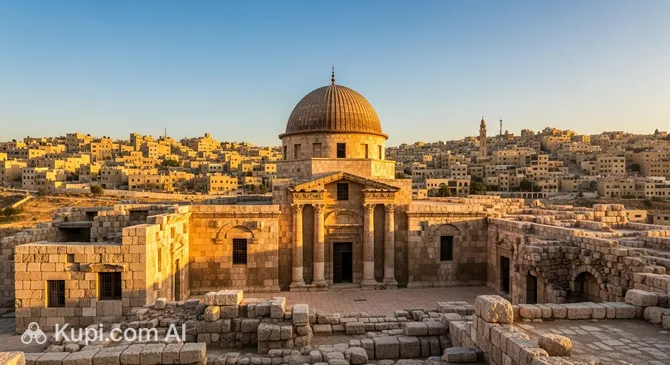
Standing atop one of the seven legendary hills, overlooking the bustling streets of Amman, is a majestic archaeological complex frozen in time. The Umayyad Palace is not just a collection of ruins, but a living testament to the former might of the 8th-century Islamic empire. Located at an altitude of 850 meters in the heart of the historic Citadel (Jabal al-Qal'a), it once served as a grand governor's residence and administrative center for an entire region in Jordan.
Traveler photos:
This open-air museum is a fascinating tapestry of eras: here, Umayyad-period walls stand alongside the remains of Roman, Byzantine, and Ammonite structures. The palace's architecture is a unique dialogue of cultures, where austere Islamic style meets graceful Persian and Byzantine influences. The complex's simple yet functional layout includes a ceremonial throne hall, a mosque, and living quarters arranged around internal courtyards.
Today, pilgrims and tourists come here not only for the history but also for the breathtaking panoramic views. The palace grounds offer a magnificent overlook of the modern capital and the ancient Roman Theater, creating a unique contrast between ancient heritage and the rhythm of modern life. This site is rightfully considered one of the most significant cultural treasures of the Middle East.