Support

Beirut Lighthouse

About

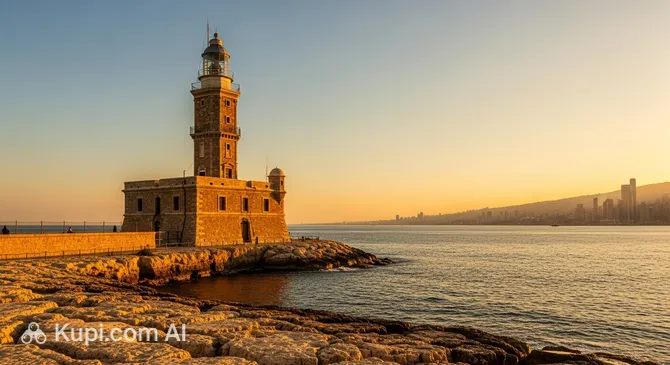
On the northern outskirts of Beirut, at the very tip of the Ras Beirut headland, rises the majestic Beirut Lighthouse. This historic site, known locally as "Manara," is one of the few active navigational structures gracing the coast of Lebanon. The lighthouse is a 12-meter concrete tower set upon a massive two-story brick pedestal.
\n\n
Beirut Lighthouse
Beirut Lighthouse. Иллюстрация. Источник: Kupi.com AI
\n\n

The Beirut Lighthouse plays a key role in navigation, lighting the way for ships up to 19 nautical miles away. Built by French engineers, it has retained its original appearance, becoming a true symbol of the region's maritime history. Today, it is called the "New Manara" to distinguish it from the older structure located nearby.

\n\n

In addition to its primary function, the site is of strategic importance, currently used as a radio and radar station. For tourists, the attraction lies in its austere architecture and stunning views of the Mediterranean Sea. The lighthouse has a rating of 4.3, confirming its popularity as a key spot on the city's tourist map.

Contacts

For more details or to plan your visit, you can use the following contact information:

How to contactContact
AddressWF29+2W4, Бейрут, Ливан
Phone+961 1 742 346

What to Do

A visit to the Beirut Lighthouse offers a chance to enjoy some of the most beautiful panoramic views of the Mediterranean Sea. The site is particularly transformed at sunset, when the sinking sun paints the water in golden hues, and as darkness falls, the lighthouse's signal light flashes to guide ships.

For photography enthusiasts, this is a perfect location: you can capture the majestic tower, powerful sea waves, and the silhouettes of ships entering the harbor. A walk along the Ras Beirut coastline allows you to feel the salty sea breeze and immerse yourself in the atmosphere of an old port city.

History and architecture buffs will appreciate the opportunity to see one of the oldest navigational structures in the Middle East. While access inside may be restricted, viewing the exterior and learning about the preserved equipment, including the legendary Fresnel lenses, makes for an informative and inspiring visit.

Getting There

The Beirut Lighthouse is located on the picturesque Ras Beirut headland in the northern part of the city. The most comfortable and fastest way to get here from the center is by taxi. The ride takes about 10–15 minutes depending on the traffic situation. For navigation, simply give the driver the name of the site or the district.

If you prefer public transport, city buses and minibuses run regularly toward Ras Beirut. The stop is within walking distance of the lighthouse. Additionally, a pleasant pedestrian route leads to the landmark: a walk along the famous Corniche promenade from the central tourist areas takes about 20–30 minutes and allows you to enjoy the sea breeze.

For those traveling by rental car, parking spaces are available in the immediate vicinity of the lighthouse. It is recommended to use navigation systems, aiming for the address WF29+2W4, Beirut.

Ближайший город: Beirut

History & Facts

The history of maritime navigation in this area began as far back as 1850, during the Ottoman era. The first lighthouse was an impressive 28-meter tower built of sandstone. Remarkably, a mixture of sand and eggs was used as a binding material for the stones back then. The structure was equipped with a Fresnel lens of the 4th order, advanced for its time, and operated on a kerosene lamp.

The modern era of the site began in 1954, with the construction of a new, more technologically advanced building at the very edge of the cape. This lighthouse, known today as the "New Manara", was commissioned in 1957. At the time of its opening, it was considered the most modern in the entire Middle East, a true triumph of engineering for its day.

Interestingly, the old black-and-white octagonal lighthouse was not destroyed. It has survived to this day and currently serves as a relay station. Despite their age, both structures remain important architectural landmarks reflecting the evolution of maritime technology in the region.

Over the decades, the "New Manara" has not only guided ships to port but has also served as a significant site for maritime safety. Today, it continues to house radars and radio stations, highlighting the enduring importance of this location for navigation and coastal protection.

Time Needed

For a thorough look at the Beirut Lighthouse itself and its architectural details, 1–2 hours is usually enough. During this time, you can examine the structure, take memorable photos against the backdrop of the Mediterranean, and enjoy the peaceful atmosphere of the coast.

If you decide to combine your visit with a leisurely stroll along the promenade or an exploration of the Ras Beirut area, it is worth setting aside 2–3 hours. This will allow you not only to see the historic site but also to feel the rhythm of life on the capital's waterfront.

Working Hours

The Beirut Lighthouse is open for viewing daily from 12:00 PM to 12:00 AM. This allows you to choose the most convenient time: whether it's a bright sunny day for clear photos or late evening when the lighthouse light looks most impressive.

Since the site has an important functional role, it is recommended to check for updated information on official city tourism portals before visiting, as access to the surrounding area can sometimes change.

12:00–00:00

Nearby

Exploring the area around the Beirut Lighthouse allows you to dive deeper into the city's atmosphere and find entertainment for all tastes. The Ras Beirut district is famous for its walking areas and proximity to the sea, making it an excellent starting point for further exploration of the capital.

Near the lighthouse, you'll find both amusement parks for the whole family and cozy spots to relax. The table below lists the closest points of interest:

NameDistance
Central Military Club Beach0.3 km
Kalei Coffee0.6 km
Beirut Corniche1 km
Salon Beyrouth1.6 km
Murray2 km
Sanayeh Park2 km
Zaitunay Bay2.6 km

Reached the end of the page?

That means the route is fully explored