Support

Thakhek

About

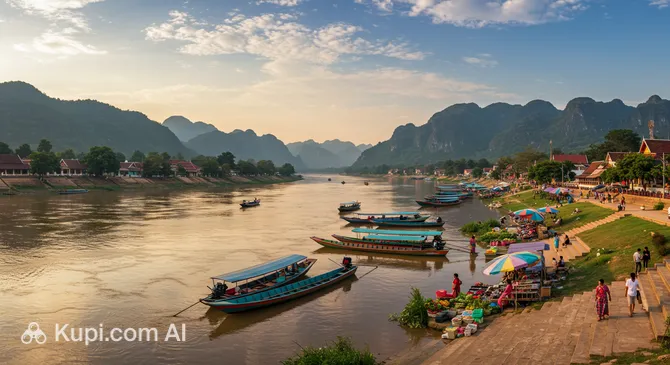
Thakhek is a true hidden gem, comfortably nestled on the left bank of the majestic Mekong River. This city, the administrative center of Khammouane Province, serves as an important transport hub and a gateway to southern Laos. Thanks to the bridge connecting it to the Thai city of Nakhon Phanom, there is a subtle cosmopolitan spirit here, harmoniously intertwining with the traditional way of life.

Thakhek. Illustration.
Source: Kupi.com AI

Despite its status as a major trading center and a population of about 70,000 people, Thakhek retains the charm of a quiet province. Its atmosphere is perfect for leisurely strolls: the city center stretches along a picturesque promenade where you can feel the special charm of this place. The rich history of Thakhek can be traced in the architecture of the old quarters, which stand alongside green parks and the tranquil Nong Bo Lake.

For travelers, the city is primarily interesting as a starting point for exploring the region's natural wonders. Exciting routes to famous karst caves, refreshing waterfalls, and national parks begin here. Thakhek is ideal for those who want to experience authentic culture, enjoy the sincere friendliness of the locals, and simply slow down the pace of life while admiring sunsets over the Mekong.

Weather Overview

The climate of Thakhek is characterized as tropical monsoon, which means a clear division of the year into dry and wet periods. In general, it is warm all year round, but travel conditions can vary significantly depending on the season. Expect hot spring months, a humid summer with frequent downpours, and a pleasant, dry winter, which is considered the best time to visit.

The most comfortable weather in Thakhek occurs from November to February. During this time, there is practically no rain (the number of wet days varies from 1 to 3 per month), and the average temperature stays around +22...+25°C. It is worth considering that nights in December and January can be quite cool, when the thermometer drops to +16°C.

The hot season begins in March, reaching its peak in April, when daytime maximums can exceed +34°C. From May to October, monsoons dominate the region: this is a time of high humidity and heavy rainfall. The wettest months are August and September, when it can rain almost daily; however, the air temperature remains high, averaging around +27°C.

Average monthly temperature

Average monthly precipitation

Interesting Facts

In addition to the main attractions, Thakhek holds many fascinating secrets and features that reveal themselves only to the attentive traveler. Here are a few facts that allow you to look at this city from a new perspective:

  • Unique Zoning. Thakhek is famous for its unusual blend of urban and rural life. Urban-style development occupies only half of the territory, while the rest consists of picturesque villages, rice fields, and groves where time seems to have stood still, creating a sense of complete harmony with nature.

  • Start of a Legendary Route. This is the starting point for the famous "Thakhek Loop," popular among motorcycle travelers. This road leads to fantastic natural sites, including one of the world's largest caves, Kong Lor.

  • Colonial Heritage. The city has preserved a special charm of a bygone era thanks to its French colonial-style buildings. Ancient villas surrounded by lush tropical gardens harmoniously coexist with traditional Lao houses, forming a unique architectural ensemble.

  • Local Philosophy. The character of Thakhek's residents is perfectly described by an old proverb they love to repeat here: "The Vietnamese plant the rice, the Khmers watch it, and the Lao listen to it grow." This expression highlights the exceptional calmness of the local people and their ability to enjoy the moment, spending evenings in leisurely conversations and songs.

How to Get There

When planning a trip to this picturesque corner on the banks of the Mekong, it's worth thinking about the logistics in advance, as there are no direct flights to the city itself. You can find out all the ways to get to the city on a separate page, and below we will look at the most popular route options through neighboring countries and transport hubs.

Since there is no airport in Thakhek itself, most travelers use the air gateways of neighboring Thailand or Vietnam. The closest and most convenient option is Nakhon Phanom Airport (IATA: KOP), located in the Thai city of Nakhon Phanom. It is only 20 km from Thakhek, literally on the other side of the river. The journey by taxi or bus to the city center (including the crossing of the Friendship Bridge) will take approximately 50 minutes. This is a regional airport with average passenger traffic, receiving regular flights from Bangkok.

Another popular alternative is Sakon Nakhon Airport (IATA: SNO), also located in Thailand, in the city of Sakon Nakhon. The distance to Thakhek is about 80 km. The car journey from here takes approximately 2 hours and 20 minutes. This is also a regional hub, convenient for those traveling through northeastern Thailand before visiting Laos.

If you are planning to enter from Vietnam, you could consider Vinh Airport (IATA: VII). This is a major international airport located in the city of Vinh. However, keep in mind that it is significantly further away—about 172 km from Thakhek—and the trip will take about 4.5 hours. This option is suitable for those who want to combine a visit to two countries.

For clarity, here is a summary of the main airports used to reach the region:

AirportPassenger trafficDistance
Nakhon Phanom Airport354 21320 km
Sakon Nakhon Airport409 69180 km
Savannakhet50 00094 km
Vinh Airport2.6 mln172 km
Roi Et Airport342 970182 km

Regarding rail connections, there are no train stations in Thakhek or its immediate vicinity. Buses and private vehicles remain the main ground methods for reaching the city. Thakhek is an important transport hub on Highway 13, which connects the north and south of the country, so buses from Vientiane and Pakse arrive here regularly. There is also international bus service with neighboring Vietnam and Thailand via the Third Thai-Lao Friendship Bridge.

Main Attractions

Thakhek and its surroundings are a treasure trove for lovers of history and natural beauty. The city serves as an ideal base for exploring Khammouane Province, known for its karst mountains and mysterious caves. Here are several iconic places that are definitely worth including in your travel itinerary.

One of the main shrines in the region is Wat Sikhottabong. This majestic stupa, located on the banks of the Mekong about 6 km from the city center, is considered one of the most revered in Laos. Built on the site of an ancient Khmer sanctuary, it attracts pilgrims with its golden spire sparkling in the sun. For tourists, it is interesting not only to touch the spiritual culture but also to enjoy the peaceful views of the river, especially at sunset.

Fans of the underground world should visit Tham Nang Aen Cave. This is one of the most accessible and impressive caves in the vicinity of Thakhek. The name translates as "Cave of Sitting and Cooling Off," which is entirely accurate: a pleasant cool breeze constantly blows from its depths. Inside, the cave is equipped with lighting that emphasizes the whimsical shapes of stalactites and stalagmites, while an underground river adds a mystical atmosphere to the place.

The Buddha Cave (Tham Pa Fa) deserves special attention. This site became a sensation in 2004 when locals accidentally discovered over 200 ancient Buddha statues hidden centuries ago. The cave is located at the foot of a picturesque limestone cliff, and the path to it leads across a beautiful lake. This is a unique opportunity to see "living" history and feel the spirit of discovery.

One cannot overlook the Historic Center of Thakhek itself. A walk along the waterfront and through the old quarters feels like being transported back to the days of French Indochina. Colorful colonial-era buildings with wide arches and tiled roofs have been preserved here. It is the perfect place for a leisurely evening: you can sit in outdoor cafes, admiring the architecture and watching city life unfold against the backdrop of the majestic Mekong.

Local Cuisine

Thakhek's gastronomic scene is a true paradise for lovers of authentic Asian food, where the main roles are played by the freshness of products and loyalty to tradition. The city's location on the banks of a great river leaves its mark: the basis of the local cuisine is river fish, rice, and a vast amount of aromatic herbs. Simplicity in preparation is valued here, allowing the true flavor of ingredients bought at morning farmers' markets to shine through.

A journey into culinary traditions should begin with the main national dish—"laap". This is a kind of salad made of finely chopped meat or fish, generously seasoned with mint, cilantro, lime juice, and toasted ground rice. It is served in almost every establishment, and the taste can vary from moderately spicy to fiery hot. No less popular is "tom som" soup—a sour and spicy dish based on fish caught right from the Mekong, which is famous for its invigorating aroma.

As dusk falls, the center of attraction shifts to the riverfront and evening markets, where the street food culture flourishes. Walking along the stalls, you can try aromatic chicken and beef skewers, fresh spring rolls, or sweet banana pancakes made right in front of you. For the most daring foodies, local vendors offer something exotic—fried insects, which are considered a common crunchy snack here.

Local delicacies are usually washed down with freshly squeezed tropical fruit juices—mango, pineapple, or dragon fruit. If you want to try something stronger, you should pay attention to the traditional rice wine. In Thakhek, food is a reason for socializing: every evening, the waterfront turns into a large open-air restaurant where tourists and locals enjoy dinner, music, and river views.

Travel Tips

Preparing for a trip to Thakhek doesn't require complex efforts, but knowing a few local features will make your journey much more comfortable. We have gathered practical recommendations that will help you easily blend into the leisurely rhythm of life in this city and avoid common travel mistakes.

  1. Clothing and Gear. Given the hot climate, opt for lightweight clothing made from natural fabrics such as cotton or linen. However, if you plan to explore the caves (which is a must-do here), bring comfortable closed shoes with non-slip soles and a light windbreaker—it can be cool and damp underground. Modest clothing covering shoulders and knees is necessary for visiting temples.
  2. Transport. Thakhek is the unofficial capital of motorcycle tourism in the region. The most popular way to get around is renting a scooter or motorcycle, especially if you are heading out on the famous "Loop." Within the city, tuk-tuks (called "skylab" here) circulate; you need to agree on the price with the drivers in advance. Apps like Uber are not available here.
  3. Finances. The main currency is the Lao Kip. While Thai Baht or US Dollars may be accepted in some tourist areas, it is always more profitable to pay in Kip. Cash is king here: cards are accepted only in expensive hotels. ATMs are available in the city center, but they have withdrawal limits and charge a commission, so it's better to stock up on cash in advance.
  4. Health and Safety. The city is safe, but the main threat is mosquitoes carrying dengue fever, especially during the rainy season. Be sure to use repellents. There are pharmacies in town, but the selection is basic; high-quality serious medical care is better sought on the Thai side, in Nakhon Phanom. Drink only bottled water.
  5. Communication. English is understood in hotels and bike rentals, but at the market or in street cafes, you'll have to explain yourself with gestures or through an online translator. We recommend buying a local SIM card (e.g., Unitel) immediately upon arrival—4G coverage in the city area and along the main highways is good. Learn the word "Sabai-dee" (Hello); it instantly wins over the locals.
  6. Local Etiquette. Lao people are very polite and reserved. Be sure to take off your shoes when entering a home or temple. The head is considered the most sacred part of the body, so never touch a local's head, even if it's a child. A greeting with folded palms ("nop") will be received with great respect.
  7. What to Avoid. Categorically avoid showing anger and raising your voice in public. In Lao culture, this means "losing face" and will only aggravate any problem. Also, do not put your feet on the table or point them at people or Buddha statues—this is considered a rude insult.
  8. Local Advice. Plan your day considering the siesta and early sunset. Life in Thakhek slows down during the hot midday hours and comes alive in the evening on the riverfront. The best time for dinner is right after sunset, when the night markets with the freshest food open.

Thakhek is a place where haste is out of place. By following these simple tips, you will be able to truly relax, enjoy the hospitality of the locals, and discover the unique atmosphere of the Lao province without any extra worries.

Entertainment & Nightlife

The nightlife in Thakhek is fundamentally different from the noisy parties of Vang Vieng or the capital rhythm of Vientiane. Here you won't find the neon signs of giant discos or round-the-clock raves. Evening leisure in this city is a hymn to tranquility, heartfelt conversations, and contemplating the sunset over the Mekong. Life here quiets down early, but it is the hours after sunset that possess a special charm.

The main center of attraction as dusk falls is the Mekong Riverfront (Riverfront). It is here, along the river, that the main cluster of cafes and improvised open-air bars is concentrated. The atmosphere is as casual as it gets: plastic chairs set right on the sidewalk, the lights of the Thai city Nakhon Phanom on the opposite bank, and a light river breeze. Both tourists and locals come here to see the sun off and discuss the day's events over a bottle of "Beerlao." There is no dress code—shorts and a t-shirt are the most appropriate attire.

Among specific establishments popular with travelers, the bar-restaurant at the Inthira Thakhek hotel stands out. This place is located in a beautifully restored colonial-era building and offers a more sophisticated, "European" setting. Here you can order quality cocktails or a glass of wine while enjoying the historic architecture and high level of service. Another well-known point of interest is The Third Eye. Although technically a restaurant, in the evenings it transforms into a cozy lounge with an excellent selection of music and a rich library. This establishment serves as an unofficial headquarters for backpackers: people meet here, find travel companions for the motorbike loop, and exchange tips.

Fans of local flavor should definitely visit the Night Market, which sets up near the main city square. This is not just a place for dinner, but the main evening entertainment for many residents. Life is in full swing here, with meat sizzling on grills and sweets and souvenirs for sale. The market operates from approximately 5:00 PM to 10:00 PM. It is the best place to have a budget-friendly dinner and immerse yourself in the authentic atmosphere of provincial Laos.

Practical tips for evening leisure:

  • Operating Hours: Keep in mind that the city goes to sleep very early. Most restaurant kitchens close by 9:00 PM – 10:00 PM, and bars empty out by 11:00 PM. Midnight life is virtually non-existent here.
  • Prices: Evening entertainment in Thakhek is very affordable. A glass of beer or a cocktail in a bar will cost significantly less than in the capital, and a dinner at the night market will cost mere pennies.
  • Transport and Safety: The city center and the waterfront are very compact and safe for walking even after dark. The crime rate is extremely low. However, if your hotel is on the outskirts, arrange a return trip with a tuk-tuk in advance, as finding transport on the street after 10:00 PM can be problematic.

As for daytime entertainment within the city limits, the choice is small and contemplative in nature. Thakhek has no large shopping malls with cinemas, bowling alleys, or noisy amusement parks. Daytime leisure here consists of leisurely walks through the old quarters with a camera, a visit to the small provincial museum (if it's open), or relaxing in the shady parks by the river. The city is designed more for relaxation and preparation for active trips to the region's natural attractions than for the entertainment industry.

Parks & Museums

The cultural and natural landscape of Thakhek is difficult to fit into the framework of classic guidebooks with giant exhibition halls. You won't find huge museum complexes here, but the city itself and its immediate surroundings represent a harmonious blend of history and wild nature. Thakhek is perceived more as an open-air museum, where colonial architecture is shrouded in tropical greenery, and the boundaries between urban recreation areas and the jungle are very relative.

The main green artery and point of attraction for all guests is the Mekong Riverfront. This is not just a promenade, but a real linear park stretching along the great river. Wide pedestrian paths are laid out here, shady trees are planted, and benches are installed from which the best views of the sunset and the lights of neighboring Thailand on the other side open up. In the evening, this place turns into a center of social life, where you can enjoy the river cool and watch the slow flow of life in Laos.

If you want to plunge into nature without traveling far from civilization, head to the Tha Falang recreation area. This picturesque spot on the Nam Don River is located about 15 km from the center but serves as the main suburban park for locals. The name translates as "Landing Place of the French," a reminder of the colonial past. Today, it is an ideal location for swimming in clear turquoise water, picnicking in the shade of trees, and relaxing surrounded by majestic limestone cliffs.

Among cultural institutions, the Khammouane Provincial Museum is worth highlighting. It is located in a beautiful restored colonial-era building, which is an architectural monument in itself. The museum's collection is small but concise: it features archaeological finds, ancient ceramics, traditional weapons, and textiles from various ethnic groups of the region. A visit here will help create the necessary context before exploring the remote villages of the province.

Another important cultural point, which can be viewed as a gallery of spiritual art, is the territory of the Wat Sikhottabong temple. In addition to the famous golden stupa, collections of ancient Buddha statues and religious artifacts found in the surrounding caves are often exhibited here. A walk through the temple garden among ancient statues and blooming plumeria gives a sense of deep peace and allows you to touch the centuries-old history of Buddhism in the region.

Insider Tip: While walking through the historical center, pay attention not only to the grand facades but also to the small family shrines in the yards ("spirit houses"). Often, they are true works of miniature art, reflecting the unique combination of Buddhism and ancient animistic beliefs that cannot be seen in official museums.

Getting Around

The public transport system in Thakhek is organized very simply and without frills, which perfectly matches the relaxed atmosphere of this provincial city. You won't find a metro, trams, or an extensive network of city buses with electronic displays here. The city is quite compact, and its historic center is easy to get around on foot; however, for trips to the bus station or to the sights, you will need the services of local carriers.

The most common and colorful means of transport are tuk-tuks, which locals often call "skylab." These are three-wheeled motorcycles with a covered passenger carriage in the back. They act as city taxis: you can catch them on literally every corner, especially near markets, hotels, and on the riverfront. They don't have fixed routes—the driver will take you anywhere in the city by agreement.

For trips outside the center or to neighboring villages, songtheaws are used. These are converted pickup trucks with two benches along the bed and a roof. Usually, they depart from the main market as they fill up with passengers and follow specific directions. This is the most budget-friendly way to get around, used by locals, but comfort is minimal, and the open window serves as the air conditioner.

Payment for travel in Thakhek is made exclusively in cash in local currency. Validators, transport cards, or the ability to pay by bank card inside the transport do not exist here. Taxi-hailing apps (like Uber or Grab) practically do not work in the city or are poorly developed, so you should rely on face-to-face communication and traditional ways of hiring transport on the street.

The most important tip for tourists: always agree on the price of the trip before boarding the tuk-tuk. There are no fixed meters here, and the price for foreigners is often quoted as higher. Bargaining is not just appropriate; it is expected. Find out the approximate cost of travel from your hotel staff in advance to have a point of reference. Usually, a short trip around town is inexpensive, but the price may increase in the evening.

Since Thakhek is the starting point for the famous motorbike route, the most popular alternative transport here has become scooter rental. Rental points are located everywhere in the city center. Usually, a passport or a cash deposit is required as collateral. Also, many guesthouses offer bicycles for rent—this is an ideal option for a leisurely tour of the colonial architecture and strolls along the Mekong.

Note a logistical detail: the main inter-provincial bus station is located about 4-5 km from the city center and the riverfront. City tuk-tuks constantly ply between the center and the station, but keep this distance in mind when planning your departure time, especially if you have heavy luggage.

Accommodation

The choice of accommodation in Thakhek, as in many provincial cities in Laos, is characterized by its affordability and lack of pretension. You won't find five-star chain giants or ultra-luxury resorts here. The basis of the hotel stock consists of cozy family guesthouses catering to backpackers and motorcycle travelers, as well as several atmospheric mid-range boutique hotels located in restored historical buildings.

The most popular and picturesque area to stay is the Historic Center and the Mekong Riverfront. By staying here, you will be within walking distance of the main cafes, the night market, and motorcycle rental points. This is an ideal location for those who want to watch the sunrise with a view of the river and neighboring Thailand, and enjoy the cool breeze in the evenings. Accommodation further into the city, closer to the bus station or the market, is usually cheaper but lacks that colonial charm and river panoramas.

A special category of accommodation in Thakhek is hotels housed in old French villas. This is perhaps the most comfortable and aesthetic lodging option in the city. High ceilings, wooden floors, wide terraces, and stylish interiors allow you to immerse yourself in the atmosphere of last century's Indochina. Such places often offer a slightly higher level of service and their own restaurants with good cuisine, while remaining quite affordable compared to Europe or neighboring Thailand.

For budget travelers, especially those planning to head out on the motorbike loop, the city offers many inexpensive hostels and guest houses. Conditions here are spartan but clean: often a room with a fan or air conditioning and a private bathroom. Many of these places offer a luggage storage service for your extra bags while you are away on the route, which is very convenient.

Booking Tips:

  • In high season (November to February), the best rooms in boutique hotels on the waterfront are booked quickly, so they should be booked in advance, several weeks before arrival.
  • For budget guesthouses, the "walk-in" rule often works, especially in the low season. However, checking availability through popular online aggregators will help you get a sense of prices.
  • The price range is pleasing: a dorm bed or a simple room can cost from $10–15, while a room in the best hotel in town rarely exceeds $40–60 per night.

Nearby Cities

For those who want to explore the surrounding area, Thakhek serves as an excellent starting point for day trips to several interesting nearby locations. The city's convenient location on Highway 13 and on the border with Thailand opens up opportunities for both domestic travel and short trips abroad.

One of the most popular day-trip destinations is Savannakhet, located about 92 km to the south. It is the country's second-largest city, famous for its relaxed atmosphere and magnificently preserved French colonial architecture. The historic city center is very photogenic, and paleontology enthusiasts will definitely appreciate the local Dinosaur Museum, where real fossils found in the region are on display. A trip here by bus or car will take about 1.5–2 hours one way.

Although it is in a different country, one cannot fail to mention the Thai city of Nakhon Phanom, which is clearly visible from the Thakhek waterfront. Thanks to the Third Thai-Lao Friendship Bridge, you can get there very quickly. This is a great option for a change of scenery: you can walk along the landscaped promenade with bike paths, visit modern shopping centers, and enjoy the variety of Thai street food. The view of the mountains of Laos from the Thai shore is considered one of the most beautiful in the region.

Also of interest are the small settlements deeper into the province, such as Mahaxay. This small town is on the way to the famous caves and serves as a gateway to the karst jungles. People come here to get acquainted with the traditional way of life in Lao villages and have a picnic by the turquoise waters of the river in the Tha Falang recreation area.

CityPopulationDistance
Nakhon Phanom26 43729 km
Na Wa12 16075 km
Sakon Nakhon53 61877 km
Seno82 km
Savannakhet124 00092 km

These nearby destinations provide insight into the diverse culture and landscapes of the region, whether it's the colonial heritage of neighboring provinces or the lively life of border towns.

Shopping & Souvenirs

Shopping in Thakhek is, first and foremost, an immersion into the authentic atmosphere of provincial Laos, rather than a pursuit of global brands. In this city, you won't find shining windows with luxury clothing or giant entertainment complexes. Trade here is spontaneous and market-based, oriented toward the needs of local residents. For a tourist, this is an excellent opportunity to purchase unique handmade items and try local delicacies at very affordable prices.

The main shopping districts and streets are concentrated in the historic city center, not far from the Mekong Riverfront. Strolling through the old streets with colonial architecture, you can find many small family-run shops. Everything is sold here: from basic necessities and flip-flops to motorbike parts. There is also lively trade along the main road leading to the market, where sidewalks are often lined with stalls selling fruit and household items.

Shopping centers in the conventional sense do not exist in Thakhek. There are no multi-story malls with air conditioning and food courts. The role of "supermarkets" is played by small minimarts and convenience stores at gas stations, where you can buy snacks, drinks, and basic hygiene products. If you need to purchase something specific or branded, it is better to do so in neighboring Thailand or in the country's capital, Vientiane.

The heart of local trade is the markets. The most colorful place is the Talat Lak Song Market, located about 2 km from the city center. This is a huge indoor and outdoor bazaar where life is in full swing from early morning. You can find literally everything here: fresh fish from the Mekong, exotic fruits, clothes, fabrics, and household goods. In the evening, the center of attraction becomes the Night Market on the riverfront. Although it is more focused on street food, stalls with souvenirs and clothing are often found here.

As souvenirs from Thakhek, it is worth bringing back items made by local artisans. Pay special attention to Lao textiles: silk and cotton scarves, as well as traditional "sinh" skirts with unique patterns characteristic of Khammouane Province. Also popular are woven bamboo products (baskets for sticky rice), local coffee grown on the Bolaven Plateau, and handmade silver jewelry.

Opening hours and payment have their own specifics. Markets open very early, around 6:00 AM, and work until lunch (morning ones) or until sunset. Shops in the city are usually open from 8:00 AM to 5:00 PM – 6:00 PM. In Thakhek, cash is king: bank cards are accepted extremely rarely, perhaps only in the most expensive hotels. The main currency is the Kip, but vendors willingly accept Thai Baht and US Dollars (especially small bills). Change is often given in Kip.

The Tax Free (VAT refund) system does not operate in Thakhek. This is a small province, and tax refund mechanisms for tourists are not provided here. All purchases are made at the final price, but polite bargaining is always appropriate in markets and private shops, which can reduce the price by 10–20%.
Reached the end of the page?

That means the route is fully explored