Support

Nakhon Phanom

About

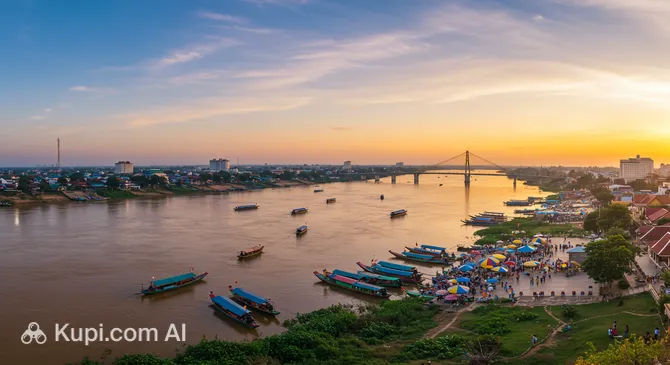
Nakhon Phanom is a captivating city located in the northeastern region of Thailand, also known as Isan. Resting peacefully on the right bank of the majestic Mekong River, this city offers a unique blend of Thai and Lao cultures, which is vividly reflected in its architecture, local cuisine, and dialect. With a population of approximately 26,000 residents, it maintains a charming small-town atmosphere that is perfect for travelers seeking tranquility away from the bustling metropolis.

Nakhon Phanom. Source: Kupi.Binoculars

The city's geographical setting provides stunning scenic views, particularly of the limestone mountains in neighboring Laos that rise dramatically across the water. The history of Nakhon Phanom is deeply intertwined with the river and the diverse communities that have settled here over centuries, creating a rich cultural tapestry. The climate is generally tropical, with a refreshing breeze often blowing off the river, making evening strolls particularly pleasant.

Visitors are often drawn to the iconic Naga Monument, a striking landmark overlooking the Mekong, and the highly revered Wat Phra That Phanom, a sacred chedi that attracts pilgrims from all over the region. Whether you are cycling along the extensive riverside promenade to admire the sunrise or exploring the vibrant Walking Street night market, Nakhon Phanom promises a memorable and relaxing experience for every visitor.

Weather Overview

The climate in this riverside city is tropical, characterized by distinct seasonal variations that influence the best times to visit. Generally, travelers can expect warm temperatures throughout the year, with a marked rainy season and a cooler, drier period that is ideal for outdoor exploration. For a more detailed breakdown of seasonal trends and forecasts, you can check the weather in Nakhon Phanom before planning your trip.

The most pleasant time to visit is typically during the cool season from November to February. In December and January, average temperatures hover around 22°C to 23°C, while nighttime lows can drop to a refreshing 16°C. This period is also the driest, with almost no recorded precipitation, making it perfect for cycling along the Mekong or visiting temples.

As the year progresses into March and April, the heat intensifies significantly, with April being the hottest month, seeing maximum temperatures reach nearly 35°C. The rainy season generally spans from May to October; during the peak months of July and August, rain is very frequent with up to 29 wet days, though the air remains warm with averages around 27°C.

Interesting Facts

Beyond the main attractions, Nakhon Phanom holds many fascinating secrets that add depth to its riverside charm. Here are a few unique insights into the history and culture of this captivating destination.

  • The "City of Mountains" Paradox: The name Nakhon Phanom literally translates to "City of Mountains," yet the city itself sits on flat terrain. The name was actually chosen to honor the majestic limestone peaks visible across the Mekong River in neighboring Laos, effectively claiming the stunning foreign landscape as the city's signature backdrop.

  • Ho Chi Minh’s Secret Refuge: In the late 1920s, the Vietnamese revolutionary leader Ho Chi Minh lived in the nearby village of Ban Na Chok under a pseudonym. He lived for a period in Thailand organizing the independence movement, and his former residence has been preserved as a museum, highlighting the strong historical ties between the local community and Vietnamese immigrants.

  • Spectacular Fire Boats: The city is home to the unique Lai Ruea Fai festival, where massive illuminated boats are launched onto the river. These are not ordinary rafts; they are intricate bamboo structures that can stretch over 80 meters long and are lit by tens of thousands of handmade oil lamps, creating a dazzling display of mythical creatures floating on the water.

  • A Symbol of Gratitude: The distinct Clock Tower in the city center was built in 1960 by Vietnamese residents before they returned to their homeland. It stands as a permanent memorial and a gesture of thanks to the people of Nakhon Phanom for their hospitality during times of conflict.

How to Get There

Reaching this serene riverside province is relatively straightforward, with air travel being the most convenient option for the majority of visitors. Whether you are coming from Bangkok or exploring other parts of the region, you can find more about how to get to Nakhon Phanom and choose the route that best suits your itinerary.

The city is served directly by Nakhon Phanom Airport (KOP), which is located just 9.1 km west of the city center. This is the most direct entry point, handling regular domestic flights. Upon arrival, a taxi or shuttle bus can take you into town in approximately 20 to 30 minutes. It is a regional facility with a moderate flow of passengers, ensuring a quick and hassle-free arrival process.

If direct flights are unavailable, you might consider flying into Sakon Nakhon Airport (SNO), situated in the neighboring city of Sakon Nakhon, about 53 km away. The transfer by car or taxi from there takes roughly 1 hour and 15 minutes. Another major alternative is Udon Thani International Airport (UTH), a larger hub located in Udon Thani, approximately 189 km from Nakhon Phanom. While the drive takes about 3 hours, this airport offers a wider range of flight connections and services.

For clarity, here is a summary of the main airports in the vicinity:

Airport Name City Passenger Traffic Km from City
Vinh Airport Vinh Large 187.7
Udon Thani International Airport Udon Thani Large 188.9
Sakon Nakhon Airport Sakon Nakhon Medium 53.3
Nakhon Phanom Airport Nakhon Phanom Medium 9.1
Roi Et Airport Roi Et Medium 166.3

Since there is no direct railway line extending to Nakhon Phanom, travelers preferring ground transport typically rely on the extensive bus network. Comfortable air-conditioned buses run daily from Bangkok's Mo Chit Bus Terminal and other major northeastern cities, offering a scenic, albeit longer, journey through the Thai countryside.

Main Attractions

Nakhon Phanom offers a delightful array of attractions that reflect its position as a cultural crossroads between Thailand, Laos, and Vietnam. The city’s charm lies in its riverside promenade, historical buildings, and deeply revered spiritual sites, making it a perfect destination for those who appreciate architecture and serenity.

The spiritual heart of the province is undoubtedly Wat Phra That Phanom. Although situated roughly 50 kilometers south of the city center, it is an essential stop for any visitor. The temple centers around a magnificent 53-meter-tall chedi, decorated with intricate golden designs and believed to contain the breastbone relic of the Buddha. It is one of the most sacred sites in the Isan region, attracting pilgrims who circle the pagoda to make merit and wish for prosperity.

Back in the city, the Phaya Si Sattanakharat (Naga Monument) stands as a majestic guardian on the banks of the Mekong River. This striking brass statue of a seven-headed serpent is not only a symbol of faith for locals but also a stunning artistic landmark. Facing the river and the mountains of Laos, it provides a dramatic foreground for sunrise and sunset photography, surrounded by a spacious plaza that often hosts local ceremonies.

For a glimpse into the city's architectural diversity, a visit to Saint Anna Nong Saeng Church is highly recommended. Built in 1926, this Catholic church showcases a unique blend of colonial and Vietnamese styles, serving as a testament to the multicultural community that has thrived here for generations. Nearby, the Former Governor's Residence is another architectural gem; this beautifully preserved yellow French-colonial building now serves as a museum, displaying photographs and artifacts that narrate the city's administrative history.

Nature lovers and engineering enthusiasts should also visit the Third Thai–Lao Friendship Bridge. Located north of the city, this impressive structure spans the Mekong River and is considered one of the most beautiful bridges in the country due to the breathtaking backdrop of limestone karsts. It is an excellent spot for sightseeing, offering panoramic views of the river valley that connects the two nations.

Local Cuisine

The culinary landscape of Nakhon Phanom is a delightful reflection of its multicultural heritage, blending spicy Isan flavors with distinct Lao and Vietnamese influences. Because of the city's history as a home for Vietnamese communities and its proximity to Laos, the local food scene offers a unique gastronomic identity that sets it apart from other parts of Thailand. Visitors will find that fresh herbs, river fish, and savory noodle dishes play a central role in the daily diet here.

One of the absolute must-try dishes in the city is Kuay Jab Yuan, a comforting Vietnamese-style noodle soup. Unlike the standard Thai version, the broth is often rich and peppery, and the noodles are distinctively chewy, served with pork sausage, fried shallots, and fresh greens. Another local favorite is Nem Nueang, savory grilled pork meatballs served with a platter of fresh vegetables, rice paper, and a special dipping sauce. This interactive dish allows diners to wrap their own bite-sized portions, making it a fun and fresh meal to share.

Given its location on the banks of the Mekong, freshwater fish is a staple ingredient. Local restaurants serve an array of river fish delicacies, ranging from spicy Tom Yum soups featuring the catch of the day to simple yet flavorful steamed fish with lime and chili. For breakfast, the city wakes up to Kai Krata, a pan-fried egg dish served in a small metal skillet, topped with minced pork and Chinese sausage. It is often accompanied by a crispy baguette, a nod to the region's French-Indochinese legacy.

When it comes to drinks, the local coffee culture is vibrant, often enjoyed strong and sweet with condensed milk in the morning. In the evenings, you can cool down with fresh fruit smoothies or herbal drinks like roselle and lemongrass juice found at street stalls. For those looking to enjoy a relaxing evening, the riverside promenade offers numerous spots to sip a cold local beer while watching the sunset over the mountains of Laos.

The best place to experience the variety of local food is the Nakhon Phanom Walking Street, which comes alive on Friday, Saturday, and Sunday evenings near the Naga Monument. Here, the atmosphere is lively, with vendors selling everything from grilled skewers to sweet treats. Locals and tourists alike gather here to eat, shop, and enjoy the river breeze. For a more sit-down experience, the restaurants lining the Mekong River road provide excellent settings to enjoy authentic Isan dishes like Som Tum (papaya salad) with a stunning view.

Travel Tips

Welcome to the serene banks of the Mekong River, where the pace of life slows down and the culture is as rich as the scenery. To help you navigate the unique charm of Nakhon Phanom and ensure a smooth journey through this northeastern gem, here are some practical tips to keep in mind.

  1. Clothing and Gear: While the days are typically warm and tropical, the mornings and evenings can get surprisingly brisk, especially during the cool season from November to February. It is wise to pack a light jacket or sweater if you plan to enjoy early morning strolls or late dinners by the river. Since visiting sacred sites like Wat Phra That Phanom is a highlight, remember to bring modest clothing that covers your shoulders and knees to respect local customs.
  2. Transportation: The city does not have a metro system, but getting around is part of the fun. The most iconic local transport is the Skylab, a distinctive three-wheeled tuk-tuk unique to the Isan region. Negotiate the fare before you hop in. For a more leisurely experience, renting a bicycle is highly recommended; the city boasts a dedicated cycling lane that runs for kilometers along the Mekong River, offering safe and scenic travel.
  3. Finances: The local currency is the Thai Baht (THB). While hotels and larger restaurants may accept credit cards, cash is king in Nakhon Phanom, especially at the famous Walking Street night market and local food stalls. ATMs are plentiful near convenience stores like 7-Eleven. It is advisable to carry small bills, as vendors may not always have change for large denominations.
  4. Health and Safety: Nakhon Phanom is a very safe and peaceful city, but general precautions apply. Since you will likely spend time near the river, bringing mosquito repellent is essential, particularly for dining outdoors at sunset. Pharmacies are widely available in the town center for basic supplies. In case of emergencies, the provincial hospital provides standard medical care.
  5. Communication: English is not as widely spoken here as in Bangkok or Phuket, though hotel staff and younger people often know basic phrases. It is highly useful to have a translation app downloaded on your phone. You can easily purchase a tourist SIM card with data packages at convenience stores or phone shops in town to stay connected and navigate with maps.
  6. Local Etiquette: The local culture is deeply influenced by Buddhist traditions. The standard greeting is the Wai (pressing palms together). When visiting temples or entering someone's home, always remove your shoes. Additionally, the Mekong River is considered the lifeblood of the region; treat the riverfront and monuments, especially the Naga Monument, with respect—avoid climbing on statues or making loud noises in spiritual areas.
  7. What to Avoid: In Thai culture, the head is considered the most sacred part of the body, and the feet are the lowest. Never touch anyone on the head, and avoid pointing your feet at people or religious images when sitting on the ground. Also, avoid raising your voice or showing visible anger in public; keeping a "cool heart" (jai yen) is key to resolving any issues politely.
  8. Additional Tip: Embrace the "early bird" lifestyle. The city is most magical at sunrise when the sun peeks over the mountains of Laos across the river. Local residents are active very early, exercising on the promenade or offering alms to monks. Waking up at 5:30 AM allows you to witness this authentic daily rhythm and capture the best photos of the day.

By keeping these simple tips in mind, you will be well-prepared to relax and enjoy the authentic hospitality of the Isan people. Have a wonderful time exploring the cultural richness and natural beauty of Nakhon Phanom!

Entertainment & Nightlife

Nightlife in Nakhon Phanom is defined by its laid-back, riverside charm rather than pulsating nightclubs or neon-lit strips. The city embraces a "slow life" philosophy, where the evening entertainment revolves around relaxing with friends, enjoying good food, and soaking in the cool breeze from the Mekong River. The main hub for evening activities is undoubtedly Sunthon Wichit Road, the scenic promenade running parallel to the river, where locals and visitors gather to unwind as the sun sets over the mountains of Laos.

For those seeking a lively atmosphere, the Nakhon Phanom Walking Street is the center of action every Friday, Saturday, and Sunday evening. While it is primarily a market, the area around the Naga Monument transforms into a vibrant social space where people sit on mats to eat, drink, and listen to local musicians performing traditional and folk songs. The vibe is incredibly casual and family-friendly, making it a perfect spot to start your night.

If you are looking for a place to sit down with a drink, the city has several rustic bars and restaurants scattered along the riverfront. These venues are popular with both locals and expats, often featuring live bands playing Thai country (Phleng Phuea Chiwit) and pop music, creating a nostalgic and welcoming environment. Another excellent option is the Mekong Paradise Cruise, which offers a dining experience on the water, allowing you to enjoy a meal and drinks while floating down the Mekong under the stars.

The dress code throughout the city is very relaxed; shorts, t-shirts, and sandals are acceptable almost everywhere. Prices are generally very affordable compared to major tourist destinations like Bangkok or Phuket. A large beer typically costs a fraction of what you would pay in the capital, and street food snacks are incredibly cheap. The best time to head out is around 6:00 PM to catch the sunset, with most bars staying open until midnight or 1:00 AM.

Safety is one of Nakhon Phanom’s strong suits. The streets are well-lit and generally very safe for night walks, even for solo travelers. However, public transport can be scarce late at night. The local three-wheeled Skylabs are the main way to get around, but drivers may retire early. It is advisable to get the phone number of a driver or arrange a pick-up with your hotel if you plan to stay out late.

While the city is quiet by day, there are a few entertainment options to keep you occupied before the sun goes down. The Mekong Underwater World is a modest but interesting aquarium showcasing the diverse fish species found in the Mekong River, making for a pleasant afternoon visit suitable for families and nature enthusiasts.

Parks & Museums

Nakhon Phanom may be a quiet border town, but it boasts a surprising depth of cultural heritage preserved in its museums and scenic beauty in its outdoor spaces. The city’s layout, hugging the Mekong River, integrates nature directly into daily life, while its historical buildings tell the story of a diverse community shaped by Thai, Lao, and Vietnamese influences.

The most prominent outdoor area is undoubtedly the Mekong River Promenade. Stretching for several kilometers along Sunthon Wichit Road, this is not just a walkway but a linear park that serves as the city's communal living room. With dedicated cycling lanes and pedestrian paths, it offers uninterrupted views of the majestic limestone karsts across the river in Laos. It is the perfect spot for jogging, enjoying a sunset picnic, or simply breathing in the fresh river air while watching local life unfold.

Another significant green space is Suan Luang Rama IX Park. Situated at the northern end of the city, this park was established to celebrate the late King Bhumibol Adulyadej. It features beautifully landscaped gardens, a large pond, and shaded areas that are popular among locals for evening aerobics and family outings. The park provides a peaceful retreat from the town center and acts as a green lung for the city, often hosting local festivals and seasonal flower displays.

For history enthusiasts, the Former Governor's Residence Museum is an unmissable architectural gem. Housed in a striking yellow French-colonial building constructed in the early 20th century, the museum offers a glimpse into the province's administrative past. Inside, visitors can explore well-preserved rooms featuring antique furniture, historical photographs of the city, and exhibits detailing the famous Fire Boat Festival. The building itself is a testament to the strong Indochinese influence on the region's architecture.

A short distance from the city center lies Ho Chi Minh's House in the village of Ban Na Chok. This historical site preserves the humble wooden home where the Vietnamese revolutionary leader lived during his time in exile in the late 1920s. The surrounding area has been developed into a memorial complex and museum, displaying his personal items, letters, and tools. It serves as a powerful symbol of the friendship between Thailand and Vietnam and highlights the significant Vietnamese community that calls this province home.

For a unique outdoor experience, rent a bicycle and ride towards the Naga Tunnel (Umong Nakkharat). This section of the bike path is lined with dense trees that form a natural green canopy, creating a cool and photogenic tunnel effect. It is a favorite hidden gem for cyclists looking for a serene ride along the riverbank, away from the main road traffic.

Getting Around

Public transport in Nakhon Phanom is informal, charming, and straightforward, reflecting the city's relaxed pace of life. Unlike Bangkok or larger metropolises, there are no metros, sky trains, or complex bus networks here. Instead, the system relies heavily on local vehicles that add a unique flavor to your travel experience. Getting around is generally easy, but it requires a bit of interaction with local drivers.

The most iconic and common mode of transport is the Skylab. These are distinctively shaped three-wheeled tuk-tuks that differ from the ones found in the capital; they are larger, often colorful, and built to handle both passengers and goods. You will see them buzzing around every corner of the town center. They function essentially as taxis. For travel between districts or to the outskirts, Songthaews (converted pickup trucks with two rows of benches in the back) are the standard option, following fixed routes for a low fare.

The payment system is almost exclusively cash-based. There are no travel cards, passes, or ticketing apps for local transport. You must pay the driver directly in Thai Baht (THB). For Songthaews, the price is usually fixed and very cheap, often ranging from 10 to 20 THB for short hops. For Skylabs, there are no meters, so the fare depends on the distance and your negotiation skills. A short trip within the city center typically costs between 40 and 60 THB, but always agree on the price before you step into the vehicle to avoid misunderstandings later.

A special feature for tourists is the city's sightseeing tram. While not a tram on rails, these open-air electric or motorized shuttles are operated by the municipality and offer guided tours along the Mekong River promenade. They are an excellent and affordable way to see the main landmarks, including the Naga Monument and various temples, without walking in the heat. Tickets are inexpensive, and the service usually operates in the mornings and late afternoons when the weather is pleasant.

For those who prefer more independence, cycling is a fantastic alternative and arguably the best way to see the city. Nakhon Phanom boasts a famous dedicated bicycle lane that runs along the Mekong River for many kilometers, offering safety and stunning views of the mountains in Laos. Many hotels and guesthouses offer bike rentals for as little as 50 to 100 THB per day. Walking is also very feasible within the town center, as many attractions are clustered near the riverfront.

Practical advice for tourists involves timing and preparation. Public transport options like Skylabs and Songthaews tend to become scarce after dark, particularly after 8:00 PM. If you plan to stay out late at the Walking Street or a riverside bar, it is wise to arrange a return ride in advance or ask your hotel to call a driver for you. While ride-hailing apps like Grab are technically available, the fleet is small, and wait times can be long, so relying on local transport or your own rented vehicle is often more efficient.

Accommodation

Where to Stay:

Accommodation in Nakhon Phanom perfectly mirrors the city's relaxed and unpretentious atmosphere. Instead of sprawling luxury resorts or high-rise international chains, travelers will mostly find a charming selection of mid-range hotels, boutique guesthouses, and budget-friendly hostels. The hospitality here is warm and personal, often family-run, ensuring a comfortable stay that feels authentic to the local "slow life" culture.

The most desirable area to stay is undoubtedly along Sunthon Wichit Road, which runs directly parallel to the Mekong River. Hotels located on this strip are highly sought after because they offer stunning, unobstructed views of the sunrise over the limestone mountains of Laos. Staying here means you are just steps away from the cycling path, the Naga Monument, and the evening Walking Street. For those on a tighter budget, the inner streets a few blocks back from the river offer excellent value, providing quiet and clean rooms that are still within walking distance of the main attractions.

While the city does not have ultra-luxury properties, the standard of comfort in the mid-range category is surprisingly high. Many newer boutique hotels have renovated old shophouses or built modern structures with floor-to-ceiling windows to maximize the river scenery. These establishments often feature rooftop terraces or riverfront balconies, allowing guests to soak in the view with their morning coffee. Basic amenities like air conditioning, Wi-Fi, and hot showers are standard across almost all accommodation types.

Booking Tip: If your heart is set on a room with a river view, it is highly recommended to book well in advance, especially during the cool season (November to February). These specific rooms are limited and tend to sell out first. Additionally, if you plan to visit during the Lai Ruea Fai (Illuminated Boat Festival) in October, you should secure your accommodation several months ahead, as the city fills up completely with visitors.

In terms of pricing, Nakhon Phanom is incredibly wallet-friendly. Budget travelers can find comfortable guesthouses for very low rates, while even the top-tier riverfront boutique hotels are reasonably priced compared to Thailand's major tourist hubs. Booking can be done easily through major online travel platforms, though many smaller guesthouses also accept direct bookings via phone or social media pages.

Nearby Cities

For those looking to explore the surroundings, Nakhon Phanom serves as an excellent base for day trips to several interesting nearby locations:

City Population Distance (km)
Sakon Nakhon 53,618 52
Mukdahan 33,102 97
Kalasin 34,437 156
Ban Nong Han 16,463 157
Amnat Charoen 25,858 172

One of the most popular choices for a short excursion is Sakon Nakhon, located just an hour away. This city is deeply rooted in tradition and is famous for its high-quality indigo-dyed fabrics, known locally as "Kram." Visitors can also explore the serene Nong Han Lake, the largest natural lotus lake in Thailand, or visit the highly revered Wat Phra That Choeng Chum.

Traveling south along the Mekong River brings you to Mukdahan, another border city with a distinct character. It is best known for the bustling Indochina Market, a riverside bazaar selling goods from Laos, Vietnam, and China. For panoramic views of the river and the surrounding countryside, a climb up the Ho Kaeo Mukdahan tower is highly recommended.

Further afield lies Kalasin, a destination that appeals to history buffs and families. This province is renowned as the dinosaur capital of Thailand, home to the Sirindhorn Museum which houses impressive fossils discovered in the region. It offers a unique educational experience contrasting with the temple-focused tourism of neighboring provinces.

These nearby destinations offer a glimpse into the diverse culture and landscapes of the region.

Shopping & Souvenirs

Shopping in Nakhon Phanom is a relaxed and culturally immersive experience, distinct from the high-end retail therapy found in Bangkok or Chiang Mai. Instead of sprawling luxury malls, the city offers a charming mix of local markets, riverside stalls, and border-town bazaars. The shopping scene here is heavily influenced by its proximity to Laos and Vietnam, meaning visitors can find a unique array of Indochinese goods, handicrafts, and local foodstuffs that are difficult to find elsewhere in Thailand.

The primary area for tourist shopping is undoubtedly along Sunthon Wichit Road, the scenic street that runs parallel to the Mekong River. This area is dotted with small boutique shops selling local textiles, postcards, and handicrafts. For more general daily needs and traditional shophouses, Bamrung Mueang Road and the streets surrounding the fresh market offer a glimpse into the everyday commercial life of the locals, where hardware stores sit next to gold shops and fabric sellers.

For those looking for modern conveniences, air-conditioning, and branded goods, the city does not have large luxury department stores. However, it is served by standard hypermarkets such as Big C Supercenter and Lotus’s. These venues function as the city's main shopping malls, offering supermarkets, food courts, banks, and a selection of clothing and electronics stores. They are the go-to spots for essentials, imported toiletries, or a break from the tropical heat.

The highlight of the local shopping scene is the Nakhon Phanom Walking Street (Thanon Khon Doen). Held every Friday, Saturday, and Sunday evening near the Naga Monument, this vibrant night market is a treasure trove for visitors. Here, vendors set up stalls selling everything from hand-woven indigo clothes and tie-dye t-shirts to handmade accessories and cute souvenirs. It is also a culinary destination, but the shopping for local crafts is equally impressive and very affordable.

Another important market is the Indochina Market (Talad Indo-Jeem), located near the ferry pier. Traditionally a hub for goods crossing the border, you can find a somewhat eclectic mix of items here, ranging from cheap electronics and kitchenware to duty-free goods from neighboring countries. For an authentic morning experience, the Municipal Fresh Market is where locals buy their produce; while not a souvenir spot, it is excellent for observing local life and buying fresh tropical fruit.

When it comes to souvenirs, Nakhon Phanom is famous for its culinary gifts and textiles. The most popular item to bring back is Moo Yor, a Vietnamese-style white pork sausage that is a specialty of the province. You will see it sold in banana leaf packaging or plastic rolls throughout the city. Additionally, indigo-dyed fabrics (Kram) are a regional pride of Isan; look for scarves, shirts, and bags made from this soft, natural cotton. Hand-woven baskets and sticky rice containers are also authentic keepsakes.

Most small shops and market stalls operate from early morning until around 5:00 PM or 6:00 PM, while the Walking Street comes alive from 5:00 PM until roughly 10:00 PM. The hypermarkets typically stay open until 9:00 PM or 10:00 PM. Cash is king in Nakhon Phanom, especially at markets and small family-run shops. While the malls and hotels accept credit cards, you will definitely need Thai Baht banknotes for street vendors and souvenir stalls.

Regarding tax refunds, the VAT Refund for Tourists scheme is generally available only in large chain stores and department stores that display the "VAT Refund" sign. In a smaller provincial city like Nakhon Phanom, opportunities to claim this are limited compared to major tourist hubs. It is best not to rely on tax-free shopping here and instead enjoy the naturally low prices of local goods.
Reached the end of the page?

That means the route is fully explored